

Kodi Kura Recipe
Malayalam കോഡി കൂരTamil கோடி கூரKannada ಕೋಡಿ ಕೂರTelugu కోడి కూర
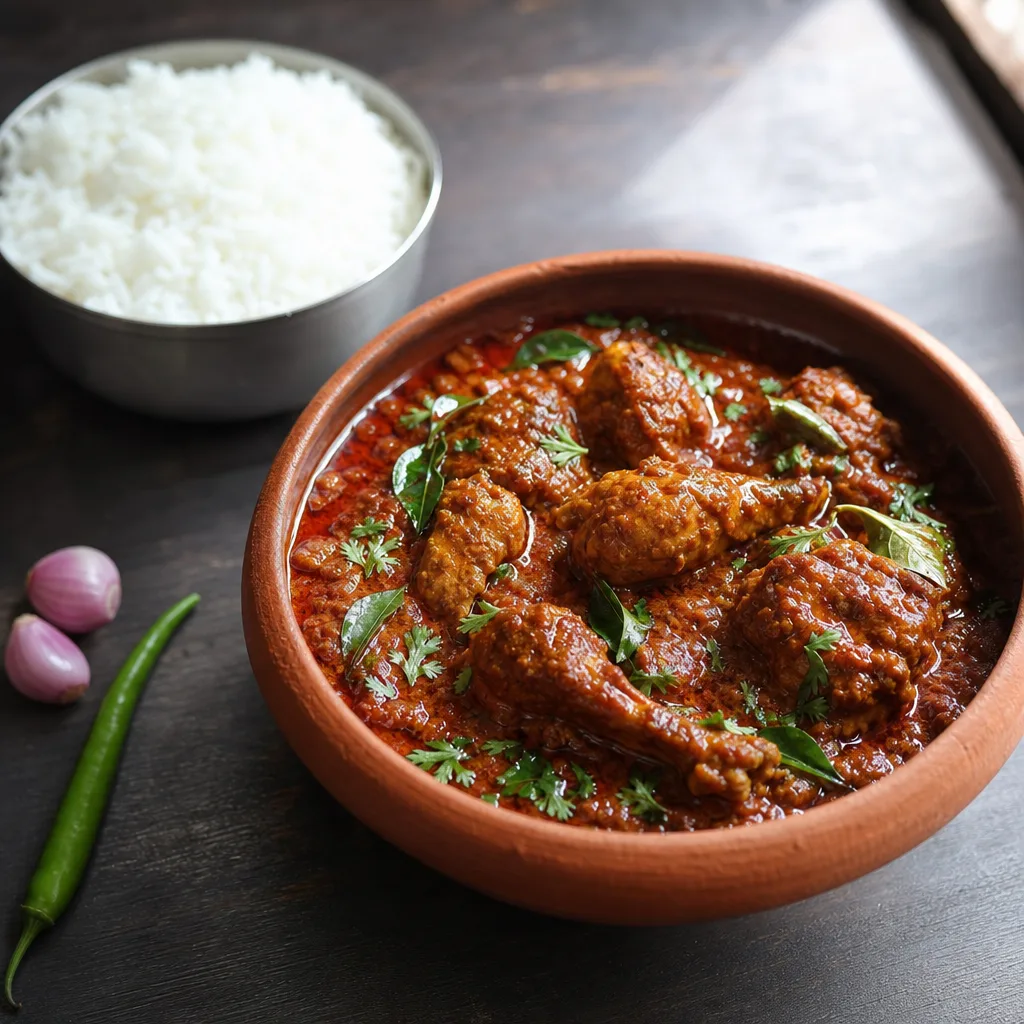
- Prep25 min
- Cook50 min
- Serves4
- DifficultyMedium
- DietNon-vegetarian
Kodi Kura is the everyday chicken curry of Andhra households, the kind that goes on the table every Sunday without ceremony. It is not a restaurant dish. The gravy is thick and clings to the meat rather than pooling in the bowl. In Rayalaseema especially, the heat is real and the colour is deep red from dried Guntur chillies, not from chilli powder added at the end.
The masala is built in two stages: a dry-roasted paste of whole spices and chillies ground fresh, and a long fry of shallots and tomato that forms the base. The chicken goes in raw, not pre-marinated, and cooks entirely in the masala. That slow cooking in the pan is what gives the gravy its body. Rushing it produces watery curry with pale meat.
In most Andhra homes this is eaten with plain white rice, the rice cooked soft enough to mix with the gravy by hand. On special occasions it appears alongside jowar roti or thick wheat roti. Families differ on whether to add a little tamarind at the end for sourness; some do, some rely entirely on tomato. Both are traditional.
Ingredients (serves 4)
Chicken
Dry-roast masala
Curry base
Tempering and finish
Method
Dry-roast the whole spices
Place a heavy iron or thick-bottomed pan over medium-low heat. Add the dried red chillies, coriander seeds, cumin, peppercorns, fennel, cloves, cardamom, cinnamon and stone flower if using. Roast, stirring constantly, for 3 to 4 minutes until the coriander seeds turn a shade darker and the chillies blister slightly. The kitchen should smell nutty and warm, not burnt. Tip onto a plate and let them cool completely before grinding.
Grind the masala paste
Transfer the cooled roasted spices to a wet grinder or heavy blender. Add 4 to 5 tablespoons of water and grind to a smooth paste. It should be fine enough that you feel no grit between your fingers. Set aside. Do not add more water than necessary; you want a paste, not a slurry.
Fry the shallots
Heat the gingelly oil in a wide, heavy-bottomed kadai over medium heat. Add the sliced shallots and fry, stirring often, for 12 to 15 minutes until they are deep golden brown and beginning to crisp at the edges. Do not hurry this step; under-fried shallots give a raw sweetness that never cooks out. Add the crushed garlic and grated ginger and fry for another 2 minutes until the raw smell goes.
Add tomatoes and cook down
Add the chopped tomatoes and turmeric powder. Stir well and cook on medium heat for 8 to 10 minutes, mashing the tomatoes as they soften. Cook until the oil separates from the tomato mass and the mixture looks almost paste-like. If you skip this stage, the curry will taste raw and the gravy will not thicken properly.
Fry the masala paste
Add the ground spice paste to the pan. Stir it into the tomato-shallot base and fry on medium heat for 5 to 6 minutes, stirring continuously so it does not catch. The paste will darken by a shade and the oil will begin to show at the edges again. This frying stage is what gives the curry its depth; do not add the chicken before this is done.
Add the chicken
Add the chicken pieces and salt. Stir well so every piece is coated in the masala. Fry on medium-high heat for 4 to 5 minutes, turning the pieces, until the outside of the chicken has sealed and turned opaque. This keeps the meat from becoming stringy.
Cook the curry with water
Add 150 ml of warm water, stir, and bring to a boil. Reduce the heat to low, cover the pan, and cook for 20 minutes. Check once halfway through and stir so the bottom does not scorch. The chicken is ready when the meat near the bone is cooked through and a skewer meets no resistance.
Adjust the gravy
Remove the lid and increase the heat to medium. If the gravy looks thin, cook uncovered for 5 to 7 minutes, stirring, until it reduces to a thick coating consistency. Taste for salt. If the tomatoes were not very sour, add the strained tamarind water now and stir through. Cook for 2 more minutes.
Finish with curry leaves and coriander
Add the curry leaves directly to the pan and stir them in. They will crackle and wilt in about 30 seconds. Turn off the heat, scatter the torn coriander leaves over the top, and cover the pan for 2 minutes before serving. The residual heat blooms the coriander without wilting it to nothing.
How to serve
Plain white rice (raw rice cooked soft), or thick wheat roti (chapati). A raw shallot and green chilli on the side is common in Rayalaseema homes.
Served with: Plain white rice (raw rice cooked soft), or thick wheat roti (chapati). A raw shallot and green chilli on the side is common in Rayalaseema homes.
Cook's tips
Guntur chillies
Guntur chillies are hotter and more aromatic than Kashmiri chillies. Do not substitute Kashmiri chillies expecting the same result; the colour will be prettier but the heat and flavour will be wrong for this dish. If Guntur chillies are unavailable, use byadagi chillies for colour and add a small amount of cayenne for heat.
Gingelly oil
Gingelly oil (cold-pressed sesame oil) is traditional in Andhra cooking and gives the curry a characteristic nutty undertone. Refined sunflower oil is used in many modern households and is a common shortcut, but the flavour is noticeably different.
Stone flower (kalpasi)
Stone flower is a lichen used as a spice in Chettinad and Rayalaseema cooking. It smells earthy and faintly mossy when roasted. It is sold in spice shops in Andhra and Tamil Nadu. Leave it out if you cannot find it; the curry is still correct without it.
Bone-in chicken
Bone-in pieces are essential. Boneless chicken cooks faster but releases no gelatin, and the gravy will not have the same body. Shoulder, thigh and drumstick pieces work best.
Storing
The curry tastes better the next day once the masala has settled into the meat. Store covered in the refrigerator for up to two days. Reheat gently with a splash of water.
Regional variations
Coastal Andhra version with grated coconut in the masala; Telangana version with sesame seeds and curry leaves fried into the masala; Nellore version that is notably sour with extra tamarind.
Glossary
- Kodi Kura కోడి కూర
- Telugu: kodi means chicken, kura means curry or cooked vegetable dish. Literally chicken curry.
- Gingelly oil (nallennai) నువ్వుల నూనె
- Cold-pressed sesame oil used widely in Andhra and Tamil cooking; has a stronger flavour than refined sesame oil.
- Dagad phool / kalpasi கல்பாசி
- Stone flower, a dried lichen used as a spice in Chettinad and Rayalaseema masalas; earthy and slightly smoky.
- Kudampuli കുടംപുളി
- Gamboge or Malabar tamarind, used as a souring agent in Kerala; not used in this Andhra dish, which uses regular tamarind.
- Sambar onions சாம்பார் வெங்காயம்
- Small shallots common across South India; sweeter and more pungent than large onions, and preferred in traditional Andhra cooking.
Two things decide whether this curry works: how long you fry the shallots, and how thoroughly you cook the spice paste into the base before the chicken goes in. Both steps require patience and a willingness to stay at the pan. Get those right and the rest follows.
More Chicken recipes
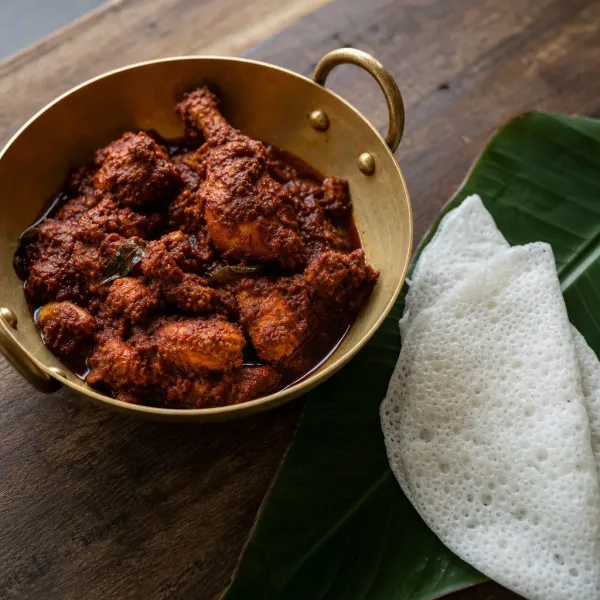
Kundapur Chicken Ghee Roast
Authentic Kundapur chicken ghee roast with byadagi and guntur chillies, freshly ground masala, and generous ghee. Traditional coastal Karnataka metho…
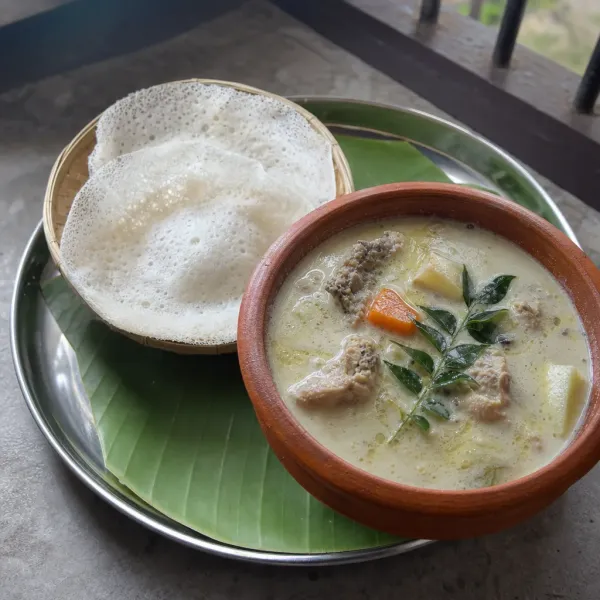
Kerala Chicken Stew
Traditional Kerala Nasrani chicken stew with fresh coconut milk, whole spices, potatoes and carrots. Served with appam for Sunday breakfast.
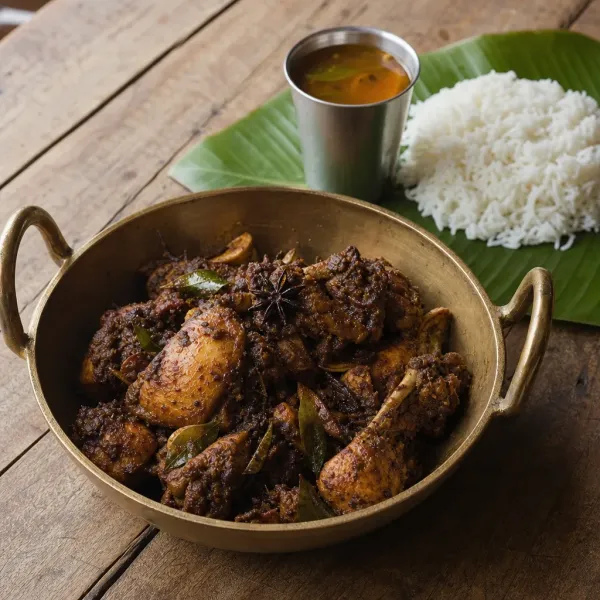
Chettinad Chicken Perattal
Authentic Chettinad Chicken Perattal from the Chettiar kitchen: bone-in chicken cooked in a fresh-ground spice paste with kalpasi, gingelly oil, and…
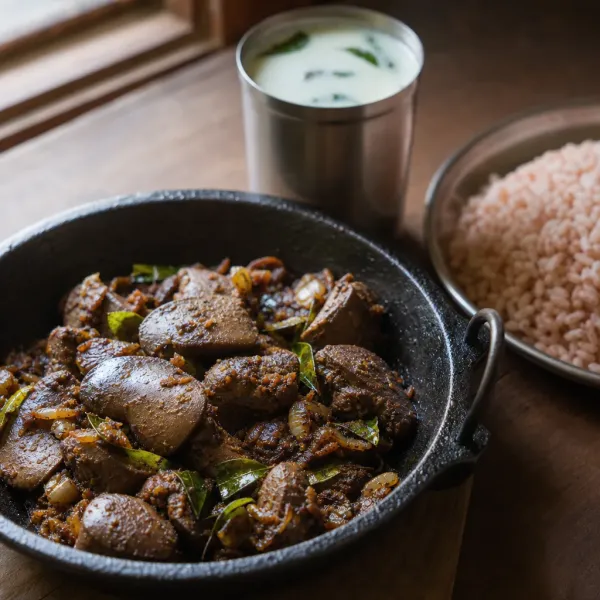
Kerala Nasrani Chicken Liver Fry
Traditional Nasrani chicken liver fry from Travancore: shallots, black pepper, curry leaves, coconut oil. Dry-fried, dark, and ready in 30 minutes.
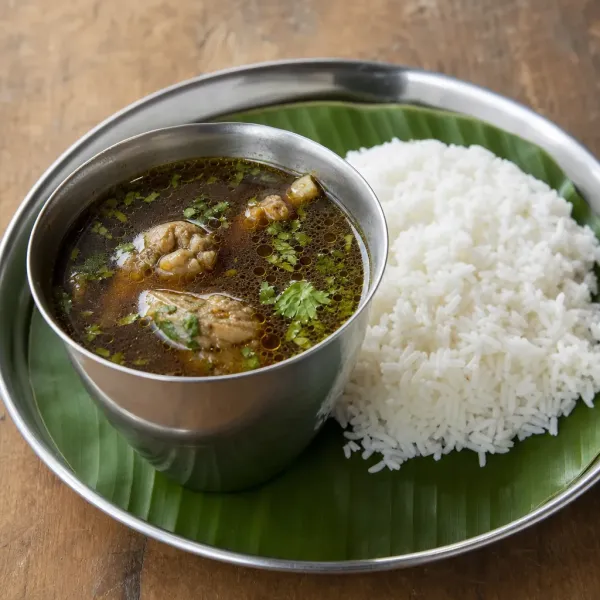
Nattu Kozhi Rasam
Traditional Kongunad nattu kozhi rasam: country chicken simmered with black pepper, cumin, marathi mokku and gingelly oil. A real household recipe.
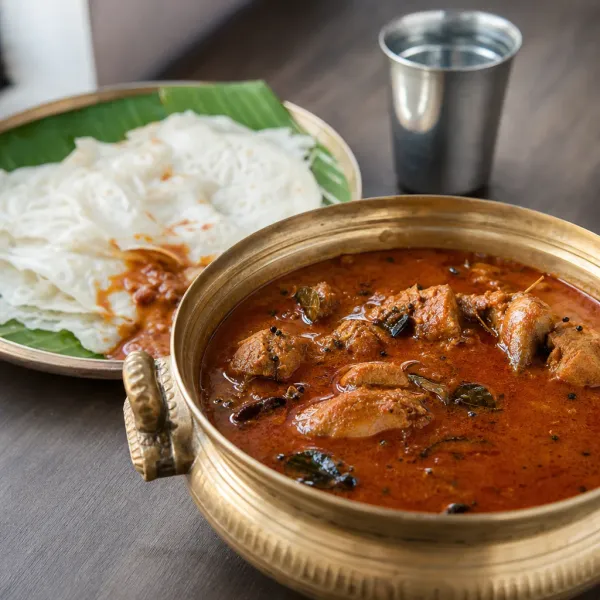
Kori Gassi
Authentic Bunt-style Kori Gassi from coastal Karnataka: chicken in a roasted coconut and byadagi chilli gravy, served with Kori Rotti or neer dosa.