

Kundapur Chicken Ghee Roast Recipe
Malayalam കുണ്ടാപൂർ ചിക്കൻ ഘി റോസ്റ്റ്Tamil குண்டாபூர் சிக்கன் கி ரோஸ்ட்Kannada ಕುಂದಾಪುರ ಚಿಕನ್ ತುಪ್ಪ ರೋಸ್ಟ್Telugu కుందాపూర్ చికెన్ నెయ్యి రోస్ట్
- Prep30 min
- Cook45 min
- Serves4
- DifficultyMedium
- DietNon-vegetarian
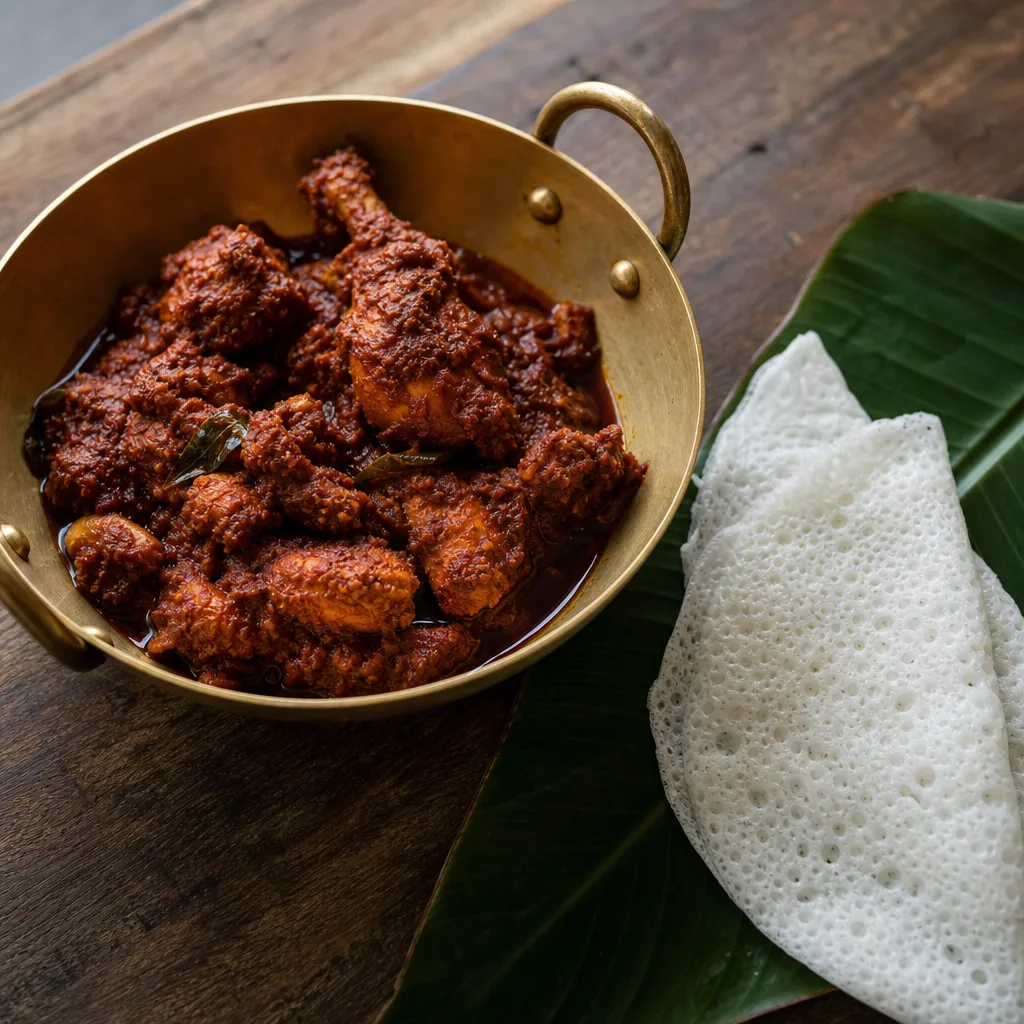
Chicken ghee roast is a dish from the coastal Karnataka town of Kundapur, and it is unlike anything else on the Mangalorean table. The chicken is not in a gravy. It is not a dry stir-fry either. It lands somewhere between the two: pieces coated in a thick, deeply red, slightly sticky masala, glistening with enough ghee that the pan bottom is never dry. The colour comes from byadagi chillies, which are mild and paprika-like in their redness. The heat comes from guntur chillies. Together they give the dish its signature look: brick red, almost lacquered, with pools of orange-tinted ghee at the edges.
In a Kundapur home, this is Sunday food, made when someone has gone to the market early and come back with a good country chicken. The masala is ground fresh on a stone or in a wet grinder. The chicken is marinated in curd and turmeric, then cooked in its own juices before the masala goes in. The ghee is not a garnish; it is the cooking medium for the final stage, and if you are cautious with it the dish will not roast properly.
Households differ mainly in the chilli ratio and in whether they add a small piece of jaggery near the end. Some cooks add a pinch, some add none. The curd in the marinade is the only souring agent; kudampuli and tamarind do not belong here. Serve it with neer dosa or Mangalorean parottas, with nothing else on the plate competing for attention.
Ingredients (serves 4)
For the marinade
For the Kundapur masala (grind fresh)
For cooking
Method
Marinate the chicken
Mix the chicken pieces with curd, turmeric and salt in a large bowl. Turn everything well so each piece is coated. Cover and leave at room temperature for 30 minutes, or refrigerate for up to 2 hours. Do not marinate longer or the curd will make the surface grainy after cooking.
Dry-roast the whole spices
Put a small heavy pan on medium-low heat. Add the coriander seeds, cumin, peppercorns, cloves, cinnamon, cardamom and fennel. Roast, stirring constantly, for about 90 seconds until they smell warm and toasty. Do not let them darken. Tip onto a plate immediately and leave to cool.
Roast the dried chillies
In the same dry pan on low heat, add both kinds of dried chillies. Press them gently with a spatula and turn them for about a minute. They should puff very slightly and smell fragrant, not burnt. Remove and cool. If any chilli smells acrid, discard it; a single scorched chilli will make the whole masala bitter.
Grind the masala
Put the cooled chillies and spices into a wet grinder or a powerful mixer jar. Add the garlic and tamarind. Add 4 to 5 tablespoons of water, just enough to get the grinder moving. Grind to a very smooth, thick paste. This takes 4 to 5 minutes in a mixer and longer in a stone grinder. A coarse paste will leave raw spice flavour in the finished dish. Set aside.
Cook the chicken in its marinade
Put the marinated chicken into a wide heavy pan or kadai over medium heat. No water, no oil. Let it cook in the curd and its own juices, turning the pieces every few minutes. After 15 to 18 minutes the liquid will have evaporated, the curd coating will have dried onto the chicken, and the pieces will be nearly cooked through. Country chicken will take a few minutes longer. Set the chicken aside.
Start the ghee base
Wipe the kadai, place it on medium heat, and add all 6 tablespoons of ghee. When the ghee is hot and shimmering, add the sliced shallots and curry leaves. Cook, stirring often, for 8 to 10 minutes until the shallots are soft, translucent and beginning to turn pale gold at the edges.
Add the masala and fry it
Add the ground masala to the ghee and shallots. Stir immediately; the paste will spit. Reduce the heat to medium-low and fry the masala, stirring and folding continuously, for 10 to 12 minutes. The paste will darken from bright red to a deeper brick red, the oil will begin to separate and pool at the sides, and the raw smell will be entirely gone. Do not rush this step. Undercooked masala is the most common reason the dish tastes sharp and unfinished.
Roast the chicken in the masala
Add the par-cooked chicken pieces to the pan. Toss and fold to coat every piece thoroughly in the masala. Increase the heat to medium. Cook for 8 to 10 minutes, turning the pieces every 2 minutes. The masala will thicken further and cling to the chicken. The ghee will reappear at the bottom of the pan; this is correct and means the dish is roasting rather than stewing.
Adjust and finish
Taste for salt. If adding jaggery, crumble in the half teaspoon now and stir for one more minute. The finished dish should be deeply coloured, almost dry, with each piece well coated and the ghee visible at the base of the pan. If it looks wet, cook for another 2 to 3 minutes on medium heat, uncovered.
How to serve
Neer dosa (the classic pairing in coastal Karnataka), Mangalorean parottas, or plain boiled matta rice. Some households serve it with sanna (steamed rice cakes) on special occasions.
Served with: Neer dosa (the classic pairing in coastal Karnataka), Mangalorean parottas, or plain boiled matta rice. Some households serve it with sanna (steamed rice cakes) on special occasions.
Cook's tips
Byadagi chillies are non-negotiable for colour
Kashmiri chillies are often suggested as a substitute, but they have a different flavour profile and the colour they give is slightly more orange than brick red. If you cannot find byadagi, use Kashmiri, but know the result will differ. Guntur chillies can be reduced if you want less heat; do not eliminate them entirely or the dish will taste flat.
Country chicken versus broiler
Country chicken (naati koli) takes longer to cook in step 5 and stays firmer in the final roast. Broiler chicken cooks faster and is more tender but can fall off the bone if overcooked. If using broiler, reduce the par-cooking in step 5 to 10 to 12 minutes.
The ghee quantity is deliberate
Six tablespoons sounds like a lot. It is. Ghee roast is a rich, occasional dish. Cutting the ghee to 3 or 4 tablespoons means the masala will not fry properly and the chicken will not roast; it will steam instead. If you must reduce ghee for health reasons, this is not the dish to cook that day.
Storing leftovers
The dish keeps well refrigerated for 2 days. The ghee solidifies when cold; reheat gently in a pan with a splash of water. Do not microwave or the chicken dries out.
Grinding the masala in a mixer
A standard Indian mixer jar can grind this paste well if you work in short bursts and scrape down the sides. Add water only a tablespoon at a time. A wet grinder gives a finer, smoother paste and is worth using if you have one.
Regional variations
Mangalorean Bunt household version uses more guntur chillies and less byadagi; a GSB (Goud Saraswat Brahmin) vegetarian adaptation replaces chicken with raw banana or mushroom; Udupi-adjacent versions sometimes add a small piece of jaggery to round the sourness.
Glossary
- Byadagi chilli ಬ್ಯಾಡಗಿ ಮೆಣಸಿನಕಾಯಿ
- A wrinkled, deep red dried chilli from Byadagi town in Haveri district, Karnataka; prized for intense colour and moderate heat.
- Naati koli ನಾಟಿ ಕೋಳಿ
- Country chicken; a free-range bird with firmer flesh and more flavour than a commercial broiler, standard in Mangalorean home cooking.
- Ghee roast ತುಪ್ಪ ರೋಸ್ಟ್
- A Kundapur-style preparation in which meat or prawns are cooked in a spiced paste fried in generous ghee until dry and deeply coloured.
- Sambar onion / shallot ಸಣ್ಣ ಈರುಳ್ಳಿ
- Small shallots used across South Indian cooking; sweeter and more pungent than large onions, and traditional in this dish.
- Sanna ಸಾನ್ನ
- Soft, mildly fermented steamed rice cakes from the Konkani Catholic and Mangalorean kitchen; a common accompaniment to spiced meat dishes.
Two things decide whether this dish works: how thoroughly you fry the masala in ghee before the chicken goes in, and how much ghee you allow yourself to use. Rush the masala and the dish will taste raw and sharp. Skimp on the ghee and the chicken will not roast; it will stew in the paste and never get that lacquered, clinging coat that makes a ghee roast what it is.
More Chicken recipes
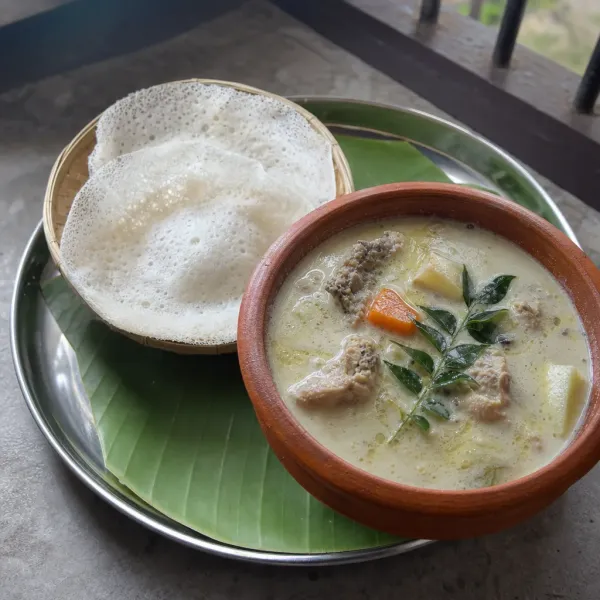
Kerala Chicken Stew
Traditional Kerala Nasrani chicken stew with fresh coconut milk, whole spices, potatoes and carrots. Served with appam for Sunday breakfast.
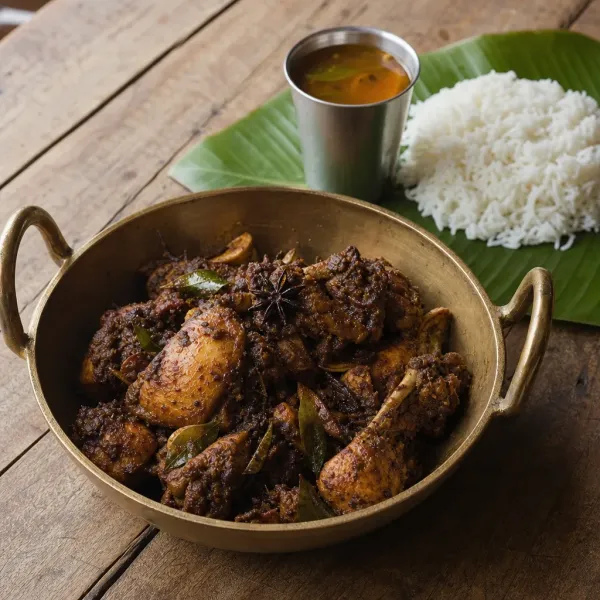
Chettinad Chicken Perattal
Authentic Chettinad Chicken Perattal from the Chettiar kitchen: bone-in chicken cooked in a fresh-ground spice paste with kalpasi, gingelly oil, and…
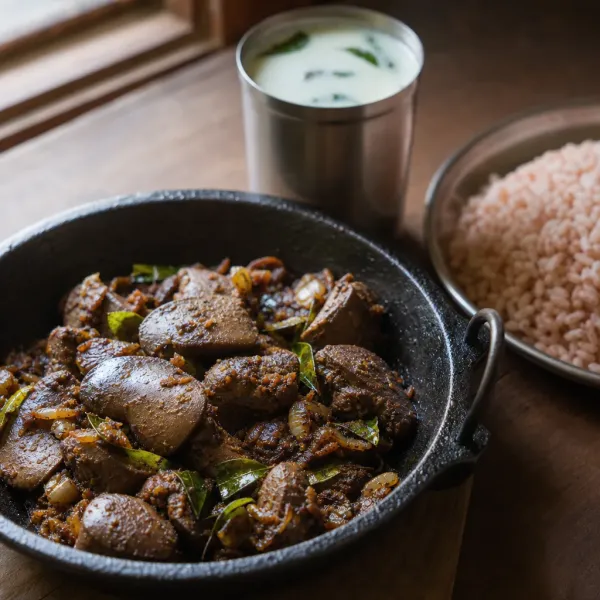
Kerala Nasrani Chicken Liver Fry
Traditional Nasrani chicken liver fry from Travancore: shallots, black pepper, curry leaves, coconut oil. Dry-fried, dark, and ready in 30 minutes.
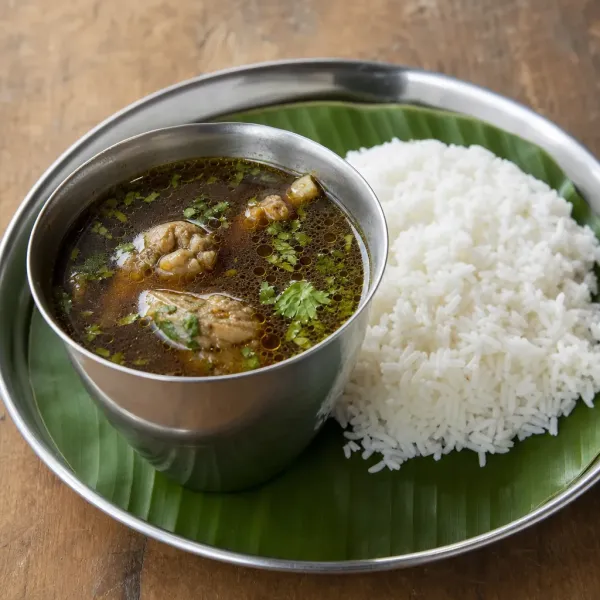
Nattu Kozhi Rasam
Traditional Kongunad nattu kozhi rasam: country chicken simmered with black pepper, cumin, marathi mokku and gingelly oil. A real household recipe.
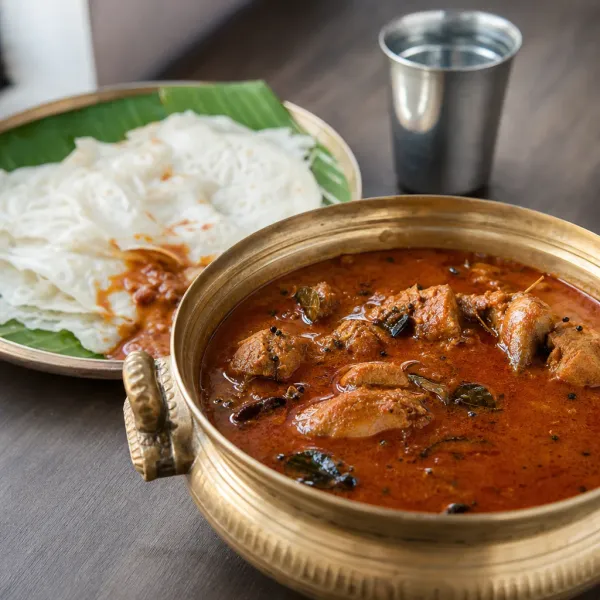
Kori Gassi
Authentic Bunt-style Kori Gassi from coastal Karnataka: chicken in a roasted coconut and byadagi chilli gravy, served with Kori Rotti or neer dosa.