

Chettinad Chicken Perattal Recipe
Malayalam ചെട്ടിനാട് ചിക്കൻ പെരട്ടൽTamil செட்டிநாடு சிக்கன் பெரட்டல்Kannada ಚೆಟ್ಟಿನಾಡ್ ಚಿಕನ್ ಪೆರಟ್ಟಲ್Telugu చెట్టినాడు చికెన్ పెరట్టల్
- Prep25 min
- Cook55 min
- Serves4
- DifficultyMedium
- DietNon-vegetarian
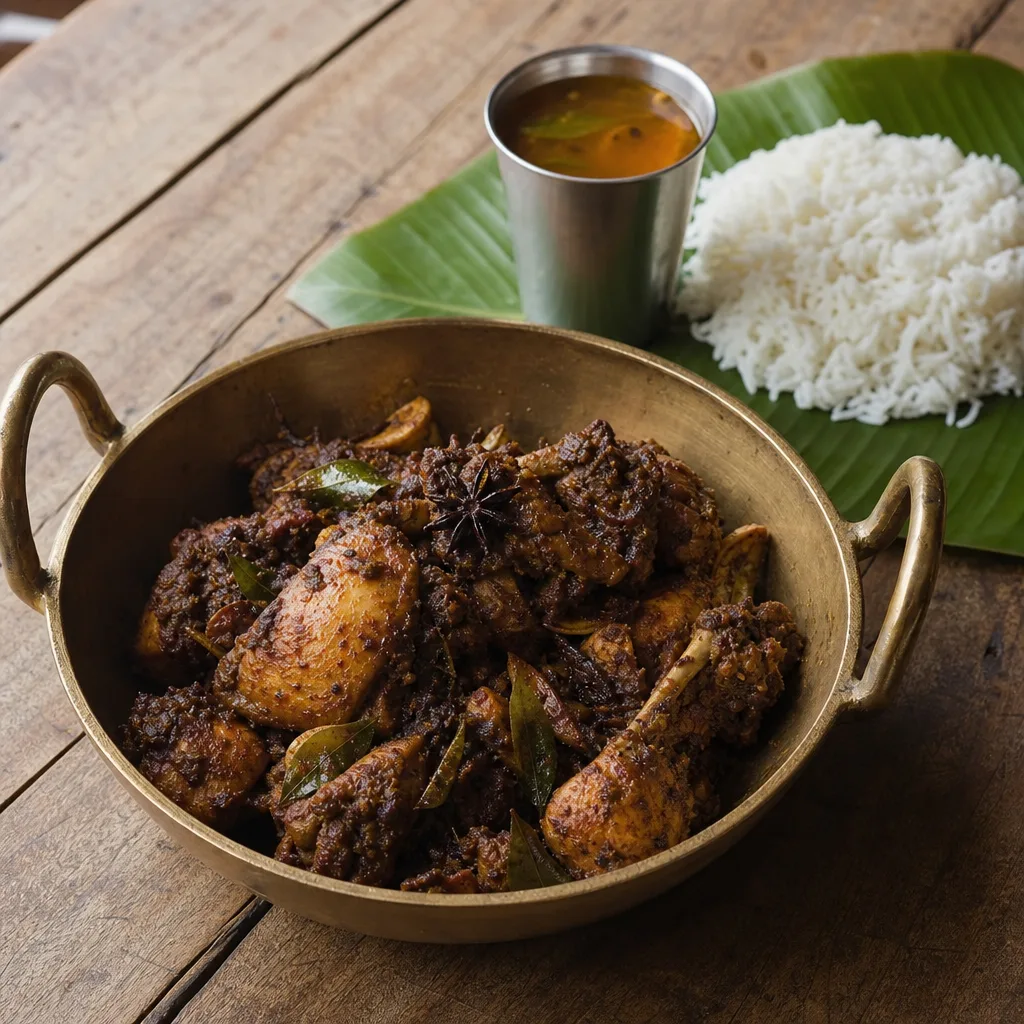
Perattal means to coat and toss, and that word describes exactly what this dish is. The chicken is cooked down until almost all the moisture has gone and the masala clings to every piece. It is not a gravy dish. The finished chicken is dark, fragrant and just barely moist at the centre of each piece.
This belongs to the Nagarathar Chettiar kitchen of the Chettinad region in Sivaganga district. Chettiar cooking is known for its fearless use of whole spices that are not common elsewhere: kalpasi, marathi mokku, star anise, and dried country chicken is the traditional choice because it holds together during the long cooking. Gingelly oil is the fat of this kitchen.
At home this is eaten with steamed matta rice or seeraga samba rice, and a simple rasam or a cooling pachadi alongside. Some families make it the day before a celebration because the spices deepen overnight.
Ingredients (serves 4)
For the chicken
Whole spices for tempering
For the fresh-ground masala
For finishing
Method
Dry-roast and grind the masala
Heat a dry pan on medium-low. Add the coriander seeds, cumin, black peppercorns, fennel seeds, and dried red chillies. Roast, stirring constantly, for 3 to 4 minutes until the coriander seeds turn a shade darker and smell nutty. Do not rush this on high heat or the peppercorns will taste bitter. Tip onto a plate to cool completely. Then grind the roasted spices with the grated coconut and turmeric to a coarse-fine paste, adding 3 to 4 tbsp of water just enough to keep the grinder moving. The paste should be thick, not watery.
Marinate the chicken
Rub the chicken pieces with 2 tbsp of the freshly ground masala paste, ½ tsp salt, and set aside while you prepare the rest. Even 15 minutes of resting helps the spice penetrate the surface. If you have more time, 30 minutes at room temperature is better.
Fry the whole spices
Heat 4 tbsp gingelly oil in a wide, heavy-bottomed kadai or uruli on medium heat. When the oil shimmers, add the bay leaves, star anise, cinnamon, cloves, cardamom, kalpasi, and marathi mokku. Let them sizzle for about 45 seconds until fragrant. The oil will take on a deep, complex aroma. Do not let them darken too much.
Cook the shallots, garlic and ginger
Add the halved shallots and fry on medium heat, stirring often, for 8 to 10 minutes until they are golden at the edges and soft through. Add the crushed garlic and ginger matchsticks and fry for another 3 minutes until the raw smell of garlic is gone. Shallots need patience here; undercooked shallots will leave a sharp raw edge in the finished dish.
Add the tomatoes
Add the chopped tomatoes and cook on medium heat for 5 to 6 minutes, pressing them down occasionally, until they collapse completely and the oil begins to separate at the edges. The mixture should look jammy, not wet.
Add the ground masala
Add the remaining ground masala paste to the pan and stir it into the shallot-tomato base. Fry this mixture on medium heat for 4 to 5 minutes, stirring frequently so it does not catch at the bottom. The paste will darken slightly and the oil will begin to separate again. This cooking of the raw masala is important; if you skip it, the dish will taste chalky.
Add the chicken
Add the marinated chicken pieces and turn them to coat thoroughly in the masala. Increase the heat to medium-high for 2 minutes to sear the surface lightly, turning the pieces once. This helps the masala cling to the chicken.
Cook covered with minimal water
Add 100 ml of water and salt to taste. Stir, then cover the kadai with a lid and cook on low-medium heat for 20 minutes for country chicken (12 to 15 minutes for broiler). The chicken will release its own juices. Check once halfway through and turn the pieces. Do not add more water unless the pan looks completely dry and the chicken is still raw; the goal is a semi-dry dish.
Reduce and coat
Remove the lid and increase the heat to medium. Cook for another 10 to 12 minutes, turning the chicken every 2 minutes, until the masala thickens and coats each piece in a dark, almost-dry crust. The chicken is ready when the masala no longer looks wet and the oil has clearly separated and returned to the surface. This stage is the perattal, the tossing and coating. Do not walk away.
Finish with curry leaves and oil
Add the curry leaves and let them crackle in the pan for 30 seconds. Drizzle the final tablespoon of gingelly oil over everything, toss once, and take off the heat. The fresh oil at the end restores the characteristic nutty fragrance that cooking drives off.
How to serve
Steamed seeraga samba rice or matta rice; a thin rasam or a simple tomato pachadi alongside.
Served with: Steamed seeraga samba rice or matta rice; a thin rasam or a simple tomato pachadi alongside.
Cook's tips
Country chicken matters
Country chicken (naatu kozhi) has firmer flesh and more gelatin in the bones. It holds together during the long reduction without falling apart. Broiler chicken works but turns tender much faster; watch it from the 10-minute mark in the covered stage and reduce accordingly.
Kalpasi and marathi mokku
These two whole spices are what make a Chettinad dish smell unmistakably Chettinad. They are available at specialty spice shops and online. Do not substitute. If you genuinely cannot find them, leave them out rather than replacing them with something else; the dish will still be good, just not Chettinad.
Gingelly oil is not optional here
Gingelly oil (cold-pressed sesame oil, not the Chinese toasted variety) is the backbone fat of Chettinad cooking. Substituting coconut oil or refined oil changes the flavour profile significantly. Use the full quantity.
The dish improves overnight
Like most heavily spiced dry dishes, this tastes better the next day. Store covered at room temperature if eating within 6 hours; refrigerate otherwise and reheat in the kadai with a splash of water to loosen.
Grinding the coconut fresh
The small amount of fresh coconut in the masala adds body and a slight sweetness that balances the pepper. It also helps the masala cling. Desiccated coconut does not behave the same way and is not a substitute in this method.
Regional variations
A wetter, gravy-forward version called Chettinad Chicken Kuzhambu exists; a Kongunad chicken perattal uses a different spice base with less whole spices.
Glossary
- Perattal பெரட்டல்
- A Tamil cooking term meaning to toss and coat; describes the final stage of reducing a curry until the masala coats the meat with almost no liquid remaining.
- Kalpasi கல்பாசி
- Stone flower or rock moss (Parmotrema perlatum), a dried lichen used as a whole spice in Chettinad cooking for its earthy, musky fragrance.
- Marathi mokku மரத்தி மொக்கு
- Dried flower pod (Capparis zeylanica or Randia dumetorum depending on the source); used whole in Chettinad spice blends for a subtle bitter-floral note.
- Sombu சோம்பு
- Fennel seeds; used in Tamil Nadu cooking both in tempering and in ground masalas.
- Nallennai நல்லெண்ணெய்
- Gingelly oil; cold-pressed sesame oil used as the primary cooking fat in Tamil Nadu, especially in Chettinad and Brahmin kitchens.
- Naatu kozhi நாட்டு கோழி
- Country chicken; free-range indigenous breed with firmer flesh and stronger flavour than commercially raised broiler chicken.
Two things decide whether this dish works: cooking the ground masala paste long enough in the fat before the chicken goes in, so the rawness is fully gone, and then holding your nerve through the final open reduction, turning the chicken patiently until the masala is genuinely dry and clinging rather than wet and loose. Rush either of those stages and you lose the dish.
More Chicken recipes
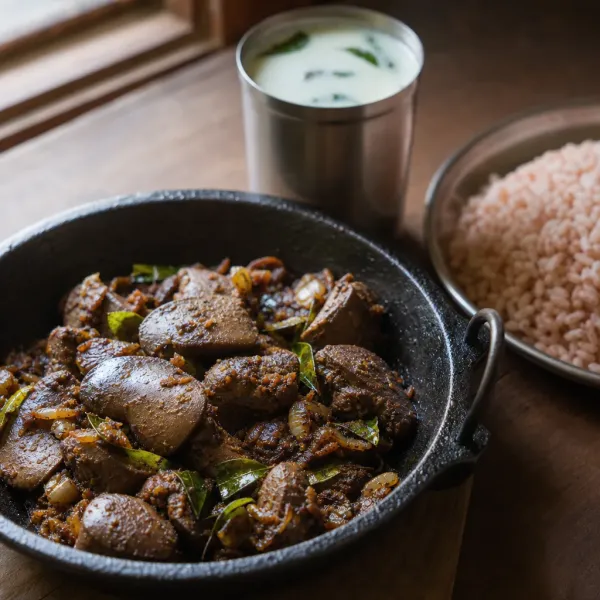
Kerala Nasrani Chicken Liver Fry
Traditional Nasrani chicken liver fry from Travancore: shallots, black pepper, curry leaves, coconut oil. Dry-fried, dark, and ready in 30 minutes.
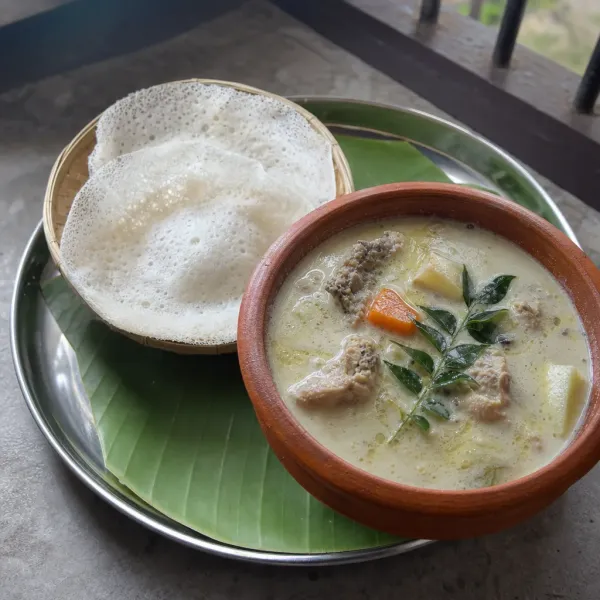
Kerala Chicken Stew
Traditional Kerala Nasrani chicken stew with fresh coconut milk, whole spices, potatoes and carrots. Served with appam for Sunday breakfast.
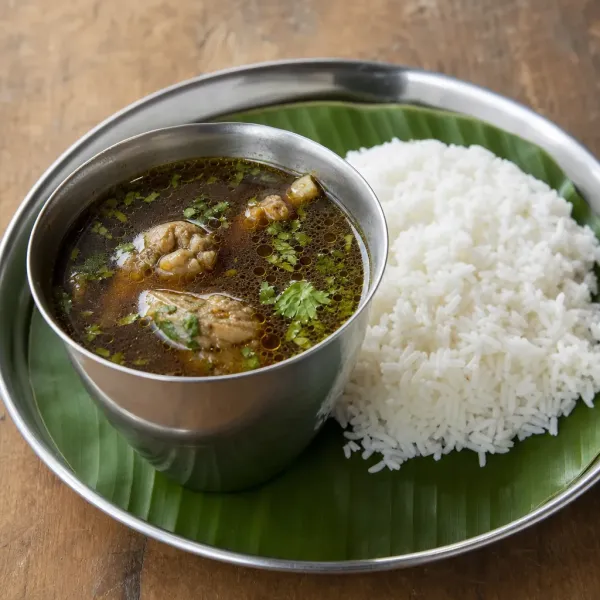
Nattu Kozhi Rasam
Traditional Kongunad nattu kozhi rasam: country chicken simmered with black pepper, cumin, marathi mokku and gingelly oil. A real household recipe.
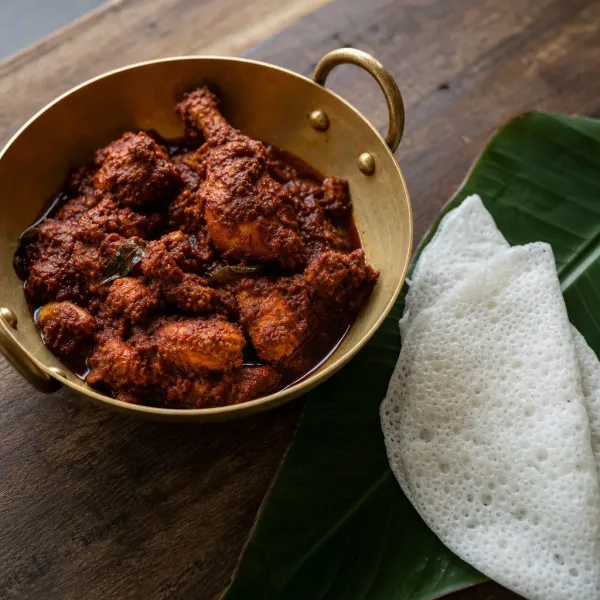
Kundapur Chicken Ghee Roast
Authentic Kundapur chicken ghee roast with byadagi and guntur chillies, freshly ground masala, and generous ghee. Traditional coastal Karnataka metho…
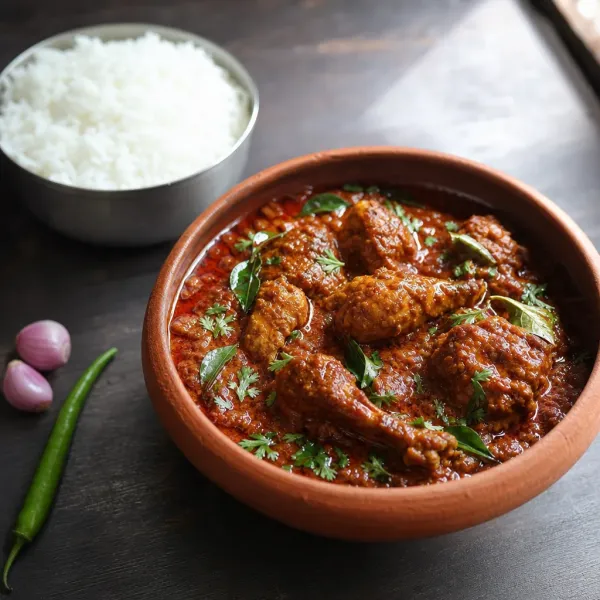
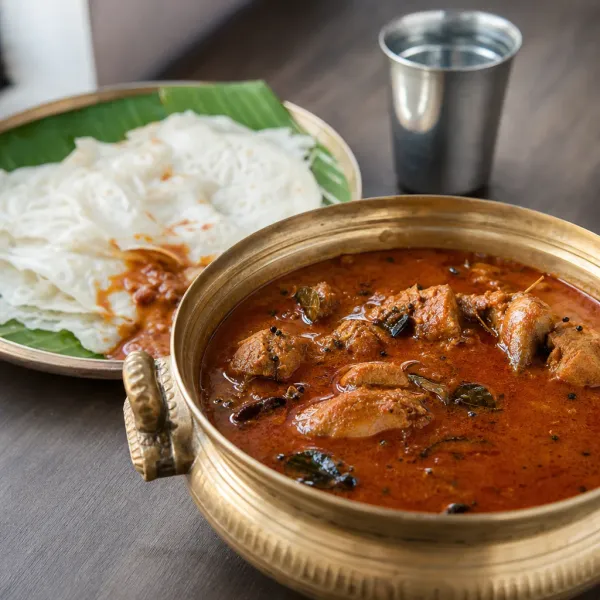
Kori Gassi
Authentic Bunt-style Kori Gassi from coastal Karnataka: chicken in a roasted coconut and byadagi chilli gravy, served with Kori Rotti or neer dosa.