

Kori Gassi Recipe
Malayalam കോരി ഗസ്സിTamil கோரி கஸ்ஸிKannada ಕೋರಿ ಗಸ್ಸಿTelugu కోరి గస్సి
- Prep30 min
- Cook50 min
- Serves4
- DifficultyMedium
- DietNon-vegetarian
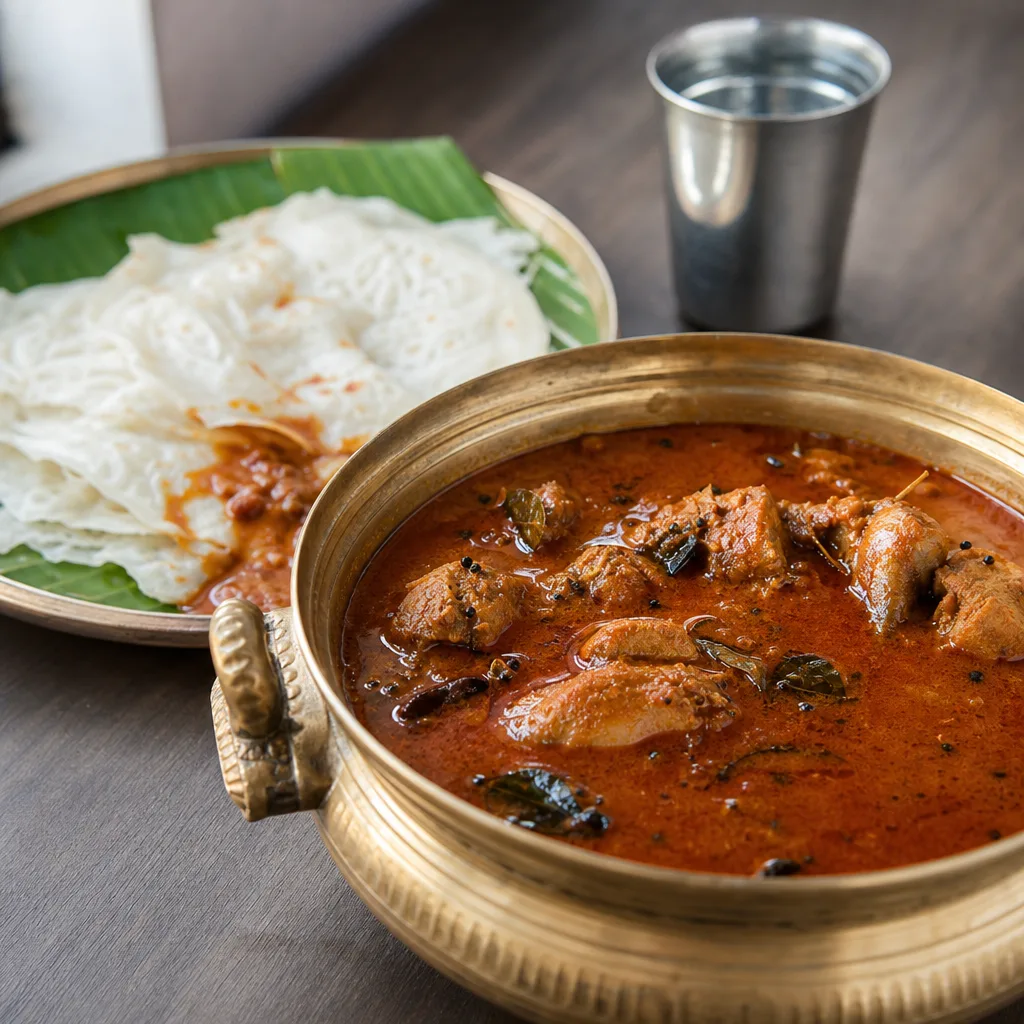
Kori Gassi is the everyday chicken curry of Tulu Nadu, the coastal strip of Karnataka that runs from Udupi down to Kasaragod. In a Bunt household it is made for Sunday lunch, for a homecoming, or whenever the occasion calls for something that says you cooked with care. The curry is a deep brick-red, richly coconut-bodied, and fragrant with roasted spices. It is not fiery in the way a Chettinad curry is fiery; the heat is present but the coconut rounds it.
The defining technique is dry-roasting: the coconut is grated fresh and roasted in a dry pan until it turns a deep amber-brown, almost the colour of dark caramel. This roasted coconut, ground with the chillies and whole spices, is what separates Gassi from every other coconut curry in the region. Skipping or rushing the roasting step produces a pale, raw-tasting gravy that no amount of extra spice will fix.
At the table it is served with Kori Rotti, the wafer-thin, sun-dried rice crisps that are broken into the curry and eaten once they have soaked up the gravy and softened. Some households serve it with neer dosa or with plain boiled matta rice. The curry itself is the same; what changes is which starch you bring to it.
Ingredients (serves 4)
For the chicken
For the roasted coconut masala
For the curry base
Method
Dry-roast the coconut
Heat a wide iron or heavy-bottomed pan over medium flame with no oil. Add the grated coconut and spread it in a thin layer. Stir constantly. It will first steam, then turn pale gold, then, after 8 to 10 minutes, deepen to a rich amber-brown the colour of dark caramel. Take it off the heat the moment it reaches that colour. If it goes darker it will taste bitter. Tip it into a plate to cool.
Roast the spices and chillies
Return the pan to a low flame and add 1 tsp coconut oil. Add the byadagi chillies and the whole spices: coriander seeds, cumin, peppercorns, fennel, cloves, cinnamon, and cardamom. Stir for 2 to 3 minutes until the seeds darken slightly and the chillies puff a little and smell toasty. Remove and cool alongside the coconut. Do not let the chillies blacken.
Grind the masala
Transfer the roasted coconut, the roasted spices and chillies, and the turmeric powder to a wet grinder or a powerful stone grinder. Add about 150 ml warm water and grind to a very smooth, thick paste. This takes 8 to 10 minutes in a wet grinder; the paste should feel completely fine between your fingers with no gritty coconut pieces. Set aside.
Salt and rest the chicken
Rub the chicken pieces with salt and set aside while you prepare the base. This is not a marination; 15 minutes is enough.
Fry the shallots
In a wide, heavy pot, heat 2 tbsp coconut oil over medium flame. Add the sliced shallots and fry, stirring regularly, for 10 to 12 minutes until they are soft and a light golden brown at the edges. Do not rush this; under-cooked shallots leave a raw sweetness that the finished curry carries.
Add garlic and ginger
Add the crushed garlic and grated ginger to the shallots. Stir and fry for 2 minutes until the raw smell of the garlic fades.
Add the chicken
Turn the heat to medium-high and add the chicken pieces. Stir to coat them in the shallot mixture and fry for 4 to 5 minutes, turning the pieces, until the surface of the chicken is no longer raw-pink. You are not browning the chicken deeply; you are sealing it and beginning to build the base.
Add the ground masala
Reduce the heat to medium. Add the entire coconut masala paste and stir it through the chicken. The paste will sizzle and stick if the heat is too high, so keep it moderate. Stir for 3 to 4 minutes, letting the masala cook into the chicken and lose its raw smell.
Add water and bring to a simmer
Add 150 ml warm water, stir well, and bring the curry to a gentle simmer. The gravy should be thick enough to coat the back of a spoon but still pourable. Add a little more warm water if it looks too dense. Cover and cook on a low flame.
Cook until the chicken is done
Simmer covered for 20 to 25 minutes, stirring every 5 minutes and checking that the bottom is not catching. The chicken is done when the meat at the thickest joint pulls easily from the bone and the oil from the coconut begins to show at the edges of the gravy. Taste and adjust salt.
Rest before serving
Turn off the flame and let the curry sit uncovered for 10 minutes before serving. The flavour deepens as it rests and the oil settles on the surface, which is correct and expected. Do not skim it off.
How to serve
Kori Rotti (sun-dried Tulu Nadu rice wafers, broken and soaked in the curry at the table), or neer dosa, or boiled matta rice.
Served with: Kori Rotti (sun-dried Tulu Nadu rice wafers, broken and soaked in the curry at the table), or neer dosa, or boiled matta rice.
Cook's tips
The coconut roasting is not optional
Pale-roasted or unroasted coconut produces a white, coconutty gravy that is pleasant but is not Gassi. The deep amber roast is what gives the curry its characteristic brick-red colour and nutty depth. Allocate the full 10 minutes and do not raise the flame to speed it up.
Byadagi chillies
Byadagi chillies from northern Karnataka are long, wrinkled, and deep red. They give extraordinary colour and a moderate, fruity heat. If you cannot find them, Kashmiri dried red chillies are the closest substitute for colour, though the flavour is not identical. Do not use generic dried red chillies as a straight replacement; the curry will be much hotter and the colour will be darker and less appealing.
Wet grinder versus blender
A blender can grind the masala but will rarely achieve the same smoothness as a wet grinder. If using a blender, grind in two batches and add enough water to keep it moving. Pass the paste through your fingers before adding it to the pot; if it still feels gritty, grind again.
The curry improves overnight
Like most coconut-based curries with whole spices, Kori Gassi tastes better the next day once the spices have had time to work into the gravy. Reheat gently over a low flame with a splash of water; do not boil hard or the coconut can split.
Bone-in versus boneless
Traditional Gassi is always made with bone-in pieces. The bones enrich the gravy. Boneless chicken cooks faster but the curry will be thinner in body and flavour.
Regional variations
Konkani Catholic households make a similar curry called Kori Rotti Gassi, sometimes using a touch of tamarind; Billava versions may use more pepper and less chilli.
Glossary
- Kori ಕೋರಿ
- Chicken in Tulu, the language of coastal Karnataka's Tulu Nadu region.
- Gassi ಗಸ್ಸಿ
- A coconut-based curry in Tulu; the word refers specifically to this style of thick, spiced coconut gravy.
- Byadagi ಬ್ಯಾಡಗಿ
- A variety of dried red chilli grown near Byadagi town in Haveri district, Karnataka; known for deep red colour and moderate heat.
- Kori Rotti ಕೋರಿ ರೊಟ್ಟಿ
- Sun-dried, paper-thin rice wafers made in Tulu Nadu; the traditional accompaniment to Kori Gassi, broken into the curry at the table.
- Tulu Nadu ತುಳುನಾಡು
- The coastal cultural region of Karnataka, roughly from Udupi to Kasaragod, home to the Tulu-speaking communities including Bunts and Billavas.
Two things decide this curry. The first is how far you take the coconut roasting: stop too early and the gravy stays pale and flat; take it to a true amber and the whole curry acquires its characteristic colour and depth. The second is patience with the shallots. They need a full 10 to 12 minutes over medium heat to soften and just catch at the edges; that slow caramelisation is the quiet backbone of the base that holds everything together.
More Chicken recipes
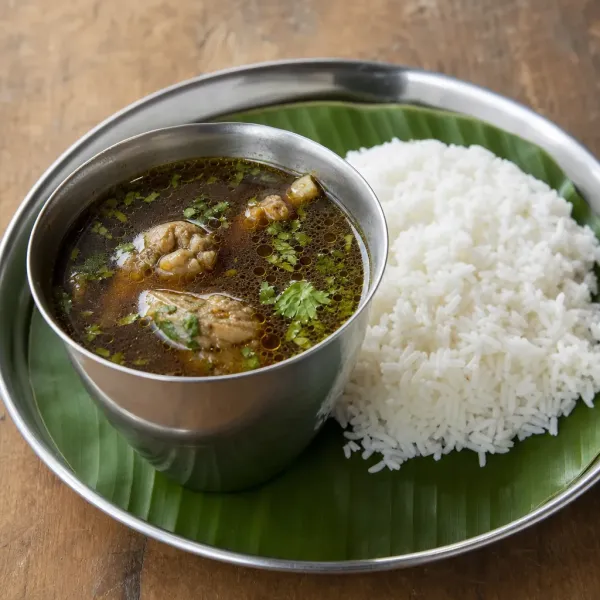
Nattu Kozhi Rasam
Traditional Kongunad nattu kozhi rasam: country chicken simmered with black pepper, cumin, marathi mokku and gingelly oil. A real household recipe.
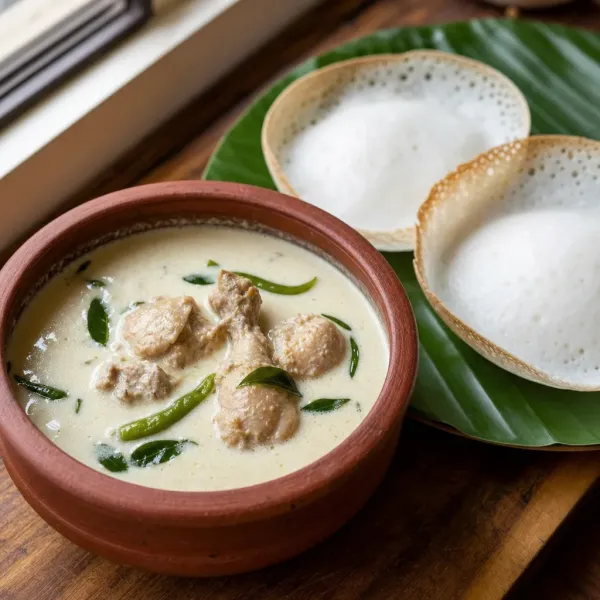
Chicken Mappas
Traditional Kerala Syrian Christian chicken mappas with coconut milk, whole spices and white vinegar. Served with appam or idiyappam. Authentic Nasra…
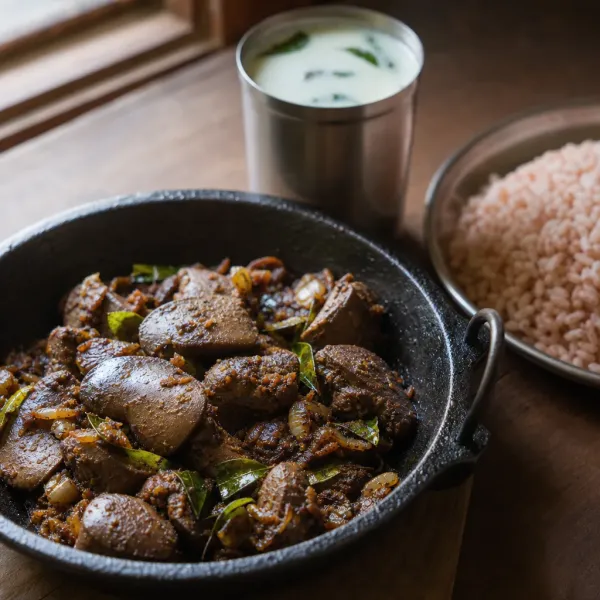
Kerala Nasrani Chicken Liver Fry
Traditional Nasrani chicken liver fry from Travancore: shallots, black pepper, curry leaves, coconut oil. Dry-fried, dark, and ready in 30 minutes.
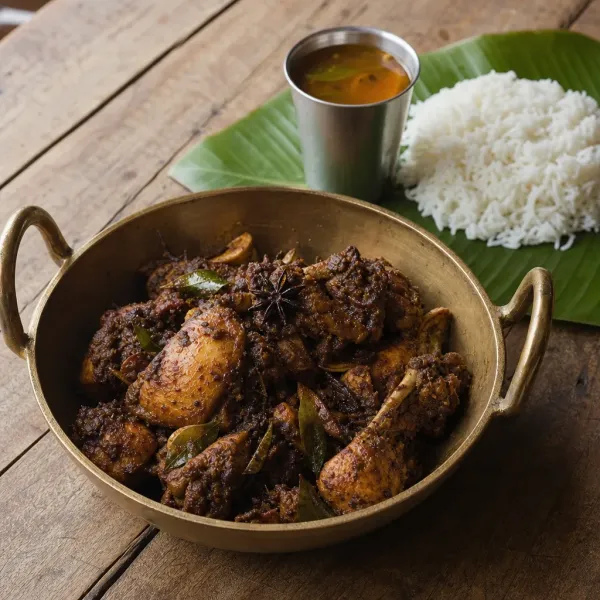
Chettinad Chicken Perattal
Authentic Chettinad Chicken Perattal from the Chettiar kitchen: bone-in chicken cooked in a fresh-ground spice paste with kalpasi, gingelly oil, and…
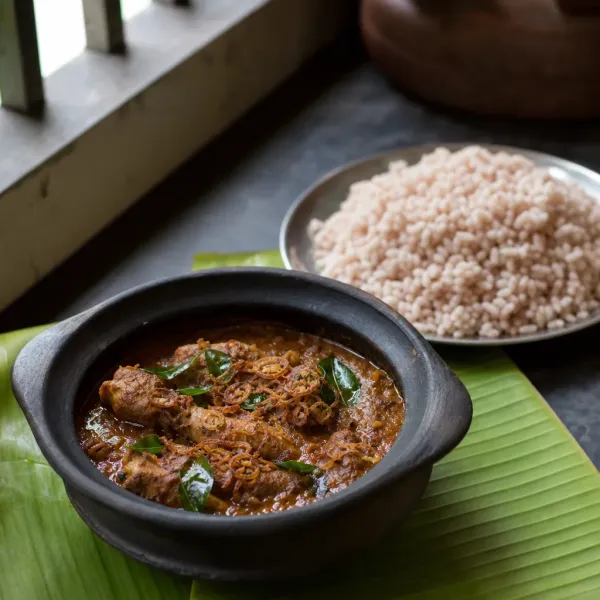
Kozhi Varutharacha Curry
Authentic Kerala Nasrani kozhi varutharacha curry with dry-roasted coconut paste. Step-by-step traditional method for a rich, dark chicken gravy.
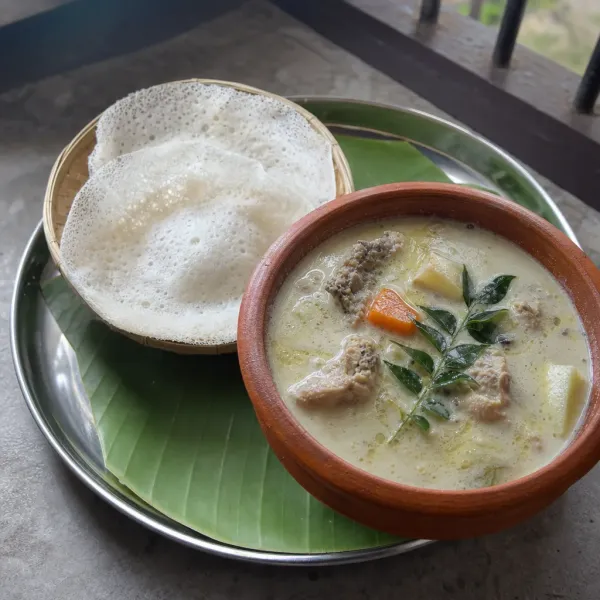
Kerala Chicken Stew
Traditional Kerala Nasrani chicken stew with fresh coconut milk, whole spices, potatoes and carrots. Served with appam for Sunday breakfast.