

Kurumulaku Kozhi (Kerala Pepper Chicken) Recipe
Malayalam കുരുമുളക് കോഴിTamil மிளகு கோழிKannada ಕಾಳುಮೆಣಸು ಕೋಳಿTelugu మిరియాల కోడి
- Prep20 min
- Cook45 min
- Serves4
- DifficultyMedium
- DietNon-vegetarian
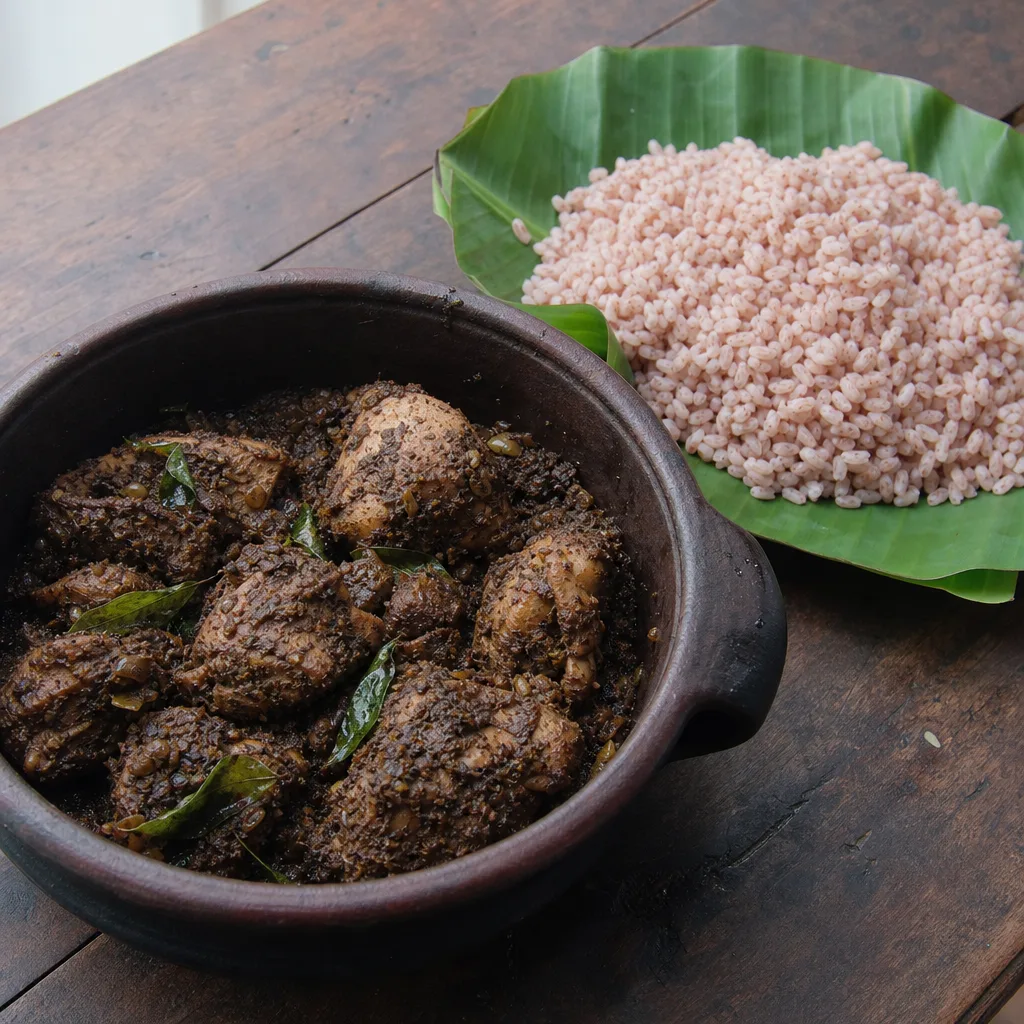
This is the pepper chicken that appears on the Syrian Christian table at Easter and at family Sunday lunches, not as a dry fry but as a semi-dry preparation with a dark, clinging masala. It is built on coconut oil, shallots, curry leaves and freshly cracked black pepper, and very little else. The pepper is not background heat; it is the entire point of the dish.
The chicken is cooked down until the masala is almost dry and coats each piece. There is no tomato, no garam masala, no cashew paste. What you get is the smell of coconut oil, the sharpness of kurumulaku and the sweetness of shallots that have cooked to a deep brown. Some households add a small piece of green chilli for a different kind of heat, but the pepper is never reduced to accommodate it.
It is eaten with matta rice and a simple thoran, or with appam on feast days. Leftover kurumulaku kozhi, reheated in the same pan the next morning with a little more coconut oil, is considered better than the first serving.
Ingredients (serves 4)
For the chicken
For the masala
For cooking
Method
Marinate the chicken
Rub the chicken pieces with turmeric and salt. Leave them at room temperature while you prepare the masala, at least 15 minutes. Do not use yoghurt or lime here; the dish does not need them and they will change the final texture.
Dry-roast the coriander and fennel
Put the coriander seeds and fennel seeds into a dry heavy pan over medium heat. Stir continuously for 2 to 3 minutes until the coriander turns a shade darker and the kitchen smells nutty. Tip onto a plate immediately to stop the cooking. Grind coarsely in a mortar; you want texture, not powder.
Crack the pepper
Crack the black pepper in a mortar to coarse, uneven pieces. Some will be almost whole; that is correct. Do not use pre-ground pepper; this dish depends on the volatile oils in freshly cracked pepper, which dissipate quickly once ground.
Fry the shallots
Heat the coconut oil in a heavy-bottomed kadai or cheenachatti over medium heat. Add the sliced shallots and a pinch of salt. Fry, stirring often, for 12 to 15 minutes until they are deep brown at the edges and have reduced to about half their original volume. If they colour too fast, lower the heat; burnt shallots will make the whole dish bitter.
Add ginger, garlic and curry leaves
Add the chopped ginger and garlic to the browned shallots and fry for 3 to 4 minutes, stirring, until the raw smell is completely gone. Add the curry leaves and green chilli and stir for another minute. The oil will smell fragrant and the mixture should look almost jammy.
Add the dry spices
Add the coarsely ground coriander and fennel. Stir into the shallot mixture over medium heat for 2 minutes. Add the cracked pepper and stir for another minute. The masala will be quite dry and fragrant. Do not add water yet.
Add the chicken
Add the marinated chicken pieces and stir well so each piece is coated in the masala. Raise the heat to medium-high and fry the chicken in the masala for 5 minutes, turning the pieces, until they begin to colour on the outside and the masala clings to them.
Cook with water
Add 80 ml water, stir once, and cover the pan with a lid. Cook on medium-low heat for 20 minutes. Check once halfway through; if it looks very dry, add a tablespoon of water. The chicken should cook through in its own steam and the released juices.
Reduce to a dry masala
Remove the lid. Raise the heat to medium and stir the chicken, scraping the masala from the bottom of the pan, for 5 to 7 minutes until nearly all the liquid has evaporated and the masala is dark and clinging to each piece. The oil will begin to separate slightly at the edges; this is the sign the dish is ready. Do not rush this step: if you stop while any liquid remains, the masala will taste raw and loose.
Finish with curry leaves
Add one fresh sprig of curry leaves, stir once, and take the pan off the heat. Rest for 5 minutes before serving. The residual heat will carry the fragrance of the fresh curry leaves through the dish.
How to serve
Matta rice and a simple vegetable thoran (beans or cabbage); or with appam on feast days. A wedge of lime is sometimes placed alongside but not universally.
Served with: Matta rice and a simple vegetable thoran (beans or cabbage); or with appam on feast days. A wedge of lime is sometimes placed alongside but not universally.
Cook's tips
The pepper quantity
2½ tablespoons of cracked pepper is traditional and the heat is substantial. First-time cooks who are unsure can start with 1½ tablespoons and taste during the dry-roasting step, but reducing it further moves the dish out of its character.
Bone-in pieces matter
The collagen from the bones helps the masala cling and adds body to the small amount of liquid used. Boneless chicken will cook faster and dry out; reduce the water to 50 ml and check at 12 minutes if you must use it.
Cheenachatti versus a non-stick pan
A traditional clay cheenachatti holds heat evenly and helps the shallots brown without burning. A heavy iron or steel kadai also works. Avoid non-stick pans here; you need the masala to catch and caramelise slightly on the bottom, which is where much of the flavour comes from.
Storing and reheating
The dish keeps well for two days at room temperature in a cool Kerala kitchen (or refrigerated elsewhere). Reheat in the same pan with a teaspoon of fresh coconut oil over low heat, turning the pieces gently. Most households agree it tastes better on the second day.
Which cut
A country chicken (naadan kozhi) cut into small curry pieces is the household standard. Broiler chicken works but cooks faster; watch the texture from step 8 onwards so the meat does not go dry.
Regional variations
A Mappila version from Malabar uses fennel seed and thin coconut milk in the gravy; a Tamil Nadu version from Chettinad uses kalpasi and marathi mokku in the spice base and gingelly oil.
Glossary
- Kurumulaku കുരുമുളക്
- Black pepper, literally 'round pepper' in Malayalam; the primary spice and heat source in this dish.
- Kozhi കോഴി
- Chicken in Malayalam.
- Chuvannulli ചുവന്നുള്ളി
- Kerala shallots, small red shallots with a sharper, more complex flavour than large onions.
- Cheenachatti ചീനച്ചട്ടി
- A deep, round-bottomed clay or iron cooking vessel widely used in Kerala kitchens; the name derives from 'China pot'.
- Perumjeerakam പെരുംജീരകം
- Fennel seeds; used in small quantities in the Nasrani spice palette to round out the heat of pepper.
- Naadan kozhi നാടൻ കോഴി
- Country chicken, a free-range bird with firmer, more flavourful meat than commercially raised broiler chicken.
- Matta rice മട്ട അരി
- Parboiled red rice from Palakkad; the everyday staple in many Kerala households, earthy and slightly chewy.
Two things decide this dish. First, the shallots must be taken to a true deep brown before anything else goes in; pale shallots will give you a flat, one-note result no amount of pepper will fix. Second, the final reduction must be complete: the masala has to be dry and clinging, not saucy. Everything else follows from those two acts of patience.
More Non-Vegetarian recipes
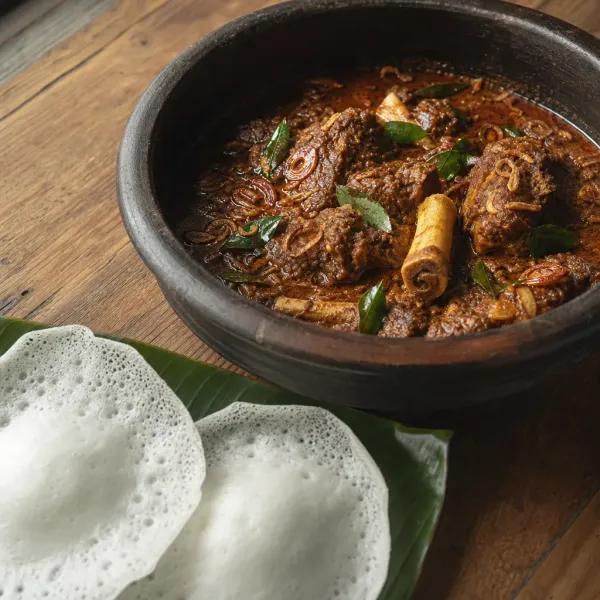
Kerala Nasrani Mutton Curry
Traditional Syrian Christian mutton curry from central Kerala, built on roasted spices and slow-fried shallots. Served with appam or matta rice.
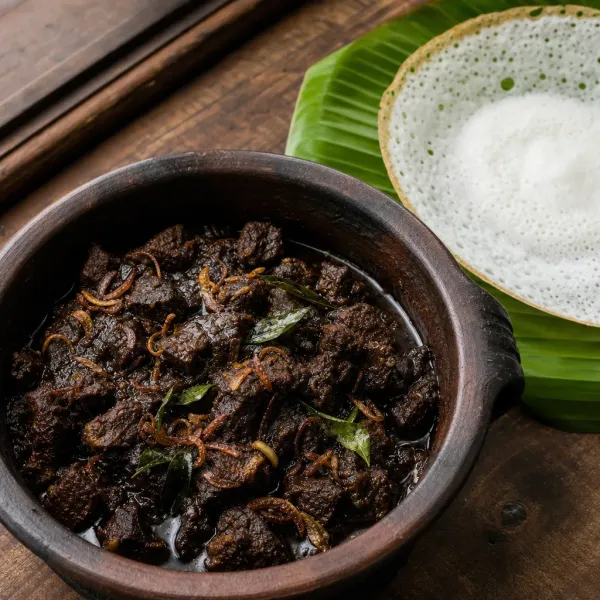
Kerala Nasrani Beef Curry (Irachi Olathiyathu Style Gravy)
Authentic Nasrani beef curry from Central Travancore: slow-cooked with black pepper, whole spices, shallots, and coconut oil. Traditional household r…
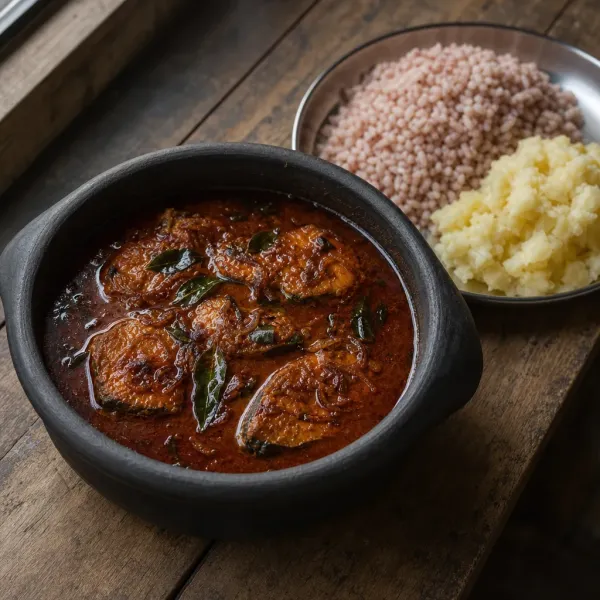
Kerala Meen Curry with Kudampuli
Traditional Kerala fish curry from Travancore, cooked in a clay pot with kudampuli, shallots and coconut oil. No coconut milk, no shortcuts.
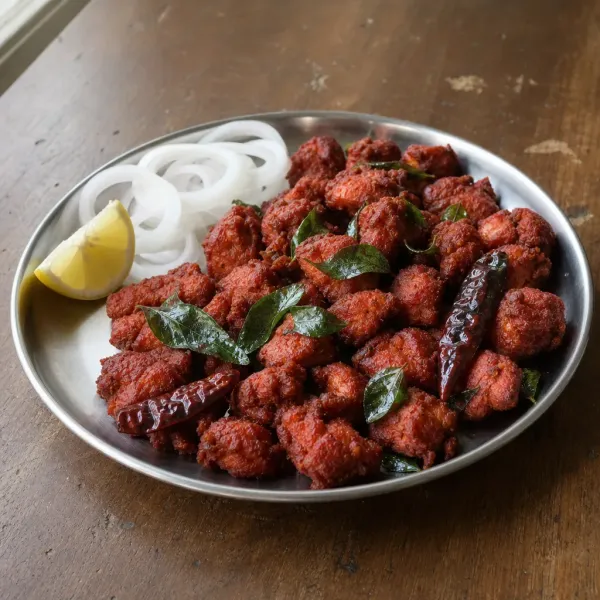
Chicken 65
The original Chennai-style Chicken 65: double-fried boneless chicken in Kashmiri chilli and gingelly oil. Dry, crisp, no sauce. Traditional household…
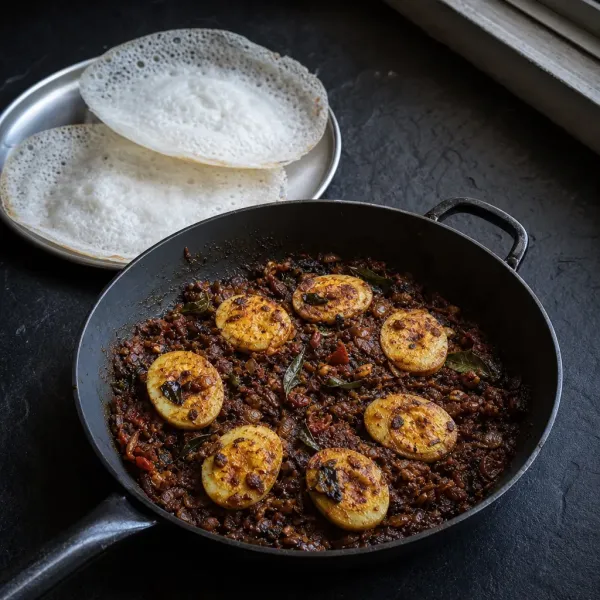
Kerala Egg Roast
Traditional Kerala egg roast from a Nasrani kitchen: hard-boiled eggs in a dark shallot and tomato masala, cooked in coconut oil and served with appa…
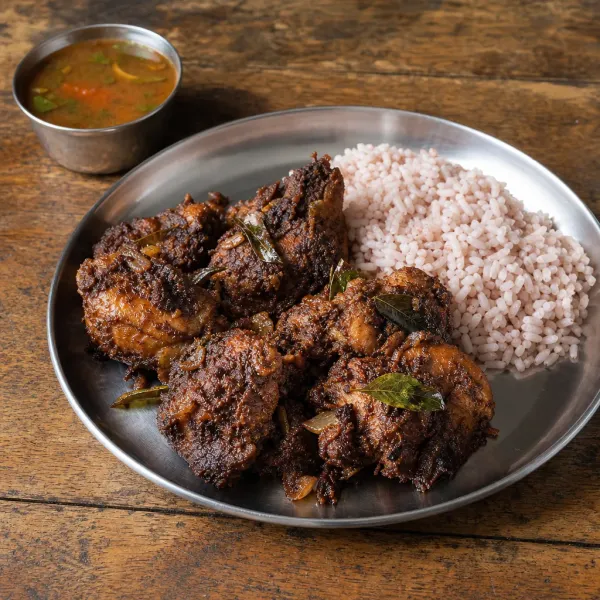
Kozhi Varuval
Traditional Kongunad kozhi varuval: bone-in chicken roasted dry in gingelly oil with shallots, tomato, and freshly ground spices. Stovetop method, no…