

Kadachakka Mezhukkupuratti (Breadfruit Stir-Fry) Recipe
Malayalam കടചക്ക മെഴുക്കുപുരട്ടിTamil கடச்சக்க மெழுக்குபுரட்டிKannada ಕಡಚಕ್ಕ ಮೆಳುಕ್ಕುಪುರಟ್ಟಿTelugu కడచక్క మెళుక్కుపురట్టి
- Prep15 min
- Cook25 min
- Serves4
- DifficultyEasy
- DietVegan
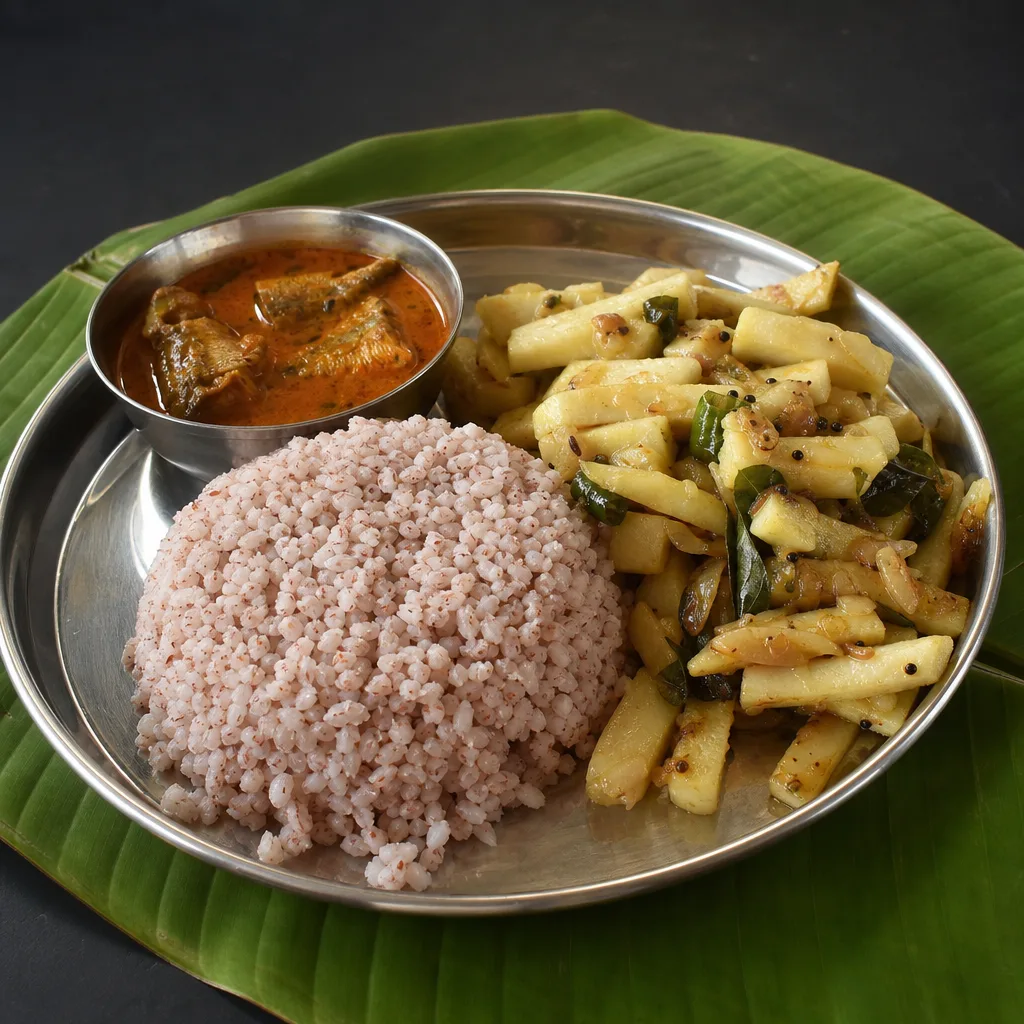
Mezhukkupuratti is the everyday Kerala stir-fry technique where a vegetable is cooked until just tender, then tossed in coconut oil with a simple tempering until each piece is lightly coated and glossy. Kadachakka, the raw breadfruit, is one of the finest vegetables for this treatment. It holds its shape, absorbs the oil and spice without going mushy, and has a mild, starchy flavour that pairs well with rice and a fish curry.
This is a Travancore household recipe, the kind cooked without much thought on a weekday afternoon. The breadfruit is peeled, cored, and cut into batons, then par-cooked in salted water before the actual frying begins. Some cooks skip the par-boil and cook everything in the pan with a splash of water, but the texture is less even that way. The dish should be dry when it reaches the table, not wet or oily.
Households differ mainly in the chilli: some use only dried red chillies in the tempering, some use green chillies, and some use both. The quantity of coconut oil is a matter of taste, but do not be too cautious with it. A mezhukkupuratti that is stingy with oil looks dull and tastes flat.
Ingredients (serves 4)
Main
For the tempering and stir-fry
Method
Prepare the breadfruit
Quarter the breadfruit, peel away the thick skin with a knife, and cut out the fibrous core. Cut the flesh into batons about 5 cm long and 1.5 cm thick. Drop the pieces into a bowl of water as you go; the cut surface oxidises quickly and will darken if left in air.
Par-boil in salted water
Drain the breadfruit and put it in a pot with enough fresh water to just cover. Add enough salt so the water tastes lightly salted. Bring to a brisk boil, then reduce to a steady simmer. Cook for 8 to 10 minutes. You want the pieces just tender enough that a knife goes in with a little resistance, not soft all the way through. Drain immediately and spread on a plate so they do not steam each other further.
Heat the pan
Set a wide, heavy pan or cheenachatti over medium-high heat. Add the coconut oil and let it heat until it shimmers. A Kerala kitchen uses a cheenachatti for this; a flat-bottomed iron kadai works equally well.
Temper the spices
Add the mustard seeds and wait for them to pop fully, about 30 seconds. Add the dried red chillies and let them darken for 10 seconds. They should smell toasty, not burnt. If they go black, the heat is too high.
Cook the shallots
Add the sliced shallots, green chillies, and curry leaves all at once. Stir and fry over medium heat for 4 to 5 minutes until the shallots are soft and beginning to turn golden at the edges. Do not rush this step; undercooked shallots leave a raw bite in the finished dish.
Add turmeric
Sprinkle in the turmeric and stir for 30 seconds so it coats the shallots and fries briefly in the oil. The colour in the pan will shift to a deep gold.
Add the breadfruit and fry
Tip in the drained breadfruit batons. Toss gently to coat every piece in the spiced oil. Spread the pieces in a single layer and leave undisturbed for 2 minutes so the underside picks up a little colour. Turn and repeat on the other side. The breadfruit should look glossy and faintly golden in places, not pale and steamed-looking.
Season and finish
Taste for salt and add more if needed. Toss once more, then take off the heat. The pan should be dry; if there is any liquid pooling at the bottom, raise the heat for a minute and let it cook off before serving. Serve immediately.
How to serve
Matta rice (red parboiled rice), a fish curry such as meen mulakittathu or a simple rasam, and papadam. On meatless days, it pairs well with dal and rice.
Served with: Matta rice (red parboiled rice), a fish curry such as meen mulakittathu or a simple rasam, and papadam. On meatless days, it pairs well with dal and rice.
Cook's tips
Choosing the breadfruit
Use a firm, fully raw breadfruit with green skin and no soft patches. If it has begun to ripen, the flesh turns sweet and starchy in an unpleasant way for this dish. Press the skin; it should feel like an unripe mango, with no give at all.
Do not over-boil
If the breadfruit is cooked all the way through in the water, it will break apart in the pan during frying and you will end up with a mash. Pull it out while there is still a little firmness at the centre.
Oxidation
Breadfruit turns grey-brown quickly once cut. Keep the pieces submerged in water until the moment you drop them into the boiling pot. A small squeeze of lime in the soaking water helps, though most households simply work quickly.
Leftover mezhukkupuratti
It keeps for a day at room temperature in a cool kitchen, or two days refrigerated. Reheat in a dry pan over medium heat rather than the microwave, which makes it soggy.
Regional variations
Malabar households sometimes add a small amount of grated coconut at the end; some Nasrani cooks include a pinch of turmeric and a dried red chilli in the tempering rather than green chillies.
Glossary
- Kadachakka കടചക്ക
- Raw breadfruit (Artocarpus altilis); the unripe fruit used as a starchy vegetable in Kerala cooking.
- Mezhukkupuratti മെഴുക്കുപുരട്ടി
- Literally 'coated in oil'; a Kerala dry stir-fry technique where cooked vegetables are tossed in seasoned coconut oil until glossy.
- Chuvannulli ചുവന്നുള്ളി
- Small red shallots; the standard allium in Kerala cooking, sharper and more aromatic than large onions.
- Cheenachatti ചീനച്ചട്ടി
- A wide, shallow iron wok used throughout Kerala; the name means 'Chinese vessel', reflecting its trade origins.
- Matta rice മട്ട അരി
- Red parboiled rice from Palakkad; the everyday rice of Kerala, with a nutty flavour and firm texture.
Two things decide this dish. The first is catching the breadfruit at the right stage of cooking in the water: firm enough to hold its shape through the frying, but not so hard that it stays chalky in the centre. The second is the coconut oil and the shallots: both must be generous. A mezhukkupuratti made with too little oil or undercooked shallots never quite comes together, no matter how good the breadfruit is.
More Dry Vegetable Sides recipes
Beetroot Poriyal
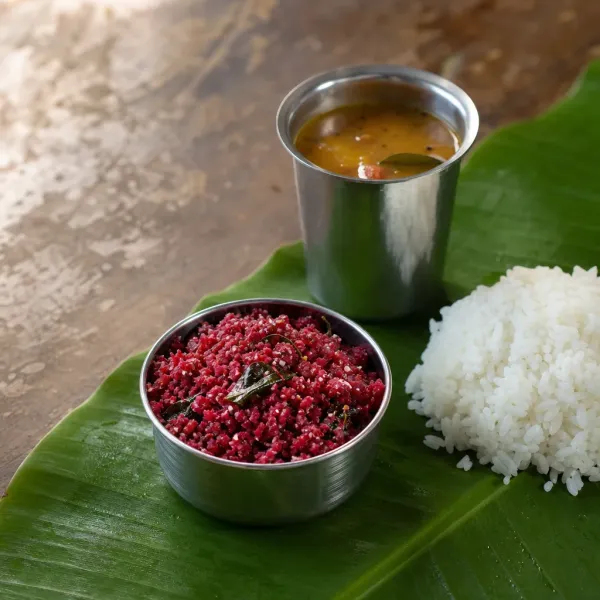
Traditional Tamil Brahmin beetroot poriyal with fresh coconut, gingelly oil tempering and curry leaves. A dry, quick weekday vegetable dish.
Vazhaipoo Poriyal
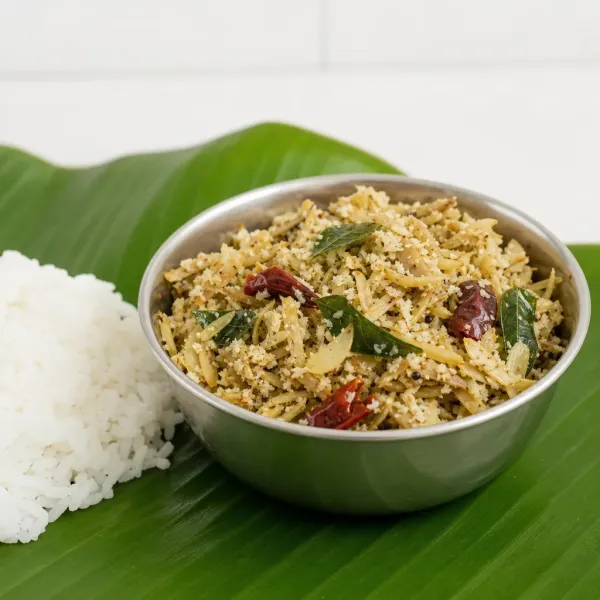
Traditional Tamil Brahmin vazhaipoo poriyal: banana blossom stir-fried with gingelly oil, shallots, urad dal and fresh coconut. Step-by-step cleaning…
Cauliflower Poriyal
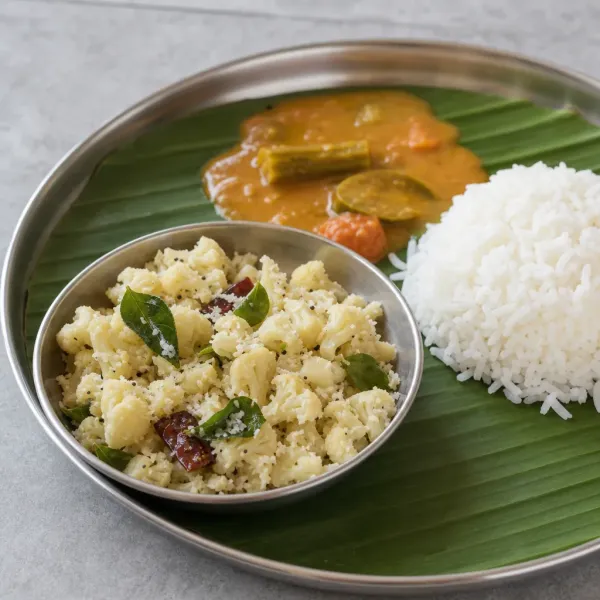
Traditional Tamil Brahmin cauliflower poriyal with mustard, curry leaves and fresh coconut. Dry, well-seasoned, cooked without water. Step-by-step me…
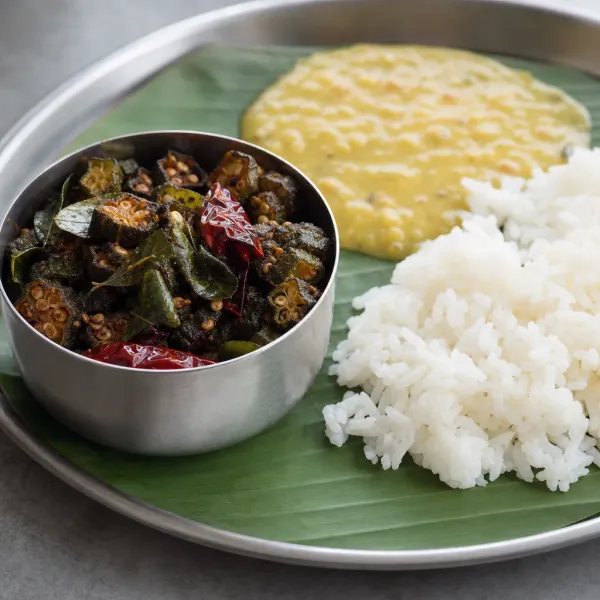
Bendakaya Vepudu
Traditional Andhra bendakaya vepudu: dry okra fry with groundnut oil, dried red chillies and besan. Crisp, spiced, and completely slime-free.
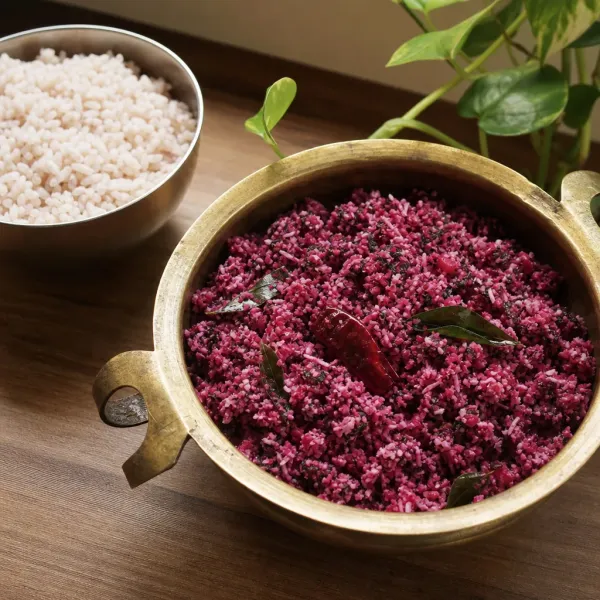
Cheera Thoran (Amaranth Leaves Stir-Fry)
Traditional Kerala cheera thoran with red or green amaranth, fresh coconut and shallots. Dry, fragrant and ready in under 30 minutes. Authentic house…
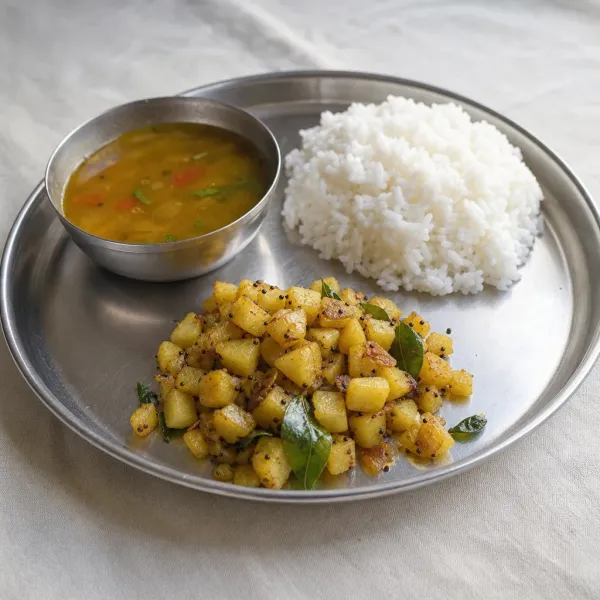
Alugadde Palya
Traditional Karnataka alugadde palya: a dry potato stir-fry with mustard, curry leaves and shallots. Everyday Kannada home cooking, ready in 40 minut…