

Alugadde Palya Recipe
Malayalam ഉരുളക്കിഴങ്ങ് പല്യTamil உருளைக்கிழங்கு பல்யKannada ಆಲುಗಡ್ಡೆ ಪಲ್ಯTelugu ఆలూగడ్డ పల్య
- Prep15 min
- Cook25 min
- Serves4
- DifficultyEasy
- DietVegan
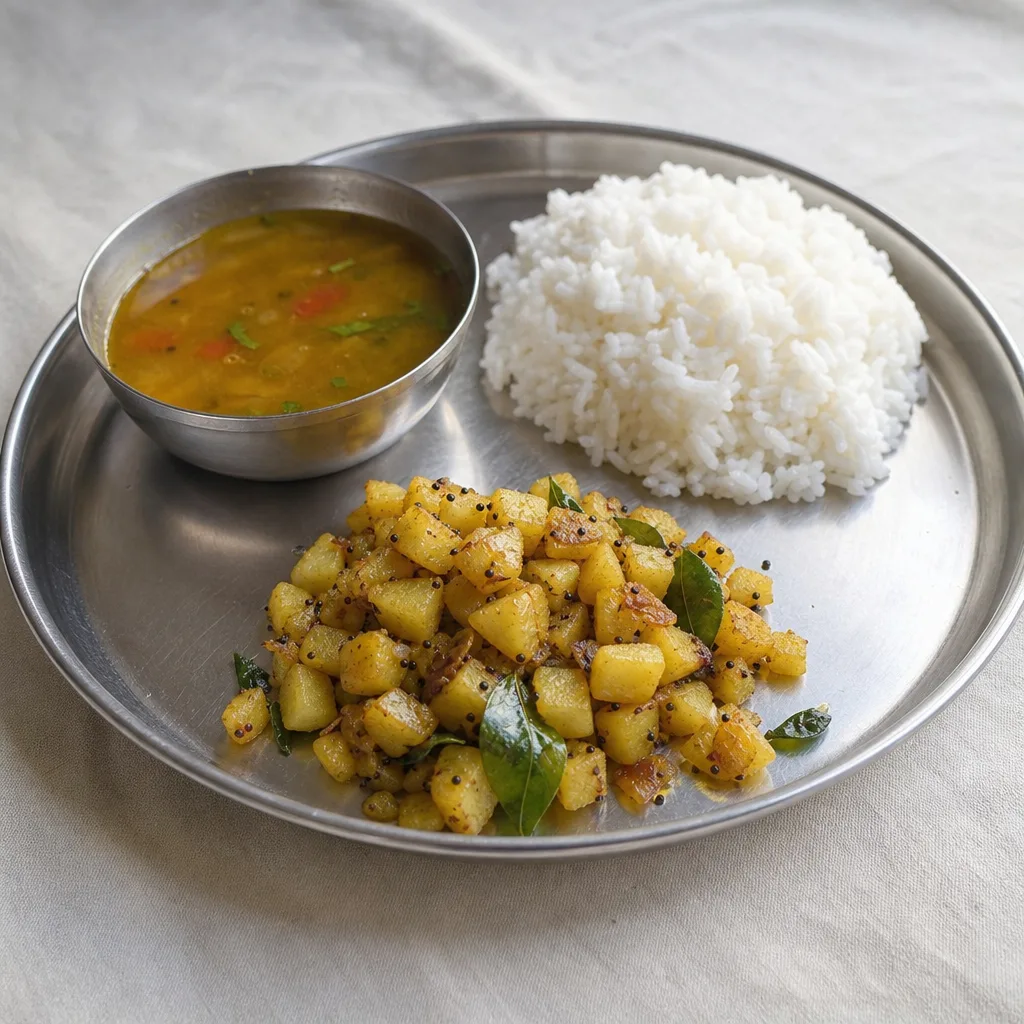
Alugadde palya is a dry potato stir-fry eaten across Karnataka households every day of the week. It is not a special-occasion dish and it is not trying to be anything more than it is: potatoes cooked with mustard, curry leaves, a little chilli heat and a final squeeze of lemon. The whole thing comes together quickly and the result is something you want to eat with everything.
In most Kannada homes this goes straight onto a steel thali alongside rice and saaru, or tucked inside a chapati for a school lunch box. Some cooks add a small amount of fresh grated coconut just before serving; others consider that unnecessary. The version here is the plain, everyday one without coconut, which is the more common household form across central and southern Karnataka.
The one thing that separates a good palya from a mediocre one is patience at the final stage. The potatoes need to sit undisturbed in the pan long enough to pick up a little colour on the underside before you turn them. Rush that and you get steamed potato, not palya.
Ingredients (serves 4)
For the palya
Method
Boil the potatoes
Place the potatoes whole and unpeeled in a pot of cold salted water. Bring to a boil and cook for 15 to 20 minutes until a skewer passes through without resistance but the potato still holds its shape. Drain immediately and let them cool enough to handle. Peel and cut into 1.5 cm cubes. Do not overcook; mushy potato will not hold up in the pan.
Heat the oil and temper the mustard
Set a wide, heavy pan over medium-high heat and add the coconut oil. When the oil shimmers, add the mustard seeds. Keep the lid nearby. The seeds will pop within 30 to 45 seconds; let them finish popping before moving to the next step.
Add the dals and dried chillies
Add the urad dal and chana dal to the popping mustard. Stir continuously. The dals will turn golden in about 30 seconds over medium-high heat; watch them closely because they go from golden to burnt quickly. Add the broken dried red chillies and stir for another 10 seconds until they darken slightly.
Add curry leaves, green chillies and shallots
Add the curry leaves, then the green chillies. Stand back as the leaves will splutter hard. After 10 seconds, add the sliced shallots. Reduce the heat to medium and cook, stirring occasionally, for 4 to 5 minutes until the shallots are soft and translucent but not browned.
Add turmeric
Sprinkle in the turmeric and stir to coat the shallots evenly. Cook for 30 seconds. The mixture will turn a uniform pale yellow.
Add the potatoes and salt
Tip in the cubed potatoes and season with salt. Toss gently to coat every piece with the tempered oil and shallots. Spread the potatoes in a single layer across the pan as much as possible.
Let the potatoes colour
Leave the pan undisturbed on medium heat for 3 to 4 minutes. Do not stir. The underside of the potatoes will pick up a light golden crust. Then turn them gently with a flat spatula and let the other side sit for another 2 to 3 minutes. This is the step most people rush; the colour is what gives the palya its texture and flavour.
Finish with lemon and serve
Turn off the heat. Squeeze the lemon juice over the potatoes and toss once. Taste for salt. Serve immediately while hot.
How to serve
Steamed rice with saaru (thin Kannada rasam) and papad; or with chapati and a bowl of plain curd. Also common in a lunch box wrapped inside a chapati.
Served with: Steamed rice with saaru (thin Kannada rasam) and papad; or with chapati and a bowl of plain curd. Also common in a lunch box wrapped inside a chapati.
Cook's tips
Which potato to use
A firm, waxy potato holds its shape through boiling and pan-frying. Starchy floury varieties turn to mash the moment you toss them. In Karnataka households, the everyday local potato works well; avoid varieties sold specifically for mashing.
Boiling ahead
You can boil and cube the potatoes the night before and refrigerate them. Cold potato actually holds up better in the pan than freshly boiled potato that is still steaming. Add a minute or two to the pan-frying time to heat them through.
The coconut variation
Udupi and coastal Karnataka cooks stir in 2 to 3 tablespoons of fresh grated coconut after turning off the heat. This is genuinely common in those kitchens but is not the standard form across the rest of Karnataka.
Pan choice matters
A wide iron pan or a heavy stainless kadai gives the best colour on the potato. A non-stick pan will work but the crust will be less pronounced. Avoid a small pan where the potatoes pile up and steam instead of fry.
Regional variations
Udupi households add fresh grated coconut at the end; some North Karnataka kitchens use more dried red chillies and skip the green chilli entirely.
Glossary
- Palya ಪಲ್ಯ
- Kannada word for a dry vegetable stir-fry, the equivalent of Tamil poriyal or Kerala thoran.
- Alugadde ಆಲುಗಡ್ಡೆ
- Kannada word for potato; alu is the root shared with Hindi, gadde means tuber or root vegetable.
- Saaru ಸಾರು
- Kannada term for a thin, peppery, tamarind-based broth; the Kannada equivalent of rasam.
- Urad dal ಉದ್ದಿನ ಬೇಳೆ
- Split black gram, used here whole and husked as a tempering ingredient that turns golden and nutty in hot oil.
- Chana dal ಕಡಲೆ ಬೇಳೆ
- Split Bengal gram, added alongside urad dal in the tempering for a slightly different texture and a mild nuttiness.
Two things decide whether this palya works. First, the potatoes must be firm after boiling, not falling apart, or the pan stage becomes mush. Second, the patience to leave the potatoes undisturbed in the hot pan long enough to colour is what separates a proper palya from plain boiled potato with spices scattered over it.
More Dry Vegetable Sides recipes
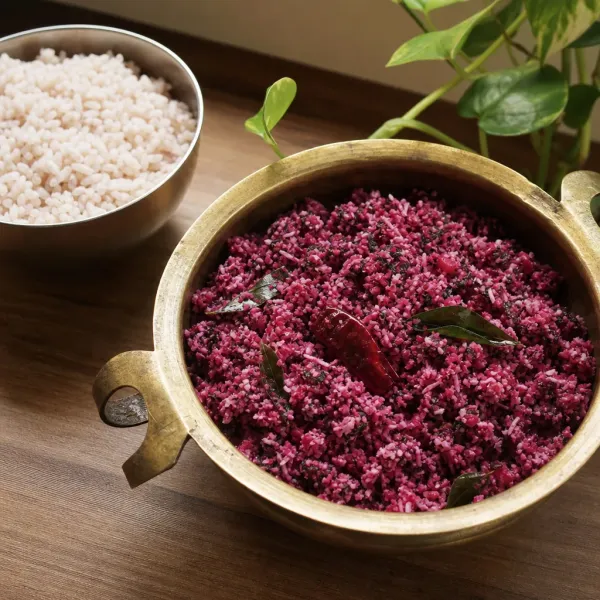
Cheera Thoran (Amaranth Leaves Stir-Fry)
Traditional Kerala cheera thoran with red or green amaranth, fresh coconut and shallots. Dry, fragrant and ready in under 30 minutes. Authentic house…
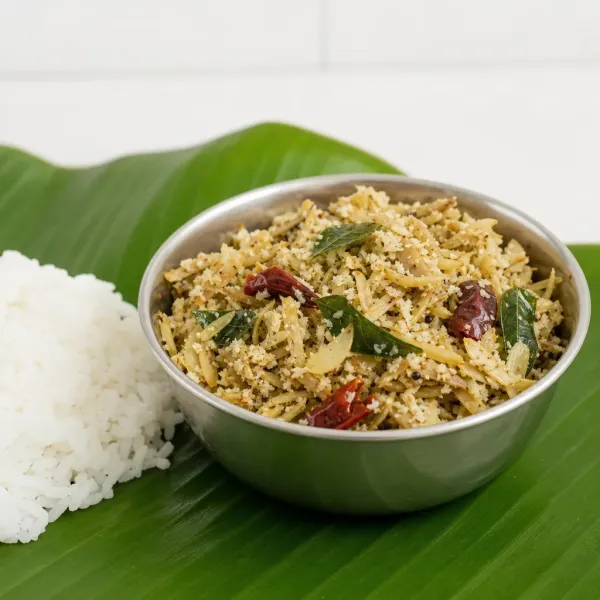
Vazhaipoo Poriyal
Traditional Tamil Brahmin vazhaipoo poriyal: banana blossom stir-fried with gingelly oil, shallots, urad dal and fresh coconut. Step-by-step cleaning…
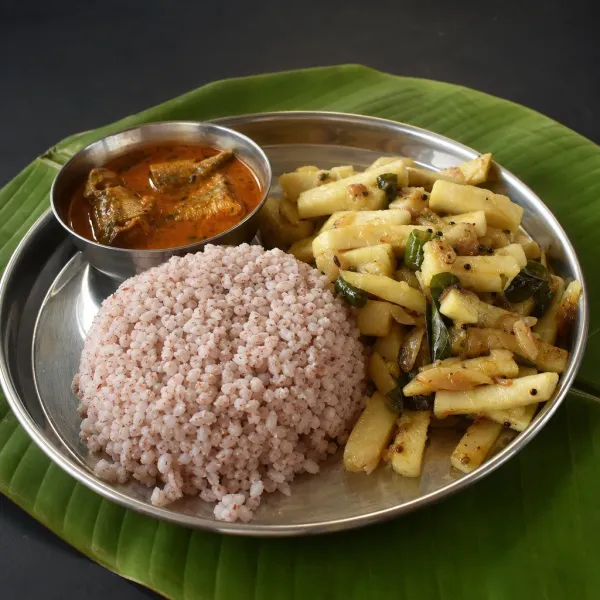
Kadachakka Mezhukkupuratti (Breadfruit Stir-Fry)
Traditional Kerala breadfruit stir-fry with coconut oil, shallots, and curry leaves. A dry, everyday mezhukkupuratti served with matta rice and fish…
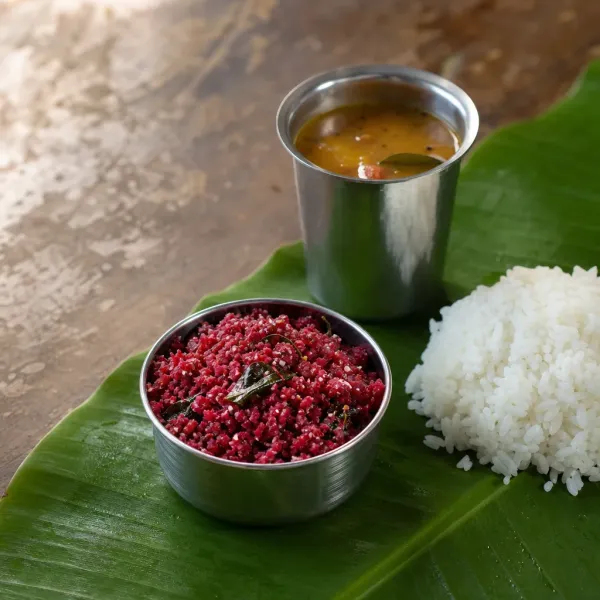
Beetroot Poriyal
Traditional Tamil Brahmin beetroot poriyal with fresh coconut, gingelly oil tempering and curry leaves. A dry, quick weekday vegetable dish.
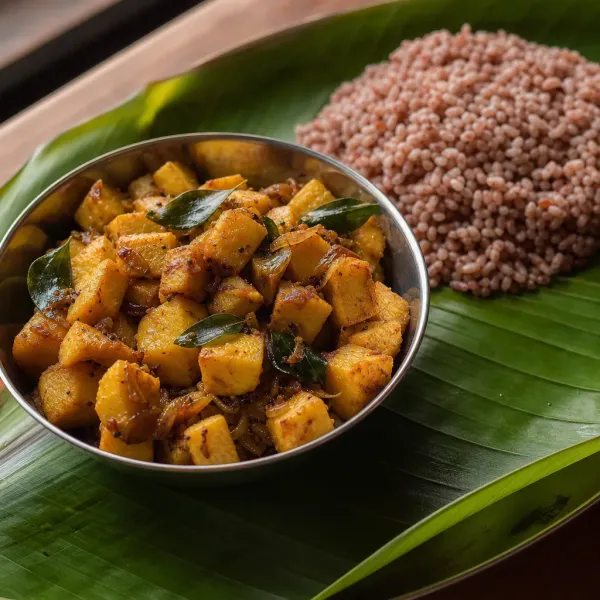
Chena Mezhukkupuratti (Elephant Foot Yam Stir-Fry)
Traditional Kerala recipe for chena mezhukkupuratti: elephant foot yam stir-fried in coconut oil with shallots, dried red chillies, and curry leaves.
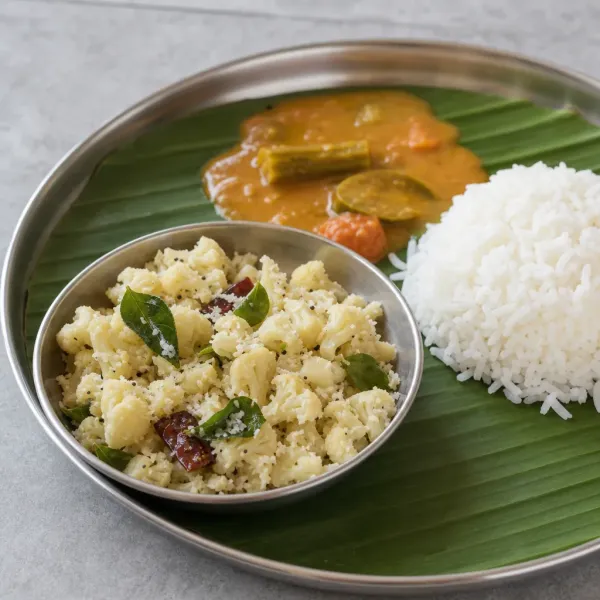
Cauliflower Poriyal
Traditional Tamil Brahmin cauliflower poriyal with mustard, curry leaves and fresh coconut. Dry, well-seasoned, cooked without water. Step-by-step me…