

Vazhaipoo Poriyal Recipe
Malayalam വാഴപ്പൂ തോരൻTamil வாழைப்பூ பொரியல்Kannada ಬಾಳೆಹೂವಿನ ಪಲ್ಯTelugu అరటిపువ్వు పొరియాల్
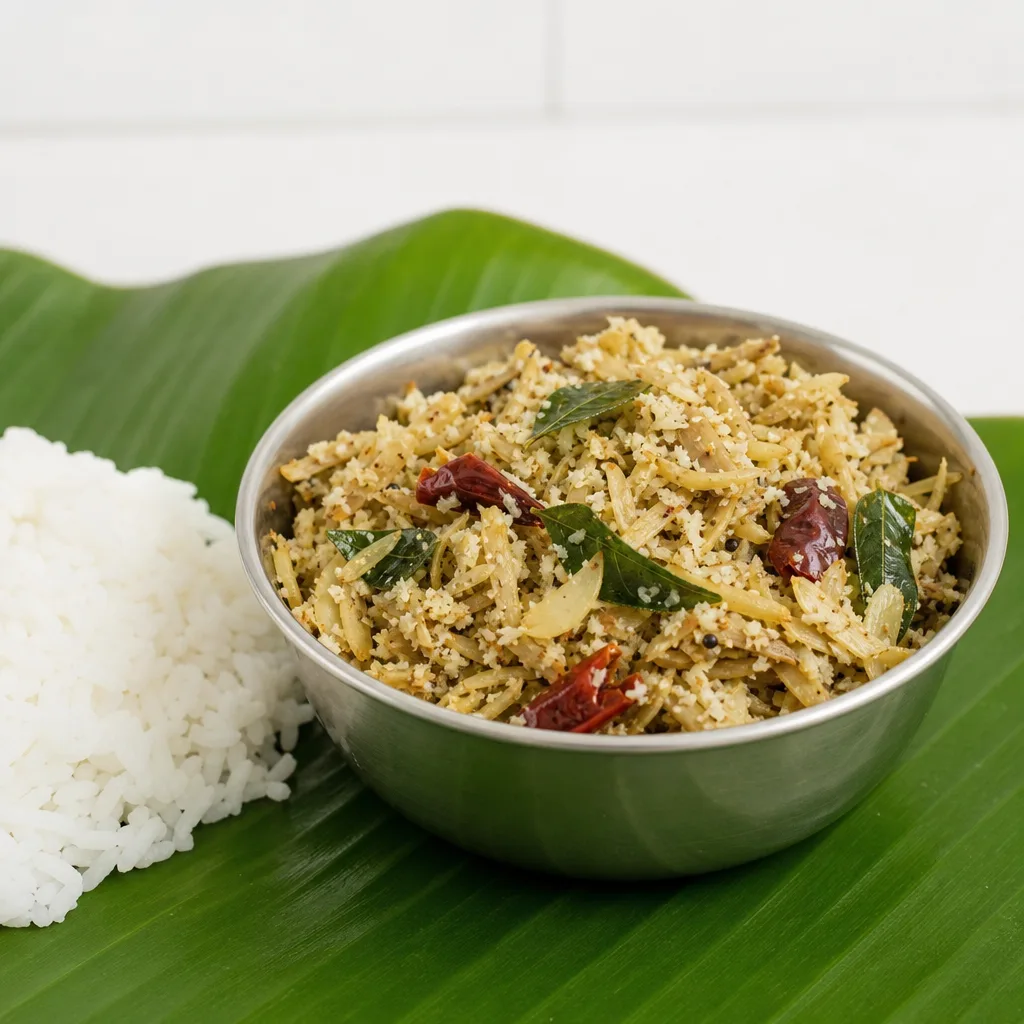
- Prep35 min
- Cook25 min
- Serves4
- DifficultyMedium
- DietVegan
Vazhaipoo poriyal is a dry stir-fry from Tamil Brahmin kitchens, made from the inner petals and florets of the raw banana blossom. It belongs to the everyday rice-plate meal, cooked on most days when banana blossoms are in season and available at the market. The cleaning is the work; the cooking is quick.
The dish is cooked in gingelly oil with a straightforward tempering of mustard, urad dal, dried red chillies and curry leaves. A small amount of fresh grated coconut is stirred in at the end, which is typical of this community's poriyal style. No tomato, no onion in the Brahmin version — only shallots, and even those are optional in some households.
The blossom discolours fast once cut, so every household has its own way of holding the cleaned florets: some keep a bowl of water with a little yoghurt, some use plain water with a pinch of turmeric. Either works. What matters is that you clean and chop quickly and get the florets into the acidulated water before they turn.
Ingredients (serves 4)
For cleaning and pre-cooking
For the tempering and stir-fry
Method
Prepare your soaking bowl
Fill a wide bowl with cold water and stir in 1 tablespoon of yoghurt. Keep this bowl beside you before you touch the blossom. The florets discolour within a minute of exposure to air, so you need the bowl ready before you start peeling.
Clean the banana blossom
Peel away the outer dark purple bracts one by one. Under each bract you will find a row of pale, finger-shaped florets — these are what you want. Remove the florets from each bract, then pull out and discard the tough central stamen (the thin, stiff thread inside each floret) and the small waxy petal at the tip. Drop the cleaned florets into the yoghurt water immediately. Continue until you reach the innermost pale yellow core, which can be chopped and used as well.
Chop the florets
Drain the florets in small batches, squeeze out the water gently with your palm, and chop them finely — about 5 mm pieces. Return each batch to the yoghurt water as you go, and do the final drain only when you are ready to cook.
Par-cook the chopped florets
Drain the chopped florets and squeeze firmly to remove as much water as you can. Put them in a small saucepan with just enough fresh water to cover, add ¼ tsp turmeric and a pinch of salt. Bring to a boil and cook on medium heat for 8 to 10 minutes until the pieces are just tender but not mushy. Drain and squeeze again — the drier they are, the better the poriyal will fry without steaming in the pan.
Heat the oil and temper
Heat the gingelly oil in a heavy iron or steel kadai over medium heat. When the oil shimmers, add the mustard seeds and wait for them to pop — this takes about 30 seconds. Add the urad dal and fry, stirring, until it turns golden, about 20 seconds. Add the broken red chillies and curry leaves and fry for another 10 seconds. The dal should be golden, not brown.
Cook the shallots and chilli
Add the sliced shallots and slit green chilli. Fry on medium heat, stirring often, for 3 to 4 minutes until the shallots are soft and just beginning to colour at the edges. Do not let them brown deeply.
Add the florets and turmeric
Add the drained, cooked florets and the remaining ¼ tsp turmeric. Stir well to coat everything in the oil. Season with salt. Spread the mixture across the pan and let it sit without stirring for a minute, then stir again. Repeat this two or three times over 6 to 8 minutes — this is what gives the poriyal its slightly dry, lightly toasted character.
Finish with coconut
Lower the heat. Add the freshly grated coconut and stir through for 1 minute until the coconut is evenly mixed and heated through. Taste for salt. The finished poriyal should be dry, not wet, with each piece of floret distinct.
How to serve
Steamed rice with sambar and rasam; part of a full Tamil Brahmin rice meal alongside kootu and appalam.
Served with: Steamed rice with sambar and rasam; part of a full Tamil Brahmin rice meal alongside kootu and appalam.
Cook's tips
Removing the stamen matters
If you leave the stamen in, the poriyal will be bitter and slightly stringy. It is the single step most people skip when they are in a hurry, and it shows in the finished dish.
Squeeze the florets twice
Once after soaking and once after par-cooking. Excess water makes the poriyal steam in the pan instead of frying, and you end up with a soggy result.
Gingelly oil is not optional here
The slightly nutty bitterness of gingelly oil balances the mild bitterness of the blossom. Coconut oil or refined oil will produce a blander result, though households do use coconut oil in a pinch.
Frozen banana blossom
Pre-cleaned frozen banana blossom is now available in many cities. It saves the cleaning work but often has a softer texture and slightly less flavour. If you use it, skip the yoghurt soak and reduce the par-cooking time to 4 to 5 minutes.
Regional variations
Kerala households make a similar dish called vazhaipoo thoran, finishing it with fresh grated coconut and curry leaves in coconut oil; Chettinad versions use gingelly oil and a small amount of ground fennel.
Glossary
- Vazhaipoo வாழைப்பூ
- Banana blossom; the large purple flower that grows at the tip of a banana bunch.
- Poriyal பொரியல்
- A dry Tamil Nadu vegetable stir-fry, typically finished with fresh coconut.
- Nallennai நல்லெண்ணெய்
- Gingelly oil; cold-pressed sesame oil used extensively in Tamil Nadu cooking.
- Chinna vengayam சின்ன வெங்காயம்
- Small shallots; the standard allium in Tamil Nadu cooking, sharper and more aromatic than large onions.
- Urad dal உளுந்து
- Split and husked black gram; used whole in tempering to add a nutty crunch.
Whether the poriyal works comes down to two things: cleaning the florets properly — every stamen out, every waxy tip removed — and getting them genuinely dry before they go into the pan. Skimp on either and the dish is bitter or sodden. Do both and the coconut and gingelly oil carry it the rest of the way.
More Dry Vegetable Sides recipes
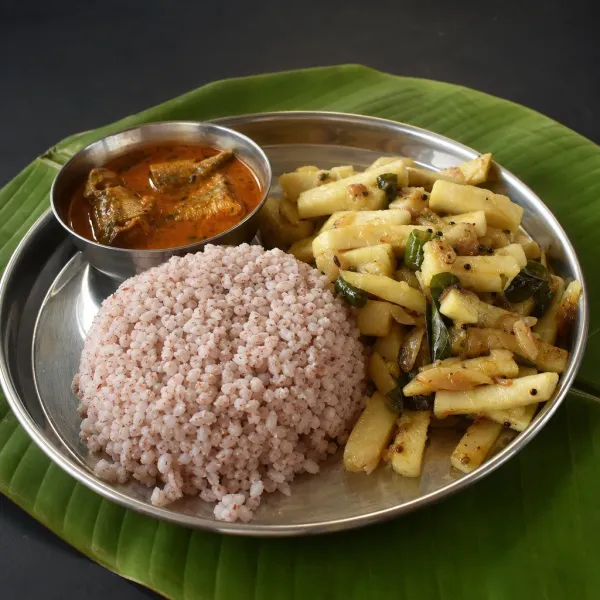
Kadachakka Mezhukkupuratti (Breadfruit Stir-Fry)
Traditional Kerala breadfruit stir-fry with coconut oil, shallots, and curry leaves. A dry, everyday mezhukkupuratti served with matta rice and fish…
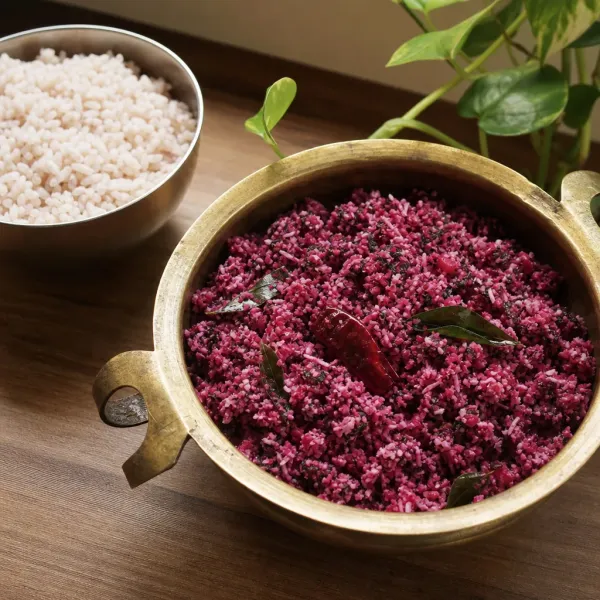
Cheera Thoran (Amaranth Leaves Stir-Fry)
Traditional Kerala cheera thoran with red or green amaranth, fresh coconut and shallots. Dry, fragrant and ready in under 30 minutes. Authentic house…
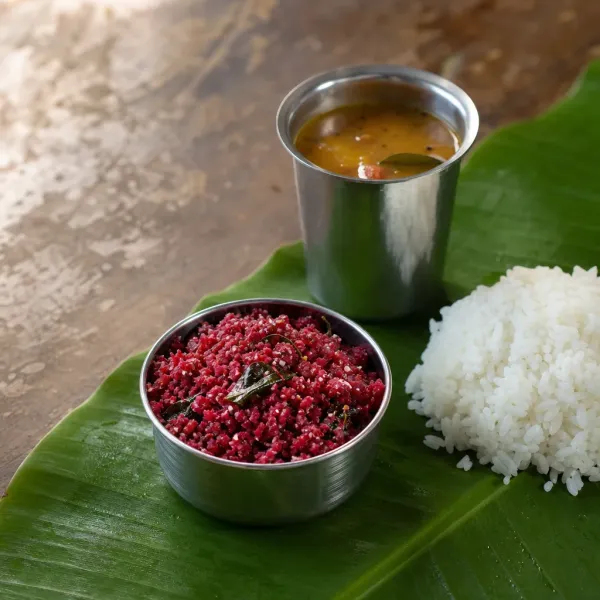
Beetroot Poriyal
Traditional Tamil Brahmin beetroot poriyal with fresh coconut, gingelly oil tempering and curry leaves. A dry, quick weekday vegetable dish.
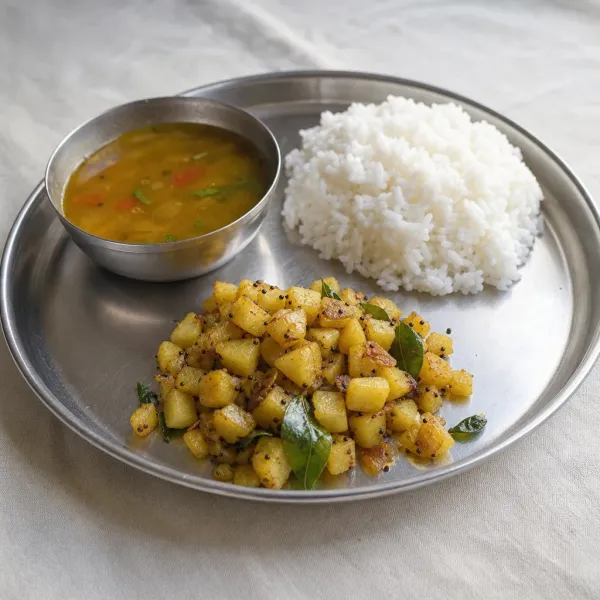
Alugadde Palya
Traditional Karnataka alugadde palya: a dry potato stir-fry with mustard, curry leaves and shallots. Everyday Kannada home cooking, ready in 40 minut…
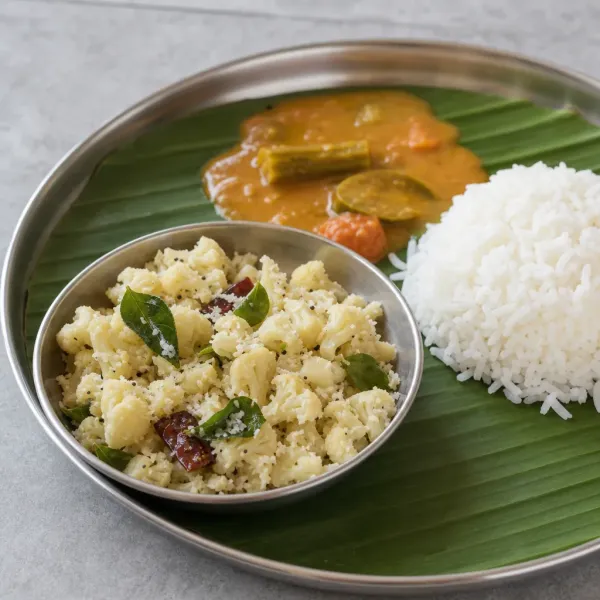
Cauliflower Poriyal
Traditional Tamil Brahmin cauliflower poriyal with mustard, curry leaves and fresh coconut. Dry, well-seasoned, cooked without water. Step-by-step me…
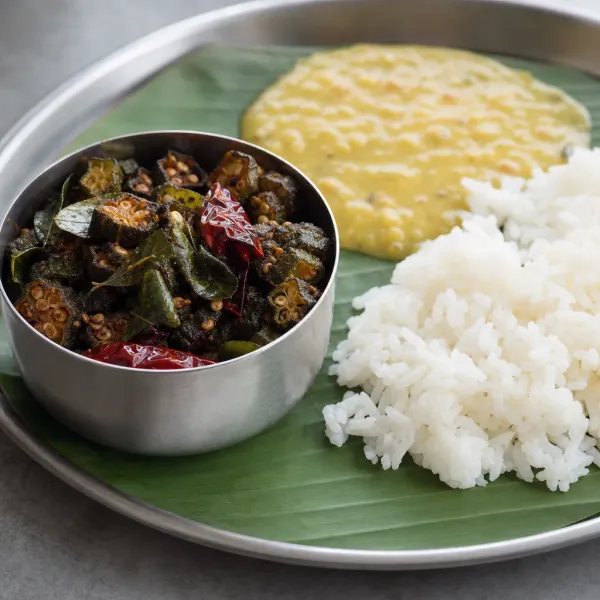
Bendakaya Vepudu
Traditional Andhra bendakaya vepudu: dry okra fry with groundnut oil, dried red chillies and besan. Crisp, spiced, and completely slime-free.