

Bendakaya Vepudu Recipe
Malayalam ബെണ്ടകായ വേപుഡുTamil பெண்டக்காய் வேபுடுKannada ಬೆಂಡೆಕಾಯಿ ವೇಪುಡುTelugu బెండకాయ వేపుడు
- Prep15 min
- Cook20 min
- Serves4
- DifficultyEasy
- DietVegan
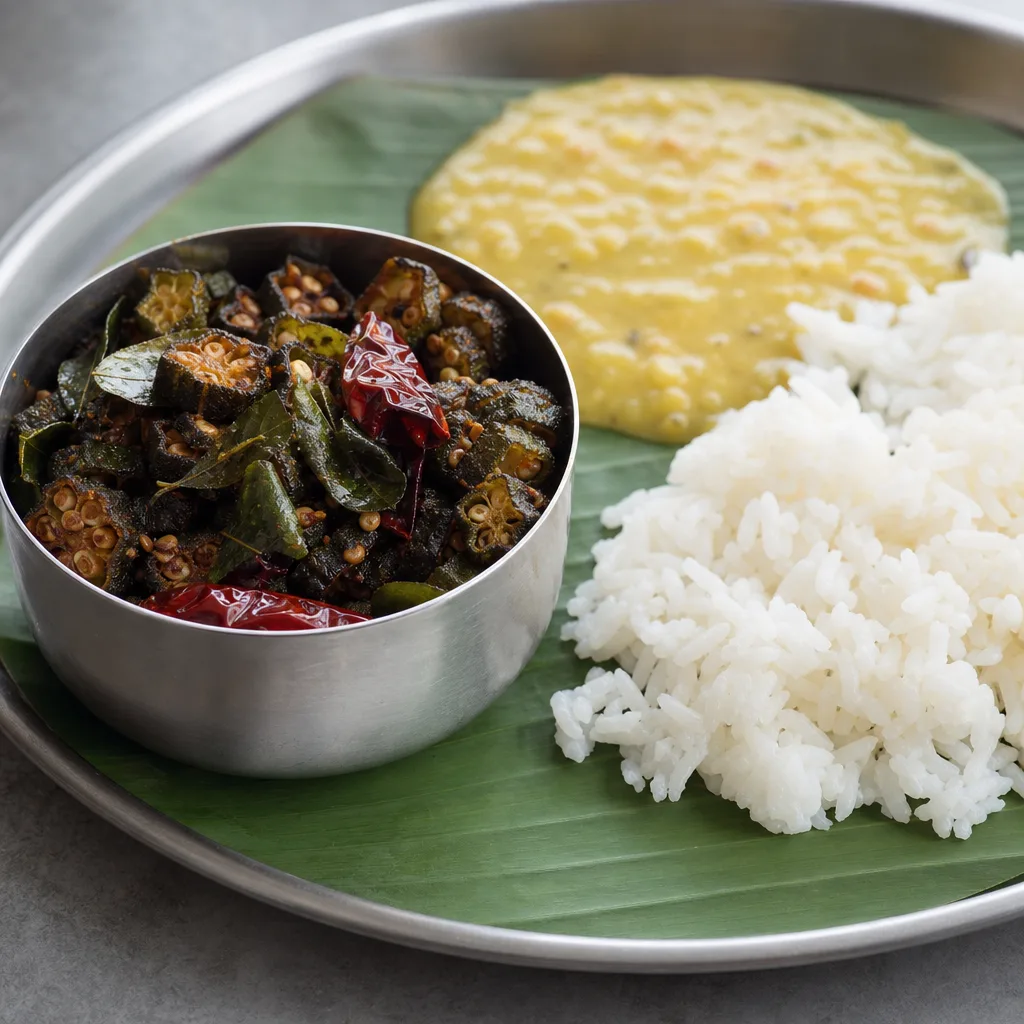
Bendakaya Vepudu is the everyday okra fry of Andhra kitchens, sharp with dried red chillies and tempered in groundnut oil. It is not a sauced dish and it is not moist. The finished fry is dry, slightly blistered, and spiced simply so the okra itself is still present. Sliminess is the only real enemy here, and the traditional method defeats it with two things: bone-dry okra before it meets the pan, and patience at high heat without a lid.
In Rayalaseema and coastal Andhra homes alike, it appears as one of two or three dry side dishes on the thali alongside sambar or pappu, and it is eaten with hot rice and a drizzle of ghee. Some households add a pinch of besan (senagapindi) tossed with the okra before frying; this catches the slime and adds a faint nuttiness. Others skip it entirely. Both are traditional. The besan version is included here because it is the more common household habit.
Spice levels vary by district. Rayalaseema kitchens lean hotter, using three or four dried red chillies where a coastal Andhra cook might use two. Adjust to your household. The method below is the same either way.
Ingredients (serves 4)
Main
Method
Dry the okra completely
After washing, spread the okra in a single layer on a clean cotton cloth and leave it for at least 30 minutes, or pat each pod dry individually. Any surface moisture will steam the okra in the pan and make it slimy. The pods must feel dry to the touch before you cut them.
Cut the okra
Trim the crown and the very tip of each pod, then cut into rounds about 1.5 cm thick. Do not cut thinner or they will fall apart during frying. Set aside uncovered on a dry plate while you prepare the pan.
Toss with besan and turmeric
In a bowl, add the cut okra, the besan, the turmeric, and a little salt. Toss well with your hands so every piece is lightly coated. The besan will absorb the cut surface's stickiness before the okra meets hot oil.
Heat the oil and pop the mustard seeds
Pour the groundnut oil into a wide, heavy iron kadai or thick-bottomed pan and set it on high heat. When the oil is hot, add the mustard seeds. Wait for them to pop fully, about 20 to 30 seconds. Do not add anything before the mustard seeds have finished spluttering.
Add the dal and dried chillies
Lower the heat to medium-high and add the urad dal and chana dal. Stir continuously. They go from pale to golden very fast, in about 30 seconds. The moment they are golden, add the broken dried red chillies and stir for another 10 seconds until they darken slightly and smell toasted.
Add the cumin and curry leaves
Add the cumin seeds and curry leaves together. The curry leaves will crackle loudly. Stand back for a second, then stir everything together. The tempering is ready when the curry leaves are glossy and have gone slightly crisp at the edges.
Add the okra and fry on high heat
Raise the heat back to high and tip in the besan-coated okra. Spread it in a single layer across the pan. Leave it without stirring for 2 minutes so the underside blisters and dries. Then toss and spread again. Do not cover the pan at any point. A lid traps steam and undoes all the drying work.
Fry until dry and slightly blistered
Continue frying on high heat, tossing every 2 minutes, for a total of 10 to 12 minutes. The okra is ready when the sliminess is completely gone, the pieces are tender through, and the outer surface has small dry brown spots on the edges. There should be no moisture visible in the pan.
Add the chilli powder and final salt
Reduce the heat to low. Sprinkle the red chilli powder and taste for salt, adjusting now. Toss once to coat evenly. Give it one more minute on the heat so the chilli powder is fragrant and dry rather than raw-tasting. Take off the heat immediately after.
Rest and serve
Tip the vepudu into a serving bowl and let it sit for 2 minutes before serving. It firms up slightly as it rests. Serve hot.
How to serve
Hot plain white rice (or sona masoori rice) with a ladle of pappu (toor dal cooked with tamarind and dried chilli) or sambar, and a small side of perugu (fresh curd). A drizzle of ghee on the rice is common.
Served with: Hot plain white rice (or sona masoori rice) with a ladle of pappu (toor dal cooked with tamarind and dried chilli) or sambar, and a small side of perugu (fresh curd). A drizzle of ghee on the rice is common.
Cook's tips
Drying the okra is not optional
The single most common reason bendakaya vepudu turns slimy is cutting okra that still has surface moisture. If you are in a hurry, wipe each pod individually with a dry cloth. Do not rinse and cut immediately.
Pan width matters
A wide, heavy pan gives more surface area so the okra fries rather than steams. If the pan is small and the pieces are crowded, fry in two batches. Crowded okra will never dry out properly.
The besan step
Leaving out the besan is equally traditional in many homes. Without it the fry is slightly less textured but still works if the okra is completely dry before cutting. Do not add more than 1½ tsp or the coating becomes floury.
Storing leftovers
Leftovers keep at room temperature for a few hours and are fine. Refrigerating okra fry makes it wet. If you must refrigerate, reheat in a dry pan on high heat for 3 to 4 minutes to drive off the condensation before serving.
Choosing the okra
Small, young pods (8 to 10 cm long) fry better and are less fibrous. Avoid large, tough pods with hardened seeds. Press the tip lightly; it should snap cleanly. If it bends without breaking, the pod is too mature.
Regional variations
Telangana households often add sliced onion and a pinch of sugar; Tamil Nadu versions (vendakkai poriyal) use grated coconut and curry leaves in a drier, shorter fry.
Glossary
- Bendakaya బెండకాయ
- Okra in Telugu; literally 'the sticky vegetable'.
- Vepudu వేపుడు
- Telugu term for a dry fry, typically in groundnut oil with whole spices.
- Aavaalu ఆవాలు
- Mustard seeds in Telugu.
- Jeelakarra జీలకర్ర
- Cumin seeds in Telugu.
- Karivepaku కరివేపాకు
- Curry leaves in Telugu.
- Senagapindi సెనగపిండి
- Chickpea flour (besan) in Telugu; used here to absorb the natural stickiness of cut okra.
- Pasupu పసుపు
- Turmeric in Telugu.
- Minapappu మినపప్పు
- Split black gram (urad dal) in Telugu.
- Senagapappu సెనగపప్పు
- Chana dal in Telugu; split Bengal gram used in tempering.
- Endu mirchi ఎండు మిర్చి
- Dried red chilli in Telugu.
Whether this fry is worth eating comes down to two things: the okra must be bone dry before it is cut, and the pan must stay uncovered and hot throughout. Get those right and the sliminess cannot survive. Everything else, the exact chilli count, the besan, the spice level, is household preference.
More Dry Vegetable Sides recipes
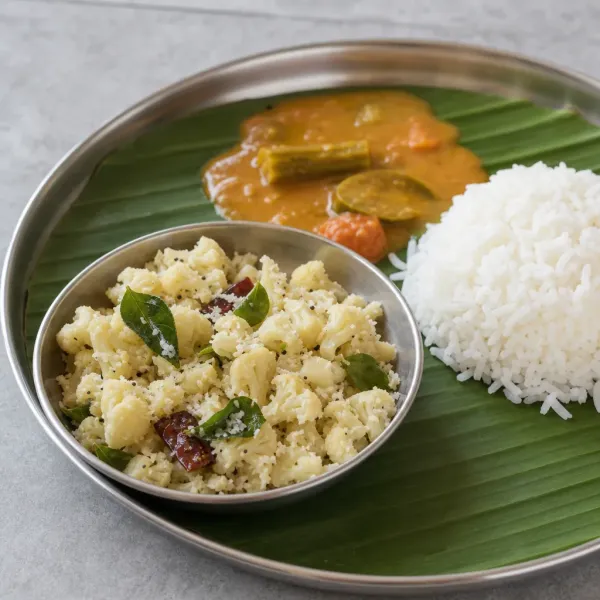
Cauliflower Poriyal
Traditional Tamil Brahmin cauliflower poriyal with mustard, curry leaves and fresh coconut. Dry, well-seasoned, cooked without water. Step-by-step me…
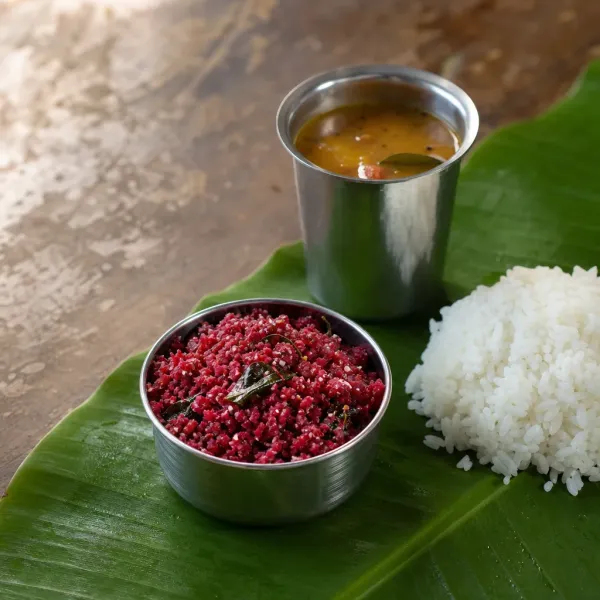
Beetroot Poriyal
Traditional Tamil Brahmin beetroot poriyal with fresh coconut, gingelly oil tempering and curry leaves. A dry, quick weekday vegetable dish.
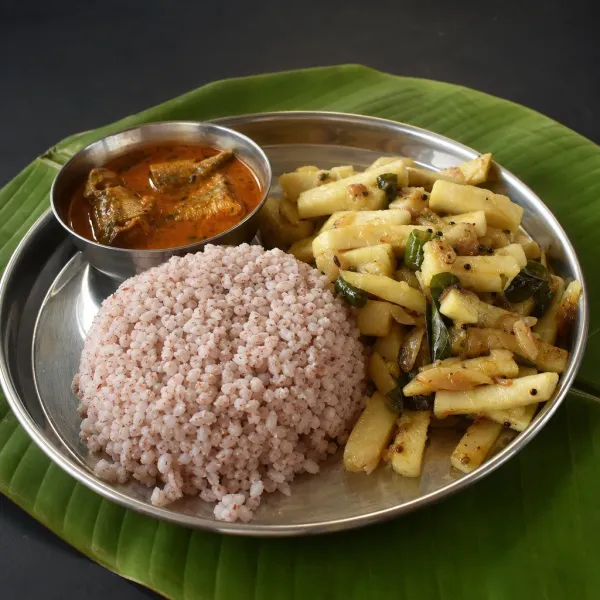
Kadachakka Mezhukkupuratti (Breadfruit Stir-Fry)
Traditional Kerala breadfruit stir-fry with coconut oil, shallots, and curry leaves. A dry, everyday mezhukkupuratti served with matta rice and fish…
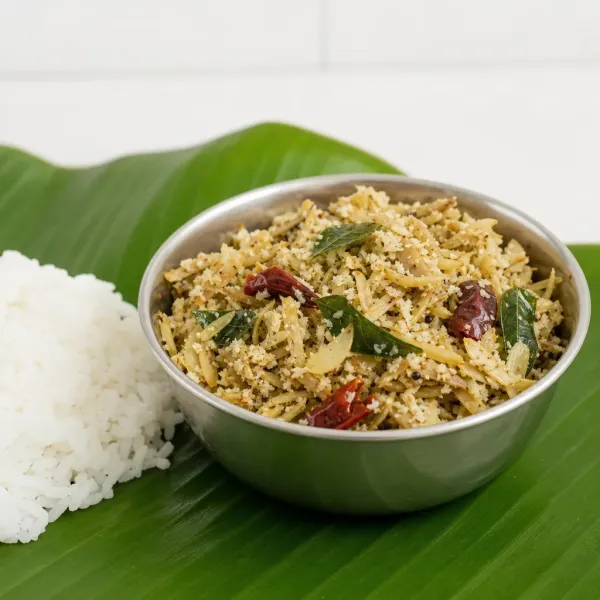
Vazhaipoo Poriyal
Traditional Tamil Brahmin vazhaipoo poriyal: banana blossom stir-fried with gingelly oil, shallots, urad dal and fresh coconut. Step-by-step cleaning…
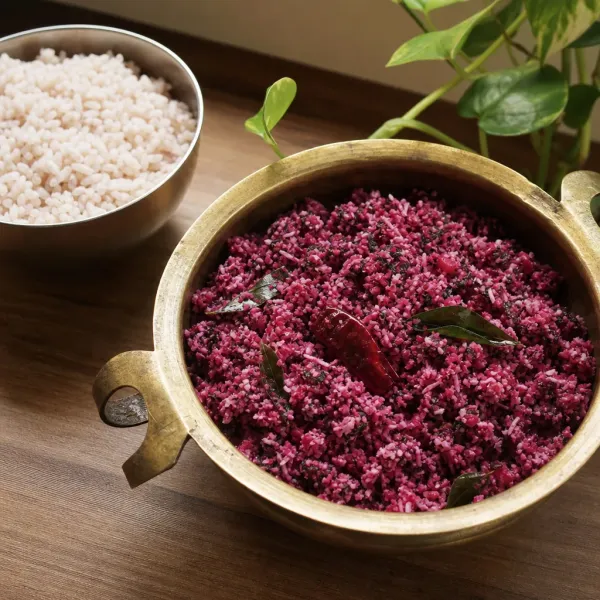
Cheera Thoran (Amaranth Leaves Stir-Fry)
Traditional Kerala cheera thoran with red or green amaranth, fresh coconut and shallots. Dry, fragrant and ready in under 30 minutes. Authentic house…
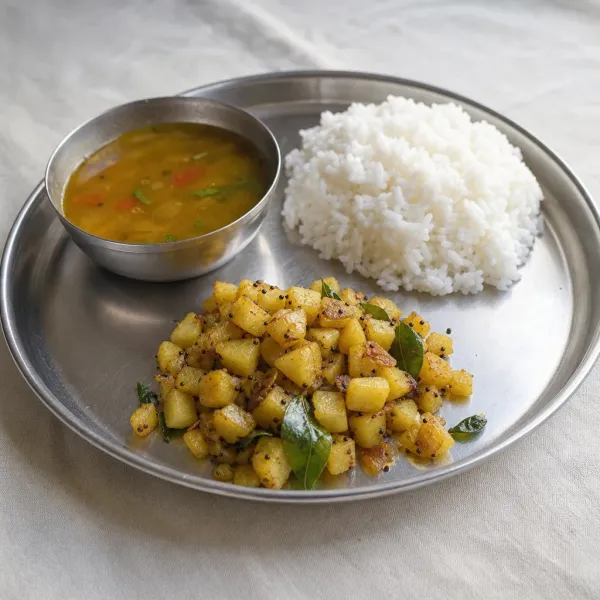
Alugadde Palya
Traditional Karnataka alugadde palya: a dry potato stir-fry with mustard, curry leaves and shallots. Everyday Kannada home cooking, ready in 40 minut…