

Sulaimani Recipe
Malayalam സുലൈമാനിTamil சுலைமானிKannada ಸುಲೈಮಾನಿTelugu సులైమాని
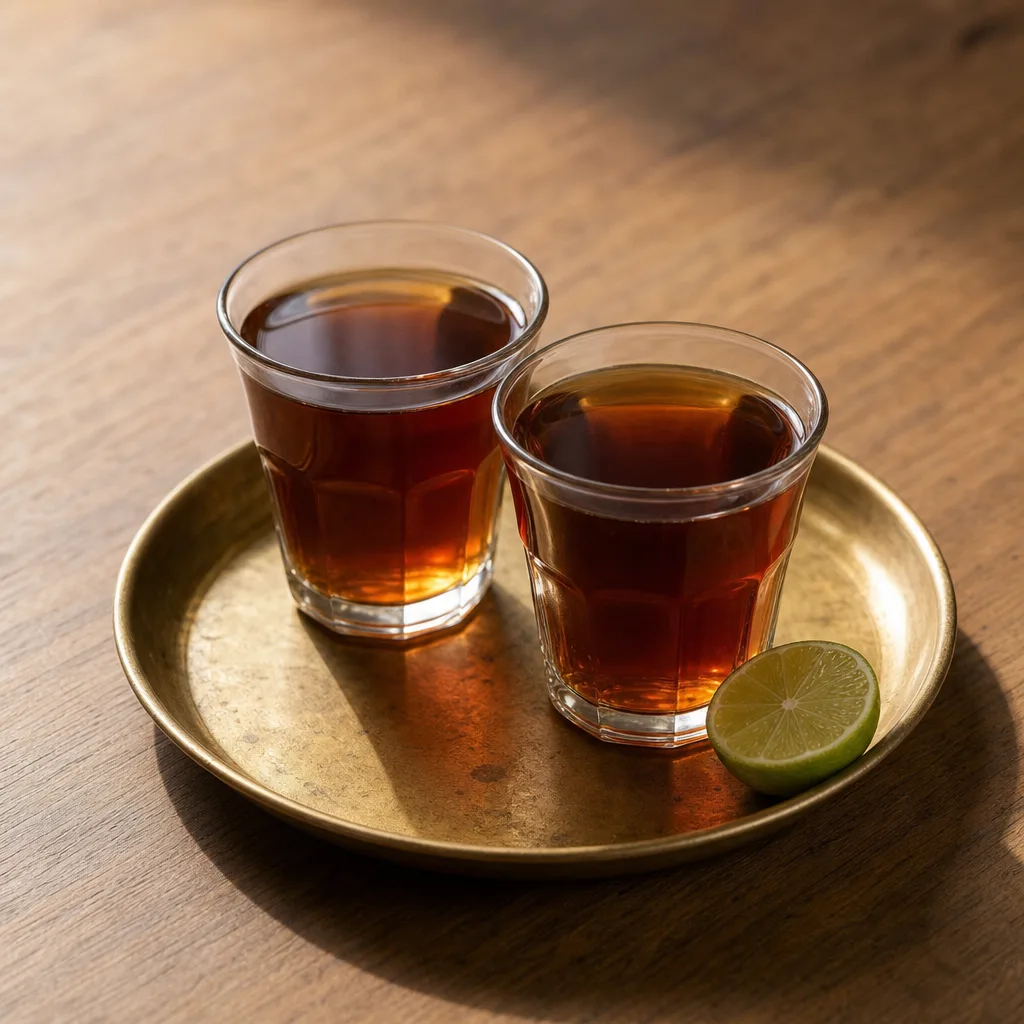
- Prep5 min
- Cook10 min
- Serves4
- DifficultyEasy
- DietVegan
Sulaimani is the tea of Mappila hospitality. In Malabar households it arrives after a heavy meal — after biriyani, after a wedding feast, after the fish curries and pathiris have been cleared — because it is understood to settle the stomach and cut through richness. It is black, lightly spiced, soured with fresh lime, and sweetened just enough to balance that sourness. It is not a chai. There is no milk, no ginger paste, no cardamom-forward sweetness of the kind you find in North Indian spiced tea.
The spicing is restrained: a single cinnamon piece, two or three cloves, a few cardamom pods cracked open. The flavour comes from good Dust No. 1 or CTC tea brewed strong, the lime squeezed in at the last moment so the brightness stays sharp. Some households add a small piece of kalpasi (stone flower), which gives a faint woody depth, but this is not universal and is not required.
Households differ mainly in sweetness and lime. Older cooks squeeze the lime into each glass separately so guests can adjust. Others stir it into the pot. The tea must be served hot; it is not a drink that waits.
Ingredients (serves 4)
For the tea
Method
Crack the spices
Lightly crack the cardamom pods with the flat of a spoon or the bottom of a glass. You want them split open, not powdered. Leave the cloves and cinnamon whole. This brief bruising is enough to release flavour without making the tea bitter or muddy.
Bring the water and spices to a boil
Pour 700 ml of cold water into a small saucepan. Add the cracked cardamom, cloves and cinnamon. Bring to a full boil over medium heat. Let it boil for 2 minutes so the spices have time to open into the water. The water will take on a very faint colour and a clean spice scent.
Add the tea and steep
Add the tea leaves directly to the boiling spiced water. Reduce the heat to low and let it steep for 2 to 3 minutes. Do not boil hard once the tea goes in, or the liquor turns harsh. The colour should be a deep amber-brown. If it looks pale, steep one minute longer.
Add the sugar
Stir in the sugar while the tea is still on the heat. Let it dissolve fully, which takes about 30 seconds. Taste: it should be mildly sweet, not cloying. The lime will add its own sharpness in a moment, so do not over-sweeten at this stage.
Strain into glasses
Strain the tea through a fine mesh strainer directly into four small glasses or a serving pot. Press the strainer lightly to extract the last of the liquor from the leaves. Discard the spent leaves and whole spices.
Squeeze the lime and serve immediately
Squeeze the lime juice into the strained tea and stir once. The tea will brighten slightly in colour. Serve at once while it is hot. If guests prefer to control their own sourness, pass the halved lime separately and let each person squeeze into their own glass.
How to serve
Sulaimani is served after a meal, most often after Malabar biriyani or a spread of rice with fish curries. It is not paired with food at the table; it is the drink that closes the meal. Some households serve it alongside small sweet bites such as unnakkai or ada at tea time, but those are separate to the tea itself.
Served with: Sulaimani is served after a meal, most often after Malabar biriyani or a spread of rice with fish curries. It is not paired with food at the table; it is the drink that closes the meal. Some households serve it alongside small sweet bites such as unnakkai or ada at tea time, but those are separate to the tea itself.
Cook's tips
Choice of tea leaf
Dust No. 1 grade from Wayanad or Munnar gives the right body and colour. Avoid whole-leaf Darjeeling or flavoured teas; they do not produce the dark, robust liquor that sulaimani needs. If you use a coarser CTC grade, steep for an extra minute.
Lime, not lemon
In Malabar households this is always fresh lime (cherunaranga). Lemon juice changes the flavour noticeably and is not traditional here. Squeeze the lime only at the very end; lime juice added too early and then boiled turns bitter.
Cinnamon matters
Kerala cooks use true cinnamon (Cinnamomum verum), which is thin, papery and mild. Cassia, the thick dark bark sold in many shops, is sharper and more pungent and will dominate the tea. If you are not sure which you have, use a smaller piece.
Kalpasi (stone flower)
Some Malabar cooks add a small piece of kalpasi to the boiling water along with the other spices. It adds a faint earthy, woody note in the background. It is not essential and is not in this base recipe, but if you have it, one small piece is enough.
Scaling for a crowd
For wedding-house quantities, the ratio holds: roughly 1.5 tsp of tea per 175 ml of water. Brew in batches rather than steeping a huge pot for too long, or the tea turns astringent.
Regional variations
Some Mappila households add a sliver of ginger; wedding-house versions are brewed in large urns and sweetened more heavily with cane sugar rather than refined sugar.
Glossary
- Sulaimani സുലൈമാനി
- Malabar Mappila black tea spiced with cardamom, cloves and cinnamon, finished with fresh lime juice; served after meals as a digestif.
- Cherunaranga ചെറുനാരങ്ങ
- The small green lime used in Kerala cooking; sharper and more fragrant than a lemon.
- Kalpasi കൽപ്പാസി
- Stone flower or black stone flower (Parmotrema perlatum), a dried lichen used in small quantities in Malabar and Chettinad cooking for its earthy, woody background note.
- Dust No. 1
- A fine-grade CTC tea classification common in South Indian tea production, producing a strong, dark liquor quickly; the grade most commonly used in Malabar households.
Two things decide this tea. The first is steeping time: too short and it is thin and pale, too long or boiled hard after the leaves go in and it turns harsh and astringent. The second is the lime: squeeze it in at the very last moment, into hot but not boiling tea, so the brightness stays clean and does not cook off into bitterness. Get those two right and everything else follows.
More Beverages recipes
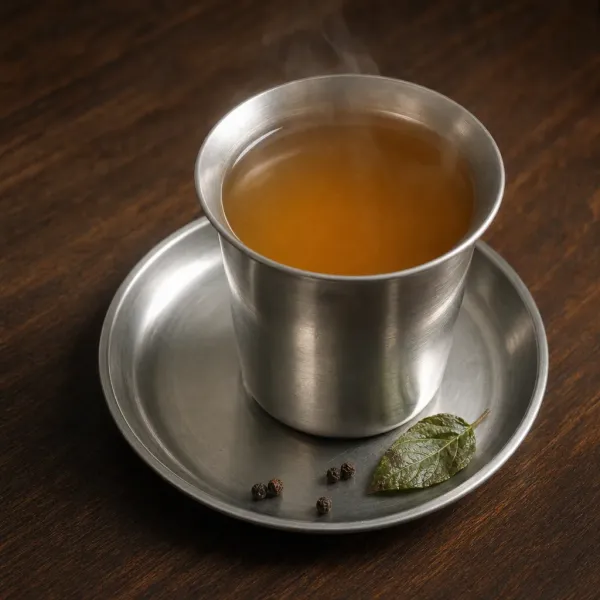
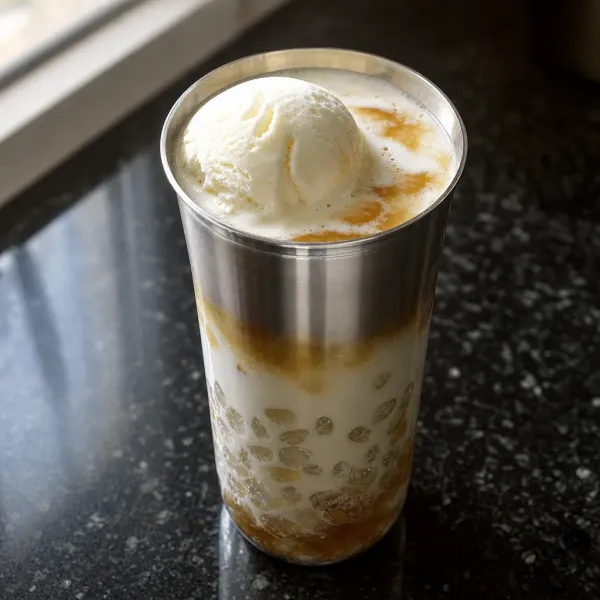
Madurai Jigarthanda
Traditional Madurai Jigarthanda with slow-reduced milk, soaked badam pisin, nannari syrup and milk ice cream. Authentic Tamil Nadu summer drink recip…
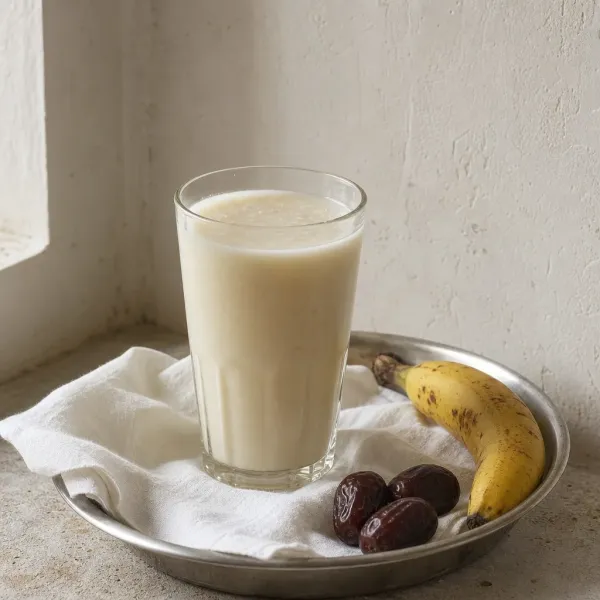
Thari Kanji
Traditional Mappila thari kanji made with roasted semolina, coconut milk and jaggery. A Malabar Ramadan iftar recipe from a Kerala kitchen.

Rose Milk (Roja Paal)
Classic Tamil Nadu rose milk made with a from-scratch rose syrup, full-fat chilled cow's milk, and optional sabja seeds. Simple, cold, and properly p…
Nannari Sharbat: Sarsaparilla Root Syrup Drink
Traditional Tamil Nadu nannari sharbat made from dried sarsaparilla root and rock sugar. A cooling summer syrup, stored and diluted to drink. Step-by…
Sukku Malli Coffee
Traditional Kongunad sukku malli coffee made with dry ginger, coriander seeds and jaggery. A warming medicinal drink, ready in 15 minutes.