

Thari Kanji Recipe
Malayalam തരി കഞ്ഞിTamil தரி கஞ்சிKannada ತರಿ ಕಂಜಿTelugu తరి కంజి
- Prep10 min
- Cook25 min
- Serves4
- DifficultyEasy
- DietVegan
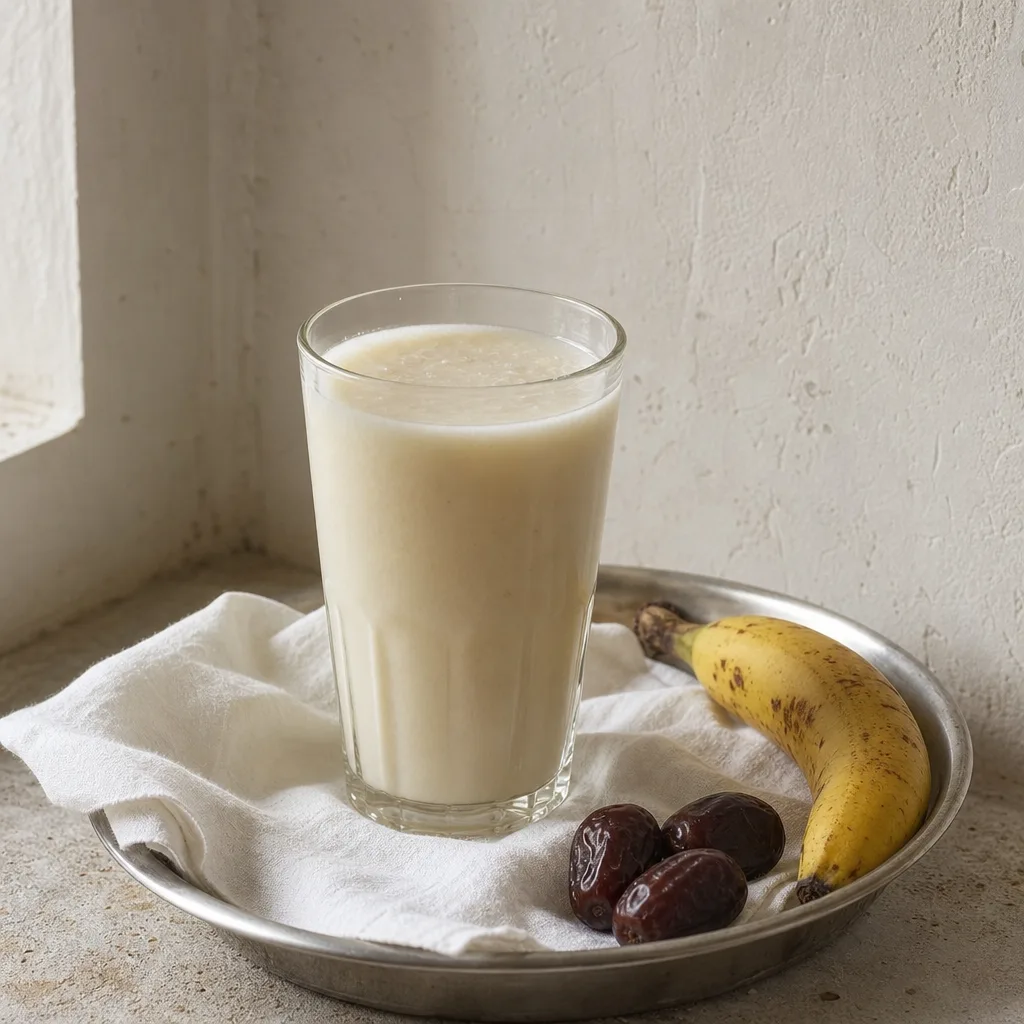
Thari Kanji is the drink that breaks the fast in many Mappila homes along the Malabar coast. It is made from roasted semolina cooked into a smooth, lightly spiced porridge with coconut milk and sweetened with jaggery. It is thin enough to drink from a glass, warming, and easy on a stomach that has been empty since before dawn.
It belongs firmly to the Ramadan table, served at iftar alongside dates, pazham (banana), and the other small savouries and sweets that come out in the evening. Families make it every day through the month, and the smell of semolina toasting in a dry pan is a Ramadan smell for anyone who grew up in a Malabar household.
The differences between families are small but firmly held. Jaggery gives a deeper, slightly caramel sweetness and is the older choice; white sugar gives a cleaner flavour and has become more common in towns. The cardamom is non-negotiable. Some grandmothers add a pinch of dried ginger powder for warmth; that detail is noted at the end.
Ingredients (serves 4)
For the kanji
Method
Extract the coconut milk
Grate one medium coconut and squeeze with 200 ml of warm water to get the thick first milk. Set this aside. Add another 600 ml of warm water to the same grated coconut and squeeze again for the thin second milk. Keep the two extracts separate. If you are using store-bought coconut milk, see the cook's notes.
Dissolve the jaggery
Combine the grated jaggery and 100 ml of water in a small pan over low heat. Stir until the jaggery is fully dissolved. Strain through a fine sieve to remove any grit or impurities. Set aside. Do this before you begin cooking the semolina so it is ready when you need it.
Dry-roast the semolina
Place a heavy-bottomed pan or uruli over medium-low heat with no oil or water. Add the semolina and stir continuously with a wooden spoon. Roast for 3 to 4 minutes until the grains smell nutty and turn very faintly golden — they should not brown. This step prevents lumps and gives the kanji its characteristic toasty undertone. Remove from the heat immediately and set aside.
Begin cooking in thin coconut milk
Return the same pan to medium-low heat and pour in the thin coconut milk. Bring it to a gentle simmer — do not let it boil hard or it may split. Add the pinch of salt.
Add the semolina
While stirring the simmering coconut milk constantly with one hand, pour the roasted semolina in a slow, steady stream with the other hand. This is the step where lumps form if you rush. Keep stirring as you pour and continue stirring for a full minute after all the semolina is in.
Cook to a smooth, flowing consistency
Reduce the heat to low and cook, stirring frequently, for 8 to 10 minutes. The mixture will thicken as the semolina absorbs the coconut milk. You want it pourable — thicker than water but thin enough to drink from a glass. If it thickens too much, add a splash of warm water and stir through.
Add the jaggery syrup
Pour the strained jaggery syrup into the cooked semolina and stir well. The mixture will loosen slightly when the syrup goes in. Taste for sweetness and add more dissolved jaggery if needed. Keep the heat on low.
Add the cardamom
Stir in the freshly ground cardamom. Cook for one more minute, stirring, so the spice is evenly distributed and the raw edge of the cardamom cooks off.
Finish with thick coconut milk
Remove the pan from the heat entirely before adding the thick coconut milk. Stir it in gently. Do not return the pan to the flame after this point — thick coconut milk splits and turns grainy if it boils. The kanji will be smooth, fragrant, and a pale cream colour throughout. Serve immediately.
How to serve
Dates (kajoor), ripe pazham (banana), and small Mappila iftar savouries such as unnakkai or sulaimani (black tea with spices) alongside.
Served with: Dates (kajoor), ripe pazham (banana), and small Mappila iftar savouries such as unnakkai or sulaimani (black tea with spices) alongside.
Cook's tips
Using store-bought coconut milk
One 400 ml tin of full-fat coconut milk diluted with 600 ml of water gives you a workable substitute. Use 200 ml of the undiluted tin as the thick milk and mix the remaining 200 ml with 600 ml of water as the thin milk. The flavour will be flatter than fresh but acceptable.
Dried ginger for warmth
Some older Malabar households add a small pinch of chukku (dried ginger powder) along with the cardamom. It adds a gentle warmth that is said to be good for the body after a long fast. Add no more than ⅛ tsp or it will overpower the cardamom.
Ghee finish
A few families stir in half a teaspoon of ghee just before serving. This is a personal choice and not universal; the dish is complete without it.
The lump problem
Lumps form when semolina hits still liquid or when it is poured all at once. Keep the liquid moving and pour slowly. If lumps do form despite this, press them against the side of the pan with the back of the spoon while the mixture is still thin enough to do so.
Consistency for serving
The kanji thickens further as it sits, even off the heat. If you are serving it a few minutes after cooking, thin it with a little warm water before you add the thick coconut milk. It should flow easily when you tilt the glass.
Regional variations
Some households cook the semolina in plain water and stir in only thick coconut milk at the end; a few use vermicelli (semiya) in place of semolina for a similar Ramadan kanji.
Glossary
- Thari തരി
- Semolina or fine broken grain; in Malabar usage it refers to fine wheat semolina (rava).
- Kanji കഞ്ഞി
- A cooked grain porridge or gruel; can be rice-based or, as here, semolina-based.
- Kudampuli കുടംപുളി
- Gamboge or Malabar tamarind; not used in this dish but listed here because it is a Malabar souring agent often confused with tamarind.
- Chukku ചുക്ക്
- Dried ginger; used as a warming spice in some versions of this kanji.
- Pazham പഴം
- Ripe banana; a common iftar accompaniment in Mappila households.
- Uruli ഉരുളി
- A wide, shallow brass or bell-metal cooking vessel traditional to Kerala kitchens.
Two things decide this kanji: the roasting of the semolina before it meets any liquid, and the discipline of keeping the heat off when the thick coconut milk goes in. Rush the roasting and you lose the nutty depth; boil the thick milk and you have a grainy, split porridge instead of a smooth one. Get those two moments right and the rest is straightforward.
More Beverages recipes

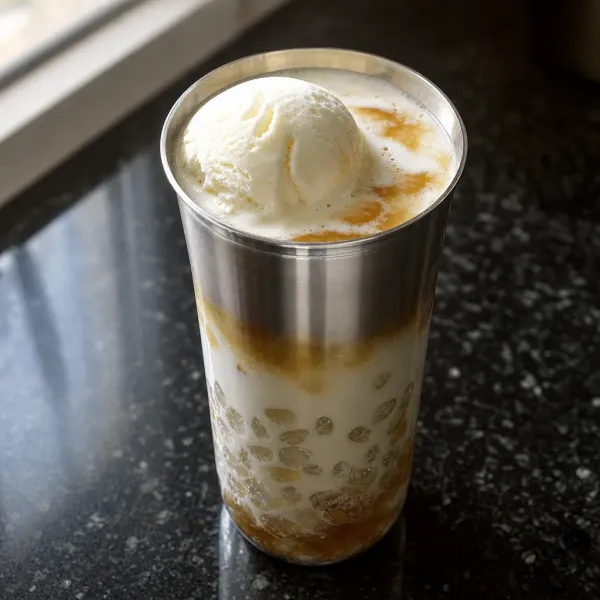
Madurai Jigarthanda
Traditional Madurai Jigarthanda with slow-reduced milk, soaked badam pisin, nannari syrup and milk ice cream. Authentic Tamil Nadu summer drink recip…
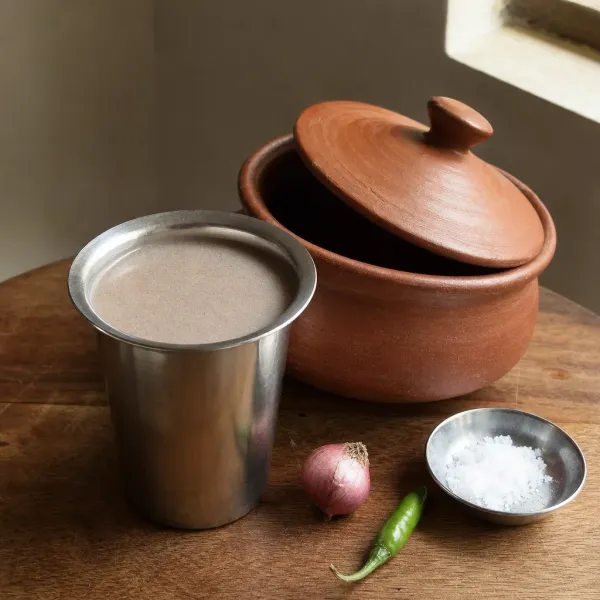
Ragi Ambali
Traditional North Karnataka ragi ambali: finger millet porridge fermented overnight in a clay pot, thinned with water and seasoned with salt at dawn.

Rose Milk (Roja Paal)
Classic Tamil Nadu rose milk made with a from-scratch rose syrup, full-fat chilled cow's milk, and optional sabja seeds. Simple, cold, and properly p…
Nannari Sharbat: Sarsaparilla Root Syrup Drink
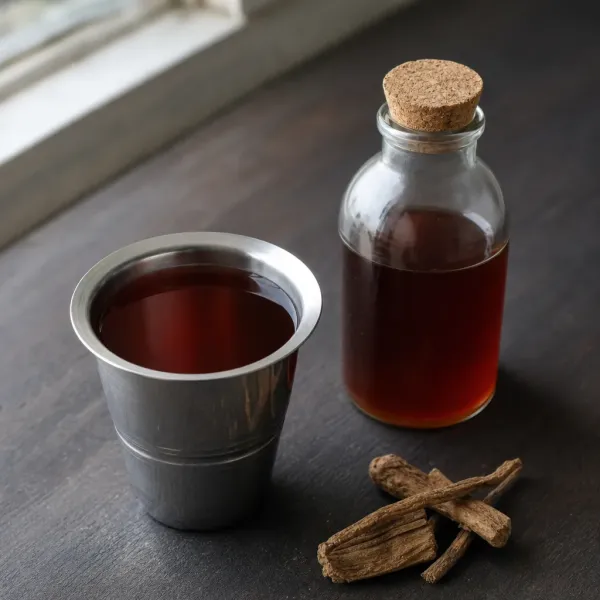
Traditional Tamil Nadu nannari sharbat made from dried sarsaparilla root and rock sugar. A cooling summer syrup, stored and diluted to drink. Step-by…