

Kashayam Recipe
Malayalam കഷായംTamil கஷாயம்Kannada ಕಷಾಯTelugu కషాయం
- Prep5 min
- Cook20 min
- Serves2
- DifficultyEasy
- DietVegan
In Kerala households, this is not a recipe so much as a reflex. When someone comes home with a sore throat, a dripping nose, or the beginning of a fever, someone heads to the kitchen and starts this. It takes twenty minutes and uses things that are always in the house. No one measures carefully; the proportions here are a reliable starting point, not a law.
The logic of the drink is simple: long simmering draws out the volatile oils from the spices into the water. The liquid reduces to roughly half, which concentrates both the flavour and the medicinal properties. Jaggery is added at the end, never at the beginning, because boiling jaggery for too long makes the drink bitter. Tulsi leaves are bruised before they go in so the oils release quickly.
How families differ: some add a small piece of dried ginger (chukku) alongside fresh ginger, making it sharper. Some households add a small piece of cinnamon or a single clove. Some skip the coriander seeds entirely and use only ginger, pepper and tulsi. All of these are genuine. The version below is the most common base, and you can adjust from there based on what the person drinking it needs.
Ingredients (serves 2)
For the decoction
Method
Bruise the aromatics
Place the ginger on your cutting board and press it flat with the back of a heavy knife or a stone pestle – you want it split open, not sliced. Crack the black pepper lightly in a mortar; you are not grinding it, just breaking each corn once or twice so the interior is exposed. Pinch the tulsi leaves firmly between your fingers and rub them briefly to release their oil. This bruising step matters: whole, unbruised spices will not give up their flavour fully in a short boil.
Combine water and spices
Pour the 500 ml of water into a small heavy saucepan or a brass vessel if you have one. Add the bruised ginger, cracked pepper, and coriander seeds. Do not add the tulsi or jaggery yet. Set the pan over medium heat and bring to a full boil, which will take about four to five minutes.
Simmer to reduce
Once the water is boiling, lower the heat to medium-low and let it simmer steadily, uncovered. You want a visible but gentle simmer, not a rolling boil that steams off everything too fast. Simmer for twelve to fifteen minutes. The liquid should reduce to approximately 250 ml – roughly half the original volume. The water will turn a pale amber-brown and smell strongly of pepper and ginger.
Add the tulsi
Drop in the bruised tulsi leaves and stir them in. Keep the heat on medium-low and let the decoction simmer for two more minutes only. Tulsi loses its fragrance quickly with prolonged heat, so do not add it earlier and do not continue boiling after this point.
Add jaggery and dissolve
Take the pan off the heat. Add the grated jaggery and stir until it dissolves completely in the hot liquid. Adding jaggery off the heat, or with only residual heat, keeps it from turning bitter. Taste and add a little more jaggery if needed, but the drink should be more spiced than sweet.
Strain and serve
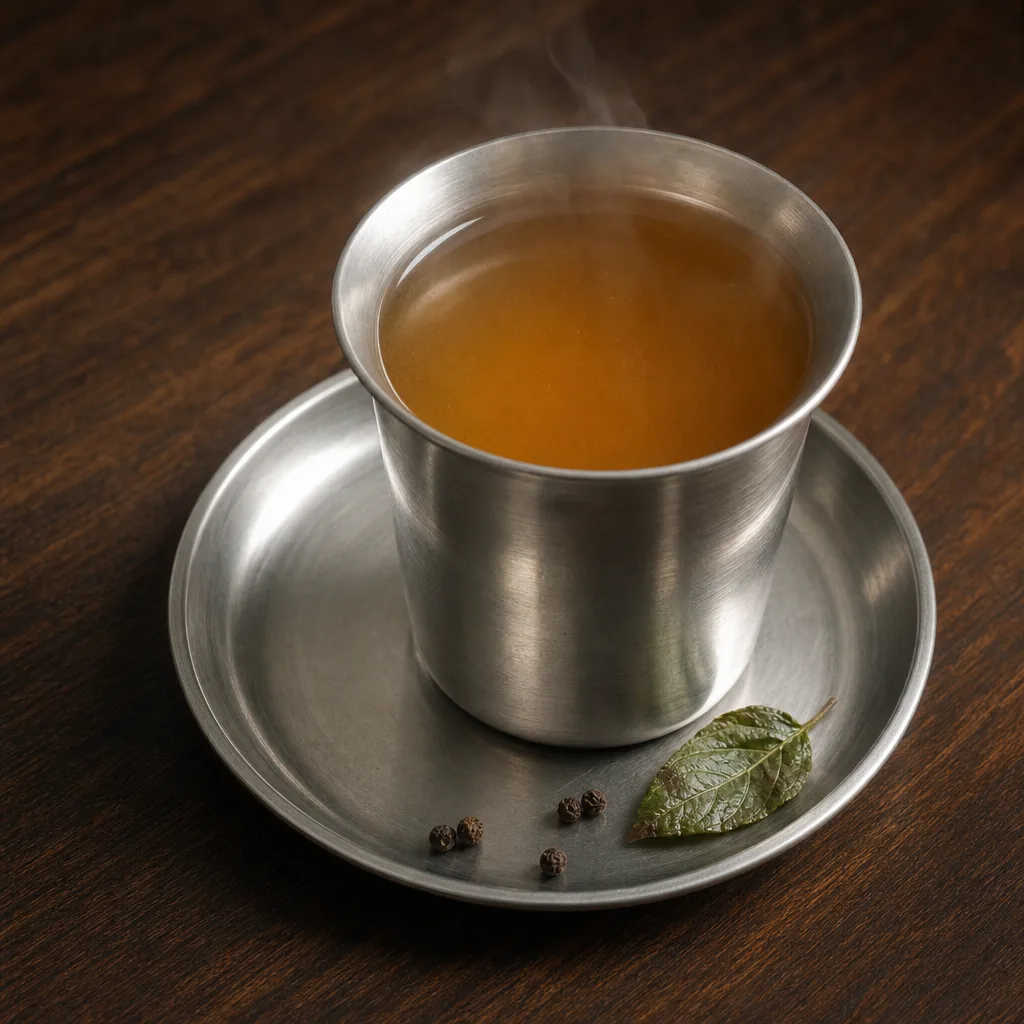
Strain through a fine sieve or a clean muslin cloth into a small steel tumbler or a cup. Discard the spent spices. Serve immediately while hot. The drink should be a warm amber colour, slightly cloudy from the pepper, and smell sharply of ginger and pepper with the green note of tulsi underneath.
How to serve
Drunk on its own, usually in the morning on an empty stomach or before bed. No food accompaniment is traditional. Some families serve a small piece of raw ginger or a few peppercorns to chew after, but this is not universal.
Served with: Drunk on its own, usually in the morning on an empty stomach or before bed. No food accompaniment is traditional. Some families serve a small piece of raw ginger or a few peppercorns to chew after, but this is not universal.
Cook's tips
Dry ginger variation
If someone in the house has a bad chest cold, replace the fresh ginger with a small piece of dry ginger (chukku), about half a teaspoon grated. Dry ginger is considered hotter and more penetrating in traditional Kerala medicine. You can also use both: a small amount of each.
Do not add jaggery too early
Jaggery boiled for more than a minute or two in a spiced liquid turns bitter and slightly astringent. Always add it after you have taken the pan off the heat, or in the very last thirty seconds of cooking.
Tulsi goes in last
The volatile oils in tulsi evaporate fast. If you add it at the beginning with the other spices you will lose the fragrance entirely. Two minutes at the end is enough.
Adjusting strength
For a child or someone with a sensitive stomach, halve the pepper and reduce the ginger to half an inch. For someone with a severe cold or fever, some households double the pepper and add a quarter teaspoon of dry ginger powder on top of the fresh ginger.
Storage
Make it fresh each time. It takes under twenty minutes and loses its aromatic quality within a couple of hours. There is no benefit to making a large batch.
Regional variations
Tamil Brahmin households make a similar karuppu kashayam leaning heavily on dry ginger and pepper with no tulsi; Andhra households make a chukku kaapi with dry ginger, pepper and palm jaggery; Ayurvedic preparations (dasamoolam kashayam, amrutharishtam) are pharmaceutical and distinct from home cooking.
Glossary
- Kashayam കഷായം
- A herbal decoction; in Ayurvedic practice, any liquid medicine made by boiling plant material in water until reduced.
- Chukku ചുക്ക്
- Dried ginger; considered distinct from fresh ginger in Kerala cooking and traditional medicine, with a sharper and more concentrated heat.
- Tulsi തുളസി
- Holy basil (Ocimum tenuiflorum); used both in household worship and in home remedies for respiratory complaints across Kerala.
- Jaggery ശർക്കര
- Unrefined cane or palm sugar; in Kerala, palm jaggery (karuppatti) is also used and has a deeper, slightly smoky flavour.
- Pachari പച്ചരി
- Raw rice; mentioned here only in the glossary context of the template, not an ingredient in this recipe.
Two things decide whether this works: the reduction and the jaggery timing. If you do not simmer long enough, the spices have not had time to release into the water and the drink tastes thin. If you add the jaggery while the pan is still on a hard boil, it turns bitter and the whole cup is unpleasant. Get those two right and the rest follows.
More Beverages recipes
Madurai Jigarthanda
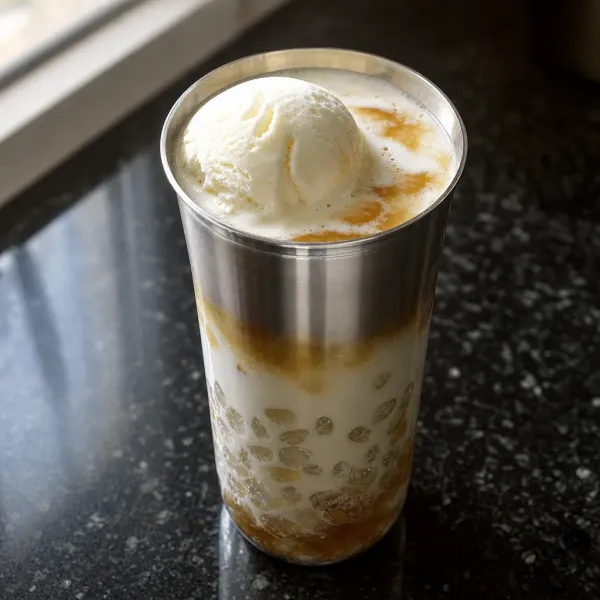
Traditional Madurai Jigarthanda with slow-reduced milk, soaked badam pisin, nannari syrup and milk ice cream. Authentic Tamil Nadu summer drink recip…
Thari Kanji
Traditional Mappila thari kanji made with roasted semolina, coconut milk and jaggery. A Malabar Ramadan iftar recipe from a Kerala kitchen.

Rose Milk (Roja Paal)
Classic Tamil Nadu rose milk made with a from-scratch rose syrup, full-fat chilled cow's milk, and optional sabja seeds. Simple, cold, and properly p…
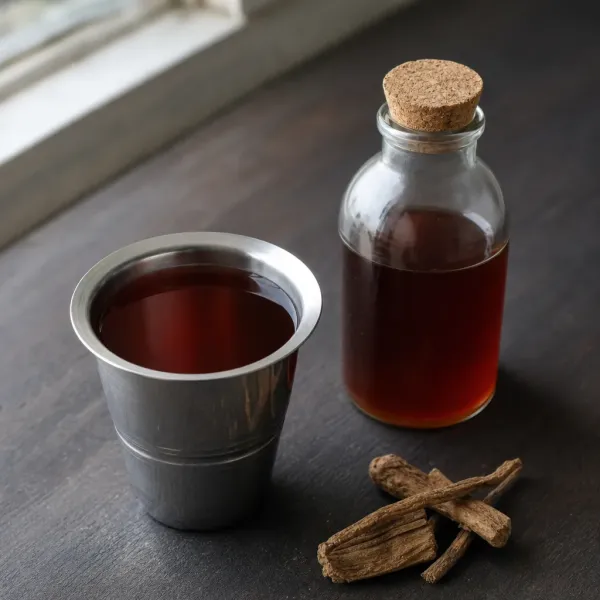
Nannari Sharbat: Sarsaparilla Root Syrup Drink
Traditional Tamil Nadu nannari sharbat made from dried sarsaparilla root and rock sugar. A cooling summer syrup, stored and diluted to drink. Step-by…
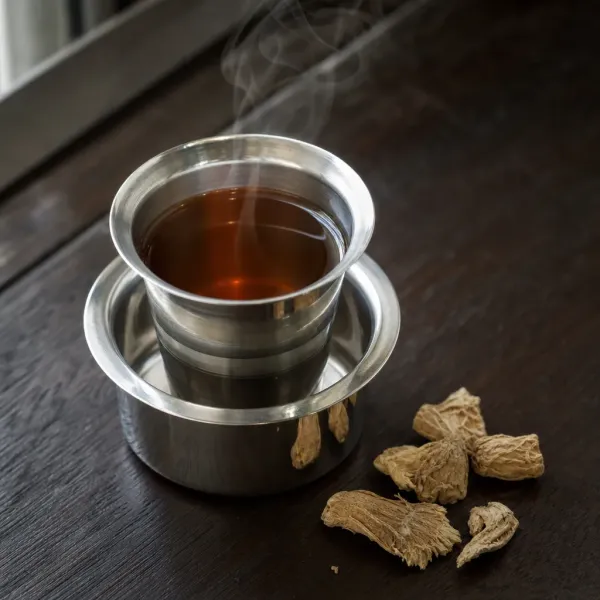
Sukku Malli Coffee
Traditional Kongunad sukku malli coffee made with dry ginger, coriander seeds and jaggery. A warming medicinal drink, ready in 15 minutes.