

Kadamba Kuzhambu Recipe
Malayalam കദംബ കുഴമ്പ്Tamil கதம்ப குழம்புKannada ಕದಂಬ ಕುಳಂಬುTelugu కదంబ కుళంబు
- Prep30 min
- Cook50 min
- Serves6
- DifficultyMedium
- DietVegan
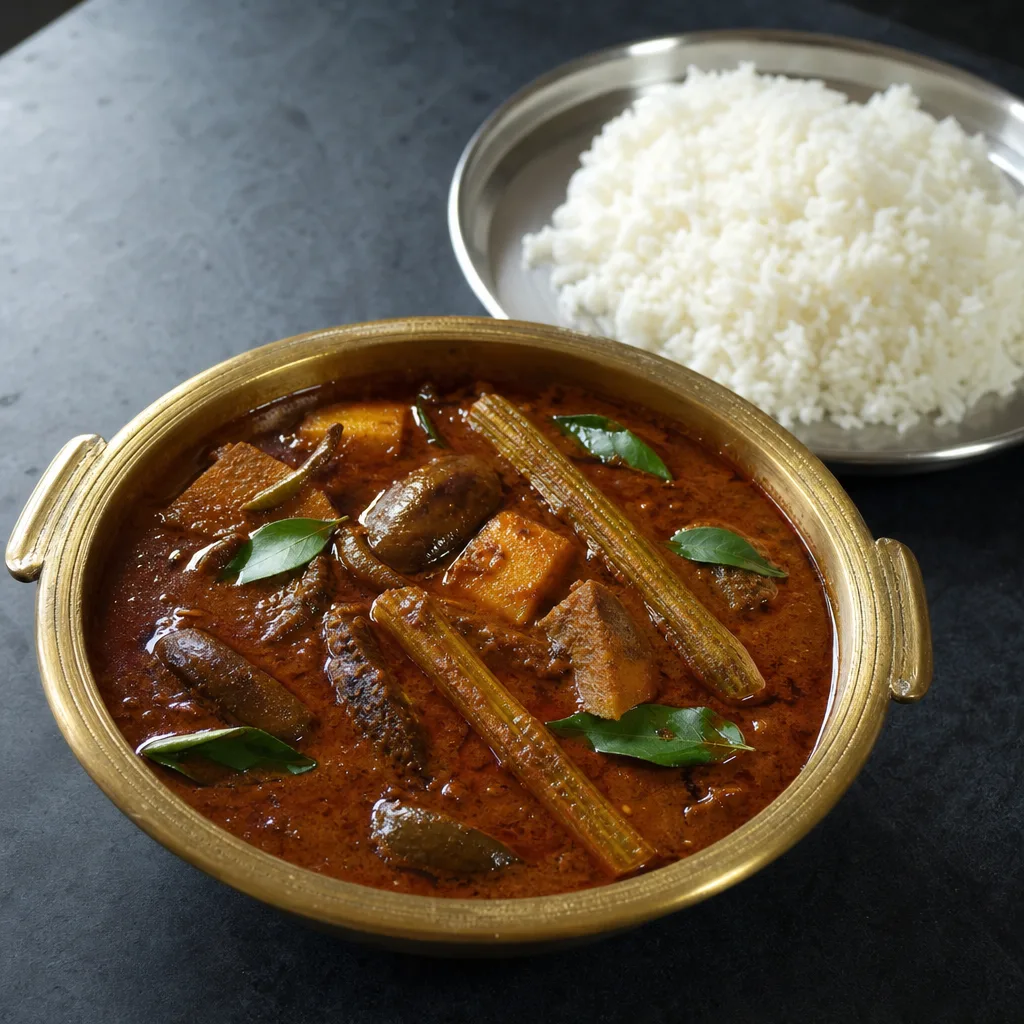
Kadamba kuzhambu is a festival or temple-day dish. Kadamba means a cluster or gathering, and that is exactly what this is: a tamarind kuzhambu in which many vegetables – whatever is auspicious and in season – are cooked together in a single pot. In agraharam kitchens it appears on Karthigai Deepam, on ekadasi days, and whenever a large household needs one pot to feed many people from whatever the garden or the bazaar has offered that morning.
The base is toor dal cooked until soft but not mashed. Into that goes a tamarind extract, a handful of vegetables cut into generous pieces, and a freshly ground paste of coconut, dried red chillies, coriander seeds, and a little chana dal that has been dry-roasted until fragrant. The paste is what gives this kuzhambu its body and its particular rounded heat, quite different from the sharper edge of a regular puli kuzhambu. Gingelly oil and a mustard-curry leaf tadka finish it.
At home the vegetable selection is flexible within a range: raw banana, drumstick, brinjal, yam, raw jackfruit, field beans, and small colocasia are all traditional. Shallots are used in some households, avoided in others on temple-cooking days. The dish should be thick enough to coat rice, not pourable like sambar. It keeps well and is considered to taste better the next day.
Ingredients (serves 6)
Vegetables
Dal and tamarind
For the ground paste
Spices and seasoning
For the tadka
Method
Cook the toor dal
Put the rinsed toor dal in a heavy pot with 300 ml water and a pinch of turmeric. Bring to a boil, skim any foam, then cover and cook on a medium-low flame for 25 to 30 minutes until the dal is completely soft and can be mashed between your fingers. Do not drain. Mash it roughly with the back of a ladle – you want it smooth but not completely puréed. Set aside.
Soak the tamarind
While the dal cooks, break the tamarind into the warm water and let it sit for 15 minutes. Squeeze the pulp thoroughly with your fingers, working out all the flesh from the fibres. Strain through a sieve, pressing hard. Discard the fibres and seeds. You should have about 200 ml of thick extract.
Dry-roast and grind the paste
In a small dry kadai over a low flame, add the chana dal and stir until it turns a pale golden and smells nutty, about 2 minutes. Add the coriander seeds, dried red chillies, peppercorns, and cumin, and roast together for another minute until the spices are fragrant and the chillies deepen in colour slightly. Do not let anything blacken. Tip onto a plate to cool. Once cool, grind with the grated coconut and about 4 tbsp of water to a smooth, thick paste. The paste should hold its shape on a spoon.
Par-cook the harder vegetables
In a wide, heavy pot, bring 400 ml of water to a boil with the remaining turmeric and a little salt. Add the yam, colocasia, and field beans first, as they take longest. Cook covered for 8 minutes on a medium flame. They should be about halfway cooked – a knife should meet some resistance.
Add the remaining vegetables
Add the raw banana, drumstick, and brinjal to the pot. Pour in the strained tamarind extract. Stir, cover, and cook for another 8 to 10 minutes until all the vegetables are just cooked through but still holding their shape. Brinjal should be tender but not collapsing. Drumstick should yield when you press a piece against the side of the pot.
Add the dal
Pour the mashed toor dal into the vegetable pot and stir well. The mixture will thicken noticeably. If it looks too thick to stir freely, add up to 100 ml of hot water. Bring back to a gentle boil.
Stir in the ground paste
Add the ground coconut-spice paste and the grated jaggery. Stir thoroughly so the paste disperses evenly – there should be no streaks of white. Simmer uncovered on a low flame for 8 to 10 minutes, stirring occasionally. The raw smell of coconut must cook out completely; the kuzhambu should smell of roasted coriander and tamarind. It will thicken further as it simmers. The finished consistency should coat the back of a spoon heavily.
Check seasoning
Taste and adjust salt. The flavour should be sour from tamarind, gently hot, and rounded by the coconut and jaggery. If it tastes flat, a little more salt usually fixes it before you reach for anything else. Keep the pot on the lowest flame while you prepare the tadka.
Make the tadka
Heat the gingelly oil in a small tadka pan over a medium flame until it shimmers. Add the mustard seeds and wait for them to pop – this takes about 30 seconds. Add the broken dried chillies and let them darken for 10 seconds. Add the curry leaves carefully as they will splutter, then the asafoetida. Swirl the pan once and immediately pour everything over the kuzhambu.
Rest and serve
Cover the pot and let the kuzhambu sit for 5 minutes before serving. This brief rest lets the tadka flavours settle into the kuzhambu. The colour should be a deep reddish-brown, the surface glistening with the gingelly oil.
How to serve
Hot cooked matta rice or sona masoori rice. A small amount of ghee may be added to the rice by those who eat it. Papad and a simple kootu or thoran alongside.
Served with: Hot cooked matta rice or sona masoori rice. A small amount of ghee may be added to the rice by those who eat it. Papad and a simple kootu or thoran alongside.
Cook's tips
Vegetable choices
The vegetable list is traditional but not fixed. Raw jackfruit (chakka kuru), ash gourd, and cluster beans all appear in different households. What matters is that you include at least four or five vegetables and that they vary in texture. Avoid watery vegetables like bottle gourd, which dilute the kuzhambu.
Handling yam and colocasia
Both can cause itching on bare skin. Oil your hands lightly before peeling. Cooking them in tamarind water also neutralises the irritant compounds, which is one reason the tamarind is added early in this recipe.
The paste must be smooth
A coarse paste leaves the kuzhambu grainy and the coconut does not cook into the base properly. If your grinder is small, grind in two batches, adding water a tablespoon at a time.
Gingelly oil is not optional
The particular nuttiness of gingelly oil is part of the flavour of this dish. Coconut oil changes it significantly. Refined sunflower oil makes it taste flat.
Next-day flavour
Like most tamarind-based kuzhambu, this tastes noticeably better reheated the next day. Store in a steel or ceramic container, not aluminium, as tamarind reacts with aluminium overnight.
Temple-day version without shallots
On strictly observed temple-cooking days, many Iyer households omit shallots entirely and also avoid garlic. This recipe already reflects that. If your household uses shallots, 10 to 12 small shallots, halved, can be added with the harder vegetables in step 4.
Regional variations
Udupi temple version uses a different roasted coconut-spice paste and a slightly sweeter profile; some Vellalar households add drumstick and omit the coconut entirely; a Mudaliar version includes small pearl onions where Iyers avoid them.
Glossary
- Kuzhambu குழம்பு
- A Tamil term for a thick, spiced gravy, usually tamarind-based; distinct from sambar in its consistency and spicing.
- Kadamba கதம்ப
- Means a cluster or gathering; here referring to the many vegetables cooked together.
- Gingelly oil / Nallennai நல்லெண்ணெய்
- Cold-pressed sesame oil used in Tamil cooking; has a distinctive nutty flavour quite different from the pale refined sesame oil used in East Asian cooking.
- Perungayam பெருங்காயம்
- Asafoetida; used in Brahmin cooking as a flavour base in place of garlic and onion on certain days, and generally as a digestive aid.
- Senai kizhangu சேனைக்கிழங்கு
- Elephant foot yam; a starchy tuber with a slightly sticky texture that firms up when cooked in tamarind.
- Seppankizhangu சேப்பங்கிழங்கு
- Colocasia or taro root; smaller and more slippery than yam, needs tamarind to neutralise its itch-causing compounds.
- Mochai மொச்சை
- Field beans or hyacinth beans; used fresh in season or dried and soaked; adds a meaty, earthy note to the kuzhambu.
- Tadka / Thalippu தாளிப்பு
- The tempering of whole spices in hot oil poured over a finished dish to add fragrance.
Two things decide whether this works: the ground paste and the simmering time after it is added. The paste must be genuinely smooth, and it must cook in the kuzhambu long enough for the raw coconut smell to disappear completely – at least eight minutes on a low flame. Rush either of those and the kuzhambu will taste raw and heavy rather than rounded and deep.
More Vegetarian Gravies recipes
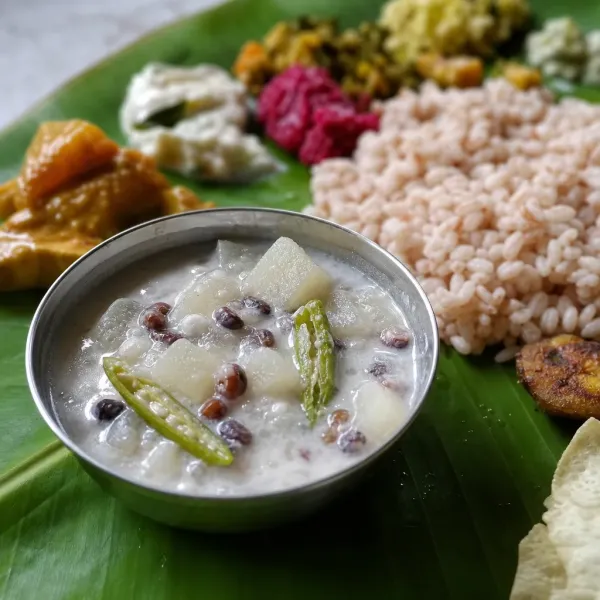
Olan
Traditional Kerala Olan recipe with ash gourd, vanpayar, and fresh coconut milk. A Sadya essential from the Travancore kitchen, cooked the household…
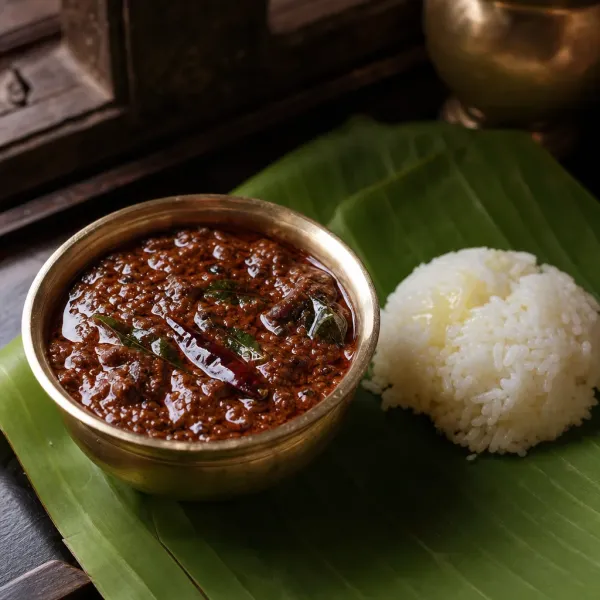
Menthya Gojju
Traditional Karnataka menthya gojju: dry-roasted fenugreek seeds in tamarind, jaggery and fresh coconut paste. Balanced bitter, sour and sweet.
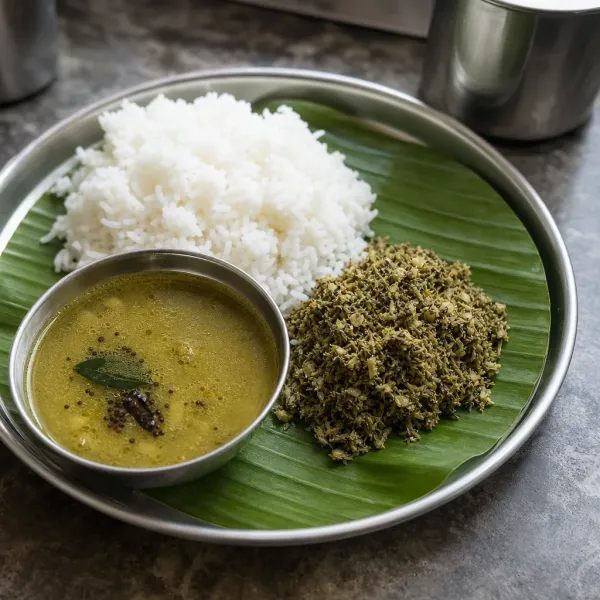
Bassaru
Traditional Karnataka bassaru: toor dal and dill cooked together, strained into a spiced coconut broth and a dry palya. Vokkaliga household recipe.
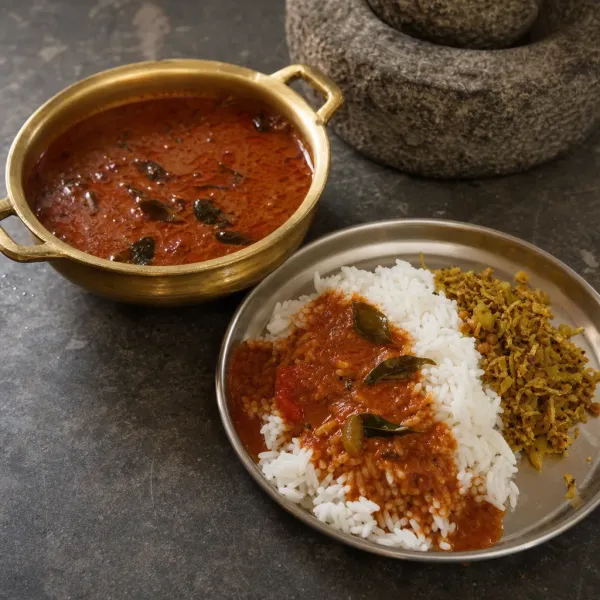
Thakkali Kuzhambu
Traditional Tamil Iyer thakkali kuzhambu with ripe country tomatoes, tamarind, shallots, and freshly roasted kuzhambu podi in gingelly oil.
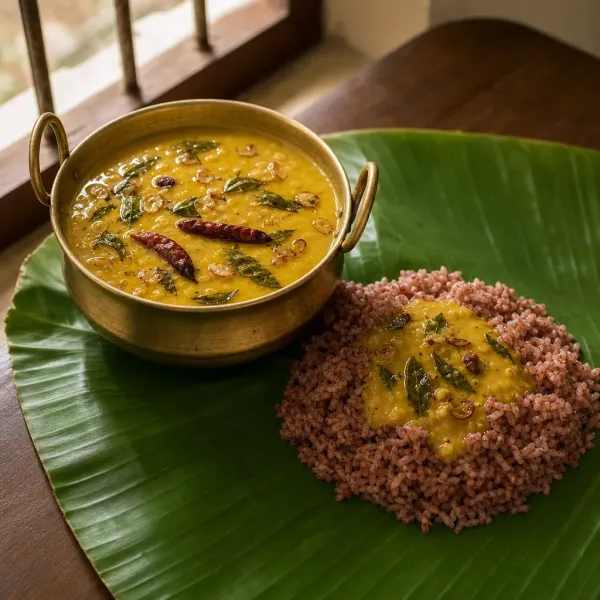
Parippu Curry
Traditional Kerala sadya parippu curry made with split moong dal, freshly ground coconut paste and a coconut oil tempering. Step-by-step home recipe.
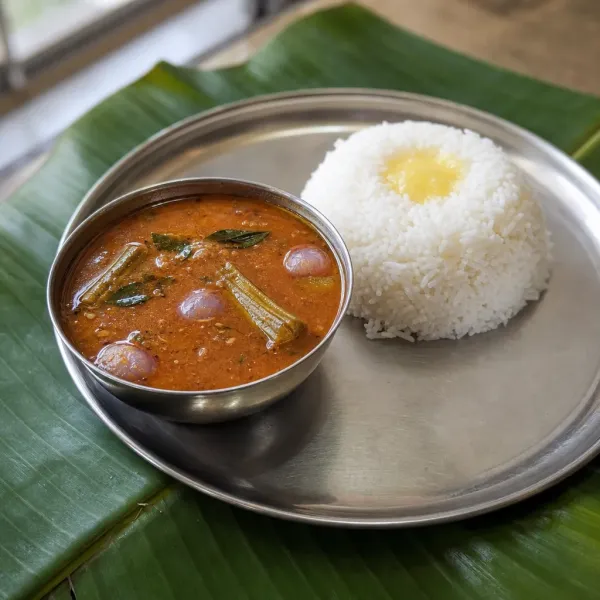
Arachuvitta Sambar (Tamil Brahmin Style, Freshly Ground Masala)
Traditional Tamil Brahmin arachuvitta sambar with freshly ground coconut masala, toor dal, drumstick, and tamarind. No sambar powder, no tomato.