

Parippu Curry Recipe
Malayalam പരിപ്പ് കറിTamil பருப்பு கறிKannada ಪರಿಪ್ಪು ಕರಿTelugu పరిప్పు కూర
- Prep10 min
- Cook35 min
- Serves6
- DifficultyEasy
- DietVegan
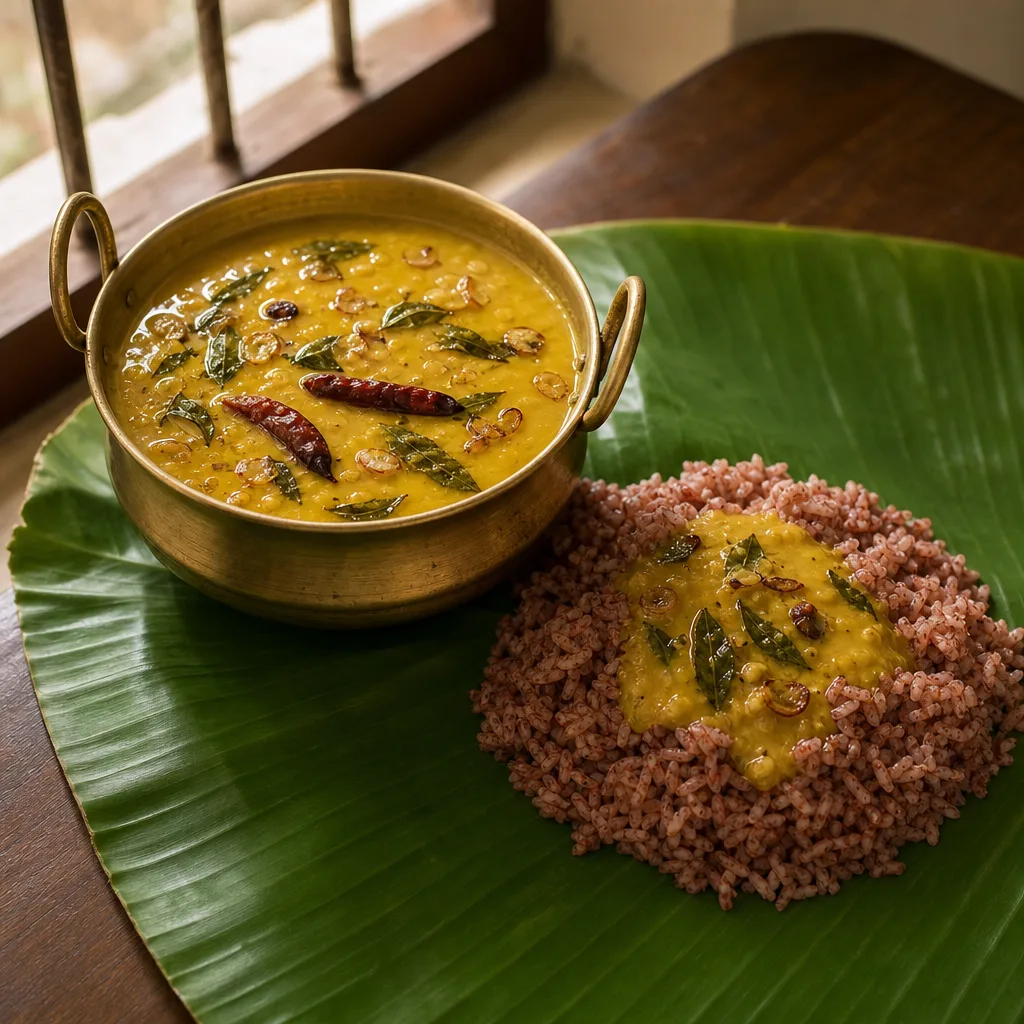
This is the first curry that goes onto the banana leaf at a Kerala sadya, poured directly over the mound of matta rice before anything else is served. It is a gentle, golden dal — cooked moong dal finished with freshly ground coconut paste and tempered in coconut oil with mustard, dried red chilli and curry leaf. The texture sits between a thick soup and a soft gravy: pourable but not watery, with the coconut giving it a faint sweetness that anchors everything else on the leaf.
Most Kerala households use split moong dal (cherupayar parippu) for the sadya version. It cooks quickly, holds a soft yellow colour, and does not turn heavy the way toor dal can. The coconut paste is ground with a little cumin and one green chilli — enough to add warmth without heat. Turmeric goes in with the dal while it cooks, so the colour comes from inside, not from the tempering.
How much coconut you use is a household decision. Some families grind a full cup and get a thick, almost creamy curry. Others use half that and keep it lighter. Both are correct. What is not variable is the final tempering: it must be done in coconut oil, and the mustard seeds must finish popping before the curry leaf goes in, or the leaf will not crisp and will taste raw.
Ingredients (serves 6)
For the dal
For the coconut paste
For the tempering (tadka)
Method
Cook the dal
Put the washed moong dal in a pressure cooker with 600 ml water and the turmeric. Close the lid and cook on medium heat for 3 whistles, then take it off the flame and let the pressure drop on its own. When you open it, the dal should be completely soft and just beginning to collapse — if individual grains are still firm, close the cooker and give it one more whistle.
Mash the dal
Use the back of a ladle or a whisk to mash the cooked dal until it is smooth but not completely paste-like — a little texture is fine. Add salt and stir it through. The consistency at this point will be thicker than the finished curry; that is correct.
Grind the coconut paste
Put the grated coconut, cumin seeds, green chilli and 3 tbsp water into a small mixer jar. Grind to a smooth, fine paste. Stop and scrape down the sides once or twice. If you grind it coarse, you will feel the coconut in the finished curry, which is not right for this dish.
Add coconut paste to the dal
Set the mashed dal over low heat. Stir in the coconut paste and mix well so there are no streaks of white. Add water in small splashes — about 100 to 150 ml — until the curry flows slowly off the ladle when you lift it. It should coat the ladle lightly, not run off like water.
Simmer gently
Keep the heat low and let the curry simmer for 6 to 8 minutes, stirring every minute or so to prevent the coconut from catching at the bottom. The colour will deepen very slightly from pale yellow to a warm gold. Do not let it boil hard — a rolling boil can make the coconut paste separate and the curry will look grainy.
Check and adjust salt
Taste now and add more salt if needed. The curry should be mildly savoury with a faint sweetness from the coconut. Take it off the heat while you prepare the tempering.
Make the tempering
Heat coconut oil in a small tempering pan or a heavy-bottomed ladle over medium heat until it shimmers. Add the mustard seeds and wait — do not stir — until they finish popping completely. Add the broken dried red chillies and let them darken for about 10 seconds. Add the sliced shallots and fry, stirring, until they turn golden at the edges, about 2 minutes. Drop in the curry leaves last and stand back; they will splutter hard. Let them crisp for 15 seconds.
Pour tempering over the dal
Pour the entire contents of the tempering pan over the curry and stir it in. The curry will take on the fragrance of the coconut oil and the toasted shallots immediately. Serve within 20 minutes for the best flavour; the tempering loses its edge if it sits too long.
How to serve
Matta rice (the first pour on a sadya banana leaf); also eaten with plain rice on ordinary days, with a small papad alongside.
Served with: Matta rice (the first pour on a sadya banana leaf); also eaten with plain rice on ordinary days, with a small papad alongside.
Cook's tips
Fresh coconut is not optional here
Desiccated coconut gives a dry, slightly bitter taste and will not grind smooth enough. If fresh coconut is unavailable, frozen grated coconut thawed at room temperature is an acceptable substitute. Do not use coconut milk powder in place of the paste — it changes the texture entirely.
Consistency check before serving
Parippu curry thickens as it sits. If it has been made ahead, stir in a few tablespoons of warm water and reheat gently before serving. Do not reheat on high heat or the coconut will separate.
The shallots in the tempering
Some households skip the shallots in the tempering and keep it to mustard, chilli and curry leaf only. Both are traditional. With shallots, the curry is slightly richer and more savoury; without, it is cleaner and lighter.
Pressure cooker shortcut
If you do not have a pressure cooker, cook the dal in a covered pot with 750 ml water on medium-low heat for 30 to 40 minutes, topping up water as needed. It takes longer but the result is the same.
Regional variations
Malabar households sometimes add a small piece of kudampuli and skip the coconut; Palakkad Iyer kitchens make a thinner, more turmeric-forward version without the coconut tempering.
Glossary
- Cherupayar parippu ചെറുപയർ പരിപ്പ്
- Split moong dal; the small yellow lentil used for the sadya curry.
- Kudaku കടുക്
- Mustard seeds used for tempering in Kerala cooking.
- Kariveppila കറിവേപ്പില
- Curry leaf; the fresh sprig added to the tempering.
- Cheriya ulli ചെറിയ ഉള്ളി
- Shallots; the small, pungent onion used throughout Kerala cooking, distinct from regular onions.
- Kollamulaku കൊല്ലമുളക്
- Dried red chilli used in tempering; adds colour and a mild background heat.
- Tadka തലിക്കൽ
- The tempering of whole spices in hot fat poured over a finished dish to finish it.
Two things decide whether this curry works: the coconut paste must be ground to a genuinely smooth consistency, and the final simmer after adding it must be slow and unhurried. Rush either of those and you get a grainy curry that smells of raw coconut. Get them right and you have the quiet, golden dal that every sadya begins with.
More Vegetarian Gravies recipes
Ennai Kathirikai Kuzhambu
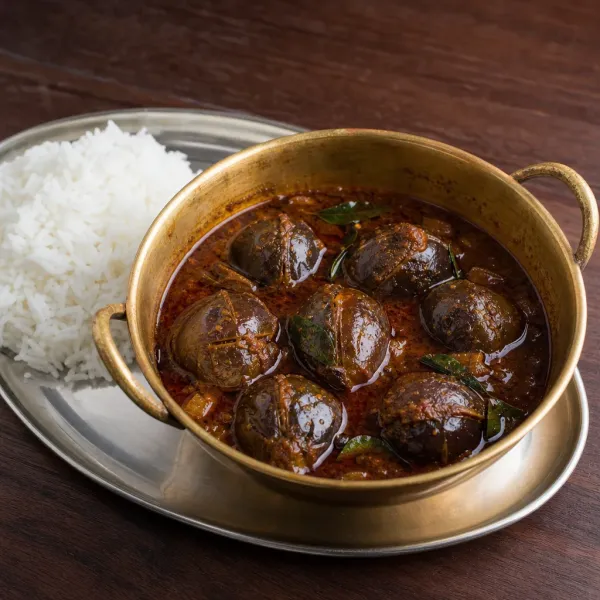
Traditional Chettinad ennai kathirikai kuzhambu: small brinjals stuffed with dry-roasted spice paste, fried in gingelly oil and simmered in tamarind…
Olan
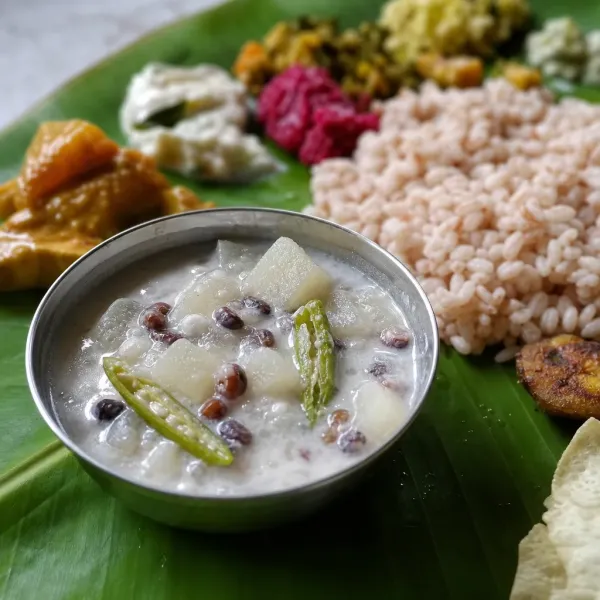
Traditional Kerala Olan recipe with ash gourd, vanpayar, and fresh coconut milk. A Sadya essential from the Travancore kitchen, cooked the household…
Kadamba Kuzhambu
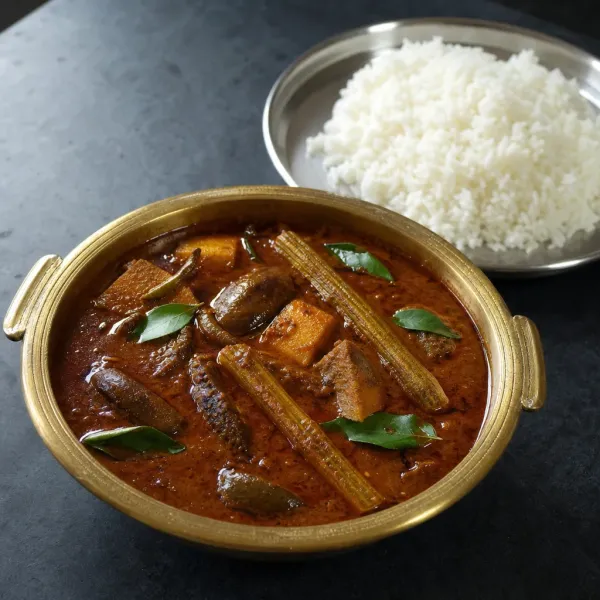
Traditional Tamil Brahmin kadamba kuzhambu with many vegetables, toor dal, tamarind, and a freshly ground coconut-spice paste. Temple-day recipe.
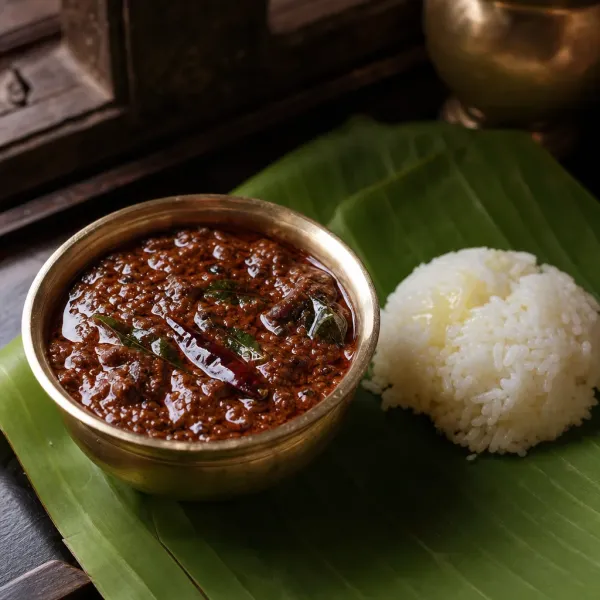
Menthya Gojju
Traditional Karnataka menthya gojju: dry-roasted fenugreek seeds in tamarind, jaggery and fresh coconut paste. Balanced bitter, sour and sweet.
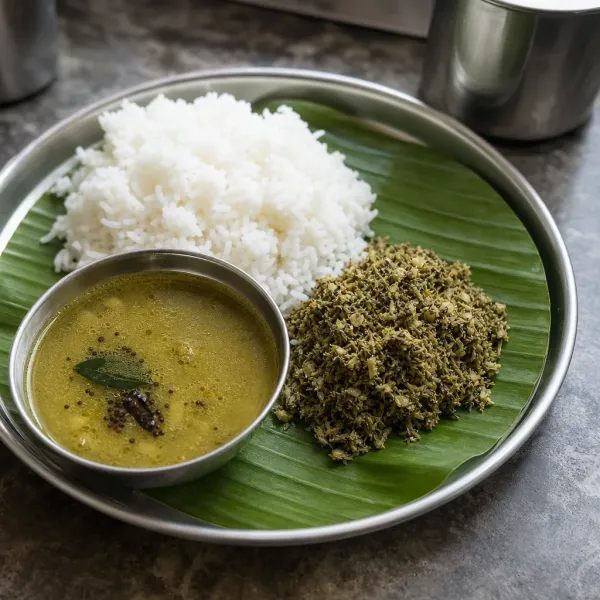
Bassaru
Traditional Karnataka bassaru: toor dal and dill cooked together, strained into a spiced coconut broth and a dry palya. Vokkaliga household recipe.
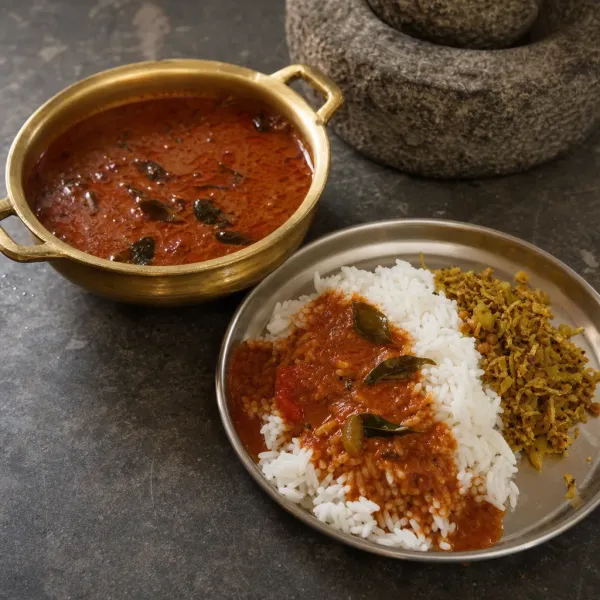
Thakkali Kuzhambu
Traditional Tamil Iyer thakkali kuzhambu with ripe country tomatoes, tamarind, shallots, and freshly roasted kuzhambu podi in gingelly oil.