

Mappila Chicken Kurma Recipe
Malayalam മാപ്പിള ചിക്കൻ കുർമ്മTamil மாப்பிள சிக்கன் குர்மாKannada ಮಾಪ್ಪಿಳ ಚಿಕನ್ ಕುರ್ಮಾTelugu మాప్పిళ చికెన్ కుర్మా
- Prep25 min
- Cook45 min
- Serves4
- DifficultyMedium
- DietNon-vegetarian
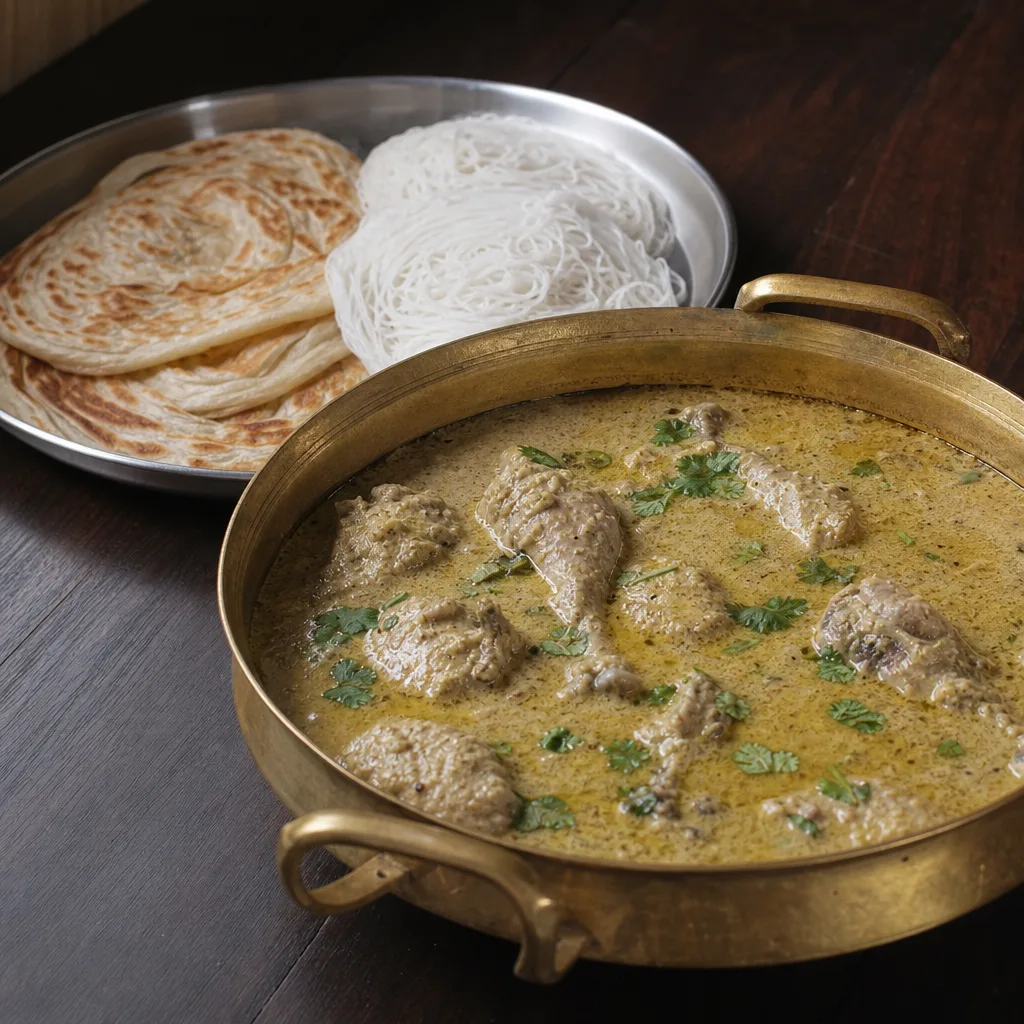
Mappila kurma comes from the Muslim households of Malabar — Kozhikode, Malappuram, Kannur — and it is the natural partner for parotta and idiyappam at weddings, feasts, and Friday lunches. It is not a light coconut stew. The gravy is rich and opaque, built on a freshly ground paste of coconut, cashews, and whole spices, and the colour is a warm ivory-gold from that paste rather than from tomato or turmeric alone.
The dish sits somewhere between a korma and a thick curry. It is not dry, but it should coat a piece of parotta rather than run off it. The fat that surfaces at the end, if you look carefully, is coconut oil carrying the fragrance of fennel and cardamom. That is the sign the masala has cooked through properly.
Households differ mainly in the ratio of cashews to coconut in the paste — more cashews gives a richer, slightly sweeter body — and in whether they add a small piece of stone flower (kalpaasi) to the whole spices. Both are genuine. Some cooks add a tablespoon of thick curd after the paste to sharpen the gravy slightly; others do not. This recipe follows the more common version without curd.
Ingredients (serves 4)
For the chicken
For the ground paste
For cooking
Method
Marinate the chicken
Toss the chicken pieces with the turmeric and salt. Set aside while you prepare everything else, at least 15 minutes at room temperature. Do not add anything else to the marinade; the flavour here comes from the paste and the slow cooking, not from a long marinade.
Grind the paste
Drain the soaked cashews. Put the grated coconut, drained cashews, fennel seeds, cardamom, cloves, cinnamon, peppercorns, and coriander seeds into a grinder with 4 tablespoons of water. Grind to a very smooth, fine paste — this takes 3 to 4 minutes in a table-top wet grinder or a powerful blender. The paste should feel silky, with no gritty coconut or whole-spice fragments remaining. A coarse paste will leave a raw, grainy texture in the finished gravy.
Fry the shallots
Heat the coconut oil in a wide, heavy-bottomed vessel over medium flame. Add the tempering spices — bay leaf, cardamom, cloves, cinnamon — and let them sizzle for 30 seconds. Add the sliced shallots and fry, stirring often, until they are deep golden brown and beginning to caramelise at the edges, about 12 to 15 minutes. Do not rush this step; under-fried shallots will leave a raw sweetness in the gravy that never cooks out.
Add ginger, garlic and green chillies
Add the grated ginger, garlic paste, and slit green chillies to the fried shallots. Stir and fry on medium flame for 3 to 4 minutes until the raw smell of the ginger and garlic is completely gone and the mixture looks cohesive rather than wet.
Add the dry spice powders
Lower the flame. Add the coriander powder, red chilli powder, and the additional turmeric. Stir continuously for 1 to 2 minutes. The powders should fry in the oil without burning — if the pan looks too dry, sprinkle a tablespoon of water to prevent scorching.
Add the ground paste
Add the ground coconut-cashew paste to the pan. Stir well to combine with the shallot mixture. Fry on medium-low flame, stirring frequently, for 6 to 8 minutes. The paste will first stick to the pan, then gradually release oil at the edges and turn a shade darker. That oil separation is the signal that the raw coconut and spices have cooked through. If you skip this, the kurma will taste flat.
Add the chicken
Add the marinated chicken pieces and turn them through the masala until every piece is well coated. Increase the flame to medium-high and cook, stirring, for 4 to 5 minutes until the chicken is sealed on the outside and the masala clings to it.
Cook with thin coconut milk
Pour in the thin coconut milk. Stir, scraping any paste from the bottom of the pan. Bring to a gentle simmer, then cover and cook on low flame for 20 to 25 minutes until the chicken is cooked through and tender. Stir every 5 minutes and check that the bottom is not catching. The gravy will thicken noticeably as it cooks.
Finish with thick coconut milk
Once the chicken is cooked, check the salt and adjust. Reduce the flame to the lowest setting and pour in the thick coconut milk. Stir gently and heat through for 2 to 3 minutes. Do not let the gravy boil after the thick milk goes in — it will split and the texture will turn grainy.
Rest and finish
Turn off the flame. Scatter the torn coriander leaves over the top. Cover and let the kurma rest for 5 minutes before serving. The gravy will be ivory-gold, thick enough to coat the back of a spoon, and the oil will have risen slightly to the surface — that is correct and desirable.
How to serve
Malabar parotta (layered, flaky wheat flatbread) or idiyappam (steamed rice noodle discs). At Mappila feasts it also appears alongside ghee rice.
Served with: Malabar parotta (layered, flaky wheat flatbread) or idiyappam (steamed rice noodle discs). At Mappila feasts it also appears alongside ghee rice.
Cook's tips
Extracting coconut milk at home
Grind the grated coconut from half a coconut with 150 ml warm water, squeeze through a cloth — that is the thick first extract. Add another 200 ml water to the same coconut, grind again, squeeze — that is the thin second extract. Use the thin milk for cooking and the thick milk only at the end.
Cashew quantity
More cashews (up to 40 g) makes the gravy richer and slightly sweeter, which suits parotta. Fewer cashews (15 g) gives a lighter body better suited to idiyappam. Both are household choices, not errors.
Grinding without a wet grinder
A powerful blender works, but stop and scrape down the sides every minute. Add water one tablespoon at a time. The paste must be truly smooth — any coarseness will show in the finished gravy.
Storing leftovers
The kurma keeps well refrigerated for two days. Reheat gently on low flame with a splash of water. Do not boil hard after reheating — the coconut milk will separate. The flavour is often better the next day.
Bone-in versus boneless
Bone-in pieces are traditional and give a fuller flavour to the gravy. Boneless breast will dry out in 25 minutes of simmering; if you use it, reduce the simmering time to 12 to 15 minutes.
Regional variations
Tamil Nadu Muslim (Arcot) chicken kurma uses a different spice blend with kalpasi and marathi mokku; Nasrani chicken stew (ishtew) is coconut-milk based without a ground masala paste and is a distinct dish.
Glossary
- Perumjeerakam പെരുംജീരകം
- Fennel seeds; essential to Mappila cooking, distinct from cumin (jeerakam) in flavour and not interchangeable here.
- Cheriya ulli ചെറിയ ഉള്ളി
- Small shallots (Allium ascalonicum) used throughout Kerala cooking; sharper and more aromatic than large onions.
- Kudampuli കുടംപുളി
- Gamboge or Malabar tamarind (Garcinia cambogia); the souring agent in Kerala fish curries, not used in this kurma.
- Mappila മാപ്പിള
- Kerala Muslim community of Malabar, whose cuisine blends Arab, Persian and local Kerala influences.
Two things decide whether this kurma succeeds: the coconut-cashew paste must be ground completely smooth, and it must be fried in the pan until the oil separates before the chicken goes in. Both steps take patience, but neither can be shortened without the gravy tasting raw and flat.
More Chicken recipes
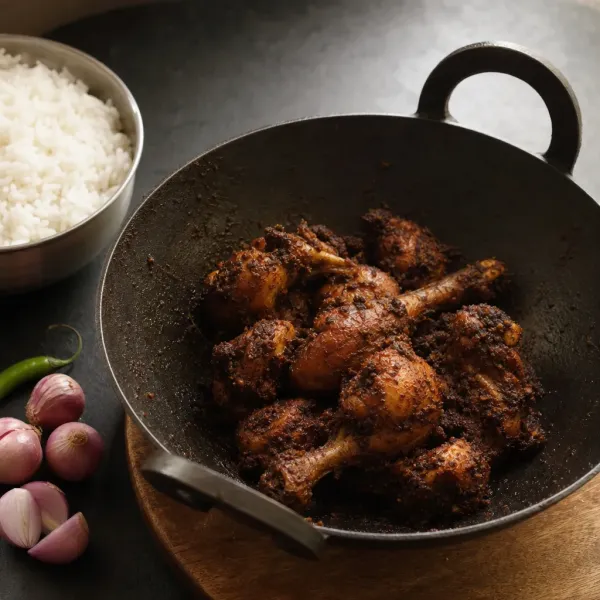
Chicken Varuval
Authentic Chettinad chicken varuval with freshly ground kalpasi and marathi mokku spices, fried dry in gingelly oil. Traditional Tamil Chettiar house…
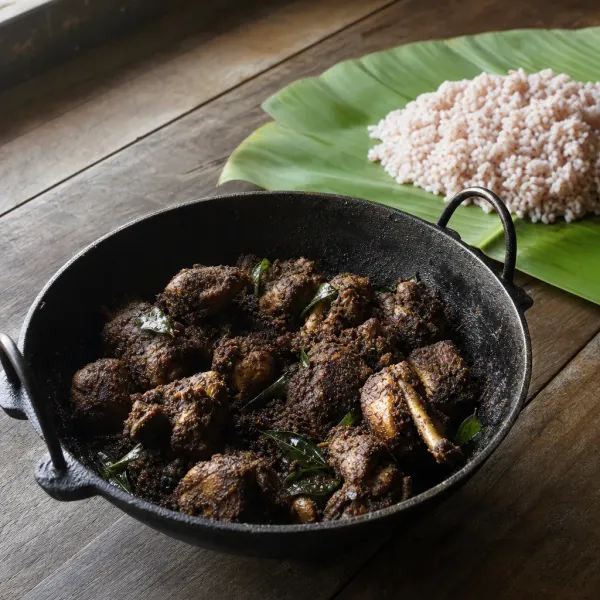
Chicken Chukka
Traditional Chettinad chicken chukka with fresh-ground kalpasi and marathi mokku masala. Dry, dark and deeply spiced. Step-by-step household method.
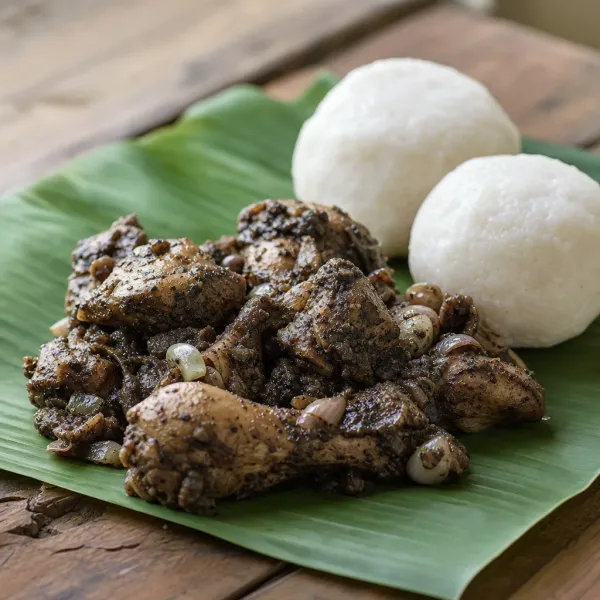
Chicken Uppu Kari
Authentic Kodava chicken uppu kari with black pepper, shallots and kachampuli. Dry-roasted, bone-in, traditional Coorg method. No gravy, no garam mas…
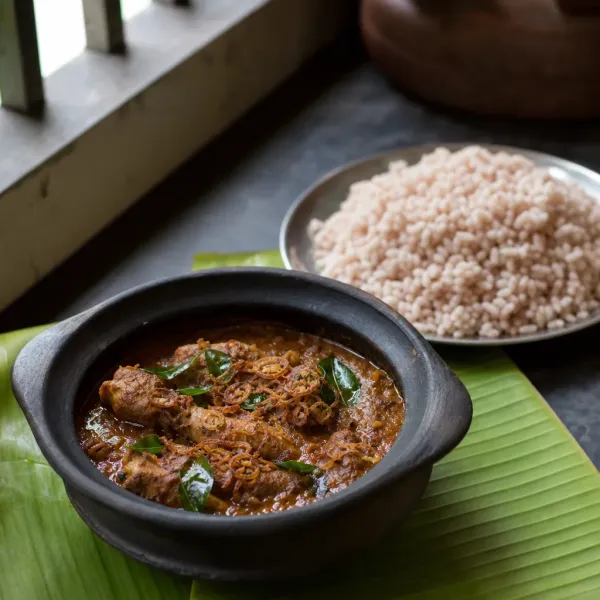
Kozhi Varutharacha Curry
Authentic Kerala Nasrani kozhi varutharacha curry with dry-roasted coconut paste. Step-by-step traditional method for a rich, dark chicken gravy.
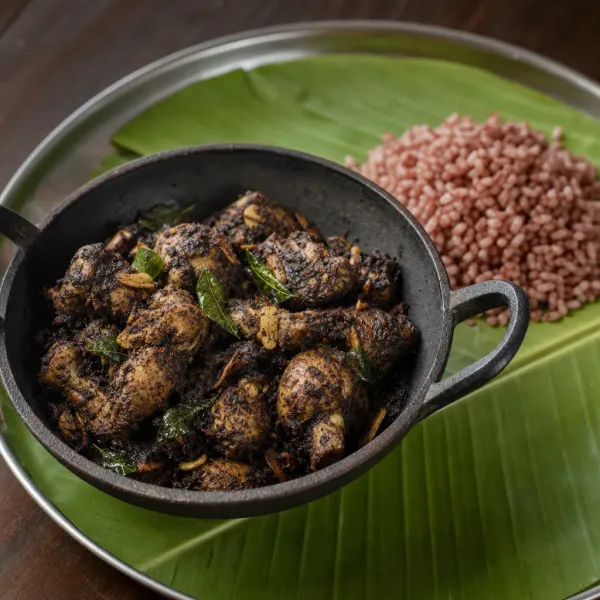
Kozhi Ularthiyathu
Traditional Nasrani-style Kerala dry-roasted chicken with coconut slivers, black pepper and shallots. Step-by-step method from a Travancore kitchen.
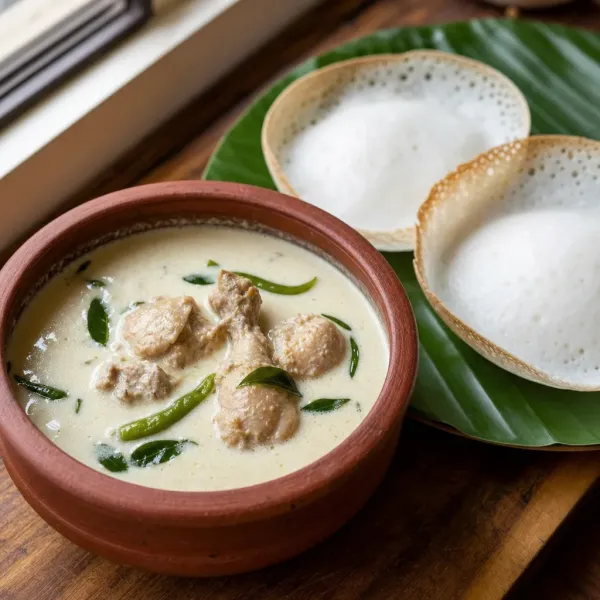
Chicken Mappas
Traditional Kerala Syrian Christian chicken mappas with coconut milk, whole spices and white vinegar. Served with appam or idiyappam. Authentic Nasra…