

Kozhi Ularthiyathu Recipe
Malayalam കോഴി ഉലർത്തിയത്Tamil கோழி உலர்த்தியதுKannada ಕೋಳಿ ಉಲರ್ತಿಯತುTelugu కోజి ఉలర్తియతు
- Prep25 min
- Cook50 min
- Serves4
- DifficultyMedium
- DietNon-vegetarian
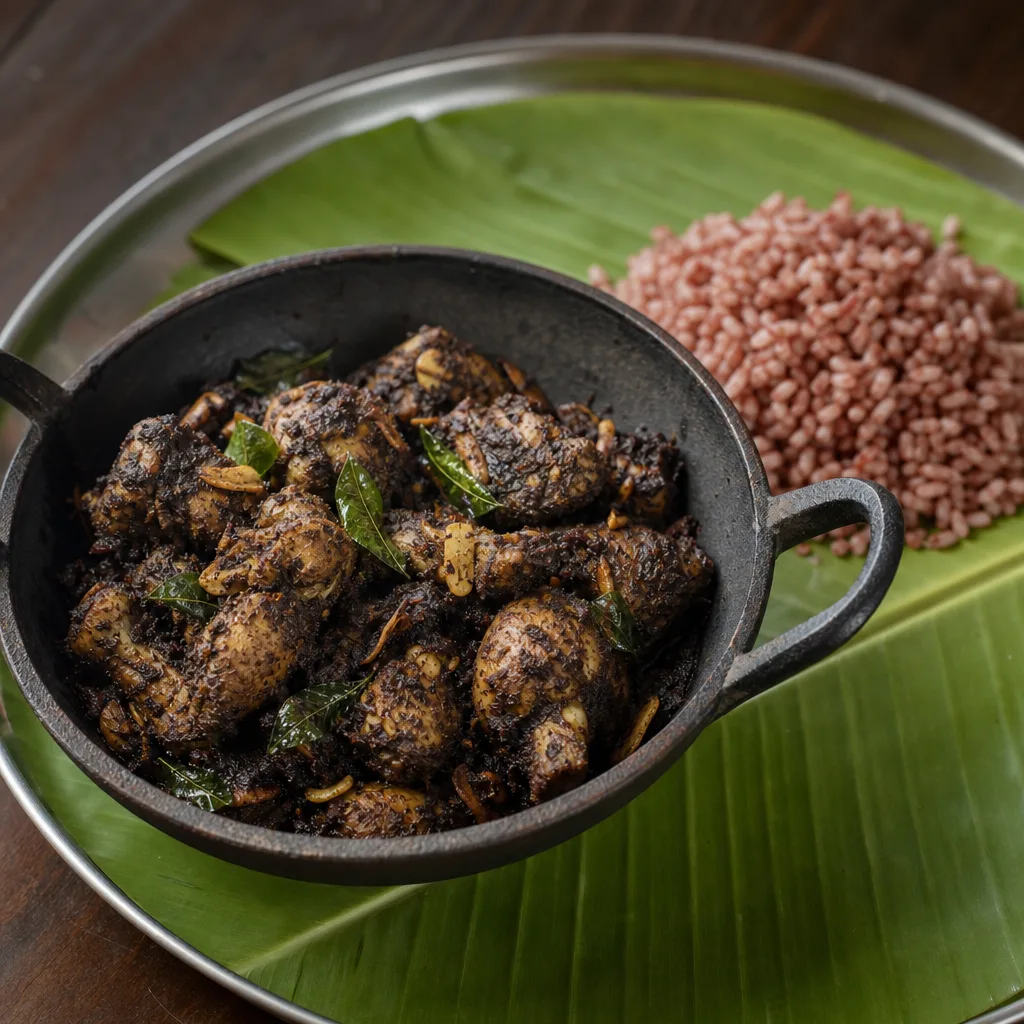
Kozhi Ularthiyathu is a dry-roasted chicken preparation from the Syrian Christian kitchens of central Kerala, particularly around Kottayam and Ernakulam. The word ularthiyathu means something roasted or tossed dry over heat until the moisture is driven off entirely. This is not a curry and it is not a gravy dish. By the time it reaches the table, the chicken pieces are dark, fragrant, and nearly clinging to the bone, coated in a thick spice paste that has been coaxed into the meat over a long, patient cook on low flame.
What sets the Nasrani version apart from other Kerala chicken preparations is the coconut: thin slivers cut from fresh coconut, not grated, not ground, but cut into small flat pieces and fried in coconut oil until they are golden and slightly chewy. These go in near the end and stay as distinct pieces, giving the dish a texture that ground coconut cannot replicate. The spice profile is built on whole spices bloomed in oil, then a paste of shallots, ginger, garlic and coarsely ground black pepper, with coriander and a restrained hand on the chilli. The heat is present but not dominant.
At home this is cooked for Sunday lunch and for feast days. It is eaten with matta rice, kappa (tapioca), or with appam in the evening. Households differ on whether to cook the chicken first in water with turmeric and salt, then finish it dry in the pan, or to do the entire cook in the pan from raw. Both methods are genuine; the par-cook method is faster and the all-in-pan method gives a deeper flavour. This recipe follows the all-in-pan method as it is the older practice.
Ingredients (serves 4)
For the chicken
For the spice paste
For the coconut and tempering
Method
Marinate the chicken
Put the chicken pieces in a wide bowl. Rub in the turmeric and salt. Set aside while you prepare the paste. Thirty minutes is enough; do not refrigerate if the kitchen is not very hot.
Make the spice paste
Grind the shallots, garlic, ginger, crushed black pepper, coriander powder, red chilli powder and fennel powder together in a small grinder or on a stone with a little water, just enough to bring it together. You want a coarse, thick paste, not a smooth purée. Set it aside.
Fry the coconut slivers
Heat 1 tablespoon of coconut oil in a heavy-bottomed kadai or cheenachatti over medium flame. Add the coconut slivers and fry, stirring often, until they are golden brown and smell nutty, about 4 to 5 minutes. They will continue to darken slightly off the heat, so pull them out just before they look done. Set aside on a plate.
Bloom the whole spices and temper
In the same pan, heat the remaining 3 tablespoons of coconut oil over medium heat. Add the mustard seeds and wait for them to splutter. Add the dried red chillies and curry leaves and stand back; the curry leaves will spit. Let them crisp for 30 seconds.
Cook the spice paste
Add the ground paste to the pan. Spread it out and cook over medium-low flame, stirring every minute or two, until the raw smell of shallot and ginger is gone and the oil begins to separate at the edges. This takes 10 to 12 minutes. Do not rush this step; undercooked paste will taste sharp and raw in the finished dish.
Add the chicken
Add the marinated chicken pieces to the pan and turn them to coat in the paste. Increase the heat to medium and cook uncovered for 5 minutes, turning the pieces so they take on colour on all sides.
Cover and cook through
Add 3 tablespoons of water, cover the pan tightly and reduce the heat to low. Cook for 20 minutes. The chicken will release its own juices and cook in that liquid. Check once halfway through; if it looks dry and is sticking, add another tablespoon of water.
Dry-roast the chicken
Remove the lid. Increase the heat to medium. Toss the chicken continuously, scraping the bottom of the pan, until all the moisture has evaporated and the masala is clinging to the pieces in a dark, dry coat. This takes 8 to 12 minutes. The chicken is ready when you hear a sizzling fry sound rather than a bubbling simmer.
Finish with the coconut slivers
Add the fried coconut slivers and toss through. Cook for another 2 minutes over medium heat so the coconut picks up any remaining masala. Taste for salt. Serve immediately; this dish is best eaten hot.
How to serve
Matta rice (rosematta or red parboiled rice) and a simple thoran or pachadi. Also eaten with kappa (boiled tapioca) or with appam at dinner.
Served with: Matta rice (rosematta or red parboiled rice) and a simple thoran or pachadi. Also eaten with kappa (boiled tapioca) or with appam at dinner.
Cook's tips
Cutting the coconut slivers
Use a sharp knife and cut from a fresh coconut half, scraping the brown skin off first if you want pale slivers, or leaving it on for a more rustic look. Grated coconut is not a substitute here; it will dissolve into the masala and the texture is lost entirely.
The par-cook shortcut
Many households pressure-cook the chicken first with turmeric, salt and a little water for one whistle, then add it to the finished paste and do only the dry-roasting stage. This saves time and is common on weekdays. The flavour is slightly less deep but perfectly acceptable.
Pan choice matters
A cheenachatti (Chinese wok, the curved iron pan used in Kerala kitchens) or a thick-bottomed iron kadai holds heat evenly for the dry-roasting stage. A thin stainless pan will scorch the masala before the chicken dries out.
Storing leftovers
This keeps well for a day at room temperature in a Kerala climate and for up to three days refrigerated. Reheat in the pan with a tiny splash of water and a drizzle of fresh coconut oil to revive it.
Black pepper is the heat here
The coarsely crushed black pepper does most of the work in this dish. Do not grind it fine; the rough texture gives occasional bursts of heat that are characteristic of this preparation. Reduce red chilli if cooking for children, but keep the pepper.
Regional variations
A Mappila version from Malabar uses fennel and star anise in the spice base and omits the coconut slivers; a Syrian Christian version from Kottayam sometimes adds a small piece of kudampuli to the initial cook.
Glossary
- Ularthiyathu ഉലർത്തിയത്
- Dry-roasted; food that has been tossed over heat until all moisture is gone.
- Cheriya ulli ചെറിയ ഉള്ളി
- Small shallots, the variety native to Kerala, sharper and more aromatic than large onions.
- Cheenachatti ചീനച്ചട്ടി
- A curved iron wok used in Kerala kitchens, introduced historically through Chinese trade contact.
- Kollamulaku കൊല്ലമുളക്
- Dried red chillies; the term used in central and southern Kerala for the whole dried variety.
- Perumjeerakam പെരുംജീരകം
- Fennel seeds; literally 'large cumin' in Malayalam.
- Kappa കപ്പ
- Tapioca, a staple of Kerala cooking, boiled and eaten as a starch alongside dry meat dishes.
Two things decide whether this dish works. First, the spice paste must be cooked long enough in the oil before the chicken goes in; a rushed paste leaves a raw, sharp edge that no amount of finishing will fix. Second, the final dry-roasting stage must go far enough: the chicken should sizzle in its own fat, not simmer in residual liquid. When you hear the sound change from a wet bubble to a dry fry, and when the masala is nearly black at the edges of the pan, it is ready.
More Chicken recipes
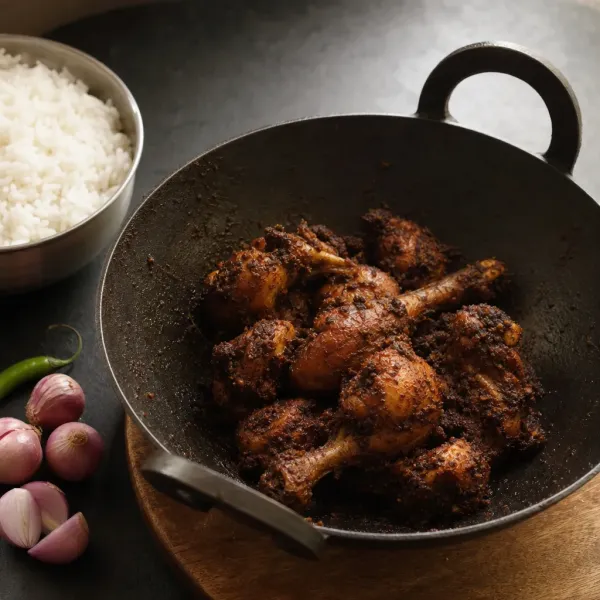
Chicken Varuval
Authentic Chettinad chicken varuval with freshly ground kalpasi and marathi mokku spices, fried dry in gingelly oil. Traditional Tamil Chettiar house…
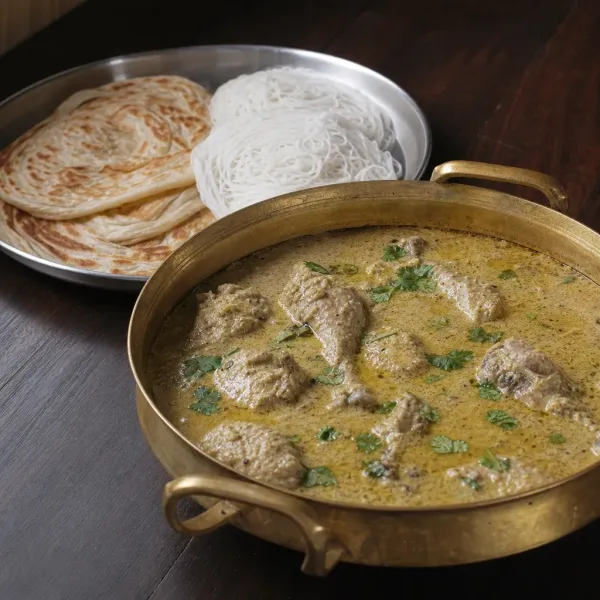
Mappila Chicken Kurma
Authentic Malabar Mappila chicken kurma with freshly ground coconut-cashew paste. The traditional partner for parotta and idiyappam. Step-by-step rec…
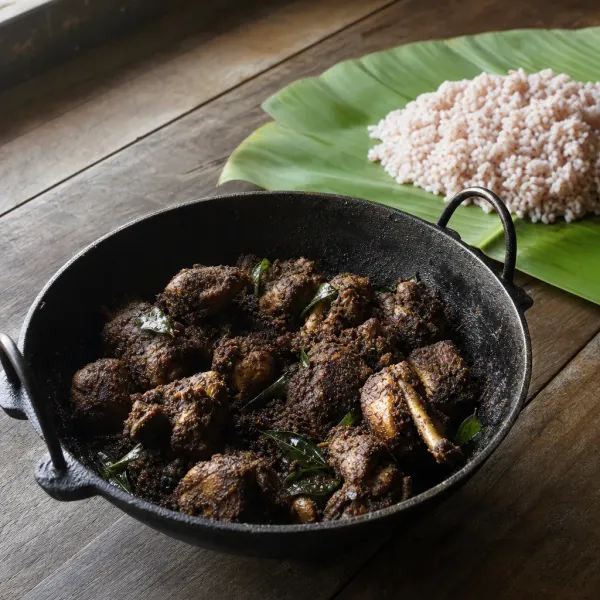
Chicken Chukka
Traditional Chettinad chicken chukka with fresh-ground kalpasi and marathi mokku masala. Dry, dark and deeply spiced. Step-by-step household method.
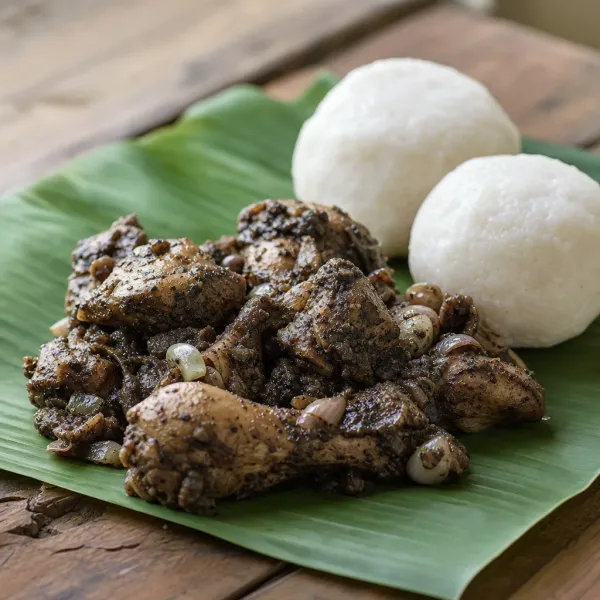
Chicken Uppu Kari
Authentic Kodava chicken uppu kari with black pepper, shallots and kachampuli. Dry-roasted, bone-in, traditional Coorg method. No gravy, no garam mas…
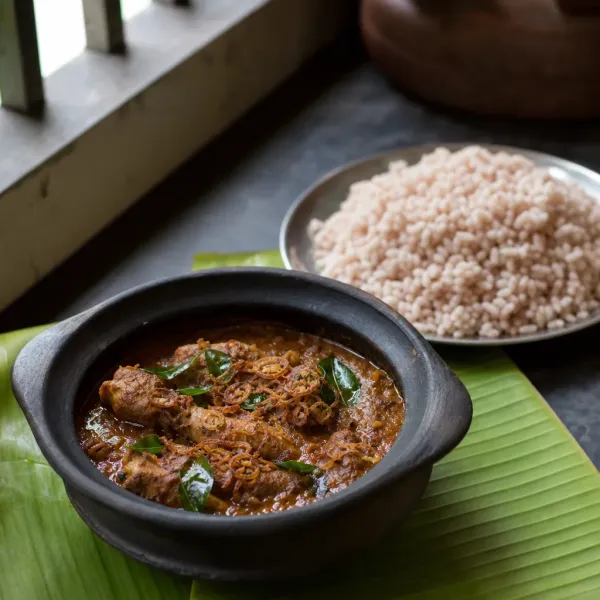
Kozhi Varutharacha Curry
Authentic Kerala Nasrani kozhi varutharacha curry with dry-roasted coconut paste. Step-by-step traditional method for a rich, dark chicken gravy.
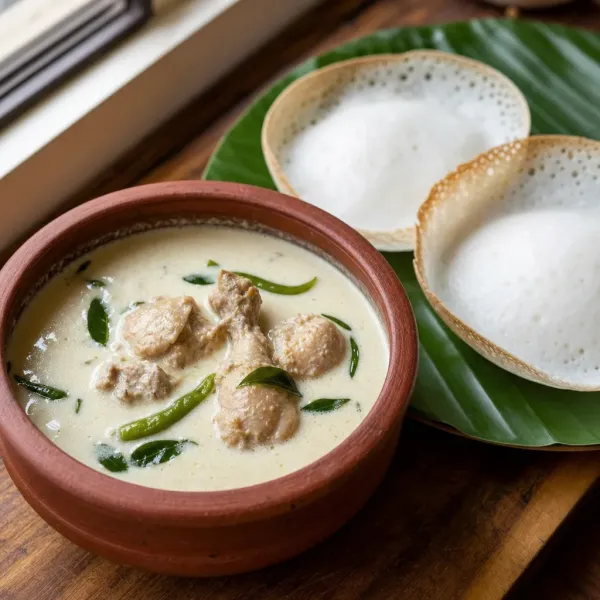
Chicken Mappas
Traditional Kerala Syrian Christian chicken mappas with coconut milk, whole spices and white vinegar. Served with appam or idiyappam. Authentic Nasra…