

Sundakkai Vathal Kuzhambu Recipe
Malayalam സുണ്ടക്കായ് വത്തൽ കുഴമ്പ്Tamil சுண்டைக்காய் வத்தல் குழம்புKannada ಸುಂಡಕ್ಕಾಯಿ ವತ್ತಲ್ ಕುಳಂಬುTelugu సుండక్కాయ్ వత్తల్ కుళంబు
- Prep15 min
- Cook35 min
- Serves4
- DifficultyMedium
- DietVegan
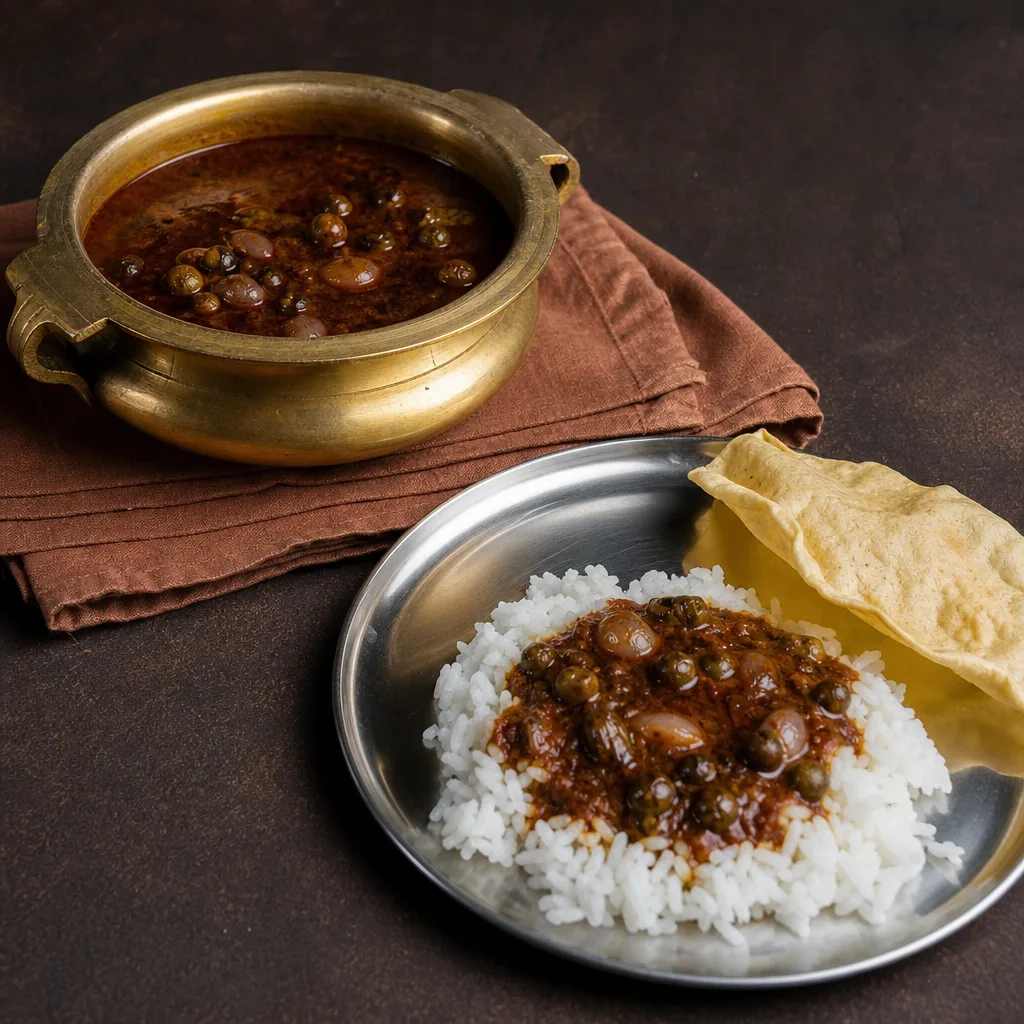
Vatha kuzhambu is a deeply sour, fiercely spiced tamarind gravy from Tamil Brahmin kitchens, built almost entirely from pantry staples. The fresh vegetable is replaced by a vathal — a sun-dried berry or vegetable — which fries in gingelly oil at the start and gives the gravy its particular bitter, nutty edge. Sundakkai vathal, dried turkey berry, is the most traditional choice in Iyer homes. The gravy is thin enough to pool around rice but concentrated enough that a small spoonful does the work.
In most households this is a Monday dish, made from what is already in the kitchen without a trip to the market. It is eaten with plain rice, a dry poriyal on the side, and a small quantity of papad. Some families add a piece of vepampoo (dried neem flower) to the tempering; others fry a pinch of asafoetida directly in the oil before anything else goes in. Both are correct.
The kuzhambu keeps well for two or three days at room temperature in a cool kitchen, and the flavour deepens overnight. Do not refrigerate it if you plan to eat it the next day — the cold dulls the gingelly oil and the tamarind together in a way that does not recover fully on reheating.
Ingredients (serves 4)
For the tamarind base
For the tempering and vathal
Method
Soak the tamarind
Break the tamarind into the 400 ml of warm water and leave it for 15 minutes. Squeeze it thoroughly with your fingers, working the pulp off the fibres. Strain through a medium sieve, pressing hard. Discard the fibres and seeds. You want a rust-coloured, opaque extract — not watery, not a paste.
Season the tamarind water
Stir the sambar powder, coriander powder, turmeric, salt and jaggery into the tamarind extract. Mix until the powders dissolve into the liquid. Set aside. The mixture will look thin at this stage; it reduces and thickens in the pan.
Fry the sundakkai vathal
Heat the gingelly oil in a heavy-bottomed kadai over medium flame until it shimmers — gingelly oil smokes at a lower point than refined oil, so do not push the heat. Add the sundakkai vathal and fry, stirring constantly, for about 90 seconds. They will darken from grey-brown to a deeper brown and smell nutty rather than raw. Remove them with a slotted spoon and set aside. Leave all the oil in the pan.
Build the tempering
In the same oil over medium heat, add the mustard seeds and wait for them to splutter completely. Add the cumin seeds and let them sizzle for 10 seconds, then add the broken dried red chillies and the asafoetida. The chillies should darken in a few seconds without burning — keep the heat at medium. Add the curry leaves immediately after; they will crackle and spit.
Cook the shallots and garlic
Add the halved shallots and crushed garlic to the tempering. Fry on medium heat, stirring often, for 8 to 10 minutes. You want the shallots to turn translucent and begin to colour at the edges — a light golden, not brown. The garlic should soften and lose its raw smell. If they colour too fast, lower the flame.
Add the tamarind mixture
Pour the seasoned tamarind extract into the kadai. It will hiss loudly when it hits the hot oil and shallots. Stir to combine everything. Raise the heat to medium-high and bring to a full boil, then lower to a steady simmer.
Simmer to thicken
Simmer uncovered for 20 to 25 minutes, stirring every few minutes. The kuzhambu is ready when it has reduced by roughly a third, the raw tamarind smell has completely gone, and the oil begins to float in small pools on the surface. It should coat the back of a spoon lightly but still pour freely — not as thick as sambar, thinner than a chutney.
Return the vathal
Add the fried sundakkai vathal back into the kuzhambu. Simmer together for 3 to 4 minutes so the berries absorb some of the gravy. Taste for salt and sourness. If it is too sharp, add a small pinch more jaggery. Take off the heat.
Rest before serving
Leave the kuzhambu covered for at least 10 minutes before serving. The vathal continues to soften slightly and the flavours settle. If you are eating it the next day, reheat gently on a low flame with a splash of water to loosen it.
How to serve
Plain boiled rice (raw rice or parboiled rice according to the household), a dry poriyal such as cabbage or raw banana, papad, and a small quantity of ghee poured over the rice at the table. Appalam is a common alternative to papad in Tamil Brahmin homes.
Served with: Plain boiled rice (raw rice or parboiled rice according to the household), a dry poriyal such as cabbage or raw banana, papad, and a small quantity of ghee poured over the rice at the table. Appalam is a common alternative to papad in Tamil Brahmin homes.
Cook's tips
Gingelly oil is not optional
The flavour of vatha kuzhambu depends on cold-pressed gingelly oil. Refined sunflower or coconut oil produces a flat, generic gravy. If you cannot find good gingelly oil, make something else that day.
Do not rush the simmer
The raw tamarind taste takes a full 20 minutes of steady simmering to cook out. If you serve it early, the sourness is harsh and one-dimensional. The long simmer is what makes it mellow.
Vathal bitterness
Sundakkai vathal has a natural bitterness that is part of the dish. If yours are very old and intensely bitter, soak them in water for 5 minutes before frying. Fresh-season vathal needs no soaking.
Sambar powder quality
This kuzhambu has very few spices beyond the sambar powder, so the powder does most of the work. Home-ground powder from a Tamil household will give a noticeably better result than most commercial brands. If you use a commercial one, taste and adjust the quantity.
Storage
Keeps for 2 to 3 days at room temperature in a cool kitchen. The flavour is better on day two. Refrigerate only if your kitchen is warm; reheat gently and add a little water to restore the consistency.
Regional variations
Chettiar households make a similar kuzhambu with a heavier spice base including kalpasi and marathi mokku; Mudaliar and Vellalar kitchens use a slightly different tamarind-to-spice ratio and sometimes add small shallots whole rather than grinding any aromatics.
Glossary
- Vathal வத்தல்
- Sun-dried vegetables or berries used in Tamil cooking; they are fried in oil before use to revive their flavour and add texture.
- Sundakkai சுண்டைக்காய்
- Turkey berry (Solanum torvum), a small bitter berry used fresh or dried in Tamil and Kerala cooking.
- Kuzhambu குழம்பு
- A broad Tamil term for a thin to medium-bodied gravy, usually tamarind- or coconut-based, eaten with rice.
- Nallennai நல்லெண்ணெய்
- Cold-pressed gingelly oil (sesame oil); the traditional cooking fat for Tamil kuzhambu and pickles.
- Perungayam பெருங்காயம்
- Asafoetida; used in small quantities in Tamil Brahmin cooking as a substitute for onion and garlic in some dishes, or alongside them in others.
- Chinna vengayam சின்ன வெங்காயம்
- Small shallots (literally 'small onion'); sharper and more aromatic than large onions, standard in Tamil cooking.
- Sambar powder சாம்பார் பொடி
- A ground spice blend of coriander, cumin, dried chilli, black pepper, chana dal and other spices; each household and region has its own ratio.
Two things decide this kuzhambu: the quality of the gingelly oil and the patience to simmer the tamarind long enough. Get those right and the sundakkai vathal does the rest, giving the gravy its particular bitter, roasted note that no fresh vegetable can replicate.
More Vegetarian Gravies recipes
Erissery
Traditional Kerala erissery with yellow pumpkin, vanpayar, and deeply roasted coconut. Step-by-step sadya recipe with fresh coconut paste.
Kalan
Traditional Kerala kalan with raw banana and elephant yam in thick sour curd. A sadya essential from Travancore kitchens, spiced with black pepper an…
Mor Kuzhambu
Traditional Tamil Brahmin mor kuzhambu with ash gourd, fresh coconut-cumin paste and a ghee tempering. Step-by-step method with tips on keeping the c…
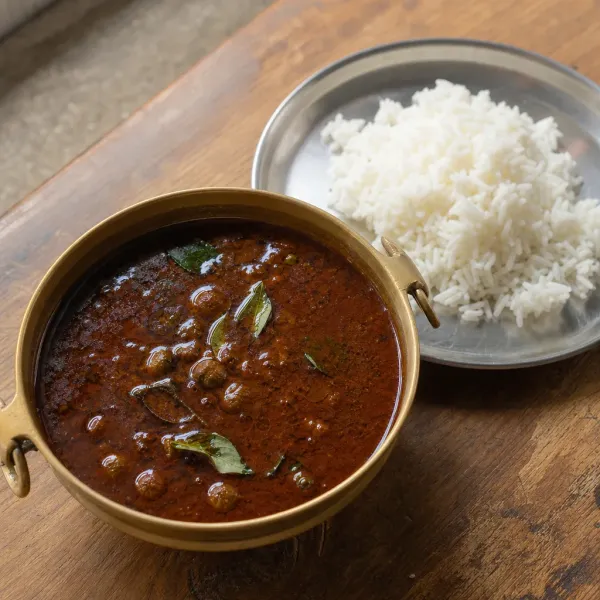
Kara Kuzhambu
Traditional Tamil Iyer kara kuzhambu with sundakkai, freshly ground spice-coconut masala, and gingelly oil. Thick, spiced tamarind gravy for rice.
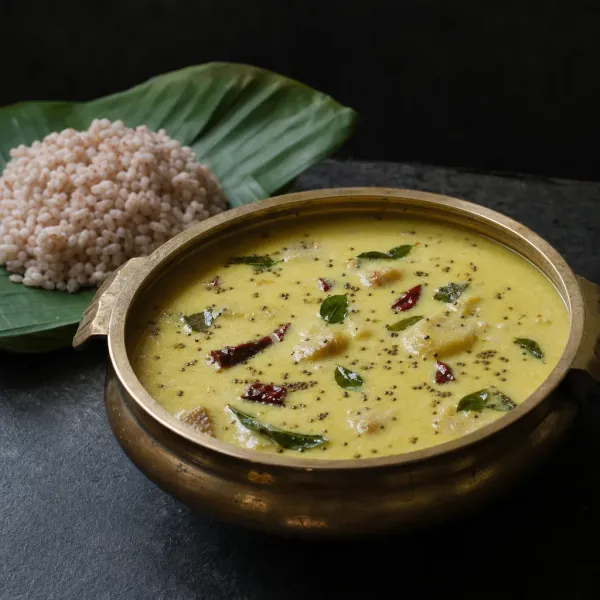
Pulissery (Kerala Yogurt and Coconut Curry)
Traditional Kerala pulissery with ripe banana or ash gourd, fresh coconut paste and soured yogurt. Step-by-step sadya recipe with coconut oil temperi…
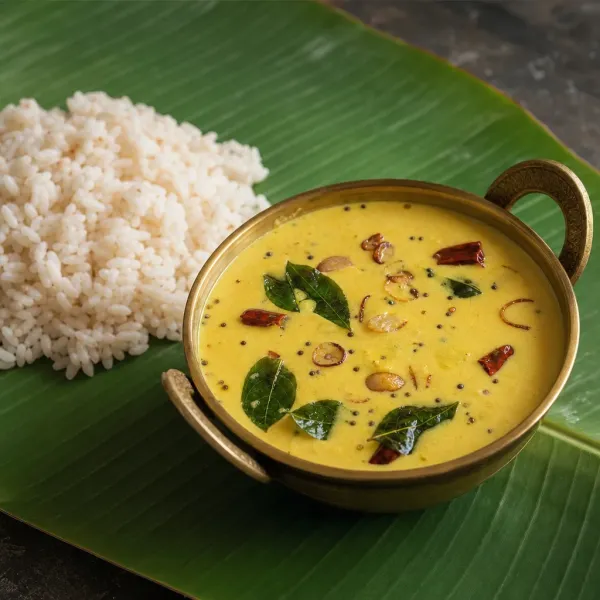
Mambazha Pulissery
Traditional Kerala Mambazha Pulissery made with whole ripe country mangoes, fresh coconut paste and sour yogurt. A classic sadya dish, step by step.