

Pulissery (Kerala Yogurt and Coconut Curry) Recipe
Malayalam പുളിശ്ശേരിTamil புளிசேரிKannada ಪುಳಿಸೇರಿTelugu పులిసేరి
- Prep15 min
- Cook20 min
- Serves4
- DifficultyEasy
- DietVegetarian
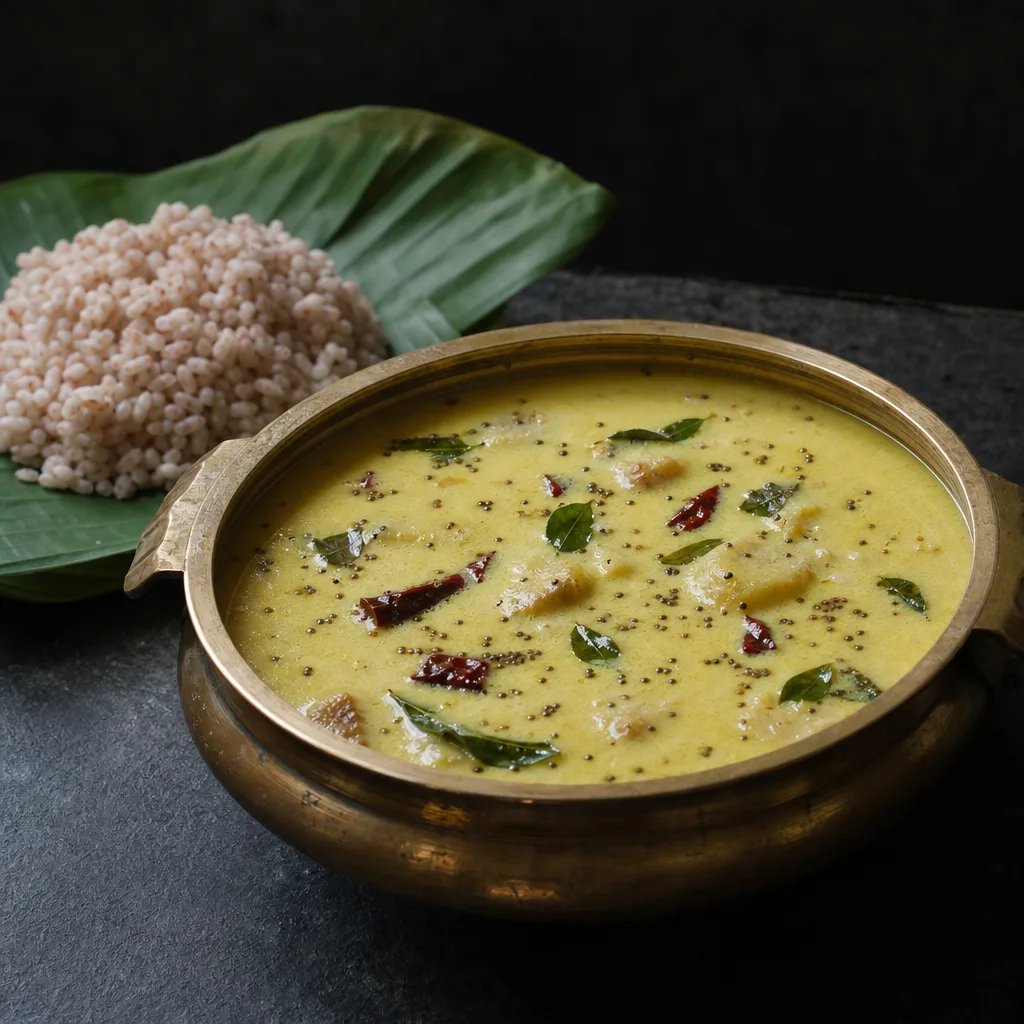
Pulissery is a Kerala curry made from soured yogurt, freshly ground coconut and a single cooked vegetable. It is mildly sour, gently spiced and finished with a coconut oil tempering. The most common version in Travancore homes uses ripe yellow banana (nendran or robusta) or ash gourd; the banana version is the one most people mean when they say pulissery at a sadya.
It sits on the banana leaf at the Onam sadya in the middle row, poured alongside sambar and rasam. Outside sadya days it is a quick everyday curry eaten with matta rice and a thoran. The sourness comes entirely from the yogurt, which must be a day old and genuinely sour rather than fresh. If the yogurt is too mild the dish will taste flat no matter what else you do.
Households differ on the vegetable and on how thick to grind the coconut. Some keep the gravy thin and pourable; others grind the coconut very fine so it thickens almost like a chutney-based curry. The tempering is always coconut oil with mustard seeds, dried red chillies and curry leaves. That final sizzle over the cooked curry is not optional.
Ingredients (serves 4)
For the vegetable base
For the coconut paste
For the yogurt
For the tempering
Method
Cook the vegetable
Put the banana or ash gourd pieces in a wide, heavy pan. Add the turmeric, salt and 100 ml water. Cover and cook on medium heat for 8 to 10 minutes until the pieces are just tender when pressed with a spoon. Ash gourd takes a little longer than banana. Do not let them turn mushy; they should hold their shape.
Grind the coconut paste
Grind the fresh coconut, cumin seeds, green chillies and turmeric together in a wet grinder or mixer with 3 to 4 tablespoons of water. Grind to a smooth, fine paste. The paste should feel almost silky between your fingers, not gritty. A coarse paste will not blend into the yogurt evenly.
Add coconut paste to the vegetable
Once the vegetable is cooked and most of the water has been absorbed, add the coconut paste directly into the pan. Stir well so every piece is coated. Cook on low heat for 3 minutes, stirring, until the raw smell of coconut disappears. The mixture will look thick and dry at this stage.
Whisk the yogurt and add it
Whisk the soured yogurt until completely smooth with no lumps. Reduce the heat to the lowest possible flame. Add the yogurt to the pan and stir gently but continuously. This step requires patience: if the heat is too high or you stop stirring, the yogurt will split and the curry will look grainy and watery. Keep stirring on the lowest flame.
Heat through without boiling
Continue to stir on low heat for 4 to 5 minutes until the curry is hot and steaming and has thickened slightly. It should coat the back of a spoon. The moment you see the first bubble trying to break the surface, take the pan off the heat. A full boil will curdle the yogurt and the curry cannot be rescued after that point.
Check seasoning
Taste and adjust salt. The curry should be sour from the yogurt, mildly spiced from the green chilli and gently fragrant from the cumin. If it tastes flat, the yogurt was not sour enough; a few drops of raw kudampuli water can rescue it, but ideally start with properly soured curd.
Make the tempering
Heat the coconut oil in a small tempering pan (tadka pan or a small kadai) on medium heat until it shimmers. Add the mustard seeds and wait for them to pop fully. Add the sliced shallots and fry for 1 to 2 minutes until they turn golden at the edges. Add the broken red chillies and curry leaves and stand back; the leaves will splutter. Let them crackle for 20 seconds.
Pour the tempering and serve
Pour the entire tempering over the pulissery immediately. Do not stir it in; let it sit on top so the aroma is present when the bowl reaches the table. Serve within 10 minutes of tempering. The curry does not keep well once tempered and reheating risks splitting the yogurt.
How to serve
Matta rice (red parboiled rice); at sadya it sits alongside sambar, rasam, parippu curry and thoran on a banana leaf.
Served with: Matta rice (red parboiled rice); at sadya it sits alongside sambar, rasam, parippu curry and thoran on a banana leaf.
Cook's tips
The yogurt must be sour
Leave fresh curd at room temperature overnight in warm weather or for up to 36 hours in an air-conditioned kitchen. It should smell pleasantly tangy, not off. Fresh yogurt makes a bland pulissery that no amount of salt or chilli can fix.
Never boil after adding yogurt
This is the one step people rush and regret. Once the yogurt goes in, treat the pan as if it holds something that will break at a high temperature, because it will. Low flame, constant stirring, off the heat at the first sign of a boil.
Ash gourd version
Ash gourd (kumbalanga) gives a cleaner, less sweet flavour than banana. Cut it into 2 cm cubes after peeling and deseeding. It needs 12 to 14 minutes to cook through. This version is more common on everyday days; banana pulissery is the sadya standard.
Grinding without a wet grinder
A mixer-grinder works well. Add the water a tablespoon at a time and grind in 30-second bursts, scraping down the sides. Three to four rounds of grinding usually gives a smooth enough paste for home cooking.
Reheating
If you must reheat, do it on the lowest possible flame in a heavy pan, stirring without stopping. Even then the texture will not be as good as freshly made. This curry is best cooked and served the same day.
Regional variations
Malabar households sometimes use raw mango (pacha manga) in place of ripe banana or ash gourd; Palakkad Iyer households make a similar dish called mor kuzhambu with a thinner coconut paste and no turmeric in the yogurt.
Glossary
- Kudampuli കുടംപുളി
- Gamboge or Malabar tamarind; the souring agent used in Kerala fish curries and occasionally as a backup souring agent; not used in traditional pulissery but mentioned in notes as a rescue option.
- Matta rice മട്ട അരി
- Kerala red parboiled rice with a nutty flavour; the standard everyday rice of Kerala households.
- Jeerakam ജീരകം
- Cumin seeds; used in the coconut paste for pulissery.
- Kaduku കടുക്
- Mustard seeds; the first ingredient into the tempering oil.
- Cheriya ulli ചെറിയ ഉള്ളി
- Small shallots; used in the tempering; not the same as large onions.
- Kumbalanga കുമ്പളങ്ങ
- Ash gourd or white gourd; the alternative vegetable to banana in pulissery.
- Kollamulaku കൊല്ലമുളക്
- Dried red chillies; added to the tempering for heat and colour.
Two things decide whether pulissery works: the sourness of the yogurt and the heat control after it goes into the pan. Start with curd that is genuinely a day old and sour, and keep the flame so low after adding it that you are almost not cooking at all. Get those two things right and the rest follows.
More Vegetarian Gravies recipes
Kara Kuzhambu
Traditional Tamil Iyer kara kuzhambu with sundakkai, freshly ground spice-coconut masala, and gingelly oil. Thick, spiced tamarind gravy for rice.
Mor Kuzhambu
Traditional Tamil Brahmin mor kuzhambu with ash gourd, fresh coconut-cumin paste and a ghee tempering. Step-by-step method with tips on keeping the c…
Kalan
Traditional Kerala kalan with raw banana and elephant yam in thick sour curd. A sadya essential from Travancore kitchens, spiced with black pepper an…
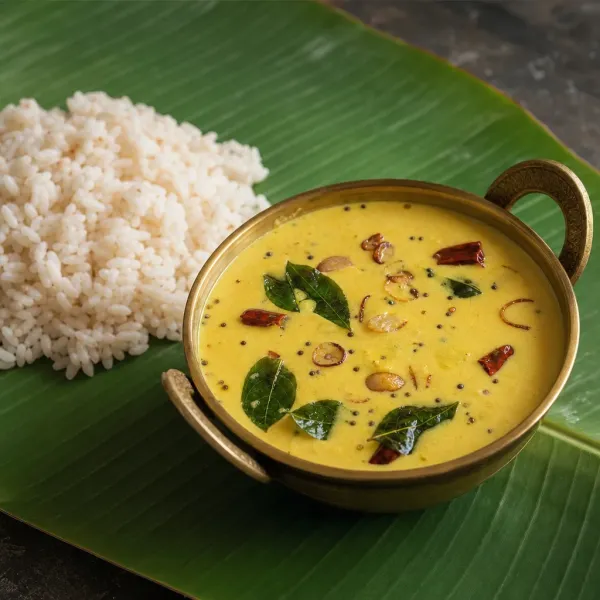
Mambazha Pulissery
Traditional Kerala Mambazha Pulissery made with whole ripe country mangoes, fresh coconut paste and sour yogurt. A classic sadya dish, step by step.
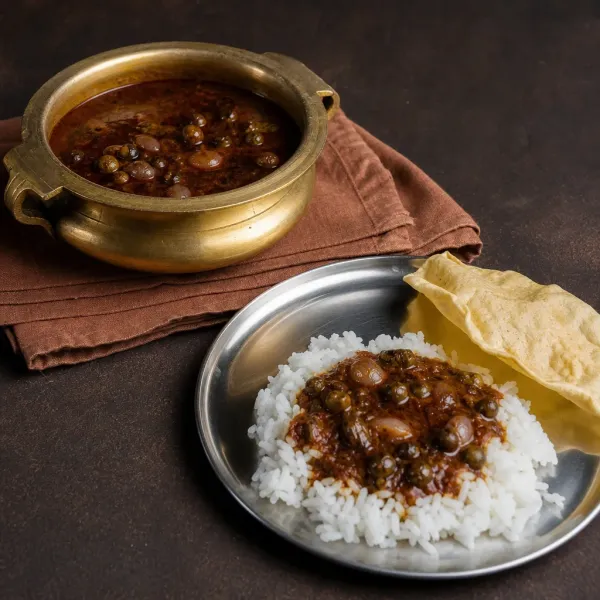
Sundakkai Vathal Kuzhambu
Traditional Tamil Brahmin vatha kuzhambu with sundakkai vathal, tamarind, and gingelly oil. Sour, spiced, and cooked the slow household way.
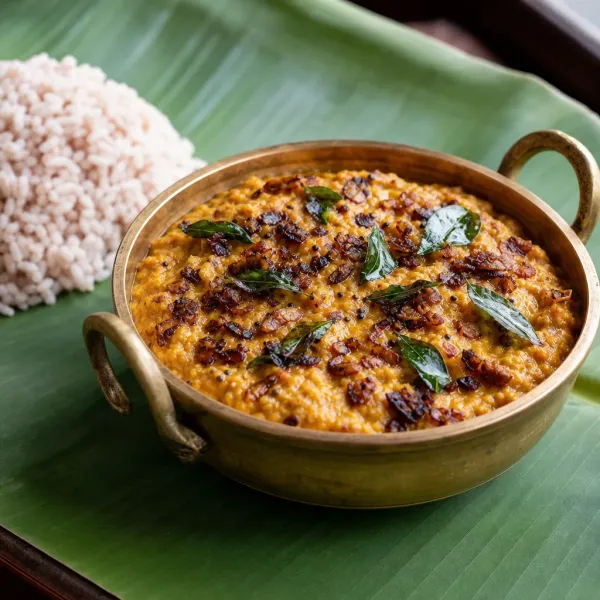
Erissery
Traditional Kerala erissery with yellow pumpkin, vanpayar, and deeply roasted coconut. Step-by-step sadya recipe with fresh coconut paste.