Omapodi Recipe
Malayalam ഓമപ്പൊടിTamil ஓமப்பொடிKannada ಓಮಪೊಡಿTelugu ఓమపొడి
- Prep20 min
- Cook40 min
- Serves8 to 10 as a snack
- DifficultyEasy
- DietVegan
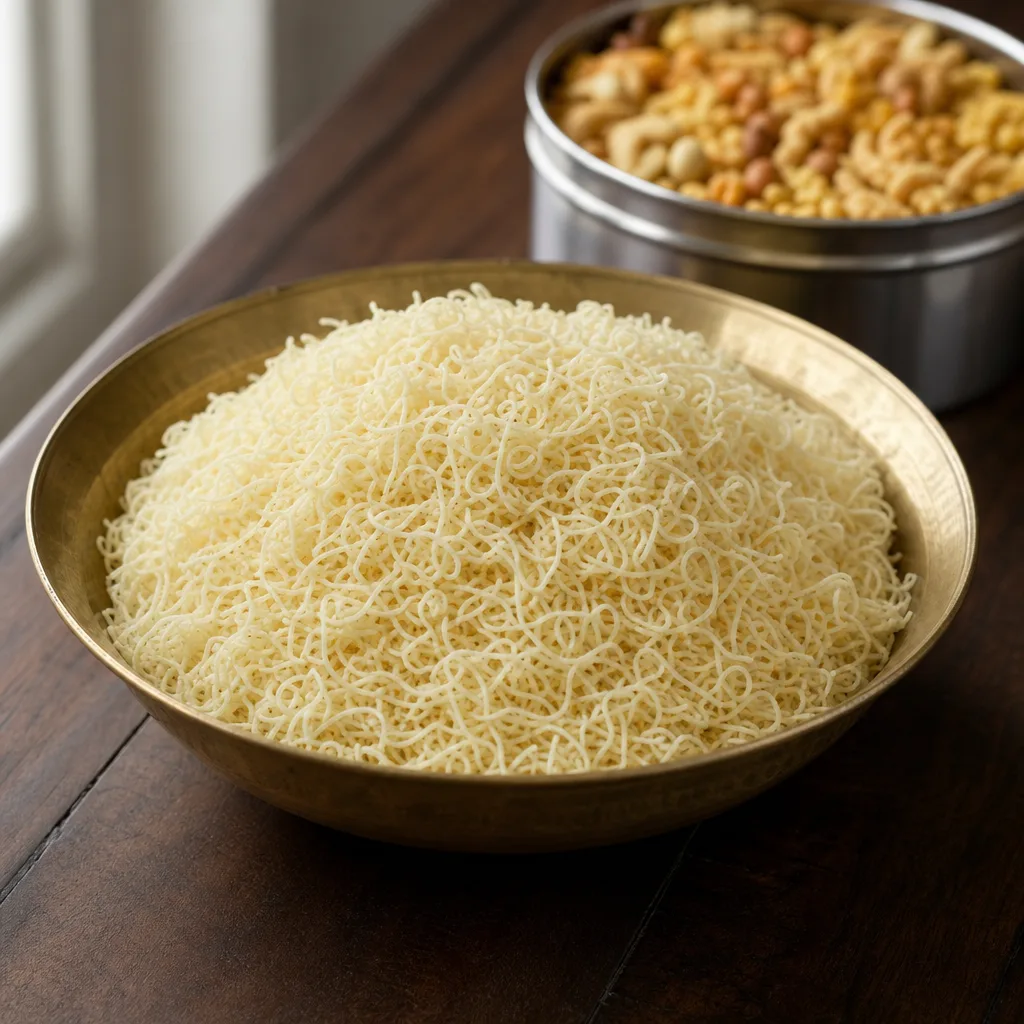
Omapodi is the fine, crisp sev made with besan and the faint anise warmth of omam — ajwain. It is a fixture in Tamil Brahmin homes at Diwali, packed into tins alongside mixture, ribbon pakoda and murukku, and it disappears faster than anything else in the box. The name says everything: oma is ajwain, podi means powder or the pressed thing. It is pressed through the single-holed disc of a murukku press, which gives strands so thin they shatter the moment you bite.
The dough is simple but the ratio of besan to rice flour matters. Too much rice flour and the strands are brittle and pale; too little and they are chewy and oily. The ajwain is soaked briefly in water and only the strained water goes into the dough — this carries the flavour without leaving whole seeds that block the fine disc.
Different households vary the heat with dried red chilli or asafoetida. Some add a pinch of turmeric for colour, others keep it pale. What does not vary is the fat: gingelly oil for frying, and a small spoon of hot oil worked into the dough to keep it pliable.
Ingredients (serves 8 to 10 as a snack)
For the dough
For frying
Method
Soak the ajwain
Put the ajwain in a small bowl with 3 tbsp warm water. Leave for 15 minutes. Press the seeds with a spoon and strain through a fine sieve, squeezing out all the liquid. Discard the seeds. You should have roughly 2 tbsp of pale, fragrant water.
Mix the dry ingredients
In a wide bowl, combine the sifted besan, rice flour, asafoetida, red chilli powder and salt. Mix well with your fingers so the asafoetida is evenly distributed. Lumps of asafoetida in the dough will block the disc.
Work in the hot oil
Heat 1 tbsp gingelly oil in a small pan until it shimmers, then pour it immediately over the flour mixture. Rub it in quickly with your fingertips until the mixture looks like coarse sand and holds together when pressed. This step keeps the finished sev from turning hard.
Make the dough
Add the strained ajwain water a little at a time and bring the dough together. Add plain water in small additions if needed. The dough should be soft and smooth — softer than chapati dough, firm enough to hold its shape. If it is too stiff, the strands will crack and break before they reach the oil; if too loose, they spread and absorb excess oil.
Fit the fine disc and fill the press
Fit the murukku press with the single small-holed disc (the omapodi disc). Grease the inside of the press lightly with a drop of oil. Fill it two-thirds full with dough. Do not pack it too tight or the press will be hard to turn.
Heat the oil
Pour the gingelly oil into a wide, deep kadai and heat over medium flame to 170°C. If you do not have a thermometer, drop a small piece of dough in: it should rise to the surface within two seconds without browning immediately. Too hot and the sev colours before it is cooked through; too cool and it is greasy.
Press into the oil
Hold the press about 8 cm above the oil and press the dough in slow, circular movements so the strands fall in a loose nest. Work quickly so the whole batch goes in together and cooks evenly. Do not press directly onto the oil surface or the strands will clump.
Fry until crisp
Fry for about 90 seconds on the first side, then gently turn the nest with a spider or slotted spoon. Fry for another 60 to 90 seconds. The sev is ready when the sizzling quietens noticeably and the strands are a very pale gold — almost cream-coloured. Do not let it go deep brown; it will continue to crisp as it cools.
Drain and cool
Lift the sev out with a spider and hold it over the kadai for a few seconds to drain, then spread it on a plate lined with newspaper or a rack. Do not pile the batches on top of each other while hot or they will go soft. Let each batch cool completely before stacking.
Fry remaining batches
Refill the press and continue. Between batches, check the oil temperature and adjust the flame. The oil cools slightly each time you add dough, so give it a minute to come back up before pressing the next batch.
Break and store
Once completely cool, break the nests into rough pieces and taste for salt. Store in an airtight tin. Properly fried and fully cooled omapodi stays crisp for ten to twelve days.
How to serve
Eaten as a snack on its own, or as part of a Diwali mixture with murukku, ribbon pakoda, and fried peanuts. Also crumbled over hot upma or pongal as a textural garnish in some Tamil households.
Served with: Eaten as a snack on its own, or as part of a Diwali mixture with murukku, ribbon pakoda, and fried peanuts. Also crumbled over hot upma or pongal as a textural garnish in some Tamil households.
Cook's tips
The disc matters
Omapodi must be pressed through the single-holed fine disc, not the star disc used for murukku. If you use the wrong disc the strands are thick and the dish is a different thing entirely.
Dough drying out
If the dough sits while you fry, it dries and the strands crack. Cover the press and the remaining dough with a damp cloth between batches.
Why gingelly oil
Gingelly oil gives the characteristic mild nuttiness and keeps the sev from tasting flat. Refined sunflower oil can be used if gingelly is unavailable, but the flavour is noticeably thinner.
Greasy sev
If the sev feels oily after cooling, the oil was not hot enough. It should be at a steady 170°C before each batch goes in.
Turmeric variation
Some households add ¼ tsp turmeric to the dough for a pale yellow colour. This is common but not universal; the plain version is equally traditional.
Regional variations
Andhra households make a similar fine sev with besan only and no ajwain, sometimes called janthikalu or sev; Karnataka versions exist with rice flour added to the besan.
Glossary
- Omam ஓமம்
- Ajwain or carom seeds; the defining spice of this sev.
- Besan கடலை மாவு
- Fine chickpea flour; the main flour in omapodi.
- Perungayam பெருங்காயம்
- Asafoetida; used in very small quantities for savour.
- Gingelly oil நல்லெண்ணெய்
- Cold-pressed sesame oil used for frying in Tamil Nadu; lighter in colour and flavour than Chinese sesame oil.
- Murukku press முறுக்கு அச்சு
- A hand-held cylindrical press with interchangeable discs, used to extrude dough directly into hot oil.
Two things decide whether omapodi works: the softness of the dough and the temperature of the oil. Get the dough too stiff and the strands snap before they cook; let the oil run cool and the sev drinks fat instead of crisping. Nail both and the strands shatter cleanly, leave no grease on the fingers, and carry that faint ajwain warmth all the way through.
More Snacks recipes
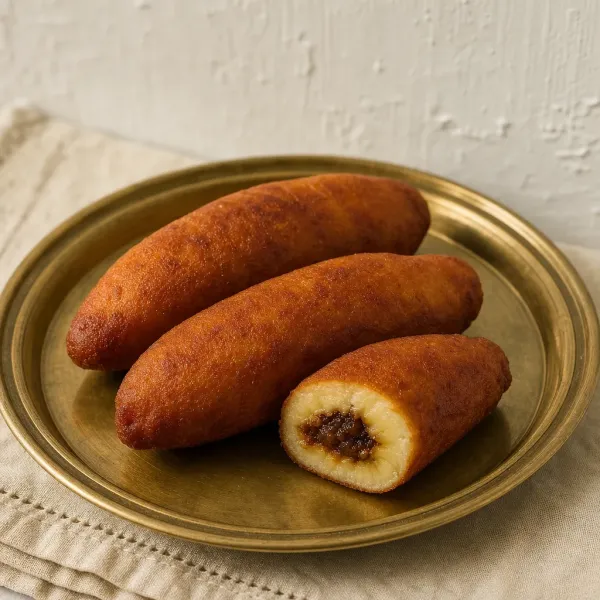
Nirachathu
Traditional Malabar Mappila nirachathu: ripe nendran banana stuffed with coconut, jaggery and cardamom, coated in rice batter and fried in coconut oi…
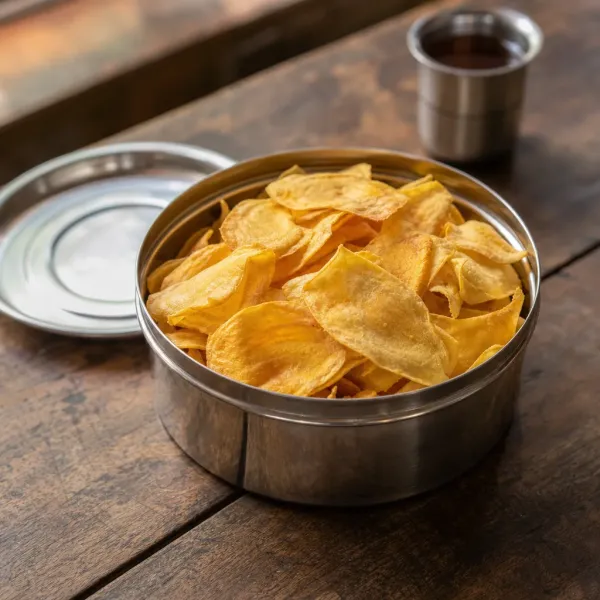
Chakka Varuthathu
Traditional Kerala recipe for raw jackfruit chips fried in coconut oil with a salt brine finish. Crisp, long-keeping, and made the old household way.
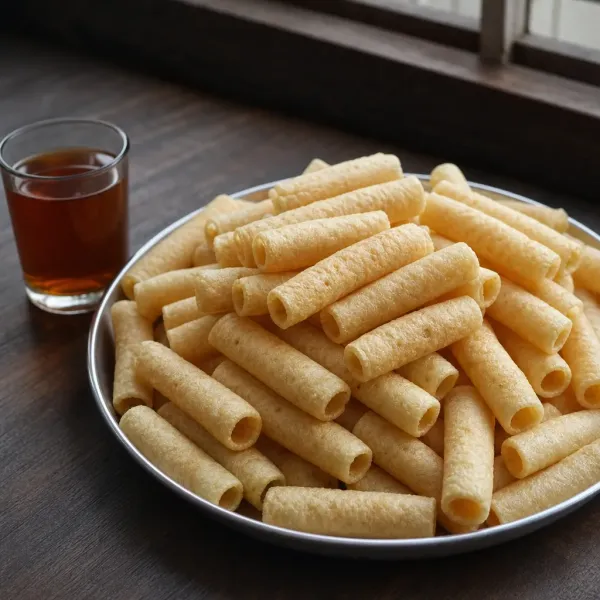
Kuzhalappam
Traditional Kerala kuzhalappam recipe: hollow rice crisps pressed through a tube mould and deep-fried in coconut oil with cumin and sesame.