

Kerala Prawn Pepper Fry Recipe
Malayalam ചെമ്മീൻ കുരുമുളക് വറുത്തത്Tamil இறால் மிளகு வறுவல்Kannada ಸೀಗಡಿ ಮೆಣಸು ಫ್ರೈTelugu రొయ్యల మిరియాల వేపుడు
- Prep20 min
- Cook25 min
- Serves4
- DifficultyEasy
- DietNon-vegetarian
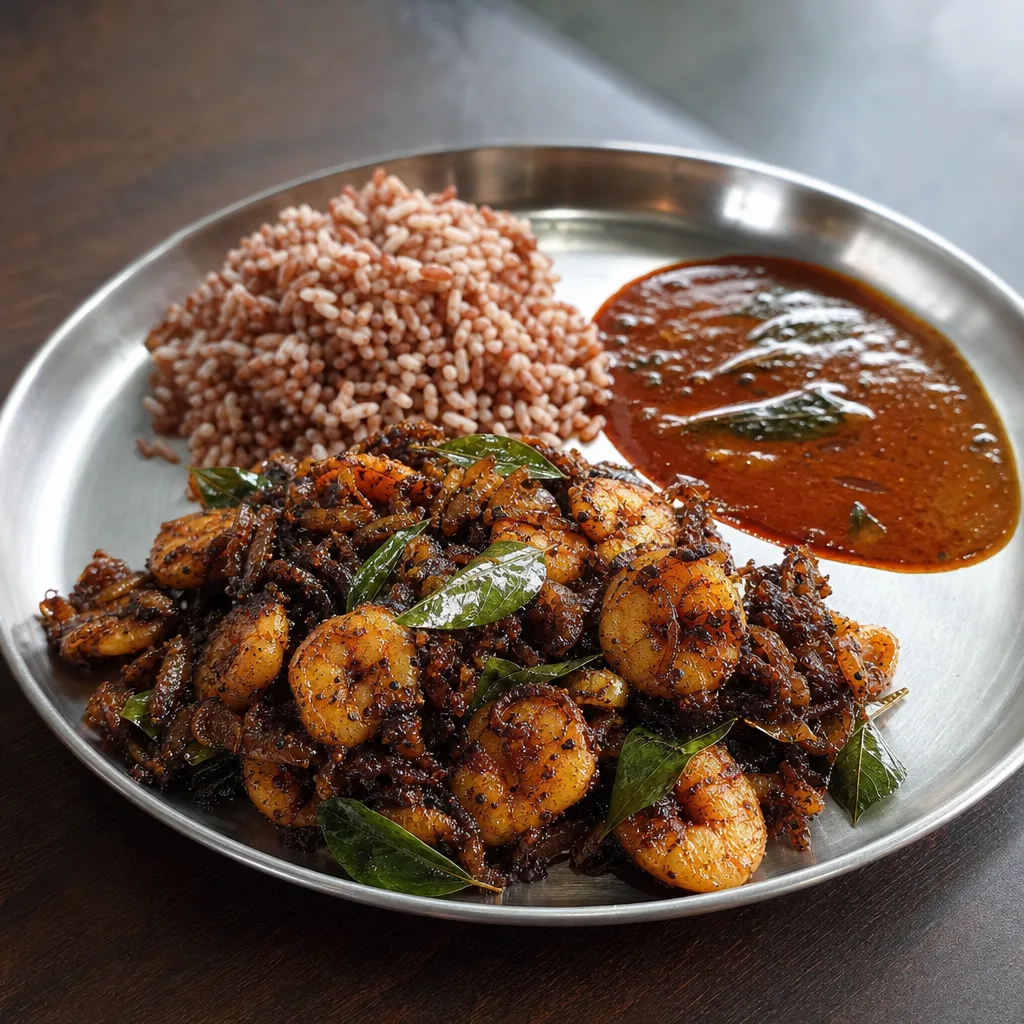
This is a dry, dark, intensely peppery fry from the Syrian Christian kitchens of Travancore. It is not a curry and it carries no gravy. The prawns finish almost black at the edges from the cracked pepper and the coconut oil, and the shallots melt into the coating rather than sitting separately. Pepper is the dominant spice here, not chilli, and the quantity used is not a misprint.
In most Nasrani households this comes to the table as a side dish alongside rice and a thin fish curry or a vegetable stew. It is also eaten with appam on feast days. The whole dish takes under half an hour once the prawns are cleaned, which is why it appears at short-notice lunches as often as it does at elaborate Sunday meals.
Households differ mainly in how much pepper they use and whether they add a small piece of kudampuli for sourness. Some cooks add a few curry leaves right at the end and keep them barely wilted; others fry the curry leaves early so they crisp into the oil. Both are correct. What does not vary is the fat: coconut oil, and enough of it that the prawns sizzle properly when they go in.
Ingredients (serves 4)
For the prawns
For the fry
Method
Marinate the prawns
In a bowl, toss the cleaned prawns with the turmeric, cracked pepper from the marinade portion, and salt. Mix well so every prawn is coated. Set aside for 15 minutes at room temperature while you prepare the other ingredients. Do not marinate longer than 30 minutes or the salt will draw out too much moisture.
Soak the kudampuli
If using kudampuli, place the piece in 2 tablespoons of warm water and leave it to soften for 10 minutes. You will add the soaking water along with the piece later. This gives a very mild, background sourness; it does not make the dish tangy.
Fry the shallots
Heat the coconut oil in a heavy iron or thick-bottomed pan over medium heat. Add the sliced shallots and a small pinch of salt. Fry, stirring regularly, for 8 to 10 minutes until they are deep golden and beginning to crisp at the edges. Do not rush this on high heat; shallots that are merely softened rather than properly caramelised will not give the dish its characteristic sweetness.
Add ginger, garlic and green chilli
Add the chopped ginger and garlic to the pan. Stir and fry for 2 minutes until the raw smell leaves. Add the slit green chillies and stir for another 30 seconds. The mixture should smell fragrant and the ginger and garlic should be lightly coloured but not brown.
Add curry leaves and the second measure of pepper
Add one sprig of curry leaves and let them splutter in the oil for about 20 seconds. Then add the remaining 1½ teaspoons of cracked pepper directly into the pan. Stir it through the shallot mixture for 30 seconds over medium heat so the pepper blooms in the oil. This is what gives the dish its depth; pepper added only in the marinade stays sharp but does not mellow into the base.
Add kudampuli if using
If using kudampuli, add the soaked piece along with its soaking water now. Stir and let the liquid evaporate almost completely, about 1 minute. The pan should look nearly dry before the prawns go in.
Add the prawns
Increase the heat to medium-high. Add the marinated prawns in a single layer as best you can. Leave them undisturbed for 1 minute so they take some colour on the underside. Then toss and stir-fry for 3 to 4 minutes total. Prawns are done when they are just curled into a C shape and opaque through. If they curl tightly into an O they are overcooked and will be rubbery; pull the pan off the heat the moment they are just done.
Finish with the second sprig of curry leaves
Add the remaining sprig of curry leaves, toss once or twice, and take the pan off the heat. The residual heat is enough to wilt the leaves. Taste for salt and pepper. Serve immediately while the coating is still clinging to the prawns.
How to serve
Steamed matta rice and a thin fish curry (meen vevichathu or meen moilee); or with appam and a vegetable stew on feast days. Often a sliced raw onion and lemon wedges are placed on the side of the plate.
Served with: Steamed matta rice and a thin fish curry (meen vevichathu or meen moilee); or with appam and a vegetable stew on feast days. Often a sliced raw onion and lemon wedges are placed on the side of the plate.
Cook's tips
Cracking the pepper
Use a mortar and pestle and crack the pepper coarsely. You want uneven pieces, some almost whole, some powdery. A pepper grinder set to coarse works, but fine-ground pepper disappears into the dish and gives heat without texture. Pre-ground pepper from a packet is not suitable here.
Choosing the prawns
Medium-sized prawns work better than large ones because they cook through in the same time it takes the coating to darken. Very large prawns need longer and the shallot coating can scorch before the prawn is done. Fresh prawns from the day's catch are ideal; if using frozen, thaw fully and pat completely dry before marinating or the water will steam rather than fry them.
Kudampuli is optional
Many Nasrani cooks include it; many do not. Without it the dish is purely peppery and rich. With it there is a faint sourness in the background. Do not substitute regular tamarind; it is sharper and will change the character of the dish.
Leftovers
The fry keeps well in the refrigerator for one day. Reheat in a dry pan over medium heat rather than in a microwave, which makes the prawns tough. The flavour actually deepens overnight.
The pan matters
A well-seasoned iron pan or a thick-bottomed steel pan gives the best result. A non-stick pan will cook the prawns but will not give the same dark, slightly charred edges on the shallot coating.
Regional variations
Mappila version from Malabar uses fennel and a small amount of grated coconut in the masala; Chettinad Tamil version uses kalpasi and marathi mokku alongside pepper and is drier still.
Glossary
- Cheriya ulli ചെറിയ ഉള്ളി
- Small shallots native to Kerala, sweeter and more pungent than large onions; used in most Kerala cooking where 'onion' is called for in traditional recipes.
- Kudampuli കുടംപുളി
- Malabar tamarind, also called gamboge or fish tamarind (Garcinia cambogia); a dried rind used in Kerala fish and prawn dishes for its mild, distinctive sourness.
- Matta rice മട്ട അരി
- Red parboiled rice from Kerala, also called Rosematta or Kerala red rice; the everyday rice of most Kerala households, nutty and slightly chewy.
- Nasrani നസ്രാണി
- Kerala Syrian Christians, also called Saint Thomas Christians; one of the oldest Christian communities in the world, with a distinct culinary tradition centred on Travancore and central Kerala.
Two things decide this dish. The first is the shallots: they must be fried slowly until genuinely golden and caramelised, not just softened, because they form the coating that clings to the prawns. The second is the pepper: it must be cracked coarsely and added in two stages, once in the marinade and once into the hot oil, so it has both sharpness and depth. Get those two right and the rest follows.
More Seafood recipes
Meen Peera: Kerala Fish Steamed with Grated Coconut
Traditional Kerala meen peera: small fish steamed dry with fresh grated coconut, shallots, kudampuli and turmeric. No water added. Step-by-step home…
Neymeen Curry
Traditional Malabar Mappila neymeen curry with kudampuli, fresh coconut paste and coconut oil, cooked in a clay pot. Step-by-step Kerala recipe.
Royyala Iguru
Traditional coastal Andhra royyala iguru: prawns cooked semi-dry in a shallot, tomato and guntur chilli masala with gingelly oil. Authentic household…
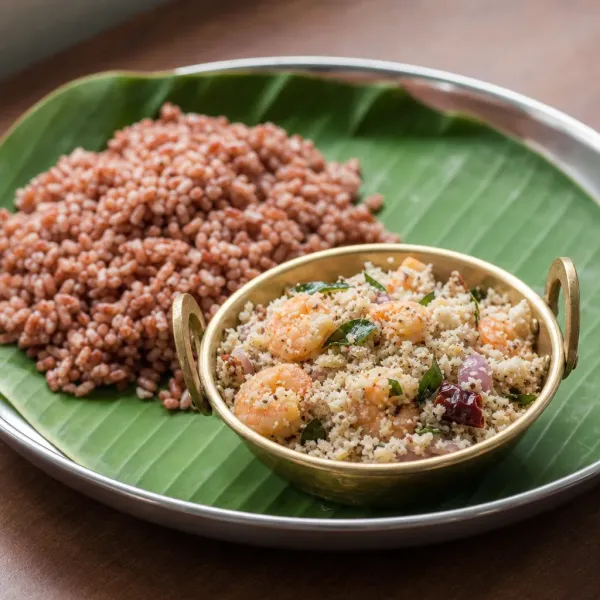
Chemmeen Thoran
Traditional Kerala chemmeen thoran: small prawns stir-fried with fresh grated coconut, shallots, curry leaves and coconut oil. Dry, fragrant and read…
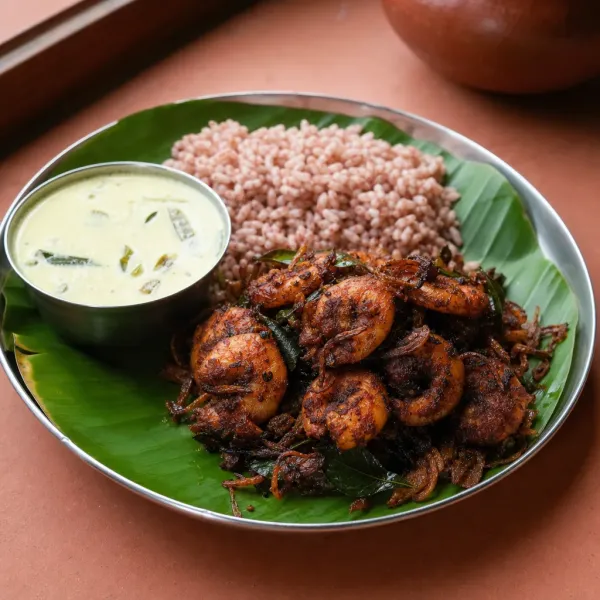
Chemmeen Varuthathu
Traditional Kerala prawn fry with kudampuli, red chilli, and coconut oil. Dry, crisp-edged, and deeply spiced – the Travancore household method.
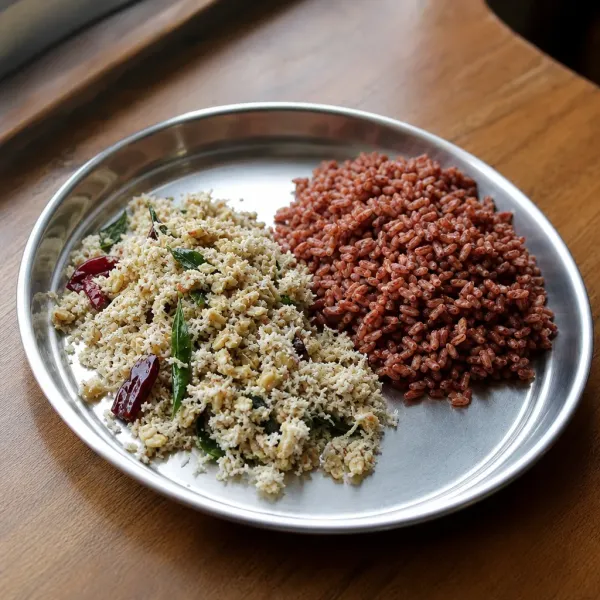
Kakka Irachi Thoran
Traditional Kerala kakka irachi thoran: fresh clam meat stir-fried dry with grated coconut, shallots and curry leaves. Coastal household recipe with…