

Erissery Recipe
Malayalam എരിശ്ശേരിTamil எரிசேரிKannada ಎರಿಸ್ಸೇರಿTelugu ఎరిస్సేరి
- Prep20 min
- Soak / ferment8 hr
- Cook40 min
- Serves4
- DifficultyEasy
- DietVegan
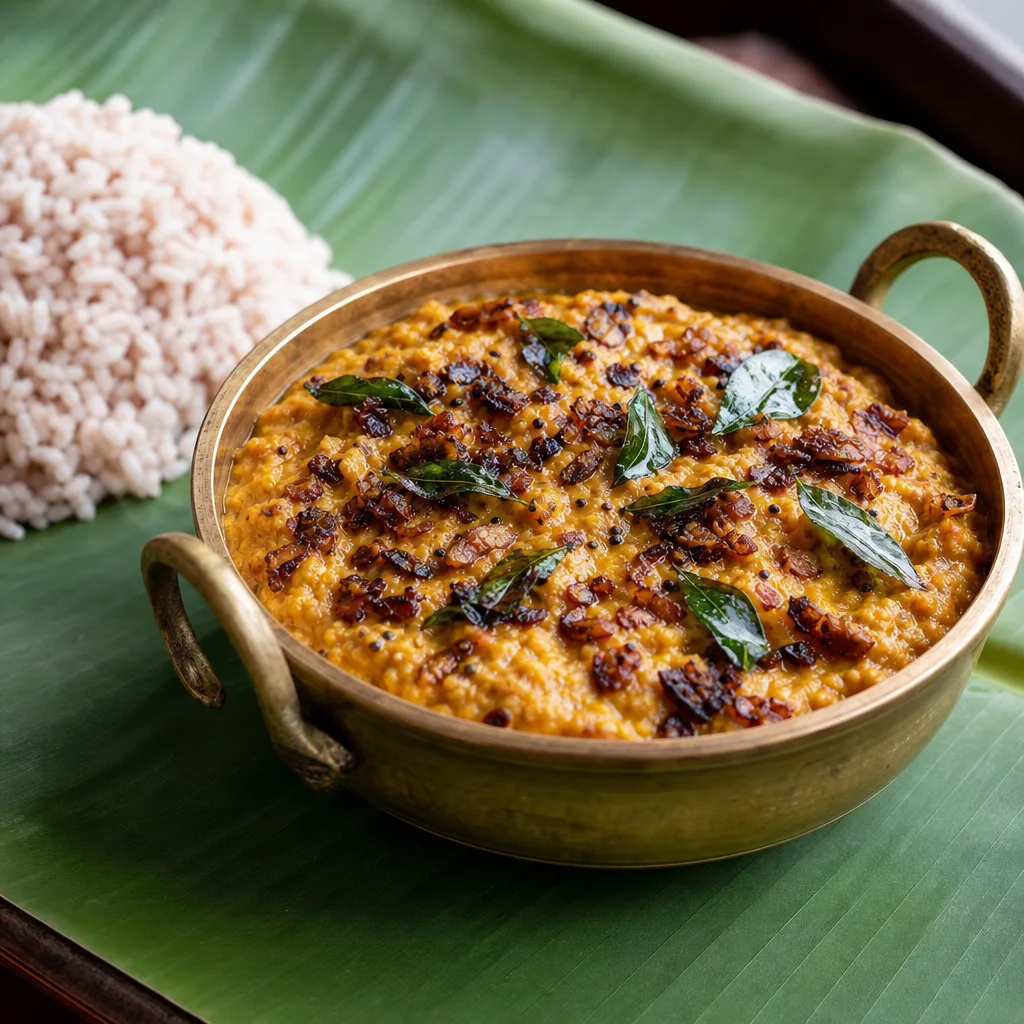
Erissery is a thick, dry-ish curry made from a starchy vegetable and a legume, finished with coconut that has been roasted in its own oil until deep brown. It is one of the essential dishes on a Kerala sadya banana leaf, sitting in its own space without touching the sambar. Outside the sadya, it appears at lunch almost any day of the week in households across central and southern Kerala.
The roasted coconut is what separates erissery from every other coconut-based vegetable dish in the Kerala kitchen. Half the coconut goes into a raw paste that thickens the curry; the other half is fried dry in coconut oil with a few curry leaves until it turns the colour of dark caramel. That roasted coconut is stirred through at the end and some of it is spooned over the top. The fragrance it gives the finished dish is not replicable by any shortcut.
Households differ mainly on the ratio of pumpkin to cowpea, and on how much cumin goes into the ground paste. Some cooks add a small piece of raw coconut to the pumpkin while it cooks, separate from the paste, for extra body. The pumpkin used in Kerala is the yellow-fleshed variety called mathanga; do not use the pale, watery kind.
Ingredients (serves 4)
For the cowpea
For the pumpkin
For the coconut paste
For the roasted coconut and tempering
Method
Soak the cowpea
Rinse the vanpayar and cover with cold water by at least 4 cm. Leave to soak for 8 hours or overnight. The beans will swell and the skins will look taut. Drain and rinse before cooking.
Cook the cowpea
Put the drained cowpea in a pressure cooker with enough fresh water to cover by 4 cm and a pinch of salt. Cook on medium heat for 3 whistles, then lower the heat and cook for another 5 minutes. Let the pressure drop on its own. The beans should be fully cooked through but still holding their shape, not mushy. Drain and set aside, keeping a few tablespoons of the cooking liquid.
Cook the pumpkin
Put the pumpkin cubes in a wide, heavy pan with 120 ml water, the turmeric, and salt. Cover and cook on medium heat for 10 to 12 minutes until the pumpkin is completely tender and can be mashed easily with the back of a spoon. Do not drain; most of the water should have been absorbed. Lightly crush a few pieces with the back of the spoon to give the curry body, but leave most cubes whole.
Grind the coconut paste
While the pumpkin cooks, grind together the 100 g grated coconut, cumin seeds, turmeric, and dried red chillies with 3 to 4 tablespoons of water to a coarse, thick paste. It should not be completely smooth; a little texture is correct. Set aside.
Combine pumpkin and cowpea
Add the cooked cowpea to the pan of pumpkin and stir gently. If the mixture looks very dry, add a tablespoon or two of the reserved cowpea cooking liquid. Keep the heat on low.
Stir in the coconut paste
Add the ground coconut paste to the pan and mix well so it coats the pumpkin and beans evenly. Cook on low heat, stirring, for 4 to 5 minutes. The paste will cook through and the raw smell of coconut will disappear. The mixture should be thick and nearly dry, not soupy. Taste and adjust salt.
Roast the coconut
In a small frying pan, heat 1 tablespoon of coconut oil on medium heat. Add the 75 g grated coconut and stir constantly. Keep the heat at medium; if you rush this on high heat, the outside burns before the inside dries. Cook for 8 to 10 minutes, stirring without stopping, until the coconut is an even deep brown, the colour of dark caramel. It will smell nutty and toasted. Remove from heat immediately.
Temper the spices
In the same small pan, add the remaining 1 tablespoon of coconut oil. When hot, add the mustard seeds and wait for them to pop. Add the dried red chillies and curry leaves and let them splutter for 20 seconds.
Finish the erissery
Pour the tempering over the pumpkin and cowpea mixture. Add most of the roasted coconut and fold it through gently. Transfer to a serving bowl and spoon the remaining roasted coconut over the top. Serve warm.
How to serve
Steamed matta rice; on a sadya banana leaf it sits alongside sambar, parippu curry, olan, avial, and pachadi.
Served with: Steamed matta rice; on a sadya banana leaf it sits alongside sambar, parippu curry, olan, avial, and pachadi.
Cook's tips
The roasting step cannot be rushed
If the coconut is not roasted long enough, the erissery will taste raw and heavy. If the heat is too high, the outside chars while the inside stays pale. Medium heat and constant stirring for the full 8 to 10 minutes is the only way.
Pumpkin variety matters
Use the yellow-fleshed mathanga, not the pale green or very watery varieties. Watery pumpkin will make the erissery loose and the coconut paste will not bind properly.
Pressure cooker shortcut for cowpea
If you have forgotten to soak, cover the dry beans with cold water, bring to a boil for 2 minutes, turn off the heat, and soak for 1 hour in the hot water. Then pressure cook for 4 to 5 whistles. The texture will be slightly softer than overnight-soaked beans.
Freshly grated coconut only
Desiccated coconut does not roast the same way and gives a different flavour entirely. The paste made from it will also be drier and less fragrant. If fresh coconut is unavailable, frozen grated coconut thawed at room temperature is an acceptable substitute.
Storing leftovers
Erissery keeps well for a day at room temperature in a cool kitchen. Refrigerate if keeping longer. Reheat gently with a splash of water; the roasted coconut will soften slightly but the flavour remains.
Regional variations
Yam erissery (chena erissery) is made the same way with elephant foot yam instead of pumpkin; raw banana erissery replaces the pumpkin with plantain. Some Malabar households skip the cowpea entirely and use only pumpkin.
Glossary
- Vanpayar വൻപയർ
- Red cowpea or yard-long bean seed; the small, dark red dried bean used in Kerala cooking.
- Mathanga മത്തങ്ങ
- Yellow pumpkin; the orange-fleshed variety used in Kerala curries and sweets.
- Kudampuli കുടംപുളി
- Gamboge or Malabar tamarind; the souring agent used in Kerala fish curries, not used in erissery but often confused with tamarind.
- Erissery എരിശ്ശേരി
- A thick Kerala curry of starchy vegetable and legume finished with roasted coconut; one of the fixed dishes on a sadya leaf.
- Sadya സദ്യ
- The traditional Kerala vegetarian feast served on a banana leaf, typically for weddings, Onam, and Vishu.
- Pachari പച്ചരി
- Raw white rice; used in Kerala for grinding batters, distinct from parboiled matta rice used for eating.
Two things decide whether erissery succeeds. The first is the pumpkin: it must be the right variety, cooked until genuinely soft and partially crushed so it holds the coconut paste rather than sitting in liquid. The second is the roasted coconut: it must go all the way to deep brown, stirred constantly on medium heat. That roasted coconut is not a garnish; it is the flavour of the dish.
More Vegetarian Gravies recipes
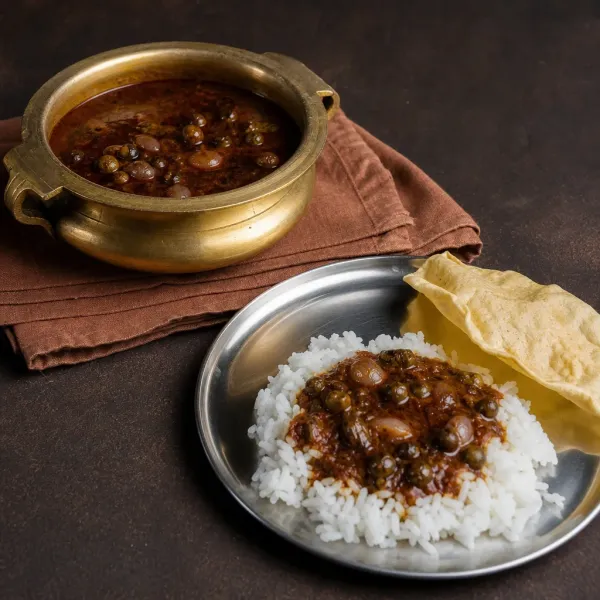
Sundakkai Vathal Kuzhambu
Traditional Tamil Brahmin vatha kuzhambu with sundakkai vathal, tamarind, and gingelly oil. Sour, spiced, and cooked the slow household way.
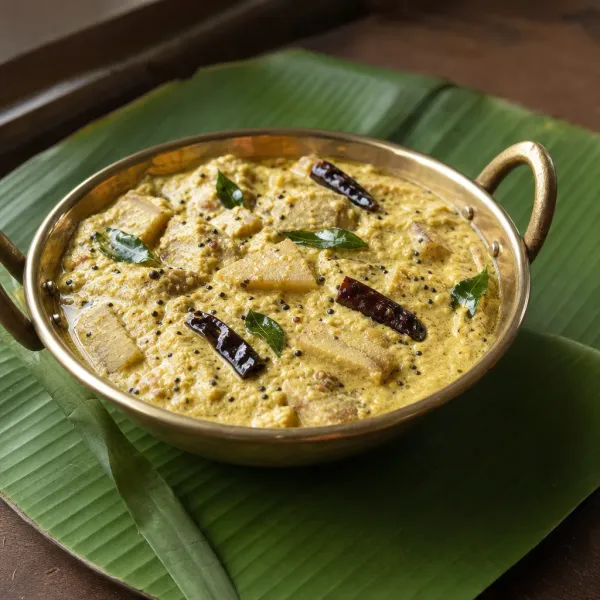
Kalan
Traditional Kerala kalan with raw banana and elephant yam in thick sour curd. A sadya essential from Travancore kitchens, spiced with black pepper an…
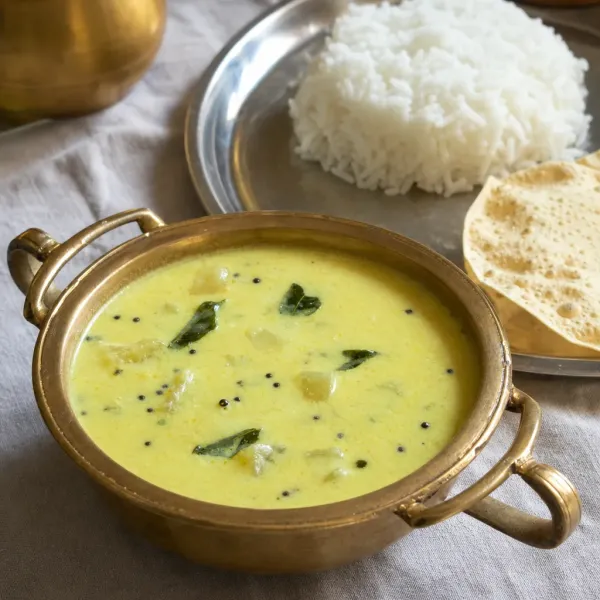
Mor Kuzhambu
Traditional Tamil Brahmin mor kuzhambu with ash gourd, fresh coconut-cumin paste and a ghee tempering. Step-by-step method with tips on keeping the c…
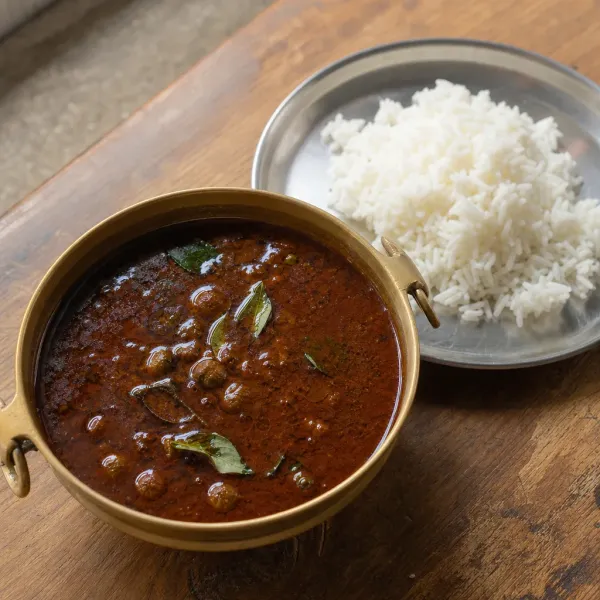
Kara Kuzhambu
Traditional Tamil Iyer kara kuzhambu with sundakkai, freshly ground spice-coconut masala, and gingelly oil. Thick, spiced tamarind gravy for rice.
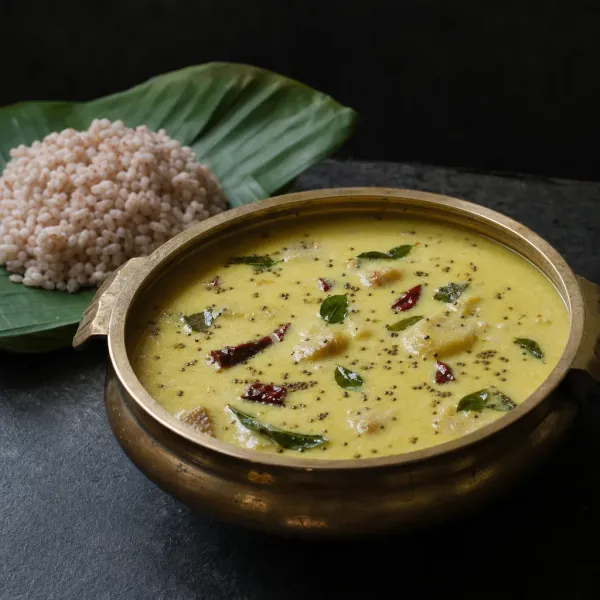
Pulissery (Kerala Yogurt and Coconut Curry)
Traditional Kerala pulissery with ripe banana or ash gourd, fresh coconut paste and soured yogurt. Step-by-step sadya recipe with coconut oil temperi…
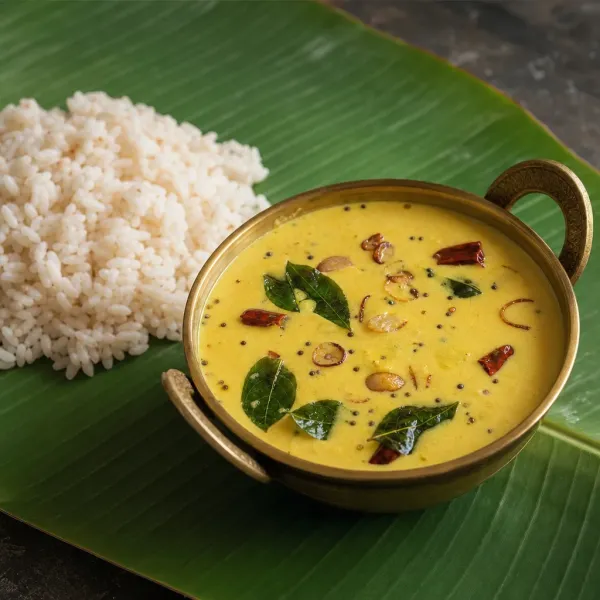
Mambazha Pulissery
Traditional Kerala Mambazha Pulissery made with whole ripe country mangoes, fresh coconut paste and sour yogurt. A classic sadya dish, step by step.