

Palakura Pappu Recipe
Malayalam പാലക്കൂര പപ്പുTamil பாலக்கூர பப்புKannada ಪಾಲಕ್ ಪಪ್ಪುTelugu పాలకూర పప్పు
- Prep20 min
- Cook40 min
- Serves4
- DifficultyEasy
- DietVegan
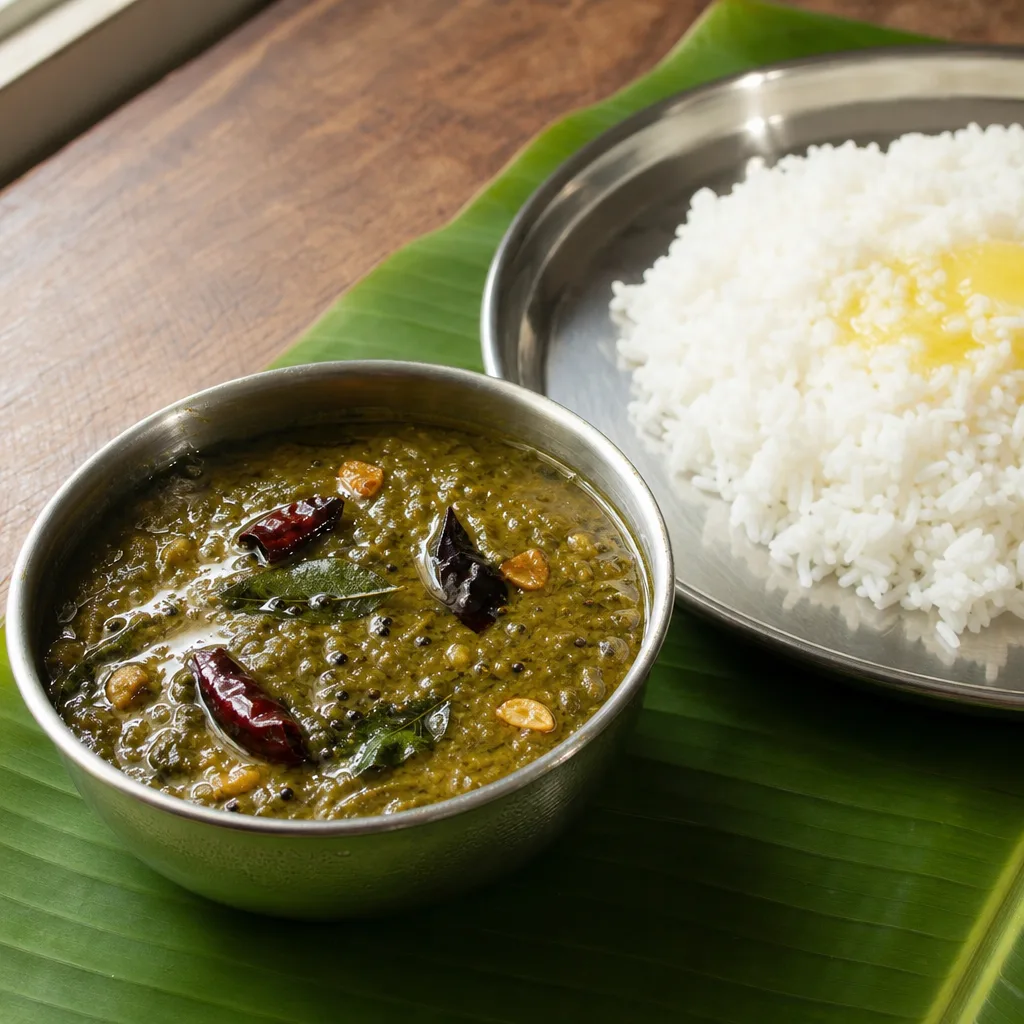
Palakura pappu is everyday Andhra cooking at its most direct. Toor dal is pressure-cooked until completely soft, spinach is stirred in and cooked down into it, and the whole thing is finished with a sharp tamarind edge and a mustard-and-dried-chilli tadka in gingelly oil. It is thick enough to eat with rice, scooping it up with a mound of hot rice and a spoon of ghee poured over the top.
In most Andhra households the spinach goes in raw after the dal is mashed, so it wilts into the dal and loses its separate identity entirely. The result is a dark, soft, deeply savoury pot of dal rather than a dal with visible greens floating in it. The tamarind is added in a small quantity, just enough to cut the earthiness of the dal, not so much that it dominates.
Household variation is mostly in heat: coastal Andhra cooks use three or four dried red chillies in the tadka and a green chilli or two in the dal itself; Rayalaseema cooks sometimes push the red chilli count higher. The garlic in the tadka is non-negotiable in most homes, though a small number of households omit it on religious days.
Ingredients (serves 4)
For the dal
For the tadka
Method
Rinse and pressure-cook the dal
Rinse the toor dal in two or three changes of water until the water runs mostly clear. Put it in the pressure cooker with 500 ml water, the turmeric, and the slit green chillies. Cook on medium heat for 4 whistles, then take the cooker off the heat and let the pressure drop on its own. Do not rush this by running cold water over the lid; the dal continues to soften as the steam subsides.
Check and mash the dal
Open the cooker once the pressure has fully released. The dal should be completely soft with no bite left; press a grain between your fingers and it should dissolve without resistance. If it is still firm, add a splash of water and cook for one more whistle. Using the back of a ladle or a wooden masher, mash the dal roughly — not to a smooth paste, but enough that no whole grains remain.
Add the spinach
Place the cooker or a heavy-bottomed pot on medium heat and bring the dal to a gentle simmer. Add the chopped spinach all at once and stir it into the dal. It will look like too much at first. Keep stirring over medium heat for 6 to 8 minutes until every bit of spinach has wilted completely and merged into the dal. The colour of the dal will turn a deep olive-green.
Add tamarind and salt
Pour in the extracted tamarind water and stir well. Add salt. Let the dal simmer uncovered on low-medium heat for another 8 to 10 minutes, stirring occasionally, until the raw edge of the tamarind is gone and the dal has thickened to a consistency that holds its shape briefly when you drag a spoon through it. If it thickens too much, add a few tablespoons of water.
Taste and adjust
Taste the dal now, before the tadka goes in. Adjust salt and tamarind at this stage. The dal should be savoury and very slightly sour; the tadka will add sharpness and heat on top of this base.
Make the tadka
Heat the gingelly oil in a small tadka pan or a steel ladle over medium-high heat until it is hot but not smoking — gingelly oil has a lower smoke point than refined oil, so watch it. Add the mustard seeds and keep the pan covered loosely; they will splutter within 30 seconds. Once the spluttering slows, add the cumin seeds and let them sizzle for 10 seconds.
Finish the tadka
Add the crushed garlic to the pan and fry, stirring, until it turns light golden at the edges, about 30 to 40 seconds. Add the broken dried red chillies, curry leaves, and asafoetida. Stand back when the curry leaves go in — they will spit. Fry for another 20 seconds until the chillies darken slightly and the curry leaves are crisp.
Pour the tadka over the dal
Pour the entire contents of the tadka pan over the simmering dal immediately. Stir once or twice to distribute the oil through the dal, then take it off the heat. The dal is ready to serve.
How to serve
Hot steamed rice (sona masuri or raw rice), a spoon of ghee poured directly over the rice, with roasted papads and a raw onion-and-green-chilli relish on the side.
Served with: Hot steamed rice (sona masuri or raw rice), a spoon of ghee poured directly over the rice, with roasted papads and a raw onion-and-green-chilli relish on the side.
Cook's tips
Why gingelly oil and not another oil
Gingelly oil gives Andhra pappu its characteristic nutty, slightly bitter undertone. Refined sunflower oil produces a flatter-tasting tadka. Coconut oil is wrong for this dish entirely.
The spinach should disappear
If you can still see distinct bright-green spinach pieces, it has not cooked long enough. Palakura pappu is not a dal with spinach on top; it is a unified, dark, thick dal. Keep stirring on medium heat until the spinach fully breaks down.
Tamarind quantity matters
15 g of tamarind gives a background sourness. If your tamarind is very dry and concentrated, use 10 g. Add it gradually and taste; too much tamarind will make the dal aggressively sour and you cannot fix it without adding more dal.
Storing leftovers
The dal thickens considerably as it cools. When reheating, add a small splash of water and stir over low heat. It keeps well in the refrigerator for two days. The flavour actually deepens overnight.
Regional variations
Telangana households make a similar pappu with more tamarind and sometimes add raw mango; Tamil Brahmin kitchens make a keerai paruppu that is blander and uses no tamarind.
Glossary
- Kandi pappu కంది పప్పు
- Toor dal (split pigeon peas); the everyday lentil in Andhra cooking.
- Palakura పాలకూర
- Spinach; the Telugu name for the leafy green used in this dish.
- Nuvvula nune నువ్వుల నూనె
- Gingelly oil, also called sesame oil; the traditional cooking fat for Andhra dals and kuzhambu-style dishes.
- Inguva ఇంగువ
- Asafoetida; used in a small pinch in the tadka to aid digestion and add a savoury depth.
- Tadka తాళింపు
- The tempering of whole spices and aromatics in hot oil, poured over the finished dish to finish it.
Two things decide whether this dal works: cooking the spinach long enough that it fully dissolves into the dal and becomes part of its body rather than a garnish, and getting the tamarind level right before the tadka goes in. Once the hot gingelly-oil tadka is poured over, you cannot taste and adjust; what is there is what you serve.
More Lentils & Legumes recipes
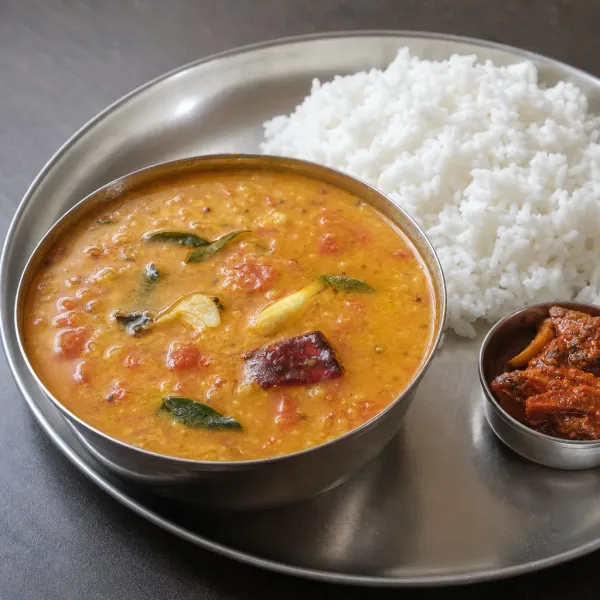
Tomato Pappu (Andhra Tomato Dal)
Authentic Andhra tomato pappu made with toor dal, ripe sour tomatoes and a ghee tadka with garlic and curry leaves. A daily dal from coastal Andhra h…
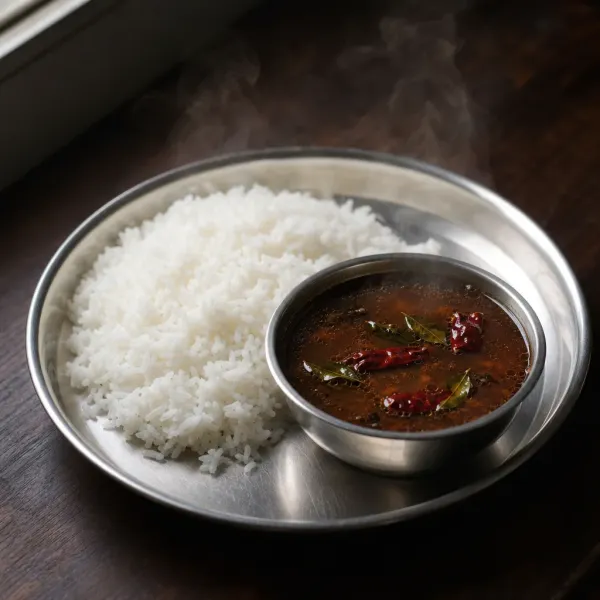
Ulavacharu
Traditional Rayalaseema ulavacharu: horse gram broth slowly reduced to a deep mahogany, finished with a gingelly oil tadka. Served over hot rice.
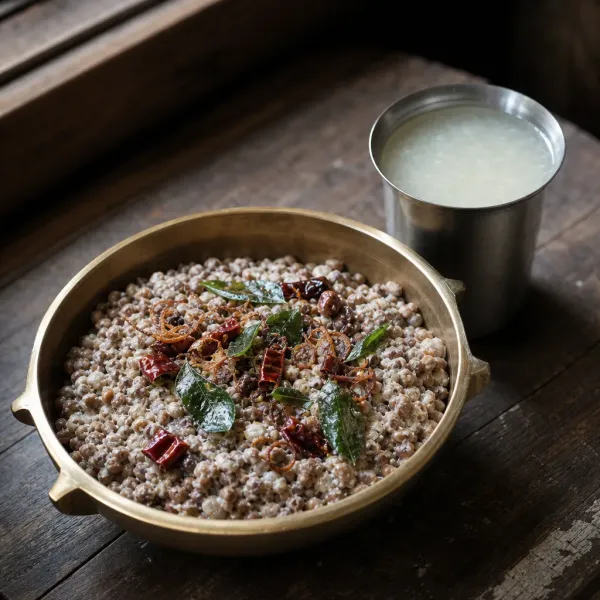
Muthira Puzhukku (Horse Gram Puzhukku)
Traditional Kerala muthira puzhukku: horse gram slow-cooked with kudampuli, finished with a fresh coconut-shallot paste and coconut oil tempering. Se…
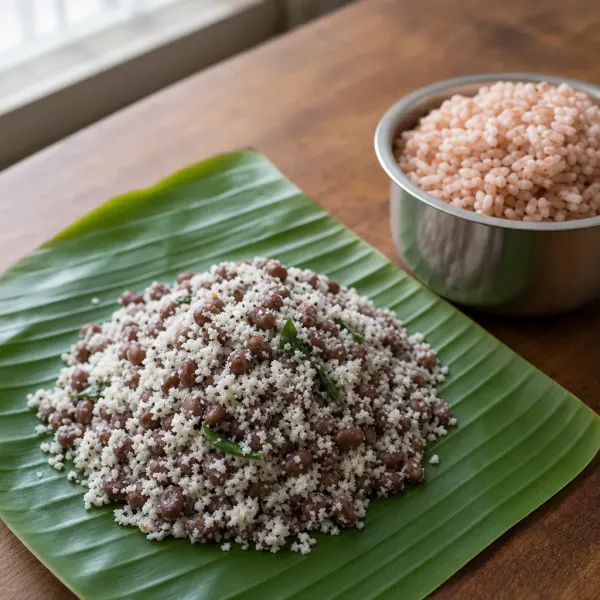
Vanpayar Thoran
Traditional Kerala vanpayar thoran: red cowpea cooked tender, tossed with fresh grated coconut and tempered in coconut oil with mustard and curry lea…
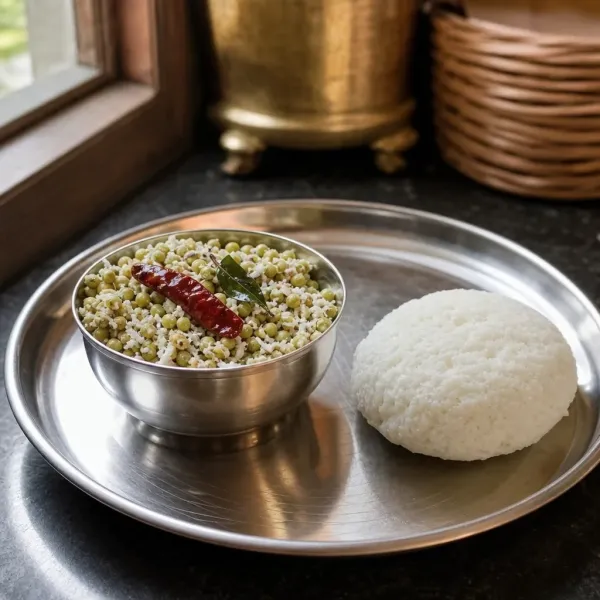
Hesarukalu Usli
Traditional Karnataka sprouted moong usli from a Udupi kitchen: steamed hesarukalu, fresh coconut, mustard tadka in coconut oil. Vegan, easy, everyda…
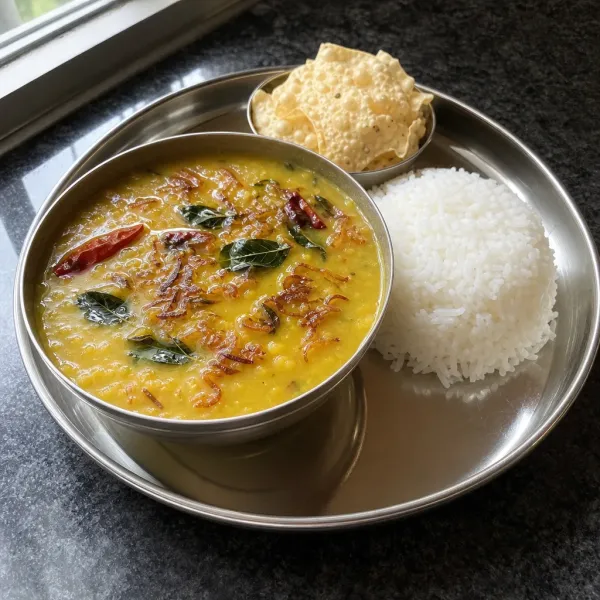
Mamidikaya Pappu
Traditional Andhra recipe for mamidikaya pappu: toor dal cooked with sour raw mango, finished with a ghee tadka of mustard, shallots, and curry leave…