

Nadan Mutta Thoran Recipe
Malayalam നാടൻ മുട്ട തോരൻTamil நாடன் முட்டை தோரன்Kannada ನಾಡನ್ ಮುಟ್ಟ ತೋರನ್Telugu నాడన్ ముట్ట తోరన్
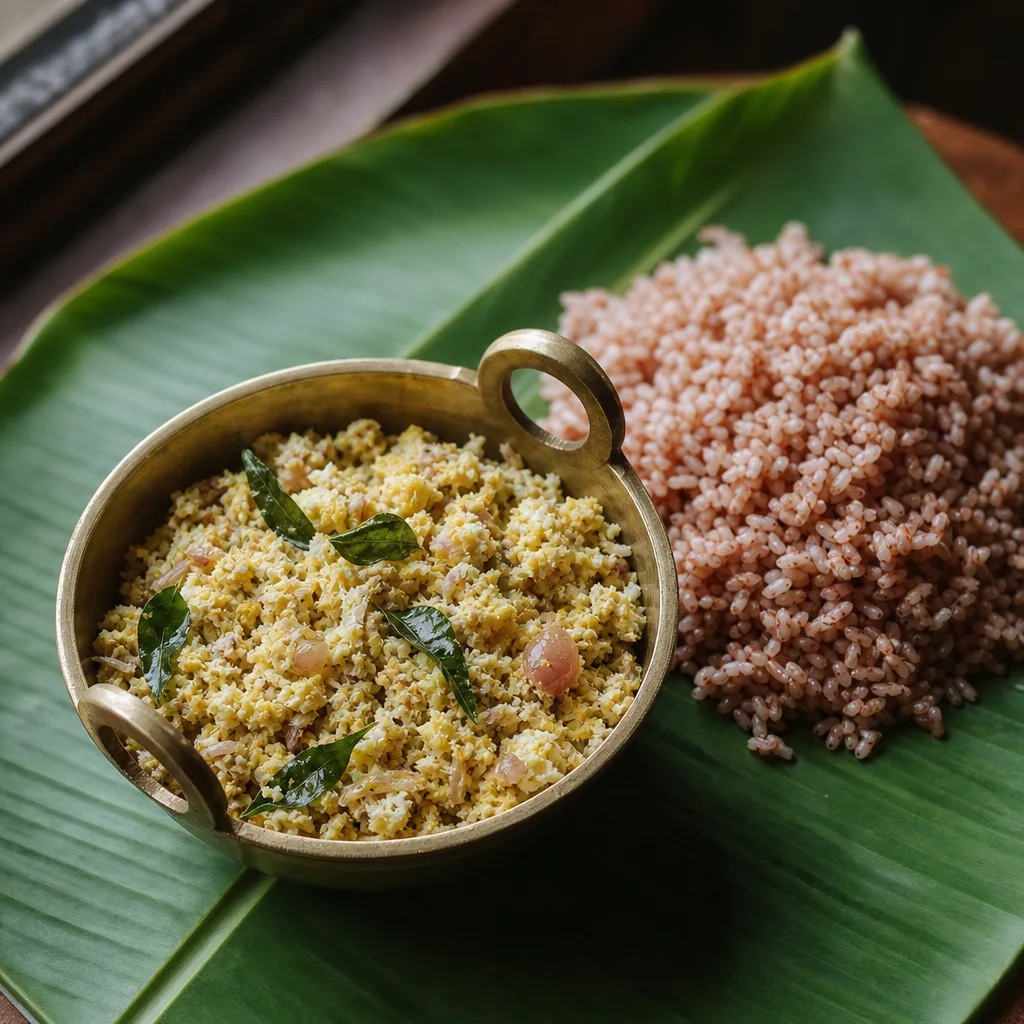
- Prep10 min
- Cook10 min
- Serves4
- DifficultyEasy
- DietEgg
Mutta thoran is the kind of dish that holds a Kerala household together on a Tuesday evening. It is not a celebration dish and it is not trying to be. Eggs are scrambled into a dry, well-seasoned mix of shallots, green chilli, curry leaf and coconut — dry enough to eat with rice without the plate going wet, which is the whole point of a thoran.
It belongs to the everyday cooking of most Kerala communities, cooked in coconut oil and finished with freshly grated coconut. The coconut keeps the scramble from going rubbery and gives it the characteristic texture that separates this from a plain egg bhurji. In most Travancore homes the eggs are broken directly into the pan over the shallot base and broken up as they cook rather than beaten beforehand — this gives slightly larger, softer pieces rather than a fine crumble.
Households differ mainly on heat. Some use only one green chilli and rely on the black pepper for warmth; others use three or four. The coconut can be stirred through at the very end off the heat, or added a minute before so it just warms through. Both are correct. What is not negotiable is the coconut oil and the fresh coconut — without those two things it is a different dish entirely.
Ingredients (serves 4)
Main
Method
Slice the shallots
Peel and slice the shallots thin and even — about 2 mm. Uneven slices mean some burn before others soften. Set aside with the slit green chillies and curry leaves.
Heat the pan
Place a wide iron or heavy-bottomed pan over medium heat. Add the coconut oil. When the oil shimmers and a curry leaf dropped in sputters immediately, the heat is right. Do not let the oil smoke.
Fry the curry leaves and chilli
Add the curry leaves and green chillies together. Stand back — the leaves will splutter. Fry for about 30 seconds until the leaves are crisp and fragrant and the chillies have blistered slightly.
Cook the shallots
Add the sliced shallots and a small pinch of salt. Stir and spread them out. Cook over medium heat for 5 to 6 minutes, stirring every minute or so, until they are soft, translucent and beginning to turn faintly golden at the edges. Do not rush this — undercooked shallots will taste raw in the finished dish.
Add turmeric
Sprinkle in the turmeric and stir through the shallots for 20 seconds. The pan should go a deep yellow. This brief cooking takes away the raw smell of the turmeric.
Break in the eggs
Reduce the heat to low. Break the eggs directly into the pan one at a time, spacing them across the shallot base. Add the salt now. Leave them undisturbed for about 20 seconds so the whites just begin to set at the bottom.
Scramble slowly
Using a spatula or the back of a spoon, begin breaking and folding the eggs through the shallots with slow, deliberate strokes. Keep the heat on low. You want large, soft pieces, not a fine crumble. If you stir too fast over high heat the eggs tighten and turn rubbery. This should take 2 to 3 minutes.
Add coconut and pepper
When the eggs are just barely set — still looking slightly underdone — scatter in the grated coconut and the cracked black pepper. Fold gently two or three times. The residual heat will finish cooking the egg and warm the coconut through without drying it out.
Check and serve
Taste for salt. The thoran should be dry enough that it holds together when pressed lightly with the back of a spoon, not wet or pooling. Take off the heat immediately and serve.
How to serve
Hot matta rice and a simple dal or sambar. Often eaten alongside a vegetable thoran and pickle (achar) as part of a daily Kerala meal.
Served with: Hot matta rice and a simple dal or sambar. Often eaten alongside a vegetable thoran and pickle (achar) as part of a daily Kerala meal.
Cook's tips
Do not beat the eggs first
Breaking eggs directly into the pan gives the characteristic soft, uneven pieces of a proper thoran. Beating them first produces a finer, drier scramble closer to a bhurji from further north.
Fresh coconut is not optional
Desiccated coconut will not work here — it stays dry and gritty and does not bind the egg pieces the way fresh coconut does. If fresh coconut is unavailable, frozen grated coconut thawed at room temperature is an acceptable household substitute.
The pan matters
A well-seasoned iron pan holds heat evenly and keeps the eggs from sticking without needing extra oil. A non-stick pan works but tends to make the eggs sweat slightly rather than staying dry.
Shallots, not onions
Large onions have more water and a sharper flavour that overwhelms the egg. Kerala shallots are smaller, sweeter and cook down faster. If you must substitute, use the smallest onions available and reduce the quantity by about a quarter.
Serving time
This does not keep well. Eggs continue to cook in their own heat and the thoran dries out within 20 minutes. Make it last and eat it immediately.
Regional variations
Mappila households in Malabar sometimes add a pinch of fennel seed and more green chilli; Nasrani versions occasionally include a small amount of grated coconut stirred in at the end.
Glossary
- Thoran തോരൻ
- A dry Kerala stir-fry, typically made with vegetables or egg, seasoned with coconut, curry leaf and shallots. Served as a side dish with rice.
- Chuvannulli ചുവന്നുള്ളി
- Kerala small red shallots; sweeter and more aromatic than large onions, essential to Kerala cooking.
- Mutta മുട്ട
- Egg, in Malayalam.
- Nadan നാടൻ
- Literally 'of the land' or 'country-style'; used to describe traditional, homestyle versions of dishes as opposed to restaurant or hotel preparations.
- Kariveppila കറിവേപ്പില
- Curry leaf; used fresh in Kerala cooking for its distinctive aroma. Dried curry leaf is not used in traditional cooking.
Two things decide whether this works: the shallots must be properly softened before the eggs go in, and the eggs must come off the heat while they still look slightly underdone. The coconut finishes them. Get those two moments right and everything else follows.
More Egg recipes
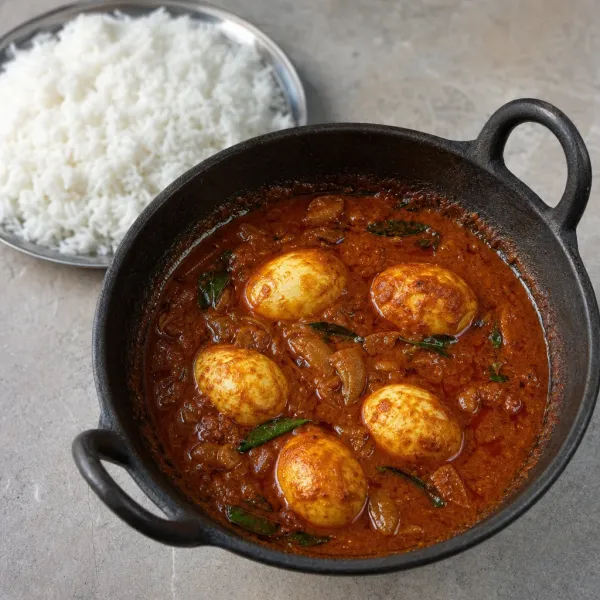
Muttai Kuzhambu
Traditional Kongunad muttai kuzhambu: eggs poached in a tamarind, shallot and fresh coconut gravy cooked in gingelly oil. Step-by-step Tamil home rec…
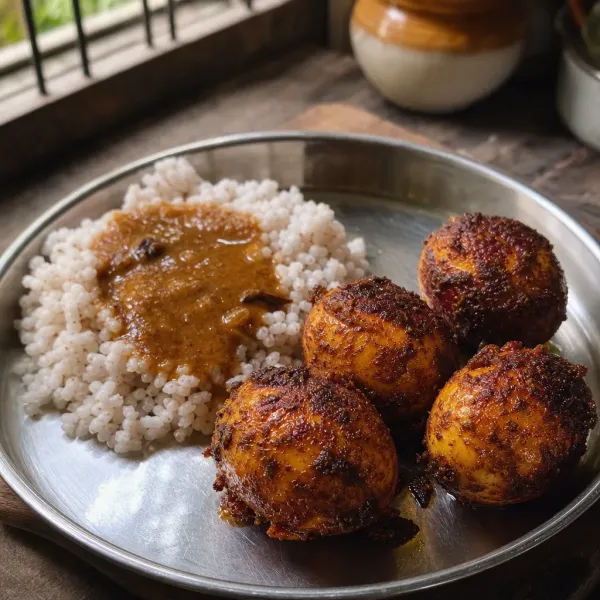
Mutta Porichathu
Traditional Kerala hard-boiled egg fried in coconut oil with a Kashmiri chilli and pepper masala coating. Ready in 25 minutes, perfect with matta ric…
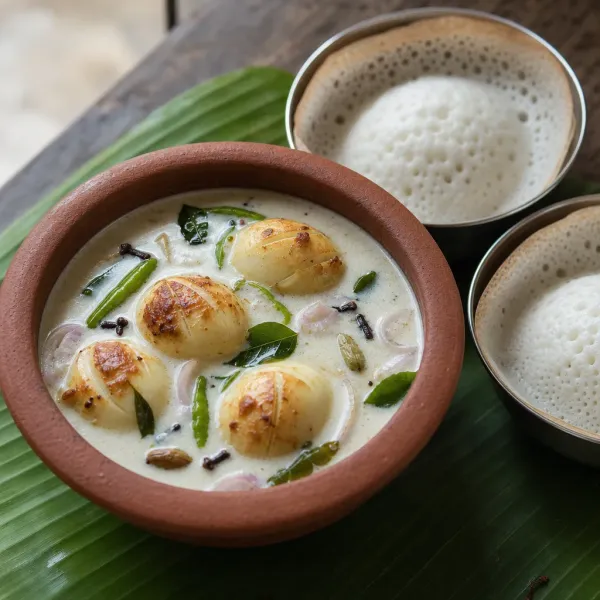
Mutta Mappas
Traditional Kerala Mappila egg curry in coconut milk with whole spices and shallots. Cooked the Malabar way, served with appam. Step-by-step recipe.
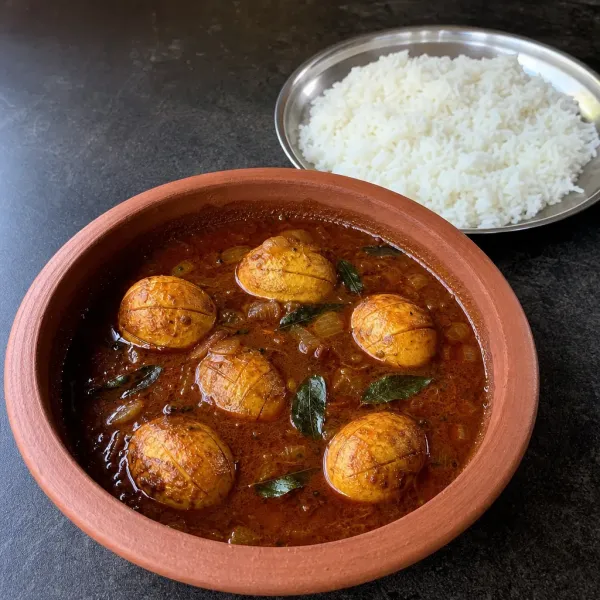
Kodi Guddu Pulusu
Traditional Rayalaseema-style Kodi Guddu Pulusu: hard-boiled eggs simmered in a hot, sour tamarind gravy with Guntur chillies and gingelly oil.
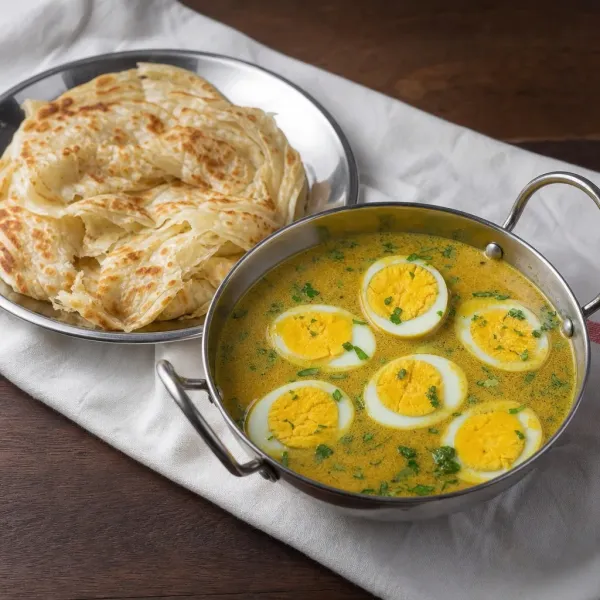
Egg Kurma for Parotta
Traditional Tamil Nadu egg kurma with fresh coconut paste, poppy seeds and whole spices. The classic pairing for layered parotta, cooked the home kit…