

Mutta Porichathu Recipe
Malayalam മുട്ട പൊരിച്ചത്Tamil முட்டை பொரிச்சதுKannada ಮೊಟ್ಟೆ ಪೊರಿಚತುTelugu గుడ్డు పొరిచతు
- Prep10 min
- Cook15 min
- Serves4
- DifficultyEasy
- DietEgg
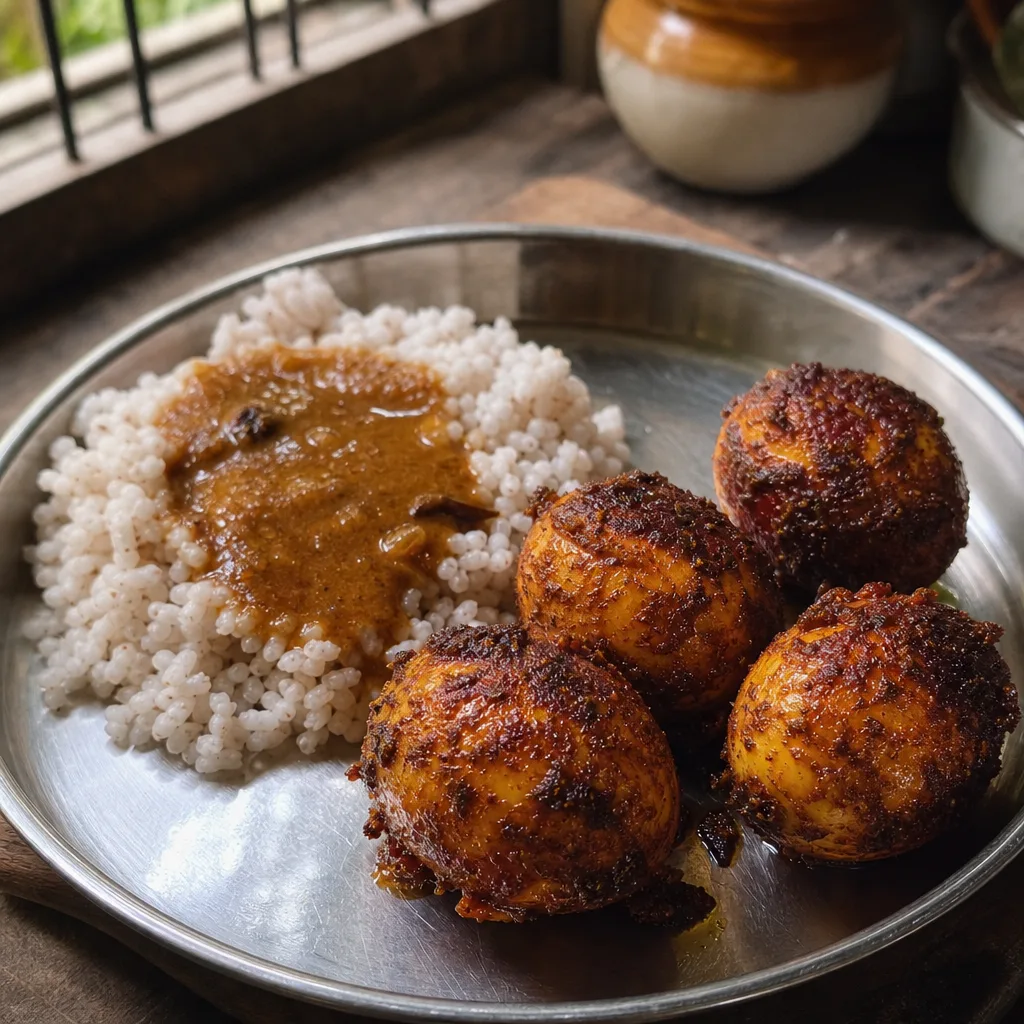
Mutta Porichathu is the everyday fried egg of the Kerala kitchen, but it is not a plain fry. The egg is first hard-boiled, then scored or pricked so the masala paste clings, then fried in coconut oil until the outside is spiced and just beginning to colour. The result sits somewhere between a boiled egg and a proper fry: firm white, fully cooked yolk, a thin coat of red masala that crisps at the edges.
It appears on the lunch plate alongside rice and a curry, tucked beside the sambar or a fish curry, and it is the quickest protein a household can produce on a busy afternoon. Some cooks fry the eggs whole; others halve them before frying so the cut face picks up more colour and spice. Both are correct.
The masala is minimal: Kashmiri chilli powder for colour without excessive heat, a little turmeric, black pepper, and salt, bound with a few drops of water or coconut oil into a paste. Nothing more. The coconut oil must be hot enough that the paste sizzles on contact, or it will steam rather than fry and the coating will stay soft.
Ingredients (serves 4)
For the eggs
For the masala coating
For frying
Method
Hard-boil the eggs
Place the eggs in a saucepan and cover with cold water by at least 2 cm. Bring to a full boil over medium heat, then reduce the heat and simmer for 10 minutes. Lift them out and drop straight into cold water. Leave for 5 minutes before peeling. This gives a fully set yolk with no grey ring.
Score the eggs
Peel the eggs cleanly. Using a sharp knife, make 3 to 4 shallow cuts lengthwise around each egg, just breaking the surface of the white. Do not cut deep enough to reach the yolk. These cuts let the masala grip the egg rather than sliding off in the oil.
Make the masala paste
In a small bowl, combine the Kashmiri chilli powder, turmeric, black pepper, and salt. Add 1 tsp of coconut oil and mix to a thick paste. If it seems too dry to spread, add a few drops of water — no more than half a teaspoon. The paste should be spreadable but not runny.
Coat the eggs
Roll each peeled, scored egg in the masala paste, pressing gently so the paste enters the cuts and covers the surface as evenly as you can manage. Set them aside on a plate while the oil heats. Do not coat them long in advance or the paste will turn wet and fall away.
Heat the oil
Pour 3 tbsp of coconut oil into a wide, heavy pan — a small uruli or a thick-bottomed frying pan works well. Heat over medium-high flame until the oil is hot and shimmering. To test, drop a tiny pinch of the masala paste in; it should sizzle immediately. If it sinks quietly, the oil is not ready.
Fry the eggs
Slide the coated eggs into the hot oil gently, keeping space between them. Fry for about 1½ to 2 minutes on the first side without moving them, until the underside is deep red-brown and the masala is set. Turn carefully using a spoon — not tongs, which can tear the coating — and fry the other sides, rotating every minute or so, for a total frying time of 4 to 5 minutes. The surface should be slightly crisp and darkened in patches; the egg inside stays firm but not rubbery.
Drain and serve
Lift the eggs out with a slotted spoon and rest them briefly on a piece of newspaper or a wire rack. Serve immediately while the coating still has some crispness. They soften as they cool, which is also fine on the rice plate where the curry moistens everything anyway.
How to serve
Steamed matta rice with sambar or a fish curry; or with parotta and a simple gravy on the side. Also eaten at breakfast alongside porotta or appam.
Served with: Steamed matta rice with sambar or a fish curry; or with parotta and a simple gravy on the side. Also eaten at breakfast alongside porotta or appam.
Cook's tips
Kashmiri chilli is not optional
Ordinary red chilli powder will make the coating bitter and very hot before it colours properly. Kashmiri chilli gives the deep red colour at a manageable heat level. If you only have regular chilli, use half the quantity and accept a paler result.
The oil temperature is the one thing that decides the texture
Underheated oil means the coating absorbs oil and goes soft and greasy. The pan must be properly hot before the eggs go in. If the oil starts to smoke, reduce the heat slightly and wait ten seconds before adding the eggs.
Halved eggs
Many cooks halve the boiled eggs lengthwise before coating and frying. The cut face caramelises well and picks up more spice. Frying time reduces to about 3 minutes total. This is the version more common in Travancore Christian households.
Leftover fried eggs
They keep for a day in the fridge but the coating softens completely. To revive them, fry briefly in a dry pan over medium heat for a minute each side.
Regional variations
Some Mappila households add a pinch of fennel powder to the masala coating; in Travancore Christian kitchens the egg is sometimes halved and the cut face is pressed into the spice mix before frying.
Glossary
- Mutta മുട്ട
- Egg in Malayalam.
- Porichathu പൊരിച്ചത്
- That which has been fried; the past participial form of porichu (to fry) used as a dish name in Malayalam.
- Kudampuli കുടംപുളി
- Gamboge or Malabar tamarind (Garcinia cambosia), the souring agent used in Kerala fish curries; not used in this dish but often confused with tamarind by cooks outside Kerala.
- Matta rice മട്ട അരി
- Kerala red parboiled rice, the everyday staple rice of the state, with a nutty flavour and firm texture.
- Uruli ഉരുളി
- A wide, shallow, rounded brass or bell-metal cooking vessel traditional to Kerala kitchens, used for frying and for cooking curries.
Two things decide whether this works: the oil must be genuinely hot when the eggs go in, and the Kashmiri chilli powder must be fresh enough to give that deep brick-red colour. Get those right and the rest follows easily.
More Egg recipes
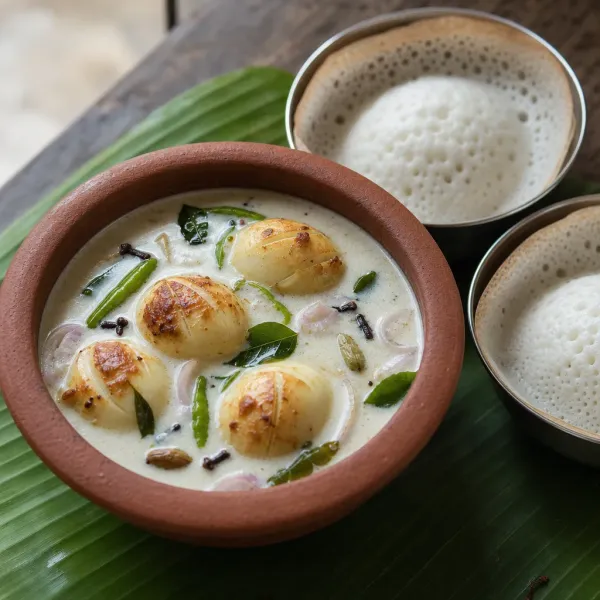
Mutta Mappas
Traditional Kerala Mappila egg curry in coconut milk with whole spices and shallots. Cooked the Malabar way, served with appam. Step-by-step recipe.
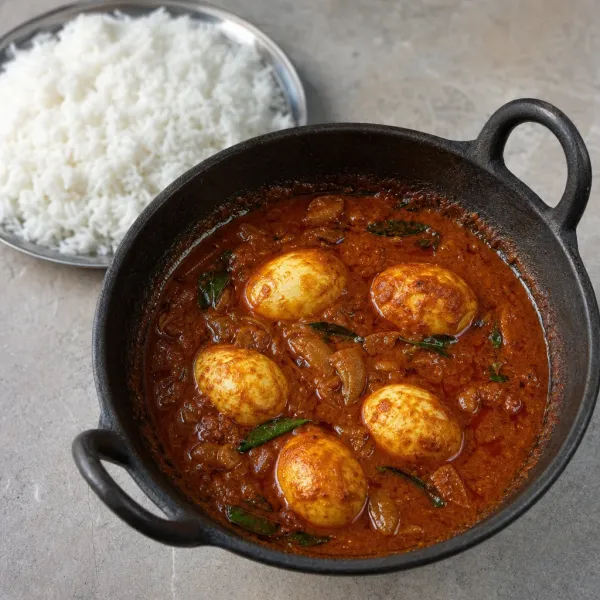
Muttai Kuzhambu
Traditional Kongunad muttai kuzhambu: eggs poached in a tamarind, shallot and fresh coconut gravy cooked in gingelly oil. Step-by-step Tamil home rec…
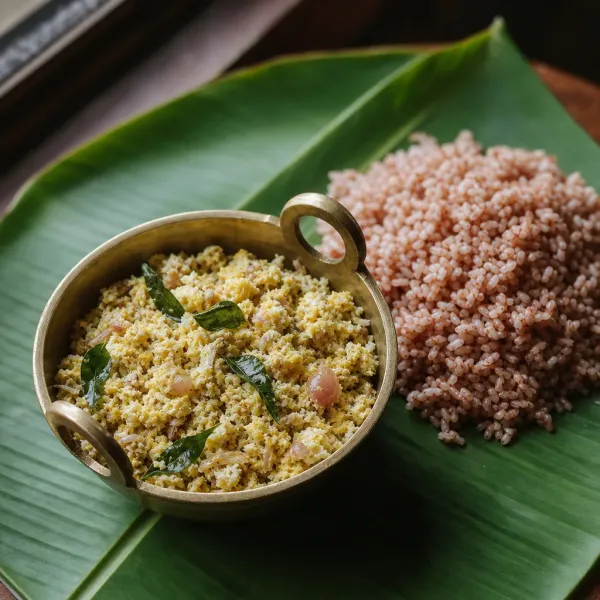
Nadan Mutta Thoran
Traditional Kerala egg thoran with shallots, fresh coconut and curry leaves. A dry, homestyle scramble cooked in coconut oil — ready in 20 minutes.
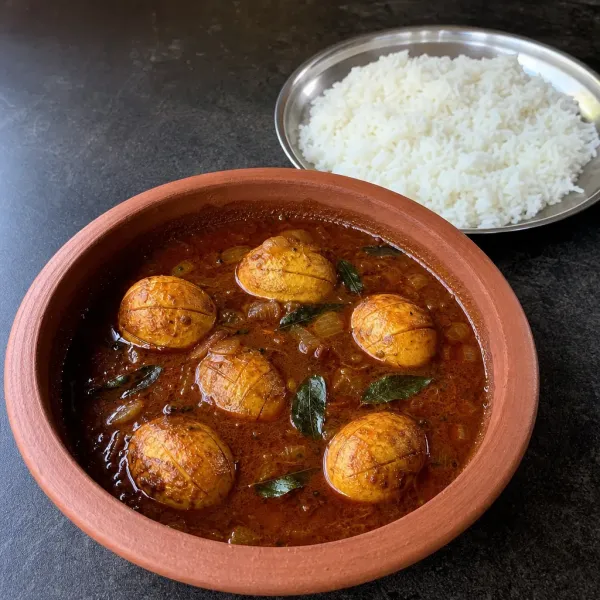
Kodi Guddu Pulusu
Traditional Rayalaseema-style Kodi Guddu Pulusu: hard-boiled eggs simmered in a hot, sour tamarind gravy with Guntur chillies and gingelly oil.
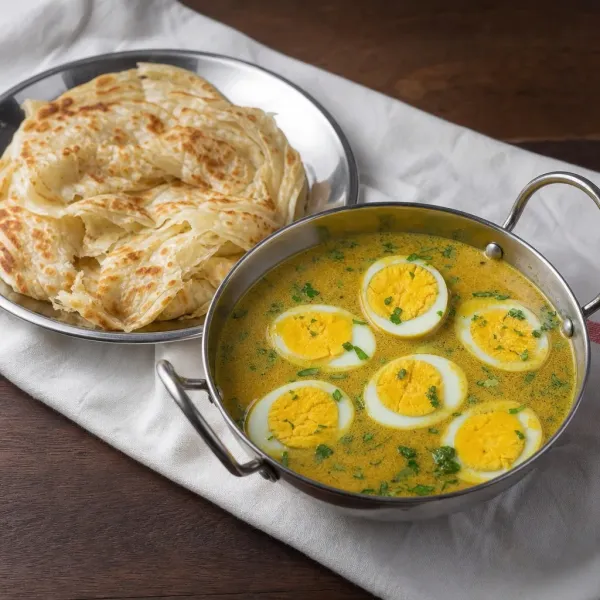
Egg Kurma for Parotta
Traditional Tamil Nadu egg kurma with fresh coconut paste, poppy seeds and whole spices. The classic pairing for layered parotta, cooked the home kit…