

Mor Kuzhambu Recipe
Malayalam മോർ കുഴമ്പ്Tamil மோர் குழம்புKannada ಮೋರ್ ಕುಳಂಬುTelugu మజ్జిగ పులుసు
- Prep20 min
- Cook15 min
- Serves4
- DifficultyEasy
- DietVegetarian
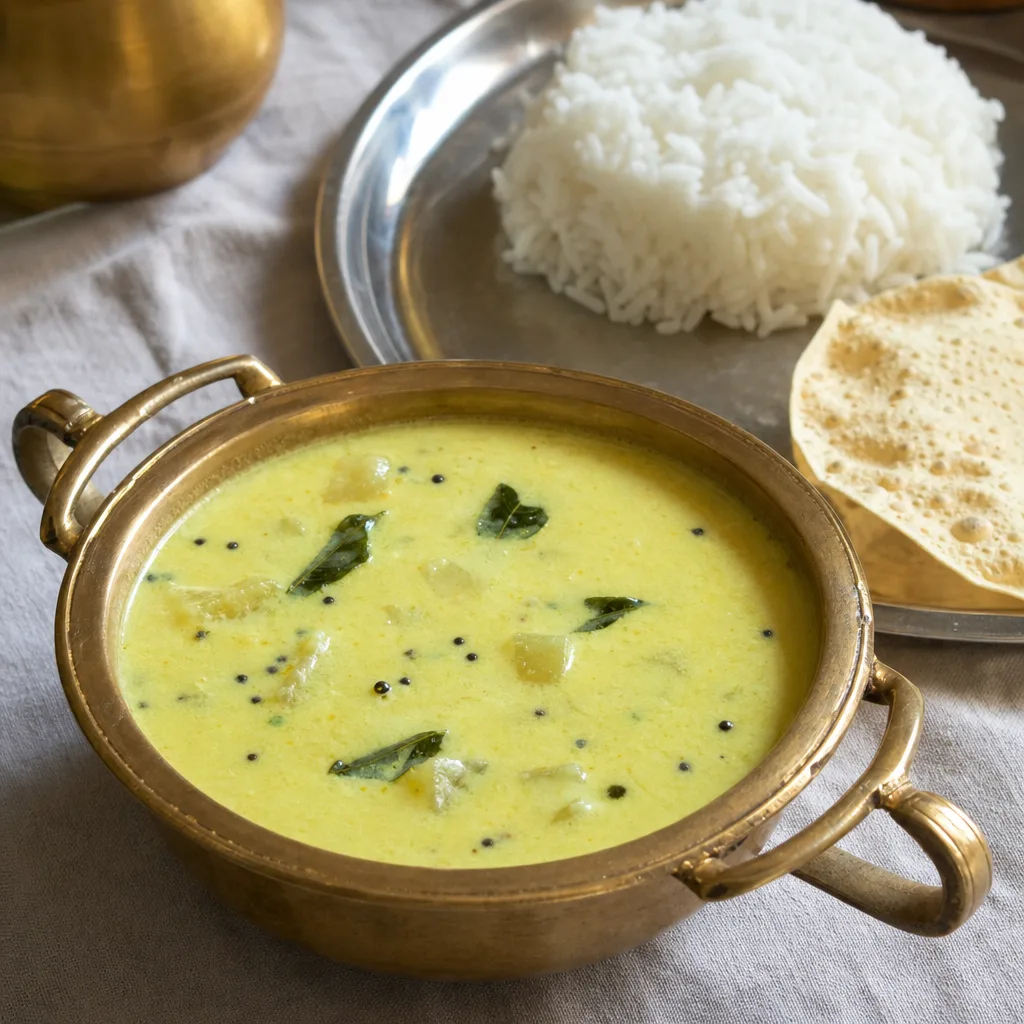
Mor kuzhambu is a Tamil Brahmin daily dish, made when the meal needs something light and cooling after a heavier sambar or rasam has already been prepared, or simply on days when the kitchen is unhurried. It is not a soup and it is not sambar. It is a thin, turmeric-yellow, mildly tangy curry held together by a ground paste of coconut, cumin and green chilli, tempered in ghee and finished with curry leaves. The vegetable inside – ash gourd, yam, raw plantain, or fried sundakkai – is incidental to the character of the dish; the buttermilk and the paste are what it is.
In Iyer households the buttermilk is always the previous day's curd thinned with water, slightly sour, never fresh. The sourness is calibrated: not sharp enough to pucker, but present enough to give the curry its identity. The paste is ground fine on a wet grinder or stone, and the coconut must be fresh. The whole thing is cooked just long enough to heat through; a rolling boil will split the curd and ruin the texture.
It is eaten with plain cooked rice, poured generously over the second or third serving, often alongside a dry vegetable poriyal and papad. Some households add a small piece of raw mango in season instead of relying on the curd's sourness alone. Others fry the sundakkai berries separately in ghee before adding them. These are genuine household variations, not errors.
Ingredients (serves 4)
For the ground paste
For the curry
For the tempering
Method
Soak the rice
Put the teaspoon of raw rice in a small bowl, cover with cold water and leave it for 15 minutes while you prepare everything else. This short soak is enough; the rice is only here to give the paste a little body.
Cook the ash gourd
Put the ash gourd cubes in a small pan with just enough water to cover them – about 150 ml. Add the ¼ tsp of turmeric and a pinch of salt. Cook on medium heat for 8 to 10 minutes until the pieces are tender all the way through but still holding their shape. Drain and set aside. Do not overcook; the gourd will finish in the curry.
Grind the paste
Drain the soaked rice. Put it in the grinder with the grated coconut, green chillies, cumin seeds, turmeric powder and 3 to 4 tablespoons of water. Grind to a very smooth paste with no gritty coconut pieces remaining. On a wet grinder this takes about 4 minutes; on a mixer-grinder, stop and scrape down twice. The paste should look like a pale green-white cream.
Beat the buttermilk
Whisk the sour curd with the 200 ml of water until completely smooth and lump-free. It should be the consistency of thin lassi. Taste it: it should be noticeably sour. If your curd is fresh and mild, the finished curry will taste flat.
Combine paste and buttermilk
Add the ground paste to the beaten buttermilk and whisk again until the paste is fully incorporated. There should be no streaks of paste floating separately. Season with salt now and stir.
Heat the curry gently
Pour the buttermilk mixture into a heavy-bottomed pan and place on low-medium heat. Stir continuously with a ladle. Watch it carefully: you want it to heat through and just begin to steam, with tiny bubbles forming at the edges. Do not let it boil. The moment it reaches a near-simmer and you see the first bubbles breaking the surface, lower the heat immediately. A full boil will cause the curd to split into grainy solids and thin whey, and there is no recovering from that.
Add the cooked vegetable
Slide the cooked ash gourd pieces into the warm curry. Stir gently to coat them. Keep the heat on the lowest setting for 2 minutes so the gourd absorbs the flavour. Taste and adjust salt.
Temper and finish
Heat the ghee in a small tempering pan on medium heat. When it shimmers, add the mustard seeds and wait for them to pop – about 30 seconds. Add the broken dried red chilli and let it darken for a few seconds. Add the curry leaves and stand back; they will splutter. Finally add the asafoetida, swirl the pan once, and immediately pour the entire tempering over the curry. Cover the pot for a minute to let the aroma infuse, then stir gently.
Rest and serve
Let the curry sit covered for 3 to 4 minutes before serving. It is eaten warm, not piping hot. The colour should be a soft, opaque turmeric-yellow throughout, with the pale green-white ash gourd visible beneath the surface.
How to serve
Plain cooked rice (raw rice or parboiled, depending on the household); a dry poriyal such as beans poriyal or raw banana poriyal; appalam (papad). Some households also serve a small amount of pickle alongside.
Served with: Plain cooked rice (raw rice or parboiled, depending on the household); a dry poriyal such as beans poriyal or raw banana poriyal; appalam (papad). Some households also serve a small amount of pickle alongside.
Cook's tips
The curd must be sour
Fresh curd gives a bland, milky curry with no character. Leave your curd out at room temperature for a day, or use curd that has been in the fridge for two days. The sourness is what distinguishes this from a raita poured over rice.
Never boil the curry
This is the one step people rush and regret. Once the curd splits, the texture is grainy and the curry is lost. Keep the heat low and stay at the stove. If you must leave the kitchen, take the pan off the heat entirely.
Other vegetables that work
Raw plantain (vazhakkai), cooked and peeled yam (senai), or fried sundakkai (turkey berry) are all traditional. Sundakkai should be fried separately in a little ghee until they turn olive-green before being added. Avoid watery vegetables like tomato.
The rice in the paste
Some cooks skip the soaked rice and use a small piece of fresh coconut more generously instead. Others add a teaspoon of chana dal soaked alongside the rice. All three approaches are traditional; the rice is the simplest and most common in Iyer households.
Ghee is not optional here
The tempering must be in ghee, not oil. The aroma of ghee with mustard seeds and curry leaves is part of what makes this dish recognisable. Using oil changes the character completely.
Storage
Mor kuzhambu does not store well. The curd continues to sour and the texture changes overnight. Make only as much as you will eat at one meal.
Regional variations
Kerala Nair and Nasrani households make a simpler version called moru curry with no ground paste; Udupi Brahmin kitchens make a similar majjige huli with ash gourd and a coconut-cumin paste; Andhra households make majjiga pulusu, which is thinner and may include drumstick.
Glossary
- Mor kuzhambu மோர் குழம்பு
- Buttermilk curry; 'mor' is buttermilk or thinned curd, 'kuzhambu' is a cooked curry with a liquid base.
- Jeeragam ஜீரகம்
- Cumin seeds; used whole in the paste here, not toasted.
- Vellai poosanikai வெள்ளை பூசணிக்காய்
- Ash gourd, also called winter melon; the white-fleshed, mild-tasting gourd most commonly used in this curry.
- Perungayam பெருங்காயம்
- Asafoetida; the dried resin used in a tiny quantity in the tempering, essential in Tamil Brahmin cooking where onion and garlic are not used.
- Sundakkai சுண்டைக்காய்
- Turkey berry; small, bitter green berries that are fried before being added to the curry as an alternative to ash gourd.
- Pachari பச்சரிசி
- Raw rice, as opposed to parboiled rice; used here in a small quantity as a thickening agent in the ground paste.
Two things decide whether this curry works: the sourness of the curd and the control of heat. Get both right and the result is a silky, pale yellow, gently tangy curry that is cooling and satisfying in equal measure. Rush the heat or use fresh curd and you will have either a split, grainy liquid or a bland white sauce, neither of which is mor kuzhambu.
More Vegetarian Gravies recipes
Kara Kuzhambu
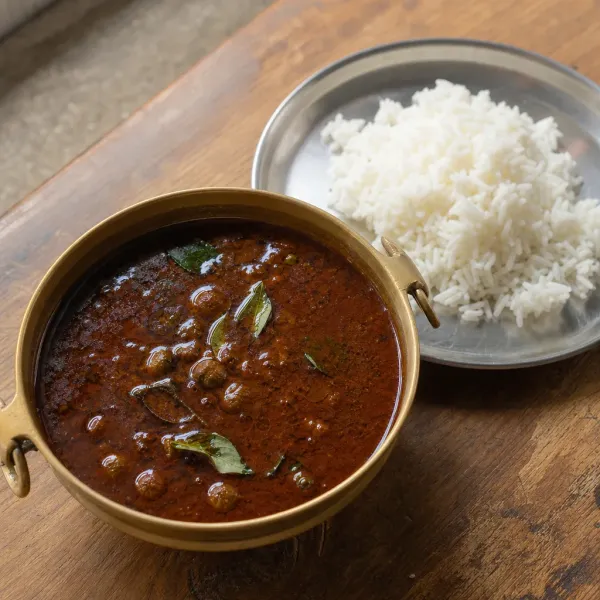
Traditional Tamil Iyer kara kuzhambu with sundakkai, freshly ground spice-coconut masala, and gingelly oil. Thick, spiced tamarind gravy for rice.
Kalan
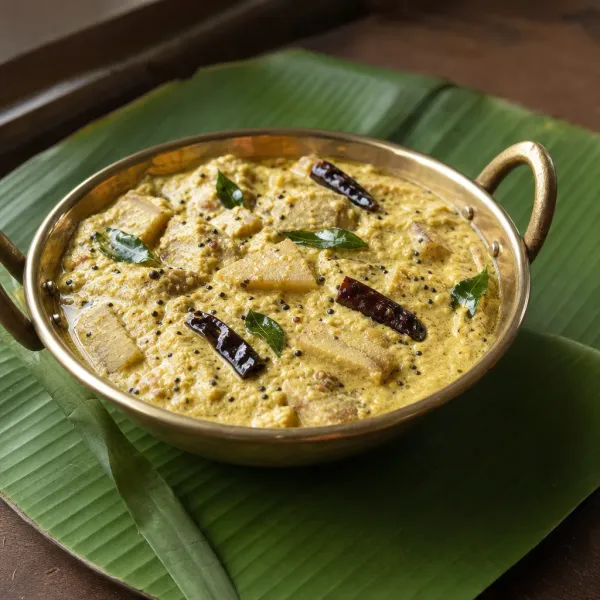
Traditional Kerala kalan with raw banana and elephant yam in thick sour curd. A sadya essential from Travancore kitchens, spiced with black pepper an…
Pulissery (Kerala Yogurt and Coconut Curry)
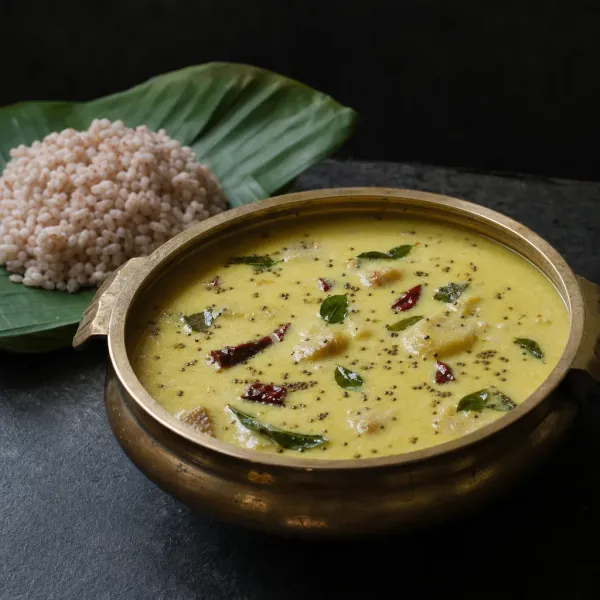
Traditional Kerala pulissery with ripe banana or ash gourd, fresh coconut paste and soured yogurt. Step-by-step sadya recipe with coconut oil temperi…
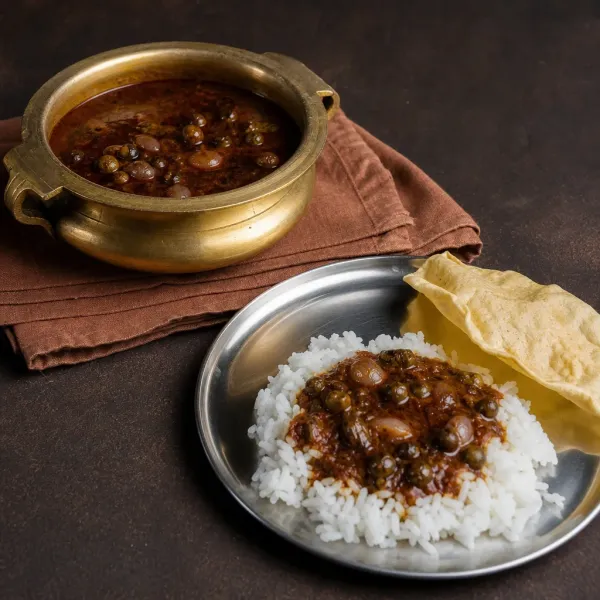
Sundakkai Vathal Kuzhambu
Traditional Tamil Brahmin vatha kuzhambu with sundakkai vathal, tamarind, and gingelly oil. Sour, spiced, and cooked the slow household way.
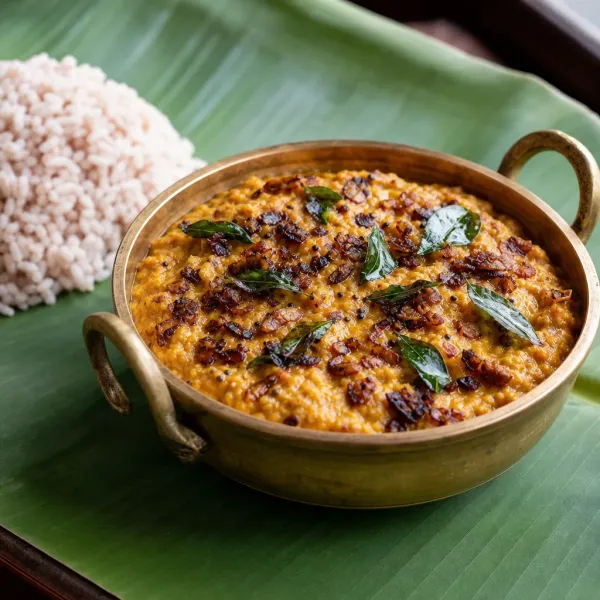
Erissery
Traditional Kerala erissery with yellow pumpkin, vanpayar, and deeply roasted coconut. Step-by-step sadya recipe with fresh coconut paste.
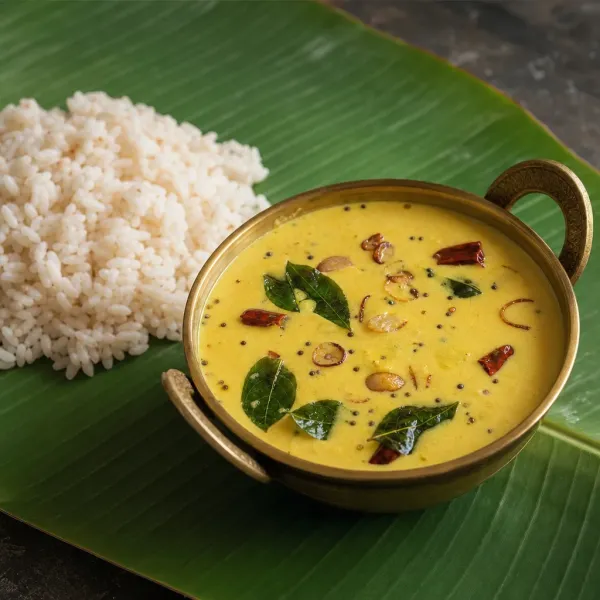
Mambazha Pulissery
Traditional Kerala Mambazha Pulissery made with whole ripe country mangoes, fresh coconut paste and sour yogurt. A classic sadya dish, step by step.