

Kal Dosa (Thick Soft Stone-Tawa Dosa) Recipe
Malayalam കൽ ദോശTamil கல் தோசைKannada ಕಲ್ ದೋಸೆTelugu కల్ దోస
- Prep20 min
- Soak / ferment14 hr
- Cook40 min
- Serves4
- DifficultyMedium
- DietVegan
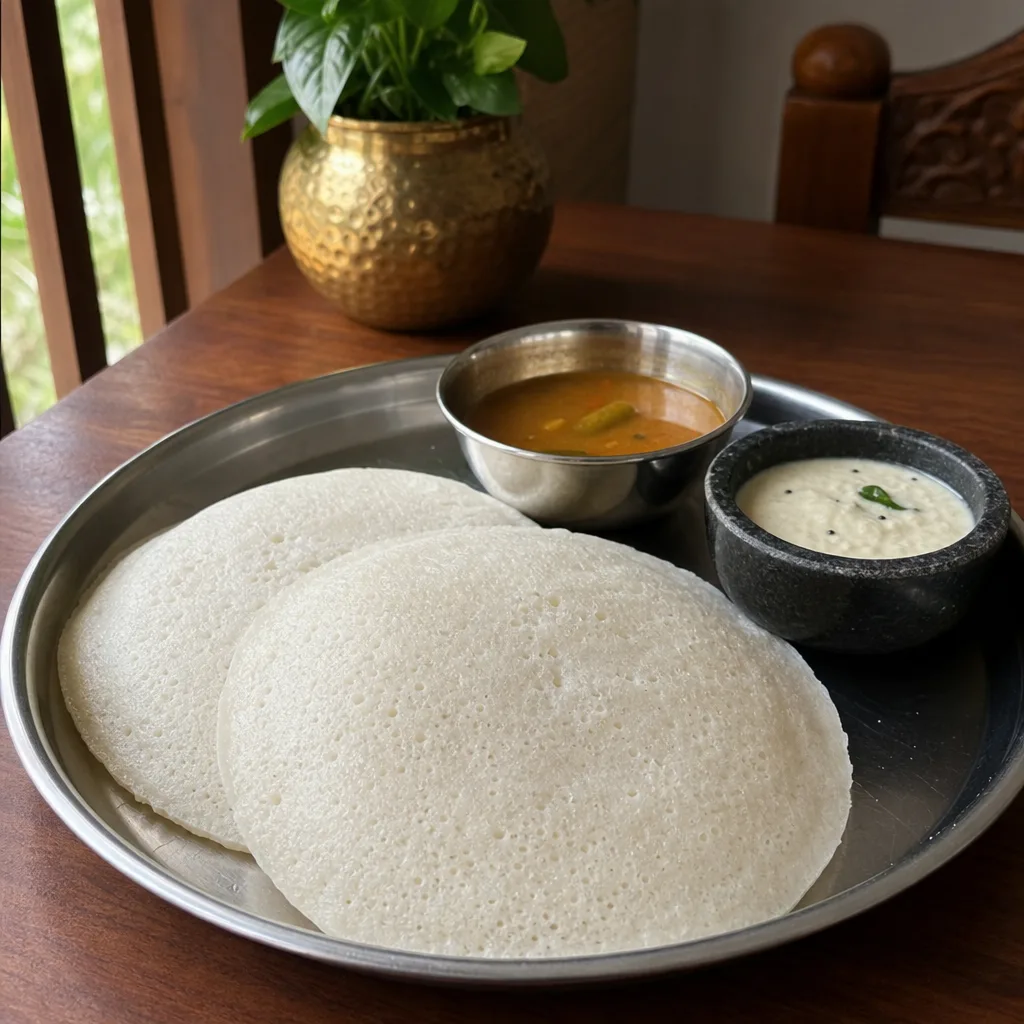
Kal dosa takes its name from the stone or heavy iron tawa it was traditionally cooked on. The stone surface holds heat steadily and evenly, which is exactly what this dosa needs: a slow, gentle cook that sets the batter into a thick, pillowy round that is soft all the way through, with a pale underside and no crispness anywhere. It is not thinned and spread like a regular dosa. The batter is poured and left, and the lid does the rest.
In Tamil Nadu this is a morning tiffin dish, eaten at the table with sambar and two chutneys, usually coconut and tomato. Tiffin shops keep a dedicated thick iron tawa for it. At home, a heavy cast-iron pan or a seasoned iron griddle works well. The batter is the same fermented rice-and-urad batter used for regular dosa, but with a slightly higher rice ratio and a small amount of poha stirred in before soaking, which gives the finished dosa its characteristic open, spongy crumb.
Fermentation time matters more here than for a thin dosa because the thick batter must have enough air in it to rise slightly as it cooks. In a warm Tamil Nadu kitchen, overnight is usually enough. In a cooler climate or during winter, give it a full day. The batter should smell pleasantly sour and have visibly expanded before you use it.
Ingredients (serves 4)
For the batter
For cooking
Method
Soak the grains
Wash the raw rice two or three times until the water runs mostly clear, then cover with fresh cold water and leave to soak for 6 hours. Separately, wash the urad dal and fenugreek seeds together and cover with cold water; soak for 4 hours. In the last 30 minutes, add the poha to the urad dal bowl so it softens in the same water. Do not discard the soaking water from either bowl — you will use it for grinding.
Grind the urad dal
Drain the urad dal, fenugreek seeds and soaked poha, reserving the water. Grind them together in a wet grinder or a powerful table-top grinder, adding the reserved soaking water a little at a time. Grind for a full 20 minutes in a wet grinder, or 10 to 12 minutes in a high-speed blender, until the batter is very smooth, light and almost fluffy. It should feel airy when you rub a little between your fingers. Transfer to a large vessel.
Grind the rice
Drain the rice and grind it using the reserved rice soaking water, adding it gradually. You want a batter that is slightly coarser than the urad batter — not completely smooth, but with no hard grains remaining. This slight texture is what gives the finished dosa its soft, open interior. Add the rice batter to the urad batter in the large vessel.
Mix and ferment
Stir both batters together thoroughly with a clean hand or a large spoon. The combined batter should be thick — thicker than regular dosa batter — and should fall in ribbons from a spoon rather than running freely. Do not add salt yet. Cover loosely with a plate or cloth (not airtight) and leave in a warm spot for 10 to 12 hours, or overnight. In a warm Tamil Nadu kitchen this is usually enough; the batter should have risen visibly and smell pleasantly sour. In a cooler kitchen, leave it up to 14 hours.
Check fermentation and season
The batter is ready when it has expanded by roughly one-third, has small bubbles on the surface, and smells gently sour but not sharp. Stir it gently from the bottom. Add salt now and mix well. The batter should still be quite thick at this stage; do not thin it down to regular dosa consistency. If it seems very stiff, add a tablespoon or two of water at most.
Heat the tawa
Place a heavy cast-iron tawa or thick iron griddle over medium heat and let it heat slowly for 3 to 4 minutes. Kal dosa needs steady, moderate heat, not a blazing hot surface. To test, sprinkle a few drops of water — they should sizzle and evaporate in about 2 seconds. If they vanish instantly, the pan is too hot; reduce the heat and wait a minute.
Grease the tawa
Dip a folded piece of cloth or a piece of onion in a few drops of gingelly oil and wipe the surface of the tawa lightly. You want a very thin film of oil, not a pool. Wipe away any excess. This is done before every single dosa.
Pour and shape
Pour a ladleful of batter (about 80 to 90 ml) onto the centre of the tawa. Using the back of the ladle, spread it gently into a circle of about 14 to 15 cm in diameter. Do not press hard or spread it thin — the batter is thick and you want it to stay that way. The circle will be about 6 to 7 mm thick. Do not try to spread it as far as a regular dosa.
Cover and cook
Immediately place a lid over the dosa. This is not optional — the steam trapped under the lid cooks the top surface through without you having to flip it. Cook on medium-low heat for 3 to 4 minutes. The dosa is ready when the top surface looks set and matte rather than wet and shiny, and the edges have pulled away slightly from the tawa. The underside should be pale cream to very light golden — not dark brown.
Remove and rest
Lift the lid, check the underside by gently easing up one edge. It should be pale and just set, not deeply coloured. Slide a flat spatula under the dosa and lift it off in one piece. Kal dosa is not flipped. Place it directly on a plate. It will feel soft and slightly springy. Do not stack dosas on top of each other or they will steam each other and become soggy — lay them side by side or serve immediately.
Repeat for remaining dosas
Wipe the tawa with the oiled cloth before each dosa. If the tawa gets too hot between dosas — you will notice the batter setting too quickly and browning on the underside before the top is cooked — remove it from the heat for 30 seconds to let it cool slightly before pouring the next one. Consistency of temperature is the thing that keeps all the dosas uniform.
How to serve
Sambar (thin lentil and vegetable gravy), fresh coconut chutney, and tomato chutney. Some households also serve with a small bowl of molagapodi mixed with gingelly oil.
Served with: Sambar (thin lentil and vegetable gravy), fresh coconut chutney, and tomato chutney. Some households also serve with a small bowl of molagapodi mixed with gingelly oil.
Cook's tips
Batter consistency
The most common mistake is thinning the batter to regular dosa consistency. Kal dosa batter should be noticeably thicker — it should mound slightly in the ladle rather than pour freely. If the batter has over-fermented and become too sour, use it up quickly; it will not improve further.
The lid is not optional
Without the lid, the top surface stays wet and the dosa will tear when you try to lift it. Always cover immediately after pouring. A domed steel lid works better than a flat one because it traps more steam.
Pan temperature
Too hot and the underside burns before the centre is set. Too cool and the dosa spreads and sticks. Medium-low, steady heat is the target. Cast iron holds heat well and is forgiving; a thin non-stick pan fluctuates more and is harder to control for this particular dosa.
Storing the batter
Once fermented and salted, the batter keeps in the refrigerator for up to 3 days. Bring it back to room temperature for 30 minutes before using, and stir well from the bottom. Cold batter poured on a hot tawa will not spread evenly.
Wet grinder versus blender
A wet grinder produces a lighter, more aerated urad batter and is worth using if you have one. A high-speed blender works but grind in short pulses and do not let the batter heat up. The poha helps compensate for a slightly less aerated batter when using a blender.
Regional variations
Some Udupi-Karnataka tiffin counters serve a version called 'set dosa' which is nearly identical in texture but uses a slightly different rice-to-urad ratio and is always served in a set of three; kal dosa and set dosa are close cousins but not the same dish.
Glossary
- Pacharisi பச்சரிசி
- Raw (unparboiled) white rice used for grinding dosa and idli batter in Tamil Nadu.
- Ulutham paruppu உளுத்தம் பருப்பு
- Urad dal; the split or whole black gram used to give dosa batter its lightness and fermentation.
- Vendhayam வெந்தயம்
- Fenugreek seeds; added in small quantity to dosa batter to aid fermentation and add a faint bitterness.
- Aval அவல்
- Flattened rice / poha; added to kal dosa batter to help produce a soft, open crumb in the finished dosa.
- Nallennai நல்லெண்ணெய்
- Gingelly oil; cold-pressed sesame oil used as the cooking fat for Tamil Nadu dosas and kuzhambu.
- Kal கல்
- Stone; refers to the stone or heavy iron tawa on which this dosa is traditionally cooked, which gives it its name.
Two things decide whether kal dosa works: the batter must be thick enough to stay as a soft pillow rather than spreading thin, and the tawa must hold a steady medium-low heat so the underside sets pale while the lid-trapped steam cooks the top through. Get those two right and the rest follows.
More Breads & Staples recipes
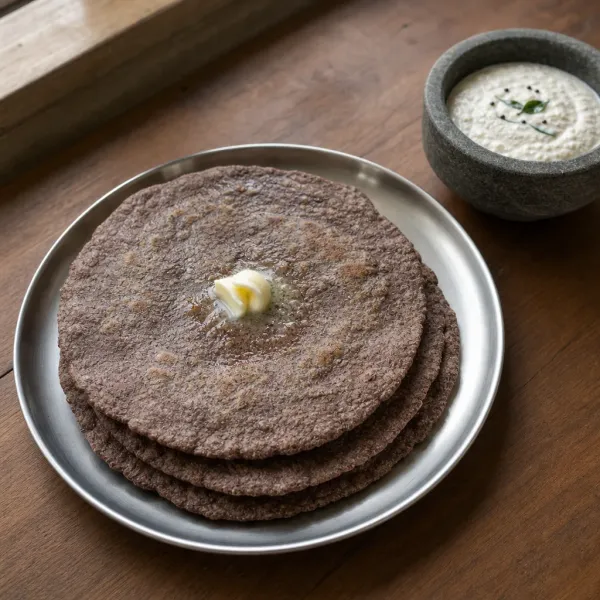
Ragi Roti
Traditional Karnataka ragi rotti with onion, green chilli and coriander. Step-by-step method for patting and cooking on an iron tawa. Vegan, no ferme…
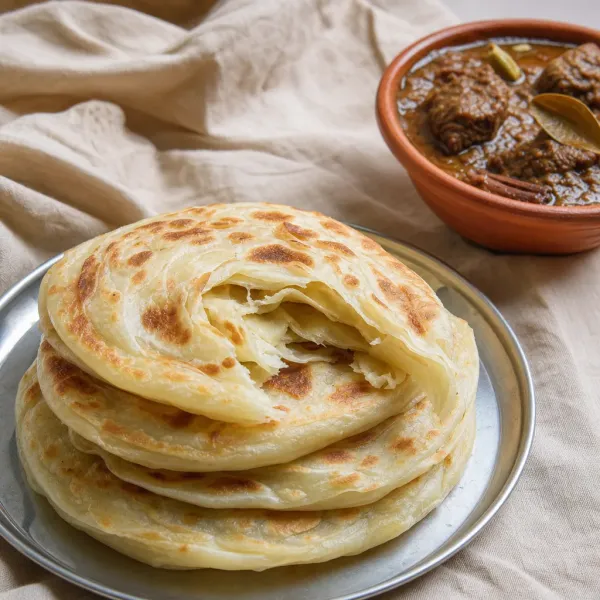
Malabar Parotta
Authentic Malabar parotta from a Mappila household kitchen: soft layered flatbread made by stretching, coiling and hand-slapping. Step-by-step tradit…
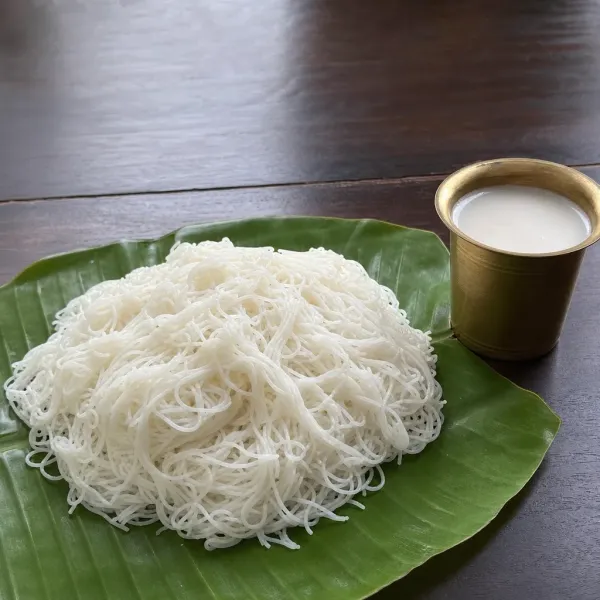
Rice Sevai (Santhakai)
Traditional Kongunad rice sevai made from fresh-ground raw rice dough, pressed and steamed. Step-by-step method with tips for the perfect soft noodle.
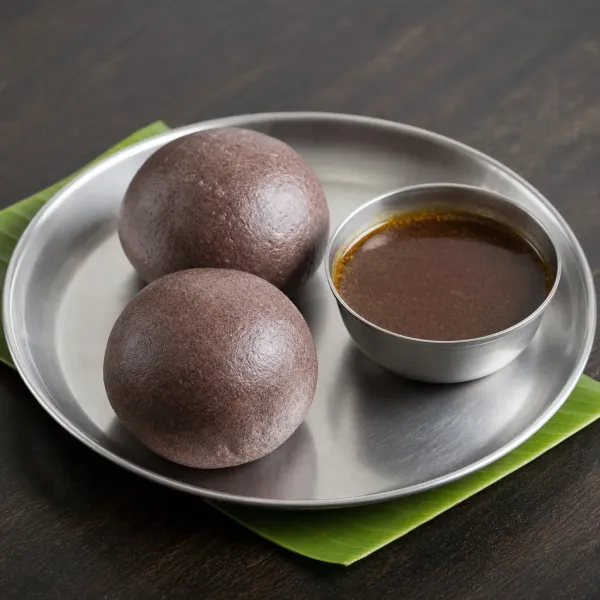
Ragi Mudde (Finger Millet Balls)
Traditional Karnataka ragi mudde recipe: finger millet balls cooked on the stovetop and shaped by hand, eaten with saaru or bassaru. Step-by-step met…
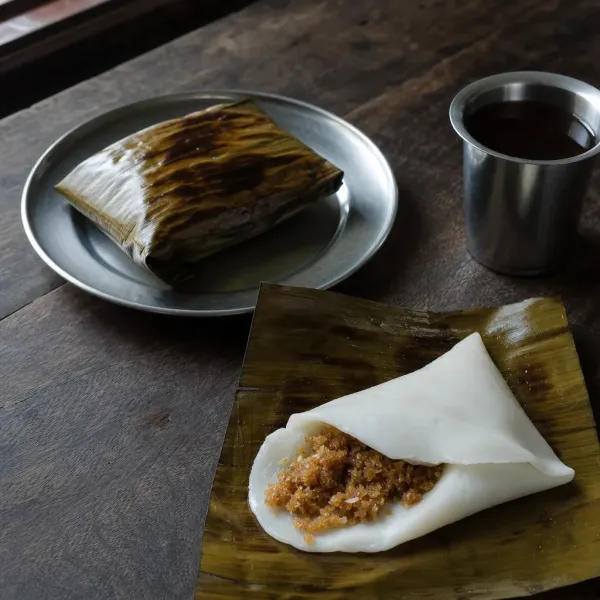
Ottada
Traditional Nasrani ottada recipe: soft rice flour flatbread filled with fresh coconut and jaggery, cooked on a banana leaf. Step-by-step Kerala meth…
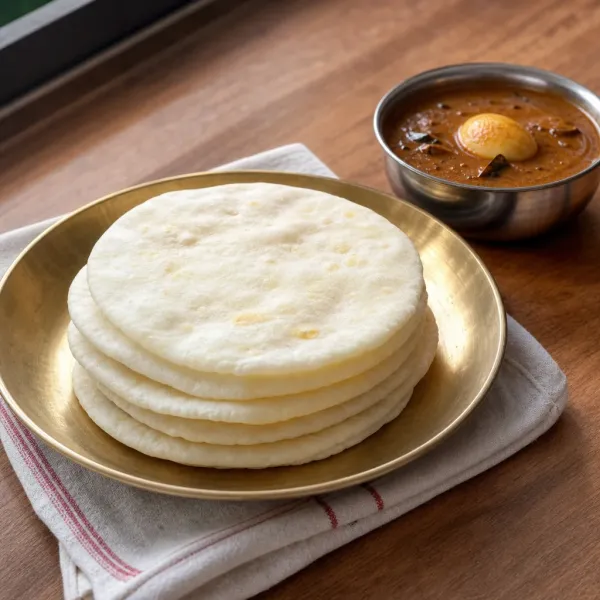
Neypathiri
Traditional Malabar Mappila neypathiri recipe: fine rice flour dough fried in pure ghee. Soft, white, and made for feast-day breakfasts.