

Ragi Mudde (Finger Millet Balls) Recipe
Malayalam റാഗി മുദ്ദെTamil ராகி முட்டேKannada ರಾಗಿ ಮುದ್ದೆTelugu రాగి ముద్ద
- Prep5 min
- Cook25 min
- Serves4
- DifficultyMedium
- DietVegan
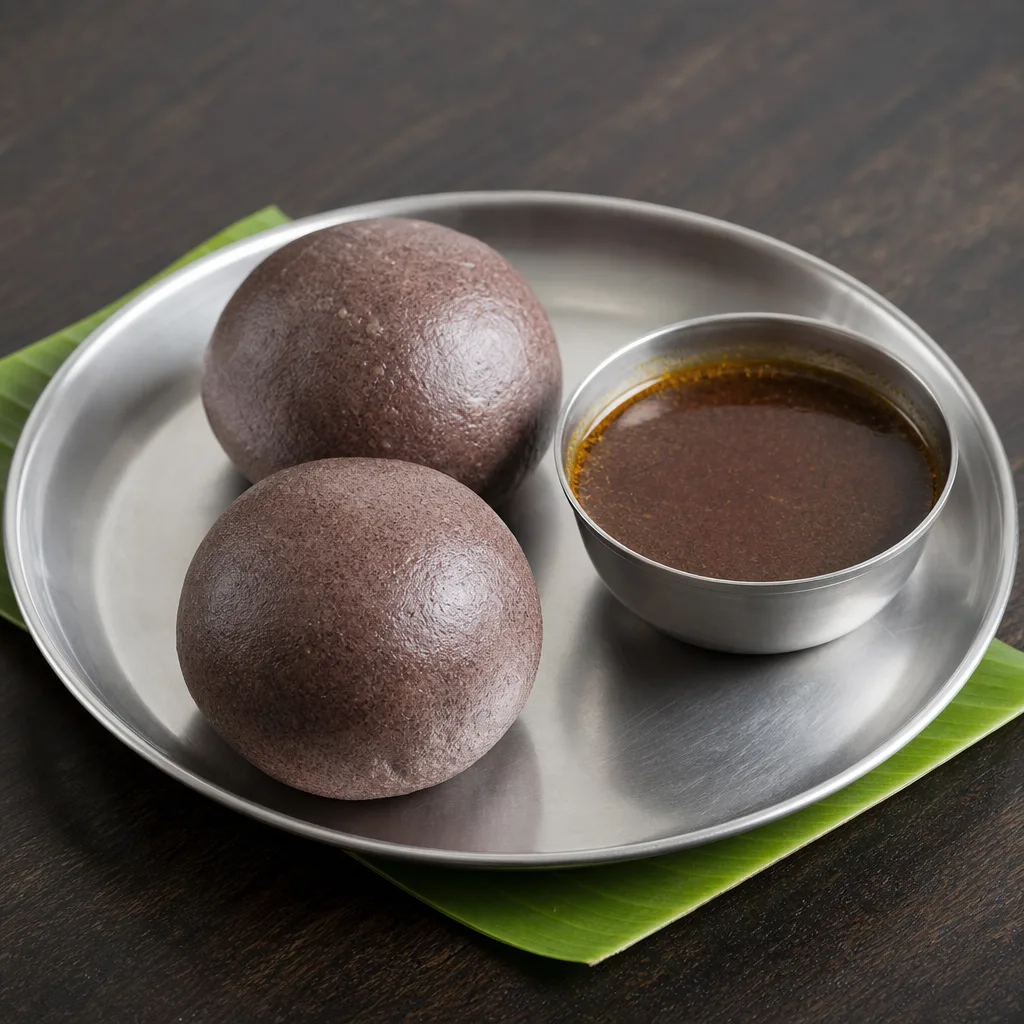
Ragi Mudde is the daily bread of rural Karnataka. In the northern districts especially, a meal without it is not quite a meal. It is made from nothing more than ragi flour and water, cooked on the stove and shaped into smooth, dense balls while still hot. The texture is firm on the outside and yielding inside, somewhere between a dumpling and a dense porridge set solid.
It is always eaten with a liquid accompaniment, something with enough sauce to coat each torn piece. The most traditional pairing is saaru, a thin, peppery rasam-style broth, or a thick bassaru made from the water in which greens or lentils were cooked. Households in the Mysuru belt favour it with a watery dal; those in the north eat it with a fiery mutton or chicken saaru.
Every household has its own ratio of flour to water and its own sense of how long to cook it. Some cooks add a small spoonful of ragi flour at the very end and fold it in off the heat; others do not. The ball should hold its shape cleanly when pressed, should not be gummy or raw-tasting inside, and should have no visible dry flour. Getting there is a matter of confidence with the heat and the stirring arm.
Ingredients (serves 4)
For the mudde
Method
Measure and sift the flour
Sift the ragi flour through a fine sieve into a bowl. Ragi flour can carry small husks or lumps that make the finished ball uneven. Set the sifted flour aside and keep the 2 tablespoons of reserved water close to the stove.
Bring the water to a rolling boil
Pour 600 ml of water into a heavy-bottomed vessel, ideally a thick aluminium or iron pot. Add salt if using. Bring to a full rolling boil over high heat. Do not add the flour until the water is genuinely boiling, not just steaming; adding flour to insufficiently hot water produces a gluey, undercooked centre.
Add most of the flour and begin stirring
Reserve about 3 tablespoons of the sifted flour to one side. Add the rest of the flour into the boiling water all at once. Immediately begin stirring with a heavy wooden spoon or a dedicated mudde stick. Work quickly in circular motions, pressing any lumps against the side of the pot. The mixture will seize and thicken fast.
Lower the heat and cook through
Once the flour is incorporated and the mass begins to pull away from the sides, reduce the heat to low-medium. Keep stirring steadily for 8 to 10 minutes. The mixture should look uniformly dark, dense, and glossy, with no pale or dry patches. If it sticks and scorches at the bottom, the heat is too high; reduce it immediately.
Add the reserved flour and fold
Sprinkle the reserved 3 tablespoons of ragi flour over the surface of the cooked mass. Pour the 2 tablespoons of reserved water over it. Cover the pot with a tight lid and leave on the lowest possible heat for 3 minutes. This brief steam finishes cooking the outer layer of flour and makes the ball easier to shape.
Fold and check doneness
Remove the lid and fold the reserved flour and water into the mass using the spoon, pressing firmly. The dough should be smooth, stiff, and come away from the pot cleanly. Taste a small piece: it should have no raw, gritty flavour. If it does, cover and cook for another 2 minutes on low heat.
Shape the mudde
Wet your hands with cold water. Take a portion of the hot dough, roughly 180 to 200 g for a single serving ball. Cup it in both palms and roll it firmly into a smooth, tight sphere with no cracks on the surface. Work quickly; the dough is easiest to shape while very hot. Wet your hands again between each ball. A cracked ball means the dough cooled too much before shaping.
Serve immediately
Place each mudde on a plate or banana leaf as soon as it is shaped. It is eaten hot. The ball firms further as it cools and becomes harder to break apart cleanly, so it should go straight to the table.
How to serve
Saaru (thin peppery Karnataka rasam), bassaru (the cooking water of lentils or greens, tempered with garlic and spices), or a watery toor dal. In meat-eating households, a thin mutton or chicken saaru is common. The mudde is broken by hand directly into the saaru and eaten without cutlery.
Served with: Saaru (thin peppery Karnataka rasam), bassaru (the cooking water of lentils or greens, tempered with garlic and spices), or a watery toor dal. In meat-eating households, a thin mutton or chicken saaru is common. The mudde is broken by hand directly into the saaru and eaten without cutlery.
Cook's tips
Flour quality matters most
Freshly milled ragi flour from a flour mill makes a noticeably smoother mudde than packaged flour that has sat in a shop. If the flour smells at all musty or bitter, it will carry that taste through cooking. There is no way to correct it once cooked.
The stove and the pot
A thin-bottomed vessel scorches the bottom before the centre cooks. Use the heaviest pot you have. Many experienced cooks use a seasoned iron vessel specifically for mudde and nothing else.
Ratio adjustment
The 600 ml to 250 g ratio given here produces a firm ball that holds its shape. In very dry climates or with coarser flour, you may need an extra 30 to 50 ml of water. Add it at step 5 rather than at the beginning.
Storing leftover mudde
Leftover mudde can be stored covered at room temperature for up to half a day. It firms considerably. Some households reheat it by placing it in the saaru itself for a few minutes; it softens back slightly. Do not refrigerate, as it becomes unpleasantly dense and dry.
Shortcut note
Some modern households make mudde in a pressure cooker: add flour to boiling water in the cooker, stir briefly, close the lid without the weight, and cook on low for 5 minutes. The result is softer and slightly stickier than the stovetop version. It is genuinely common but produces a different texture.
Regional variations
In Andhra Pradesh and Telangana, a similar preparation called Ragi Sangati is eaten with spiced lentil gravies; proportions of water and technique differ slightly.
Glossary
- Ragi ರಾಗಿ
- Finger millet (Eleusine coracana); the grain ground into flour for this dish.
- Mudde ಮುದ್ದೆ
- Ball or lump; refers here to the cooked ragi ball shaped by hand.
- Saaru ಸಾರು
- Karnataka term for a thin, peppery broth or rasam, the primary accompaniment to mudde.
- Bassaru ಬಸ್ಸಾರು
- The strained cooking liquid from lentils or leafy greens, tempered and served as a thin gravy.
Two things decide whether the mudde works: the heat of the water when the flour goes in, and the courage to keep stirring without stopping for the full cooking time. Pull the flour off an insufficiently boiling pot or let the stirring lag and you will have a gummy, unevenly cooked mass that no amount of extra cooking will fully rescue. Get both right and the ball shapes itself almost willingly, smooth and firm, ready to be torn into a bowl of saaru.
More Breads & Staples recipes
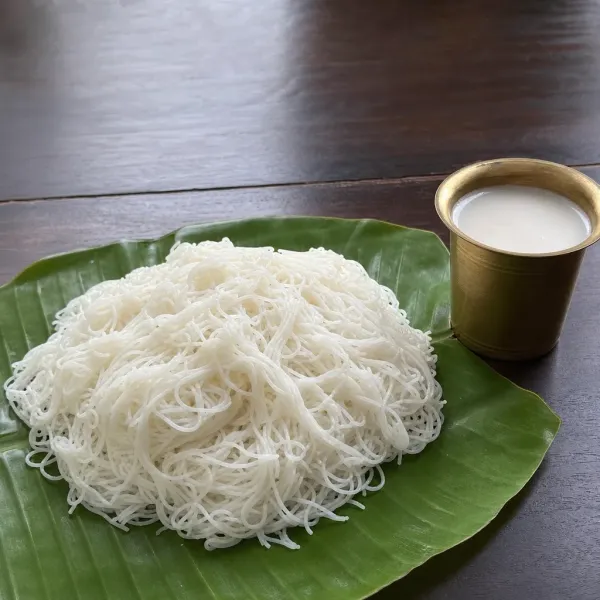
Rice Sevai (Santhakai)
Traditional Kongunad rice sevai made from fresh-ground raw rice dough, pressed and steamed. Step-by-step method with tips for the perfect soft noodle.
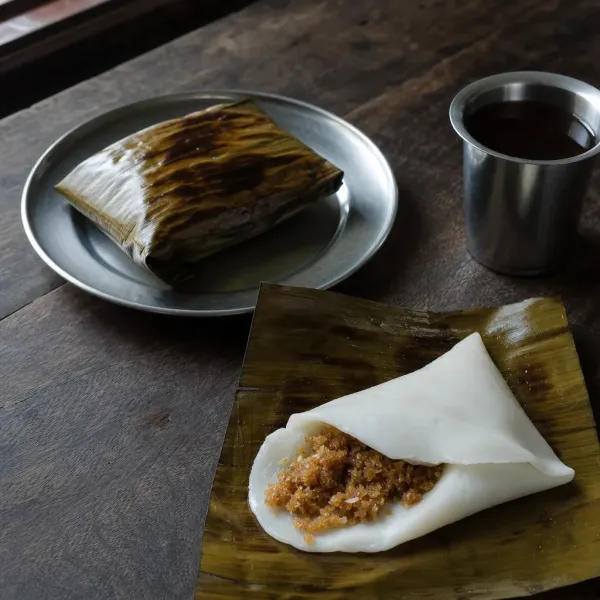
Ottada
Traditional Nasrani ottada recipe: soft rice flour flatbread filled with fresh coconut and jaggery, cooked on a banana leaf. Step-by-step Kerala meth…
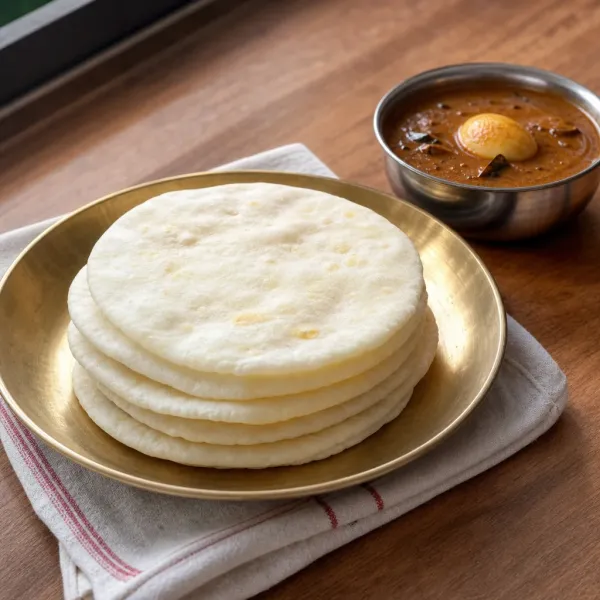
Neypathiri
Traditional Malabar Mappila neypathiri recipe: fine rice flour dough fried in pure ghee. Soft, white, and made for feast-day breakfasts.
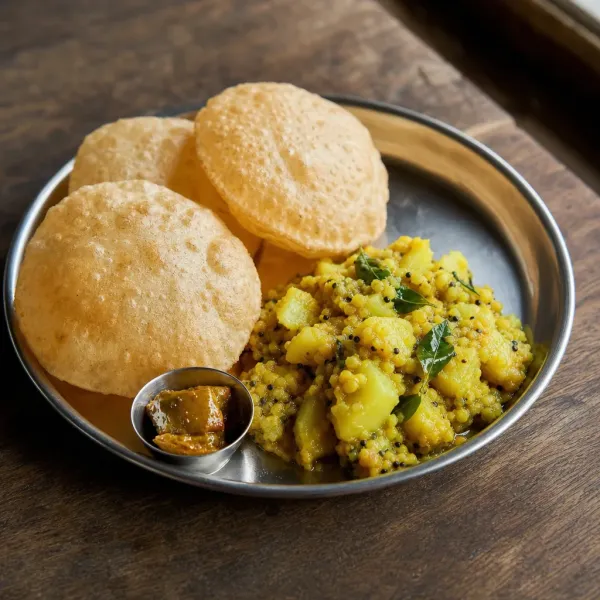
Poori with Potato Masala
Traditional Tamil Brahmin poori recipe with urulaikilangu masala. Stiff atta dough, hot groundnut oil, the right technique for a puffed, grease-free…
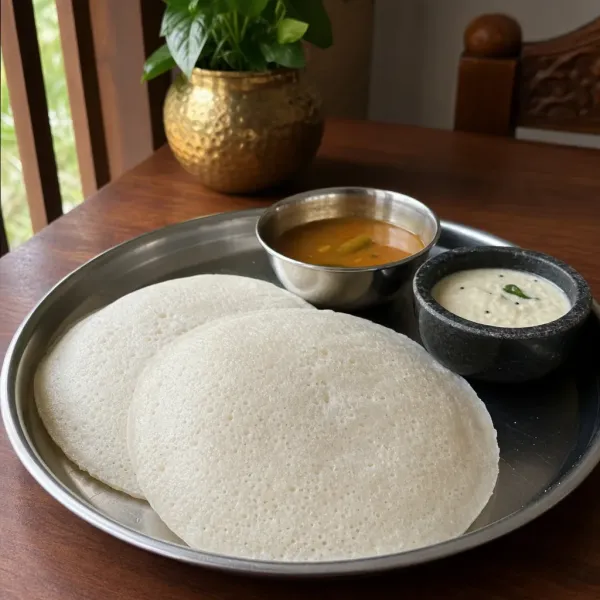
Kal Dosa (Thick Soft Stone-Tawa Dosa)
Traditional Tamil Nadu kal dosa recipe: thick, soft, pale dosa cooked covered on a heavy iron tawa. Fermented rice and urad batter with poha.
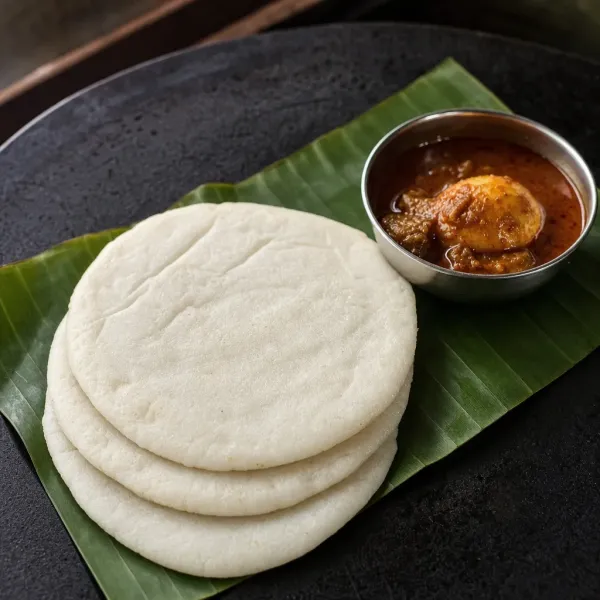
Orotti
Authentic Malabar Mappila orotti recipe: soaked raw rice ground and cooked into a soft dough, shaped by hand and finished on a dry iron griddle. Whit…