

Chicken Varuval Recipe
Malayalam ചിക്കൻ വരുവൽTamil சிக்கன் வறுவல்Kannada ಚಿಕನ್ ವರುವಲ್Telugu చికెన్ వరువల్
- Prep25 min
- Cook45 min
- Serves4
- DifficultyMedium
- DietNon-vegetarian
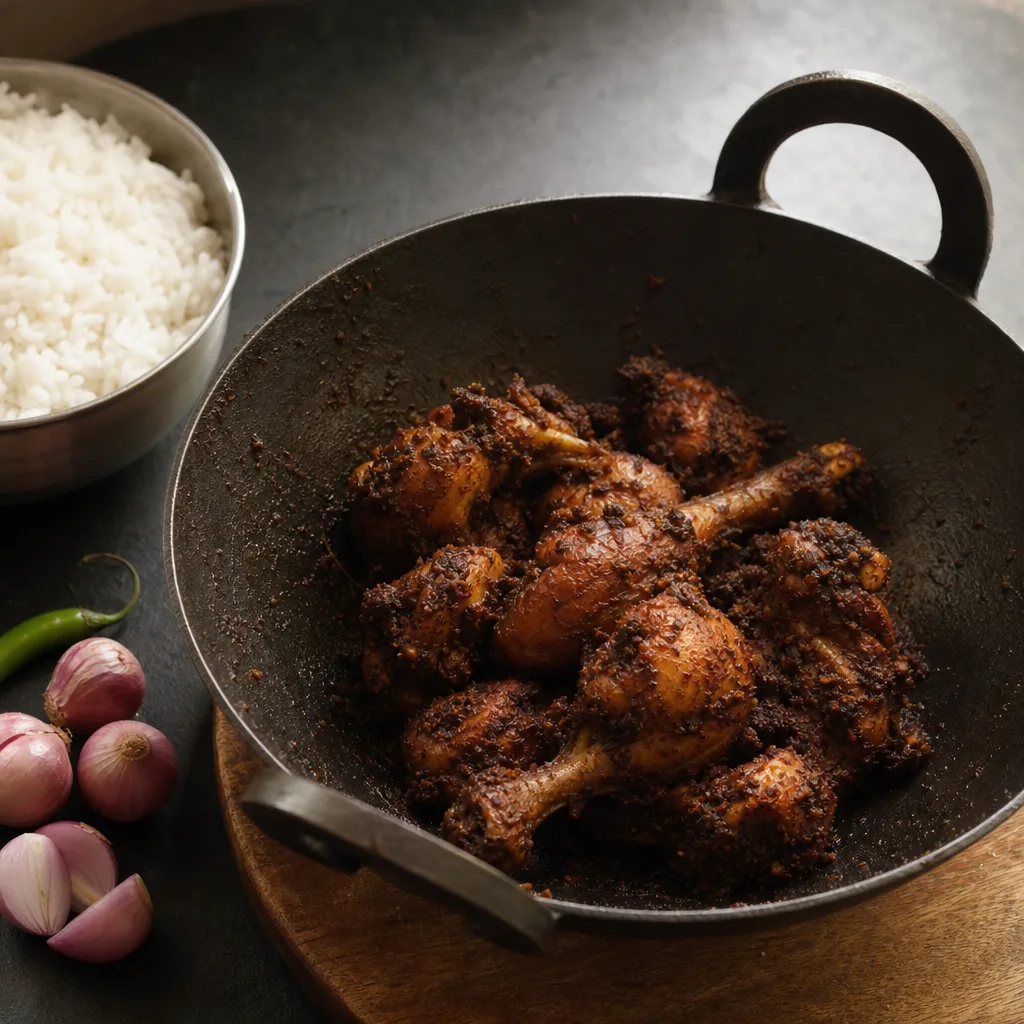
Chicken varuval from a Chettiar kitchen is a dry fry in the strictest sense: by the time it reaches the table, almost no sauce remains. The chicken is coated in freshly ground spices, fried in gingelly oil with whole aromatics, and then left on the heat long enough that the masala darkens and clings to each piece. It is not crispy like a batter fry, but the surface is dry, a little rough to the touch, and deeply coloured from the combination of Kashmiri chilli, black pepper, and the slow reduction of everything in the pan.
Chettinad cooking uses a set of whole spices that do not appear in most other Tamil kitchens. Kalpasi (stone flower), marathi mokku (dried flower pods), and kombupattai (country cinnamon) are ground fresh for this dish; they are not interchangeable with the standard garam masala blend. The heat comes primarily from black pepper and dried red chillies rather than chilli powder alone, and gingelly oil is not optional here.
In Chettiar households this is typically made with bone-in curry-cut chicken because the bones release gelatin as the liquid reduces, which helps the masala coat and stick. It is eaten with plain rice and a thin kuzhambu or rasam alongside. Leftovers are often better the next day, eaten at room temperature with rice or rolled into a parotta.
Ingredients (serves 4)
For the chicken
To grind fresh
For frying
Method
Dry-roast the whole spices
Set a small heavy pan over low heat. Add the peppercorns, coriander seeds, cumin, fennel, both types of dried red chillies, kalpasi, marathi mokku, kombupattai, and cloves. Roast, stirring constantly, for two to three minutes until the coriander seeds turn a shade darker and you can smell the pepper opening up. Do not let anything blacken. Tip onto a plate and cool completely before grinding.
Grind the masala paste
Add the cooled roasted spices to a grinder jar along with the cardamom pods, ginger, and garlic. Add three tablespoons of water and grind to a smooth, thick paste. Scrape down the sides once or twice. The paste should hold its shape; it must not be watery.
Marinate the chicken
Put the chicken pieces in a wide bowl. Add the turmeric, salt, and the entire ground paste. Mix thoroughly with your hands so every surface is coated. Set aside for at least 20 minutes at room temperature while you prepare the pan.
Fry the shallots
Heat the gingelly oil in a wide, heavy-bottomed kadai over medium heat. Add the bay leaf and curry leaves; they will splutter immediately. Add the sliced shallots and a pinch of salt. Fry, stirring often, for ten to twelve minutes until the shallots are deep golden and beginning to crisp at the edges. Do not rush this step; under-fried shallots will make the final dish taste raw and sharp.
Add the tomatoes
Add the chopped tomatoes to the fried shallots. Cook over medium heat, pressing them down occasionally, for six to eight minutes until the tomatoes completely dissolve and the oil begins to separate around the edges of the mixture. The pan should look like a thick, oily paste at this point, not a wet sauce.
Add the marinated chicken
Tip the marinated chicken into the kadai along with any paste left in the bowl. Stir well to coat the chicken in the shallot-tomato base. Cook uncovered over medium-high heat for five minutes, turning the pieces so the masala sears onto the surface rather than stewing.
Cook covered to finish the chicken
Reduce the heat to medium-low. Cover the kadai and cook for fifteen to eighteen minutes, turning the chicken every five minutes. The chicken will release its own moisture; do not add water. Check that the thickest piece is cooked through by pressing it; it should feel firm with no give at the bone.
Dry out the masala
Remove the lid. Increase the heat to medium-high. Stir and turn the chicken continuously for eight to ten minutes. The moisture will evaporate and the masala will begin to stick and darken on the chicken and on the base of the pan. This is the correct outcome. The pieces should look nearly dry, deeply coloured, and the masala should be clinging rather than coating. If the masala threatens to burn before the chicken is dry, reduce the heat slightly and keep stirring.
Rest and serve
Take the kadai off the heat and let the chicken rest for three to four minutes before serving. This allows the masala crust to firm up slightly. Serve directly from the kadai or transfer to a steel plate.
How to serve
Plain steamed rice with a thin Chettinad kuzhambu or rasam. A small fresh shallot and green chilli on the side is common in Chettiar households.
Served with: Plain steamed rice with a thin Chettinad kuzhambu or rasam. A small fresh shallot and green chilli on the side is common in Chettiar households.
Cook's tips
Gingelly oil matters
Use cold-pressed gingelly oil, not toasted sesame oil. The flavour is mild and nutty, not overpowering. Coconut oil or sunflower oil will change the character of the dish noticeably.
Kalpasi and marathi mokku
These are available in Chettinad spice shops and many South Indian grocery stores. If you genuinely cannot find them, leave them out rather than substituting. The dish will still be good; it simply will not be Chettinad.
The drying step is where most people stop too early
The instinct is to take the chicken off the heat as soon as it looks cooked. Varuval requires patience at the end. Keep the heat on and keep stirring until you see the masala darken and the pan shows dry, stuck bits. That is the flavour.
Bone-in versus boneless
Boneless chicken cooks faster and is easier to eat, but the dish will be drier and less flavourful. Bone-in curry-cut pieces are traditional and the better choice here.
Leftovers
Store covered at room temperature for up to four hours or refrigerate for up to two days. Reheat in a dry pan over low heat; do not add water or the crust will dissolve.
Regional variations
Kongunad chicken varuval uses more pepper and less whole spice layering; Tamil Muslim households in the delta districts make a version closer to a dry kuzhambu with shallots cooked down longer.
Glossary
- Varuval வறுவல்
- A Tamil word for a dry fry; something fried until the moisture is gone.
- Kalpasi கல்பாசி
- Stone flower, a lichen used as a spice in Chettinad cooking; earthy and faintly smoky.
- Marathi mokku மரத்தி மொக்கு
- Dried flower pods of Ailanthus malabarica; used in Chettinad spice blends for a faint floral bitterness.
- Kombupattai கொம்புப்பட்டை
- Country cinnamon or Cassia bark; more pungent than Sri Lankan cinnamon and traditional in Chettinad cooking.
- Sombu சோம்பு
- Fennel seeds; used in Chettinad masalas for a mild anise note.
- Gingelly oil நல்லெண்ணெய்
- Cold-pressed sesame oil used as the cooking fat in Tamil Nadu; not the same as toasted Asian sesame oil.
Two things decide this dish. The first is the freshness of the ground spice paste; pre-mixed powders will not give the same depth. The second is the patience to dry the chicken properly at the end, keeping the heat on until the masala darkens and clings. Pull it off too soon and you have a wet curry. Stay with it and you have varuval.
More Chicken recipes
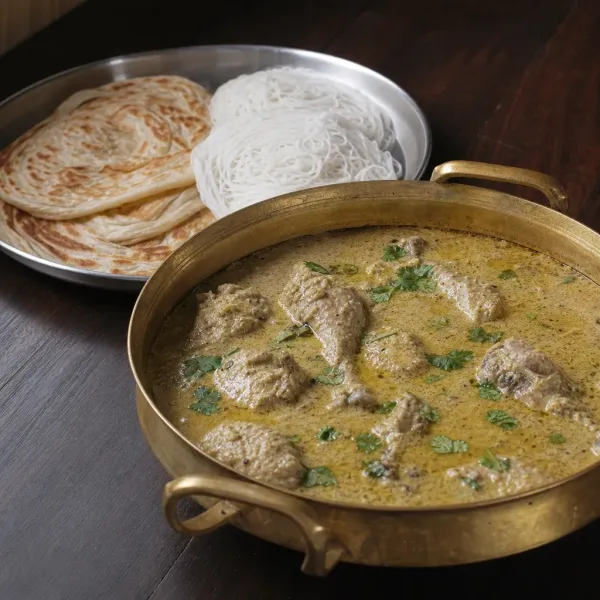
Mappila Chicken Kurma
Authentic Malabar Mappila chicken kurma with freshly ground coconut-cashew paste. The traditional partner for parotta and idiyappam. Step-by-step rec…
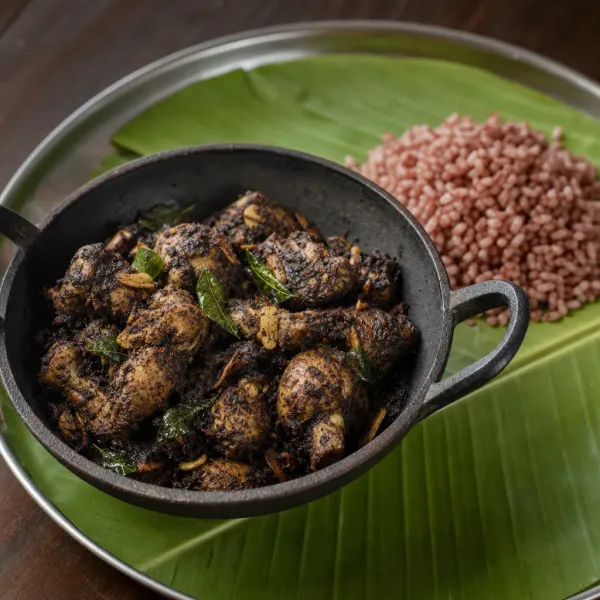
Kozhi Ularthiyathu
Traditional Nasrani-style Kerala dry-roasted chicken with coconut slivers, black pepper and shallots. Step-by-step method from a Travancore kitchen.
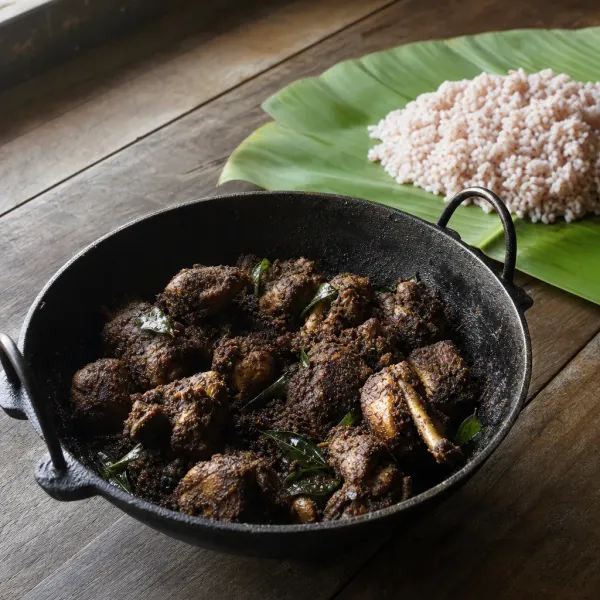
Chicken Chukka
Traditional Chettinad chicken chukka with fresh-ground kalpasi and marathi mokku masala. Dry, dark and deeply spiced. Step-by-step household method.
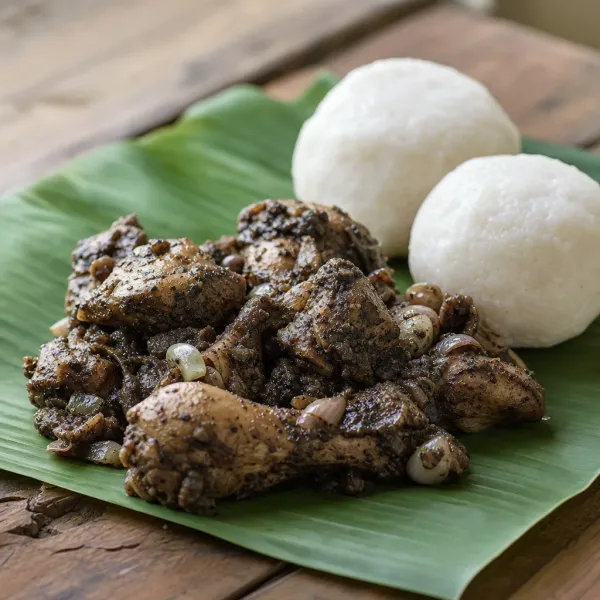
Chicken Uppu Kari
Authentic Kodava chicken uppu kari with black pepper, shallots and kachampuli. Dry-roasted, bone-in, traditional Coorg method. No gravy, no garam mas…
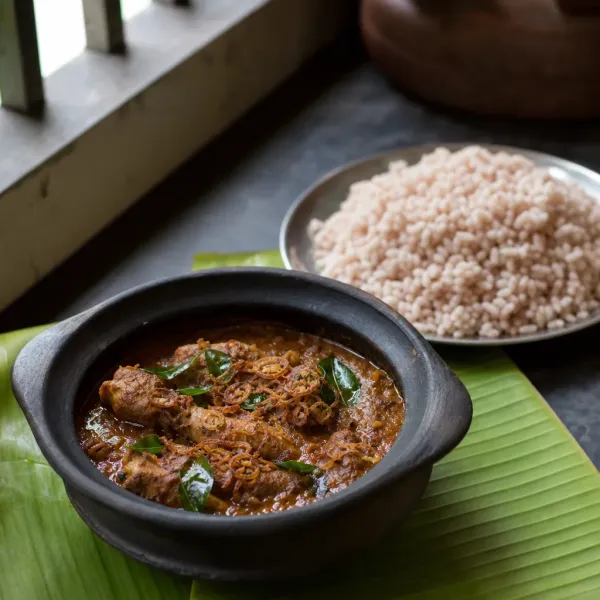
Kozhi Varutharacha Curry
Authentic Kerala Nasrani kozhi varutharacha curry with dry-roasted coconut paste. Step-by-step traditional method for a rich, dark chicken gravy.
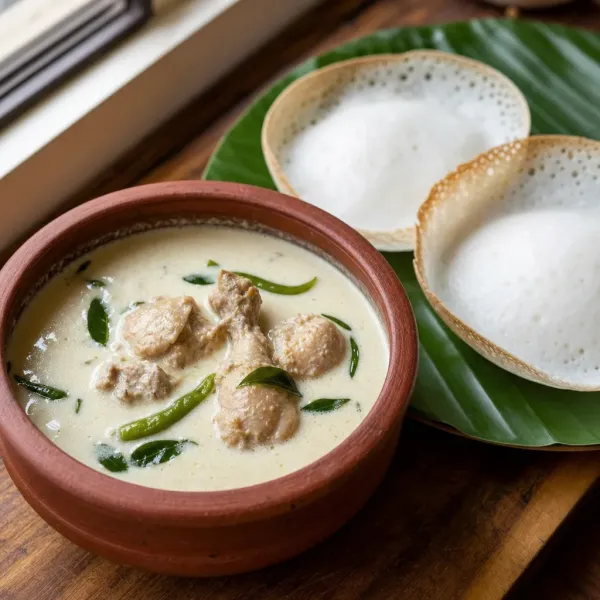
Chicken Mappas
Traditional Kerala Syrian Christian chicken mappas with coconut milk, whole spices and white vinegar. Served with appam or idiyappam. Authentic Nasra…