

Karuveppilai Sadam (Curry Leaf Rice) Recipe
Malayalam കറിവേപ്പില സാദംTamil கறிவேப்பிலை சாதம்Kannada ಕರಿಬೇವಿನ ಸಾದTelugu కరివేపాకు సాదం
- Prep15 min
- Cook25 min
- Serves4
- DifficultyEasy
- DietVegan
Karuveppilai sadam is a rice dish built around a dry-roasted spice powder in which curry leaves are the main ingredient, not a garnish. In Iyer households it is one of the dishes made when there is leftover cooked rice, or on days when something quick and sustaining is needed without elaborate cooking. It travels well and is a common addition to a packed lunch box.
The character of the dish depends entirely on how the curry leaves are handled. They must be completely dry before roasting, and they must be roasted until they are crisp enough to crumble, but not so far that they turn bitter. The spice powder is mixed through warm rice with gingelly oil, which gives the dish its particular nutty undertone. Coconut oil is not traditional here.
Households differ on whether to grind the roasted ingredients into a fine powder or leave them slightly coarse. Some add a small amount of freshly grated coconut to the powder before grinding, though many Iyer households keep it entirely dry. The version here is the dry powder method, which keeps for a few days and is the more common household approach.
Ingredients (serves 4)
For the rice
For the karuveppilai powder
For the tempering
Method
Dry the curry leaves thoroughly
After washing, spread the curry leaves in a single layer on a clean dry cloth and leave them for at least 30 minutes. They must feel completely dry to the touch before they go into the pan. Any residual water will cause them to steam rather than roast and the powder will not be crisp.
Roast the dals and spices
Set a heavy iron or steel kadai over a low flame. Add 1 tsp gingelly oil and let it warm. Add the chana dal and urad dal and stir constantly for about 2 minutes until they turn pale gold. Add the dried red chillies, black pepper, and cumin seeds and continue stirring for another minute. The dals should be a steady golden colour and the spices should smell toasted. Tip everything onto a plate and spread it out to cool.
Roast the curry leaves
In the same dry kadai over a low flame, add the dried curry leaves. No oil. Stir them continuously for 3 to 4 minutes. They will darken, shrink, and turn brittle. When you can crumble a leaf between your fingers without it bending, they are ready. Remove immediately and spread on the plate with the spices. Do not let them sit in the hot pan or they will turn bitter.
Add the asafoetida
In the residual heat of the kadai, add the asafoetida and stir it for 20 seconds. If using a compounded block, break off a small piece and let it soften just slightly in the warm pan. Add it to the plate with the other roasted ingredients. Allow everything to cool completely to room temperature before grinding.
Grind the powder
Transfer all the cooled roasted ingredients to a small dry mixer jar. Grind to a coarse powder, not a fine flour. Pulse rather than running the grinder continuously so you have control over the texture. The finished powder should feel slightly gritty between your fingers. Set aside.
Prepare the tempering
Heat 1 tbsp gingelly oil in the kadai over a medium flame. When the oil shimmers, add the mustard seeds and wait for them to splutter fully. Add the chana dal and urad dal and stir until they turn golden, about 1 minute. Add the broken dried red chillies and the curry leaf sprig and let them crackle for 15 seconds. Keep the flame at medium throughout; the dals burn quickly.
Add the rice
Add the cooled cooked rice to the kadai. Using a wide spatula or your fingers (if the rice is cool enough), gently separate any clumps as you add it. Fold the rice through the tempering, turning it over rather than stirring hard, so the grains stay intact.
Mix in the oil and powder
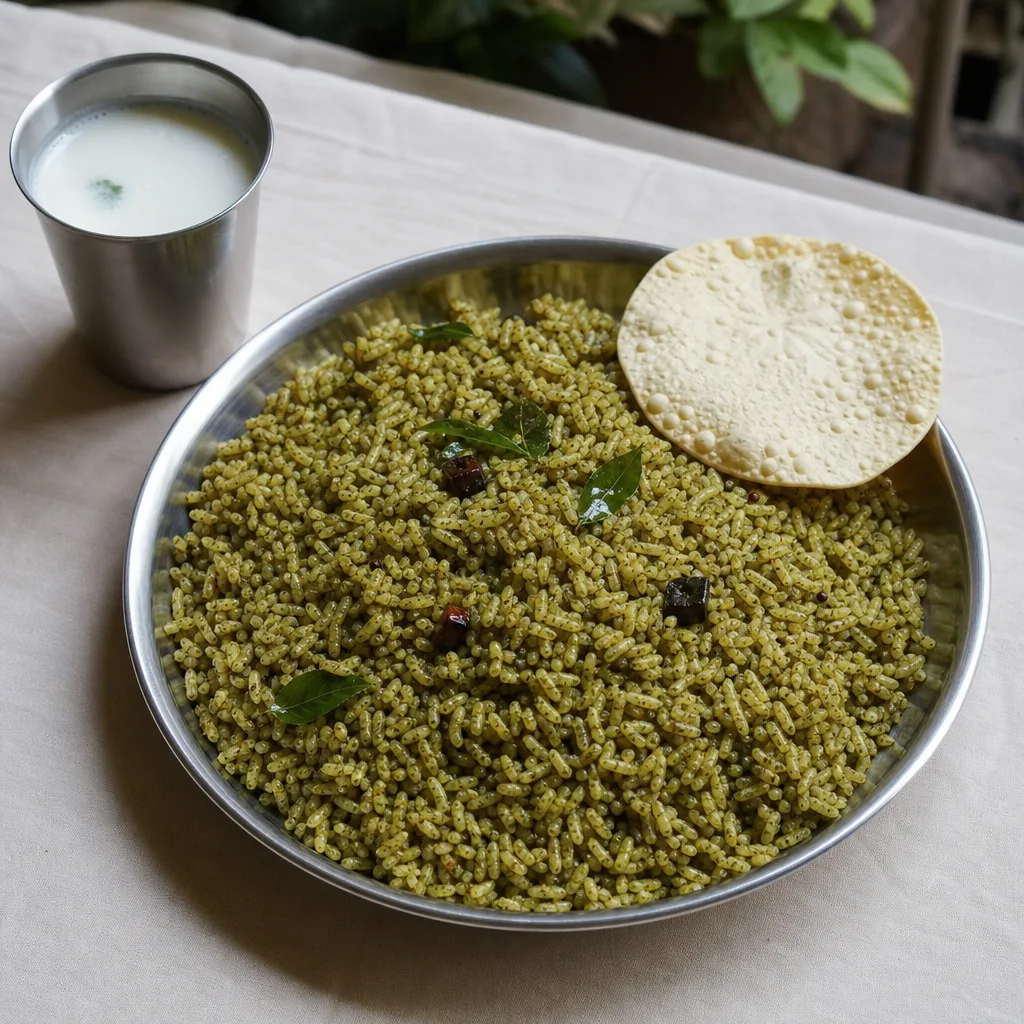
Drizzle the remaining 2 tbsp gingelly oil over the rice and fold it in. Add the karuveppilai powder, starting with 3 tbsp, and fold through evenly. Taste and add more powder and salt as needed. The rice should be an even deep green-brown from the powder, with every grain lightly coated. Adjust salt now; once the powder is mixed in, the seasoning is difficult to correct.
Rest briefly and serve
Take the kadai off the heat, cover with a lid, and let it sit for 5 minutes. This allows the oil and powder to settle into the rice. Serve warm or at room temperature.
How to serve
Plain papad (appalam), a small bowl of mor (thin buttermilk seasoned with salt and green chilli), or a simple raw onion and cucumber salad. In a packed lunch context it is often eaten on its own.
Served with: Plain papad (appalam), a small bowl of mor (thin buttermilk seasoned with salt and green chilli), or a simple raw onion and cucumber salad. In a packed lunch context it is often eaten on its own.
Cook's tips
Dry the leaves, or the powder will clump
Even a small amount of moisture on the curry leaves will make the powder damp and sticky rather than free-flowing. If your kitchen is humid, you can wipe the leaves gently with a dry cloth after air-drying.
Make extra powder and store it
The karuveppilai powder keeps well in an airtight jar at room temperature for up to two weeks, or in the refrigerator for a month. Many households make a larger batch and use it through the week.
The rice must be cool and dry
Hot freshly cooked rice releases steam when mixed, making the dish sticky. Cook the rice, spread it on a wide plate, and let it cool and dry for at least 20 minutes before using. Day-old refrigerated rice works well if you bring it to room temperature first.
Gingelly oil is not optional here
The nutty flavour of unrefined gingelly oil is central to this dish. Refined sesame oil or any neutral oil will produce a flat result. Do not substitute coconut oil; it belongs to a different kitchen.
Byadagi chillies for less heat
If your household prefers a milder dish, use Byadagi dried red chillies rather than Guntur. They give colour and flavour without aggressive heat. Reduce the count to 4 if cooking for children.
Regional variations
Karnataka households make a similar dish called karibevu chitranna with a coconut-based masala; Vellalar households in Kongunad use more dried red chillies and sometimes add peanuts.
Glossary
- Karuveppilai கறிவேப்பிலை
- Curry leaf (Murraya koenigii); the Tamil name used in this dish's title.
- Sadam சாதம்
- Cooked rice; used in Tamil to refer to rice-based mixed dishes.
- Nallennai நல்லெண்ணெய்
- Gingelly oil; cold-pressed unrefined sesame oil used in Tamil Nadu cooking.
- Kadalai paruppu கடலை பருப்பு
- Split chana dal; used here both in the spice powder and the tempering.
- Ulutham paruppu உளுத்தம் பருப்பு
- Split urad dal; adds a slightly nutty flavour when fried golden in oil.
- Perungayam பெருங்காயம்
- Asafoetida; used in small quantities in Iyer cooking in place of onion and garlic.
Whether this rice works comes down to two things: the curry leaves must be roasted until genuinely crisp and dry, and the gingelly oil must be the real unrefined kind. Get those right and the powder will be fragrant, the rice will be glossy and well-coated, and the dish will taste like it came from a kitchen that has been making it for generations.
More Rice Dishes recipes
Kanji with Cherupayar
Traditional Kerala kanji made with matta rice cooked to a silky gruel, served with whole green moong. Simple, nourishing, and made the household way.
Nei Choru (Kerala Ghee Rice)
Traditional Malabar Mappila nei choru made with jeerakasala rice, pure ghee and whole spices. Step-by-step household method for perfectly separate, f…
Kuthari Choru
Traditional Kerala matta rice cooked by the open-boil-and-drain method with a second steam sitting. Step-by-step household recipe for kuthari choru.
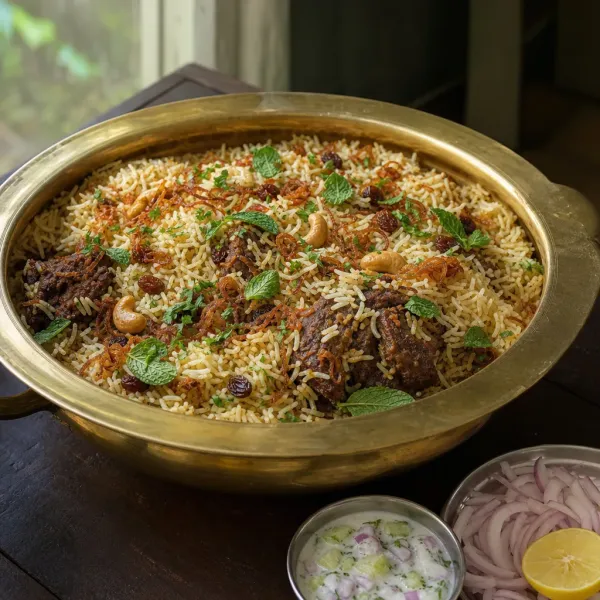
Malabar Mutton Dum Biryani
Traditional Malabar Mappila mutton dum biryani with Kaima rice, whole spices, and a sealed dum finish. Household recipe from northern Kerala.
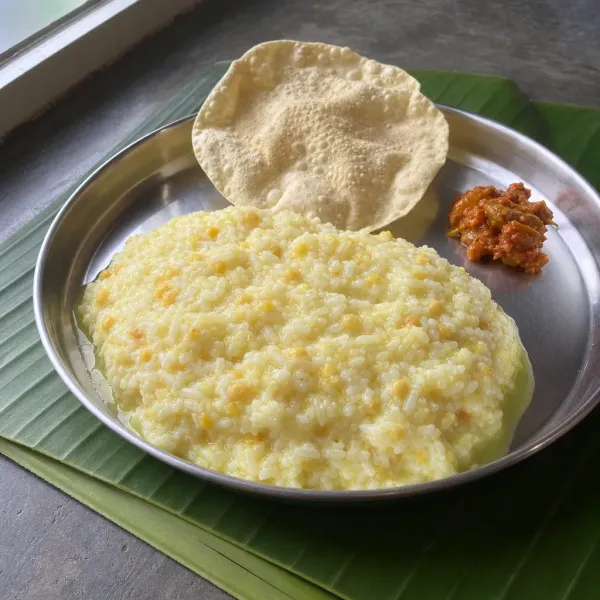
Paruppu Sadam
Traditional Iyer-style paruppu sadam: soft raw rice stirred with toor dal and finished with ghee, the first course of a Tamil Brahmin meal.
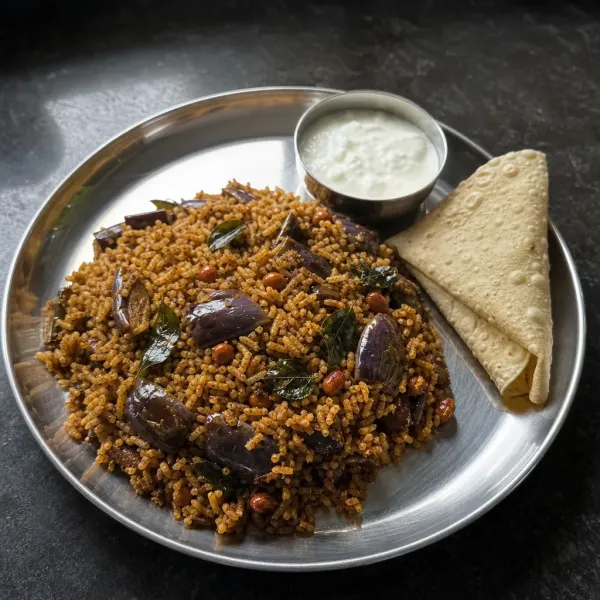
Vangi Bath
Authentic Karnataka vangi bath with freshly ground dry masala of kopra, dagad phool and byadagi chilli. Step-by-step traditional household recipe.