

Gongura Pachadi (Andhra Gongura Pickle, Long-Keeping) Recipe
Malayalam ഗോംഗുര അച്ചാർTamil கொங்குர ஊறுகாய்Kannada ಗೊಂಗೂರ ಉಪ್ಪಿನಕಾಯಿTelugu గోంగూర పచ్చడి
- Prep30 min
- Cook50 min
- ServesMakes approximately 400 g of pickle
- DifficultyMedium
- DietVegan
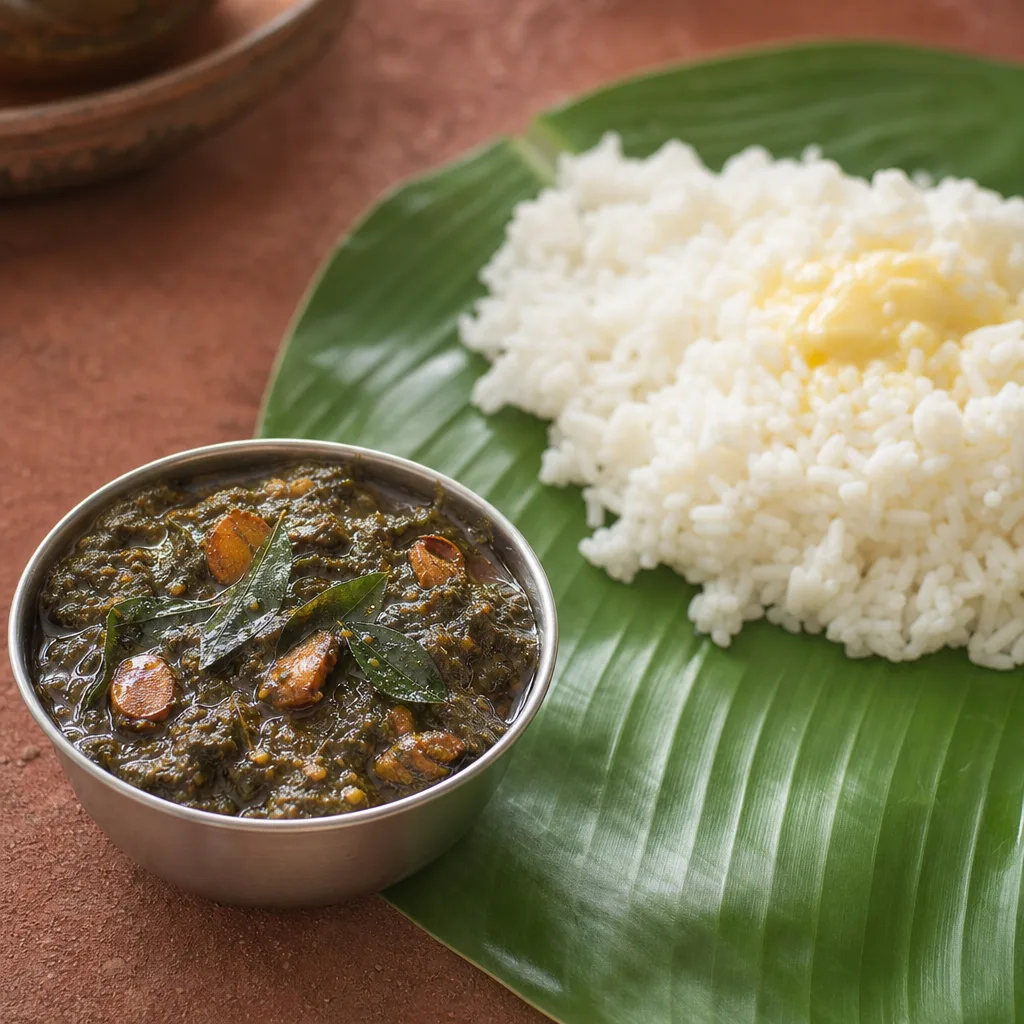
Gongura is sorrel — specifically Hibiscus sabdariffa, the red-stemmed variety that Andhra cooks prize above the green — and this pickle is the dish that every Andhra household measures its pantry by. The leaves are sour enough to make your mouth water before you have even opened the jar. Rayalaseema cooks use more chilli and more oil than anywhere else, and that combination is exactly what keeps the pickle good for three to four weeks without refrigeration.
The method has two stages: first the gongura is cooked down until all its water is gone and it becomes a thick, dark paste, then a dry-roasted spice paste is blended in, and finally a very generous tempering of gingelly oil, dried red chillies, garlic and mustard is poured over everything. The oil must float on top when the pickle is jarred — that layer is what preserves it.
It is eaten with plain rice and a spoonful of ghee, or alongside a dal. Some households add it to a mutton curry mid-cook. No two jars taste identical because gongura sourness varies with the season and the soil, and you adjust salt and chilli to the batch, not to a fixed number.
Ingredients (serves Makes approximately 400 g of pickle)
For the gongura base
For the dry-roasted spice paste
For the tempering
Method
Dry the gongura
Spread the washed gongura leaves and stems on a clean cloth in a shaded, airy spot for at least two hours after washing. They must feel completely dry to the touch — no surface moisture at all. Wet gongura will spit badly in the oil and the pickle will not keep. In humid weather, give it three hours.
Cook the gongura down
Heat 120 ml gingelly oil in a wide, heavy kadai over medium heat. Add all the dried gongura at once — it will seem like too much but it collapses quickly. Stir, cover loosely, and cook over medium-low heat for 20 to 25 minutes, stirring every five minutes. You are looking for the leaves to break down completely into a thick, dark-green paste and for all visible moisture to have evaporated. The oil will begin to separate at the edges when it is ready. Do not rush this stage with high heat; the paste scorches at the bottom if the heat is too strong.
Dry-roast the spices
In a separate dry pan over low heat, roast the dried red chillies, coriander seeds and cumin seeds together, stirring constantly, for two to three minutes until fragrant and the chillies darken slightly. Add the fenugreek seeds in the last 30 seconds only — they need very little heat. Tip onto a plate and cool completely before grinding.
Grind the spice paste
Grind the cooled roasted spices to a coarse-fine powder in a small dry grinder. You want it mostly fine but with a little texture — not a smooth flour. Set aside.
Combine gongura paste and spice powder
Add the ground spice powder to the cooked gongura paste in the kadai and stir well over low heat for two minutes. Add salt and mix thoroughly. The paste will thicken further. Taste at this stage — the sourness, salt and chilli heat should feel assertive because the tempering oil will mellow it slightly. Take off the heat.
Make the tempering
Heat 60 ml gingelly oil in a small pan over medium heat until it shimmers. Add the mustard seeds and wait for them to pop. Add the broken dried red chillies and let them darken for 15 seconds. Add the crushed garlic cloves and fry, stirring, until they turn golden at the edges — about one and a half minutes. Add the curry leaves (stand back, they will splutter) and the asafoetida, stir once, and immediately pour the entire contents of the pan over the gongura paste.
Mix and check oil level
Stir the tempering into the paste thoroughly. There should be a visible layer of reddish oil sitting on the surface of the pickle when it settles. If the paste looks dry and the oil has been absorbed entirely, heat the extra 2 tbsp gingelly oil separately until hot and stir it in. That oil layer is the preservative.
Cool and jar
Allow the pickle to cool completely to room temperature — do not cover while hot or condensation will form. Transfer to a clean, completely dry glass jar. Press the pickle down so the oil rises to cover the surface. Seal and store in a cool, dark place. It is best after two days when the flavours have settled. Use a dry spoon every time you serve it.
How to serve
Plain hot rice with a small spoonful of ghee stirred in; also alongside pappu (dal) and rice, or as a side to roti.
Served with: Plain hot rice with a small spoonful of ghee stirred in; also alongside pappu (dal) and rice, or as a side to roti.
Cook's tips
Which gongura to use
The red-stemmed variety is sourer and makes a better pickle than the green-stemmed variety, which is milder and better for fresh chutneys or dal. If you can only find green-stemmed, increase the quantity slightly and expect a less sharp result.
Shelf life depends on oil and dryness
If the gongura was fully dried before cooking, the spices were roasted dry, and the jar and spoon are always dry, the pickle keeps at room temperature for three to four weeks. Refrigeration extends this but is not traditional and can cause the oil to solidify.
Garlic quantity
Ten cloves is a moderate Rayalaseema household amount. Some families use 15 to 20 cloves and consider the garlic as important as the gongura itself. Adjust to your preference, but do not reduce below six or the tempering will taste flat.
Fenugreek bitterness
A quarter teaspoon is enough. More fenugreek and more roasting time are the two most common mistakes — both push the pickle into bitterness that no amount of salt will fix.
Chilli heat
Guntur chillies are hot. If you are not accustomed to Andhra heat levels, start with 8 to 10 chillies in the paste and keep the tempering chillies as they are. You can always add more heat but you cannot take it away.
Regional variations
Telangana households make a fresher, less oily version eaten within a few days; some Andhra versions add a small amount of urad dal, roasted and ground, into the masala for body.
Glossary
- Gongura గోంగూర
- Sorrel (Hibiscus sabdariffa), a sour leafy plant central to Andhra cooking; the red-stemmed variety is more acidic and preferred for pickling.
- Pachadi పచ్చడి
- In Telugu usage, a broad category covering fresh chutneys, cooked relishes and pickles; this long-keeping cooked version sits at the pickle end of that range.
- Nuvvula nune నువ్వుల నూనె
- Gingelly oil, sesame oil; the traditional cooking and pickling fat in Andhra and Tamil Nadu.
- Inguva ఇంగువ
- Asafoetida; used in small quantities in the tempering to add depth and aid digestion.
- Pappu పప్పు
- Cooked lentil dal; the most common accompaniment to gongura pachadi when served with rice.
Two things decide this pickle: the gongura must be cooked until every drop of moisture is gone before anything else is added, and there must be enough oil at the end to float visibly on the surface. Everything else — the chilli count, the garlic — is household preference. Get those two things right and the pickle will keep and taste the way it should.
More Chutneys, Podis & Pickles recipes
Pulikachal
Traditional Iyer-style pulikachal: tamarind cooked down with gingelly oil, fresh-ground spice powder, and a tempering of mustard and curry leaves. Ma…
Poondu Chutney (Tamil Nadu Brahmin Style)
Traditional Tamil Brahmin poondu chutney with raw garlic, roasted chana dal, dried red chillies, and tamarind, tempered in gingelly oil. Served with…
Veluthulli Achar
Traditional Malabar-style garlic pickle in coconut oil with Kashmiri chilli and vinegar. A fiery, long-keeping condiment from the Mappila kitchen.
Puli Inji
Traditional Kerala puli inji recipe for sadya – fresh ginger and tamarind cooked to a thick, dark condiment with jaggery and coconut oil tempering.
Allam Pachadi
Traditional Rayalaseema-style allam pachadi with fresh ginger, Guntur chillies, tamarind and jaggery. Served with pesarattu and idli.
Vepudu Karam Podi
Traditional Rayalaseema vepudu karam podi: dry-roasted Guntur chillies, black pepper, cumin and garlic ground to a coarse powder for finishing Andhra…