

Pulikachal Recipe
Malayalam പുളിക്കച്ചൽTamil புளிக்கச்சல்Kannada ಪುಳಿಕಚ್ಚಲ್Telugu పులికచ్చల్
- Prep20 min
- Cook45 min
- ServesEnough paste for 8 to 10 servings of ric
- DifficultyMedium
- DietVegan
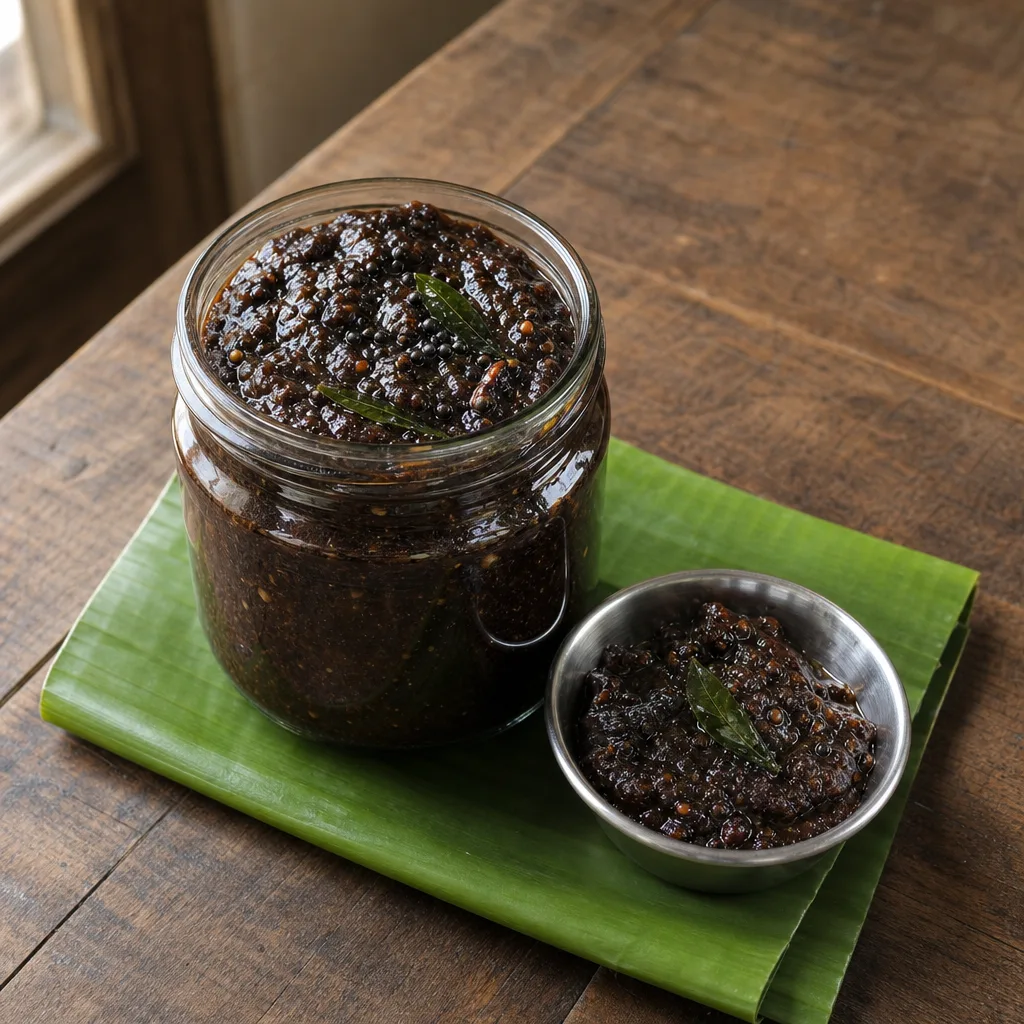
Pulikachal is not a dish on its own but the concentrated tamarind-and-spice paste that becomes puliyodharai when mixed through cooked rice. In Iyer households it is made in a batch, stored in a glass or ceramic jar, and kept on the counter or in the fridge for up to three weeks. When rice needs to be packed for a long journey, a school tiffin box, or a temple prasadam, a spoonful of pulikachal is all that stands between plain rice and a complete meal.
The paste is built in two stages. First, thick tamarind water is cooked down until it loses its raw sourness and turns deeply concentrated, almost jammy. Then a dry-roasted, freshly ground spice powder is stirred in along with a tempering of gingelly oil, mustard, dried chillies, curry leaves, asafoetida, and chana dal. The gingelly oil is not optional; it is what gives the paste its characteristic flavour and also what preserves it. Coconut oil does not belong here.
Households differ mainly in the ratio of tamarind to jaggery and in how much pepper goes into the spice powder. Some families add a small piece of jaggery only at the end and taste as they go; others measure it precisely. The spice powder itself, called the pulikachal podi, is the thing most cooks grind fresh each time rather than keeping a separate stock.
Ingredients (serves Enough paste for 8 to 10 servings of ric)
For the tamarind base
For the spice powder (pulikachal podi)
For the tempering (thalippu)
Method
Soak the tamarind
Break the tamarind into pieces and soak in 400 ml of warm water for 20 minutes. Squeeze thoroughly with your fingers, working the pulp loose from the fibre. Strain through a sieve, pressing hard. You should have roughly 350 ml of thick, dark pulp. Discard the fibre and seeds.
Dry-roast the spice powder ingredients
Set a heavy kadai over low heat. Add the coriander seeds, chana dal, urad dal, peppercorns, and dried red chillies together and roast, stirring constantly, until the dals turn pale gold and the coriander smells nutty, about 3 to 4 minutes. Add the fenugreek seeds in the last 30 seconds only; they darken fast and turn bitter if they go in earlier. Add the asafoetida lump, stir once, and tip everything onto a plate to cool completely.
Grind the spice powder
Once the roasted spices are fully cool, grind them to a fine, dry powder in a small mixer jar. Do not add water. Set aside. A warm grinder will make the powder clump; wait until the spices are genuinely cold.
Cook down the tamarind pulp
Pour the strained tamarind pulp into the same kadai and set over medium heat. Add the turmeric powder and salt now. Cook uncovered, stirring every few minutes, for 20 to 25 minutes. The pulp will splutter as it thickens; turn the heat to medium-low once it starts doing this. It is ready when the mixture has reduced by roughly half, looks very thick and dark, and the raw sour smell has given way to a rounded, cooked sourness. A spoon drawn through it should leave a clear trail for a moment before it fills back in.
Make the tempering
In a separate small pan, heat the gingelly oil over medium heat until it shimmers. Add the mustard seeds and wait for them to pop. Add the chana dal and fry until it turns golden, about 1 minute. Add the torn dried red chillies and curry leaves, standing back as the leaves will sputter. Add the pinch of asafoetida, stir once, and pour the entire tempering into the reduced tamarind in the kadai.
Add the spice powder
Stir the tempering into the tamarind over low heat. Now add the ground spice powder and mix thoroughly so no dry pockets remain. The paste will thicken further as the powder is absorbed.
Add jaggery and adjust seasoning
Add the grated jaggery and stir until it dissolves completely, about 1 minute on low heat. Taste carefully: the paste should be intensely sour, warmly spiced, lightly sweet, and well salted. Adjust salt or jaggery at this point. Remember it will be mixed through a larger quantity of plain rice, so it should taste stronger than you want the finished rice to taste.
Cool and store
Take the kadai off the heat and let the pulikachal cool completely in the pan before transferring to a clean, dry glass or ceramic jar. Do not use a wet spoon at any point during storage. Kept at room temperature in a cool kitchen it will last 5 to 7 days; refrigerated, up to 3 weeks. The gingelly oil will solidify in the fridge; bring the paste to room temperature before using.
How to serve
Mixed through cooked rice (preferably sona masoori or raw rice cooked slightly drier than usual) to make puliyodharai. Often accompanied by appalam (papad), a dry potato fry, or mor kuzhambu. Frequently served on banana leaf for temple occasions.
Served with: Mixed through cooked rice (preferably sona masoori or raw rice cooked slightly drier than usual) to make puliyodharai. Often accompanied by appalam (papad), a dry potato fry, or mor kuzhambu. Frequently served on banana leaf for temple occasions.
Cook's tips
The oil quantity matters
Five tablespoons of gingelly oil sounds like a lot. Do not reduce it. The oil is both flavour and preservative. A paste made with less oil will spoil faster and taste flat when mixed through rice.
Fenugreek is the danger spice
Over-roasted fenugreek turns the entire powder bitter and there is no fixing it. Add it last, watch it carefully, and pull the pan off the heat the moment it turns one shade darker.
Tamarind quality varies
Freshly opened block tamarind gives a cleaner, brighter sourness than old stock. If the tamarind smells musty when you open it, the paste will carry that mustiness through. Taste the pulp before you cook it down.
Mixing ratio for rice
A rough guide is 1 heaped tablespoon of pulikachal per cup of cooked rice, but adjust to your family's taste. Mix while the rice is warm so the paste coats each grain evenly.
Shortcut note
Some households use store-bought tamarind concentrate (puli paste) to skip the soaking and straining step. If you do this, use about 3 tablespoons dissolved in 150 ml water and reduce the cooking time, but taste carefully as concentrate can be sharper and less rounded than fresh pulp.
Regional variations
Iyengar households make a similar paste called puliyodharai gojju, which uses a slightly different spice balance and often includes more pepper; Andhra kitchens make pulihora paste with a heavier hand on dried chillies and sometimes add peanuts directly into the paste rather than tempering them separately.
Glossary
- Puli புளி
- Tamarind; the word also means sour.
- Nallennai நல்லெண்ணெய்
- Gingelly oil; cold-pressed sesame oil used in Tamil Nadu cooking.
- Perungayam பெருங்காயம்
- Asafoetida; the dried resin used in Brahmin cooking in place of onion and garlic.
- Vendhayam வெந்தயம்
- Fenugreek seeds; used sparingly in spice powders for a faint bitterness.
- Kadugu கடுகு
- Mustard seeds; the first ingredient into hot oil in most Tamil temperings.
- Karuveppilai கறிவேப்பிலை
- Curry leaves; fresh leaves are essential; dried leaves are not a substitute.
- Vellam வெல்லம்
- Jaggery; unrefined cane sugar used to balance sourness.
- Thalippu தாளிப்பு
- The tempering of oil, mustard, dal, and aromatics that is poured into a dish to finish it.
Two things decide whether pulikachal works: cooking the tamarind pulp down long enough that the raw sourness is fully gone, and using enough gingelly oil. Cut either short and the paste will taste harsh and will not keep. Get both right and a jar in the fridge means a proper meal is always twenty minutes away.
More Chutneys, Podis & Pickles recipes
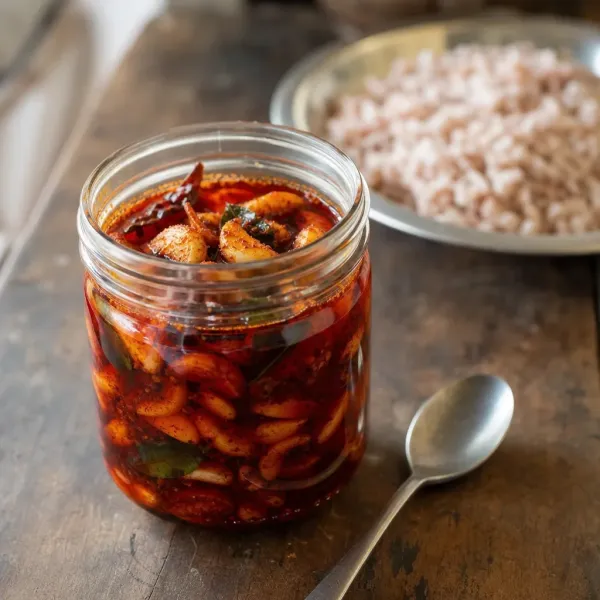
Veluthulli Achar
Traditional Malabar-style garlic pickle in coconut oil with Kashmiri chilli and vinegar. A fiery, long-keeping condiment from the Mappila kitchen.
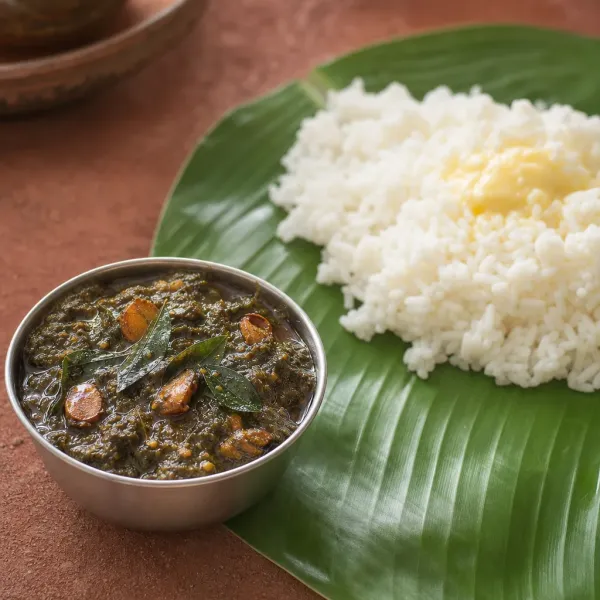
Gongura Pachadi (Andhra Gongura Pickle, Long-Keeping)
Traditional Rayalaseema gongura pickle with gingelly oil, Guntur chillies and garlic. Keeps for weeks. Step-by-step Andhra household method.
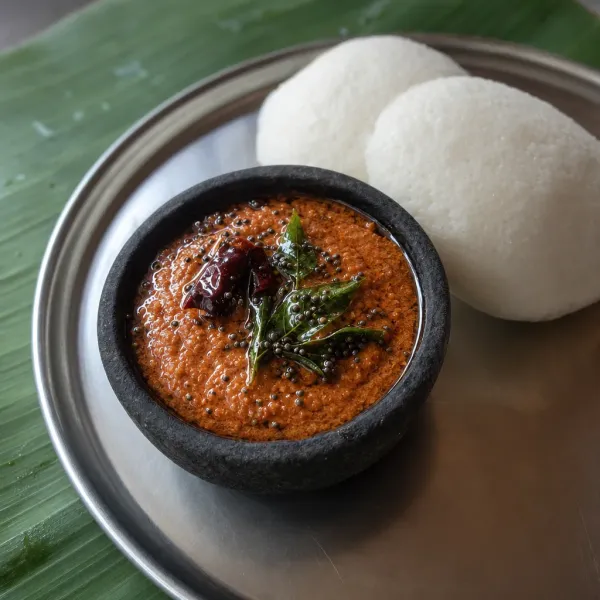
Poondu Chutney (Tamil Nadu Brahmin Style)
Traditional Tamil Brahmin poondu chutney with raw garlic, roasted chana dal, dried red chillies, and tamarind, tempered in gingelly oil. Served with…
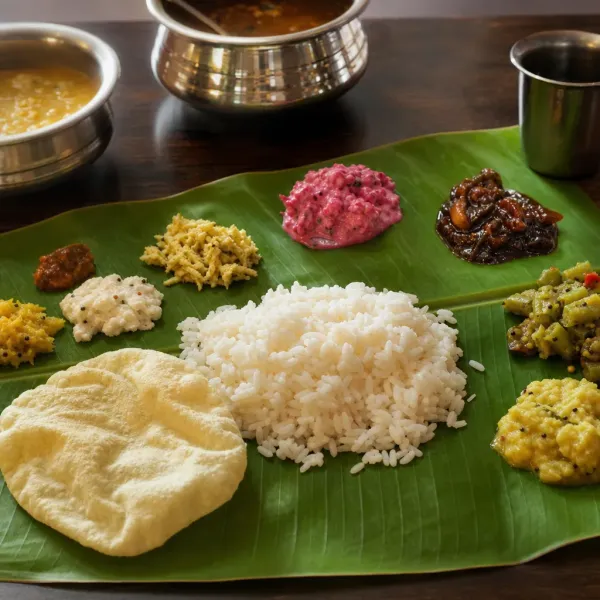
Puli Inji
Traditional Kerala puli inji recipe for sadya – fresh ginger and tamarind cooked to a thick, dark condiment with jaggery and coconut oil tempering.
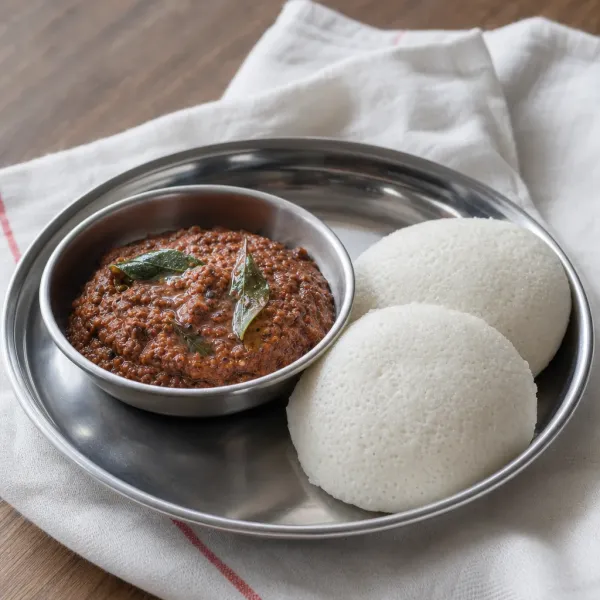
Kathirikai Chutney
Traditional Tamil Brahmin roasted brinjal chutney with gingelly oil tempering. No onion, no garlic. Ready in 30 minutes. Serve with idli or dosa.
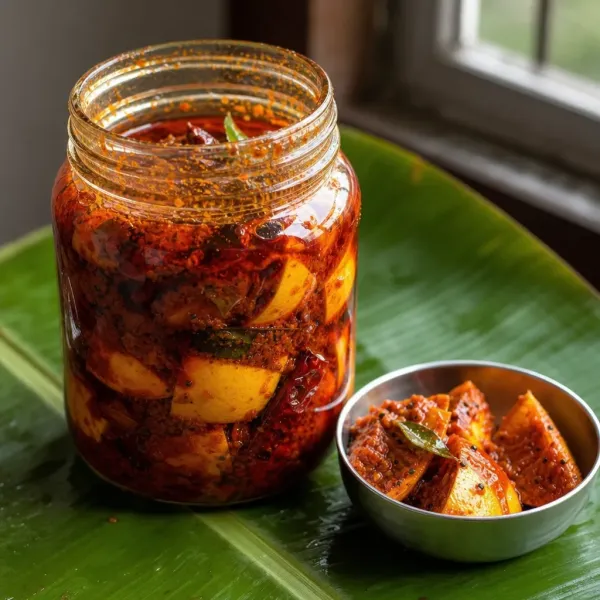
Naranga Achar
Traditional Kerala lemon pickle with a 10-day salt cure, coconut oil tempering, and fenugreek-chilli masala. Step-by-step household method from Trava…