

Kathirikai Chutney Recipe
Malayalam കത്തിരിക്കാ ചട്ണിTamil கத்திரிக்காய் சட்னிKannada ಬದನೆಕಾಯಿ ಚಟ್ನಿTelugu వంకాయ చట్నీ
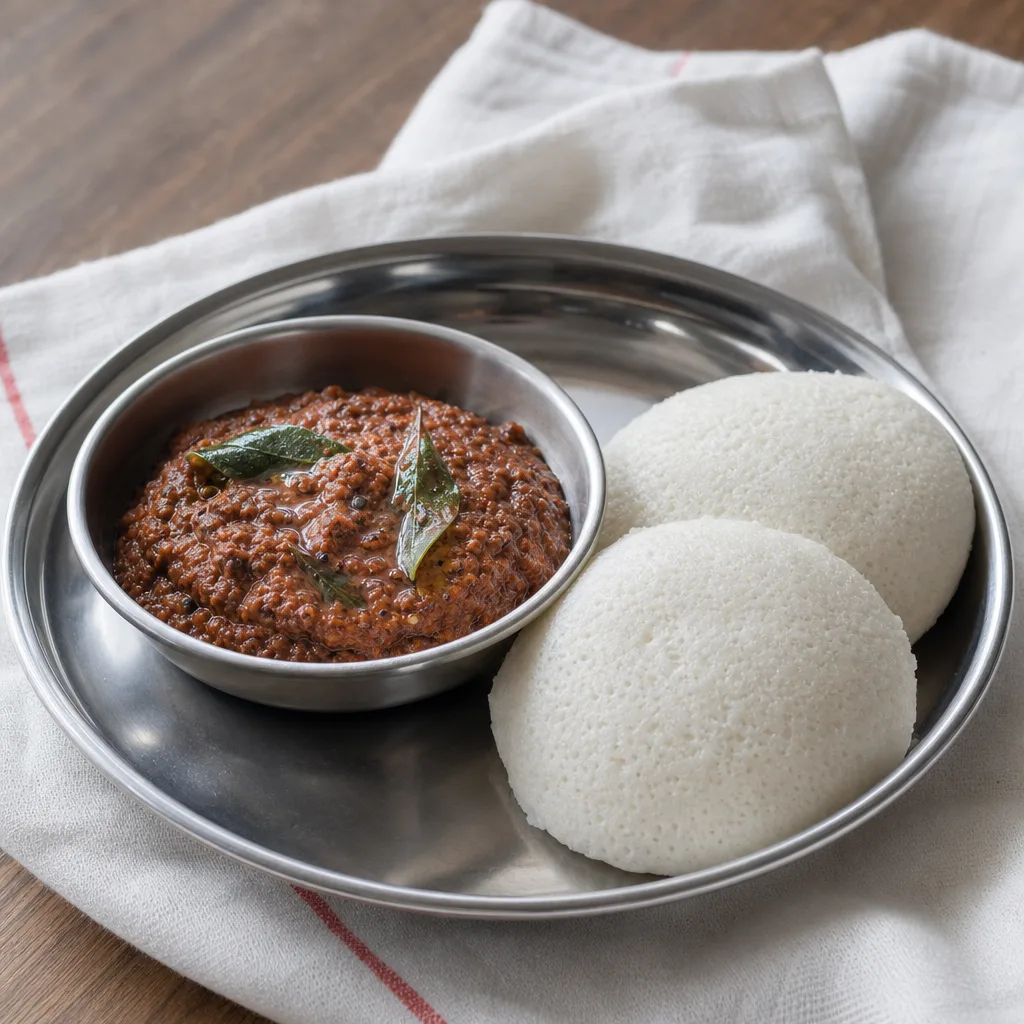
- Prep10 min
- Cook30 min
- Serves4
- DifficultyEasy
- DietVegan
This is the kind of chutney that appears on a Tamil Brahmin breakfast table alongside idli or dosa, made on days when there is a large brinjal sitting on the counter and not much time. The brinjal is roasted directly over a flame until the skin is completely charred and the flesh inside collapses. That char is the point. Without it, you have a pale, watery paste with no depth.
In Iyer households, this chutney contains no onion and no garlic. The sourness comes from a small piece of tamarind. The heat comes from dried red chillies. Gingelly oil goes into the tempering and gives the finished chutney its particular nutty undertone. Some households add a little roasted chana dal to the grinding for body; others do not. Both are correct.
It keeps well for a day at room temperature and two days in the fridge, though the colour darkens as it sits. Most households make it fresh for the morning meal and finish it at the same sitting.
Ingredients (serves 4)
For roasting and grinding
For the tempering
Method
Char the brinjal over open flame
Place the whole brinjal directly on a medium gas flame. Turn it every two to three minutes using tongs. You are looking for the skin to blister and blacken all over, including the shoulder near the stem, and for the brinjal to feel completely soft when you press it gently. This takes about 15 to 20 minutes depending on size. Do not rush it on high flame — the inside will stay raw while the outside burns.
Steam-rest the brinjal
Transfer the charred brinjal to a plate and cover it with another plate or a lid. Leave it for 10 minutes. The trapped steam loosens the skin and makes it easy to peel cleanly.
Peel and drain
Peel away the charred skin with your fingers under a gentle trickle of water, or peel dry if you prefer a smokier result — washing removes some of the char flavour. Discard the stem. The flesh will be soft, slightly stringy, and very moist. Tilt the plate and let the excess liquid drain off for a few minutes; too much liquid makes the chutney thin.
Soak the tamarind
While the brinjal rests, soak the marble-sized piece of tamarind in 2 tbsp of warm water for 10 minutes. Squeeze it well between your fingers to extract the pulp, then discard the fibre and seeds. You should have a small amount of thick sour extract.
Grind the chutney
Put the dried red chillies into a small mixer jar and pulse them a few times until coarsely broken. Add the peeled brinjal flesh, the tamarind extract, and salt. Grind to a coarse paste — not completely smooth. A little texture is correct here. Taste and adjust salt and sourness.
Prepare the tempering
Heat the gingelly oil in a small tempering pan over medium heat. When it shimmers, add the mustard seeds and wait for them to pop. Add the urad dal and stir until it turns pale gold, about 30 seconds. Add the broken dried red chilli, curry leaves, and asafoetida. The curry leaves will splutter. Remove from heat immediately after the leaves crisp — about 15 seconds.
Combine and serve
Pour the hot tempering over the ground brinjal paste and fold it through. Serve at room temperature. The chutney should be thick enough to mound on a spoon, with a deep smoky smell and a reddish-brown colour from the chillies and tamarind.
How to serve
Idli, dosa, or plain cooked rice with a drizzle of gingelly oil. Also eaten as a side with roti in some households.
Served with: Idli, dosa, or plain cooked rice with a drizzle of gingelly oil. Also eaten as a side with roti in some households.
Cook's tips
Oven roasting is slower but works
If you cannot roast on an open flame, halve the brinjal, brush with a little oil, and roast cut-side down in a very hot oven (220°C) for 25 to 30 minutes until completely collapsed. The smokiness will be milder. Prick the skin with a fork before roasting to prevent bursting.
Draining matters
Brinjal holds a surprising amount of water after roasting. If you skip the draining step, the chutney will be too loose and the flavours will be diluted. Five minutes on a tilted plate is enough.
Chana dal for body
Some Iyer households dry-roast 1 tsp of chana dal until golden and grind it in with the brinjal. This thickens the chutney and adds a mild nuttiness. It is a genuine household variation, not a shortcut.
Gingelly oil is not optional
In this chutney, the gingelly oil in the tempering is part of the flavour, not just a cooking medium. Coconut oil or refined oil will give a noticeably different result. Use gingelly oil.
Storage
Keeps at room temperature for one day, refrigerated for two. The colour will darken from reddish-brown to a deeper brown as it sits. This is normal and does not affect the taste.
Regional variations
Non-Brahmin Tamil versions include shallots and garlic; Andhra households make a similar dish called vankaya pachadi with green chillies and sometimes yoghurt; Karnataka versions (badanekayi chutney) are closer to a raita with curd.
Glossary
- Kathirikai கத்திரிக்காய்
- Tamil word for brinjal (eggplant, aubergine).
- Nallennai நல்லெண்ணெய்
- Gingelly oil, sesame oil; the traditional cooking fat for Tamil chutneys and kuzhambu.
- Kadugu கடுகு
- Mustard seeds, used at the start of a tempering in most Tamil cooking.
- Perungayam பெருங்காயம்
- Asafoetida; used in small quantities in Brahmin cooking where onion and garlic are absent.
Two things decide this chutney: the completeness of the roast and the quality of the gingelly oil. If the brinjal is not charred all the way through, the flesh tastes raw and grassy no matter how long you grind it. And if you substitute a neutral oil in the tempering, the chutney loses the nutty, slightly bitter undertone that makes it worth making.
More Chutneys, Podis & Pickles recipes
Naranga Achar
Traditional Kerala lemon pickle with a 10-day salt cure, coconut oil tempering, and fenugreek-chilli masala. Step-by-step household method from Trava…
Pudina Chutney
Traditional Tamil Brahmin pudina chutney with fresh coconut, green chilli and tamarind, finished with a gingelly oil tadka. Ready in 15 minutes.
Puli Inji
Traditional Kerala puli inji recipe for sadya – fresh ginger and tamarind cooked to a thick, dark condiment with jaggery and coconut oil tempering.
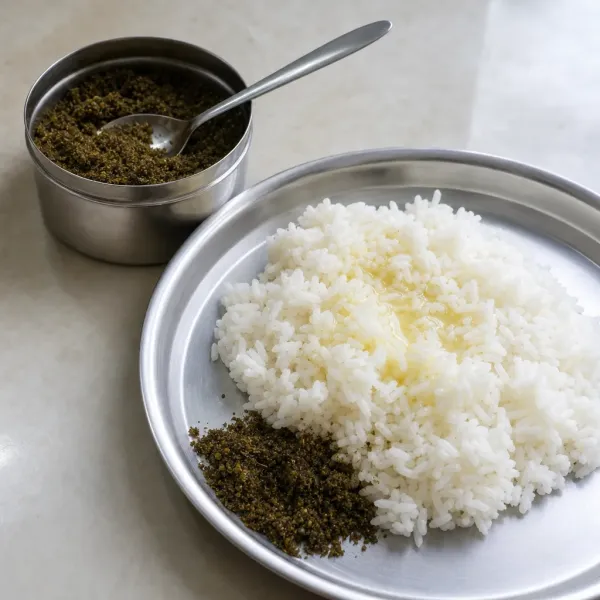
Karuveppilai Podi (Curry Leaf Powder)
Traditional Tamil Iyer karuveppilai podi made with urad dal, black pepper and dry curry leaves. A step-by-step household recipe for rice podi.
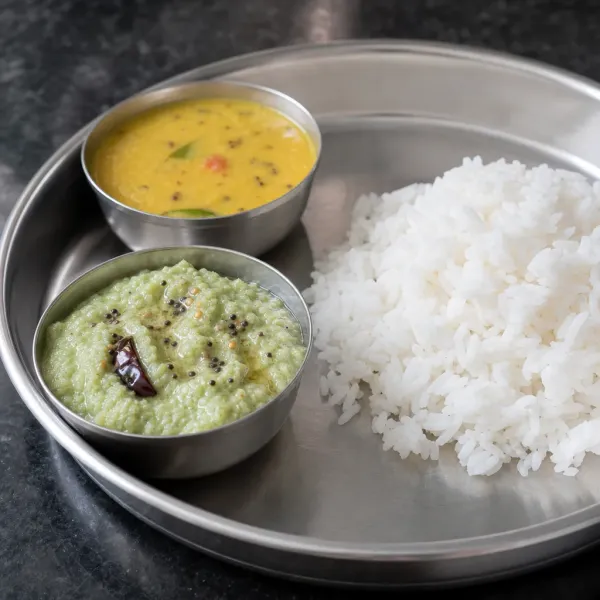
Beerakaya Pachadi
Traditional Coastal Andhra beerakaya pachadi: ridge gourd cooked in gingelly oil, ground coarse with coconut and cumin, finished with a mustard tadka…
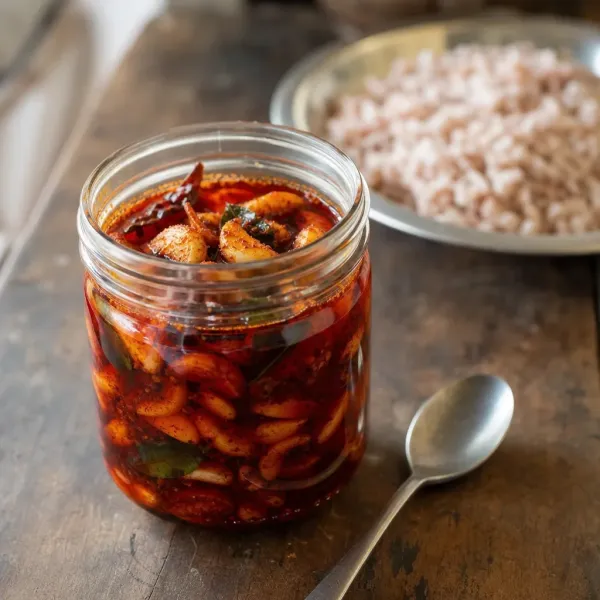
Veluthulli Achar
Traditional Malabar-style garlic pickle in coconut oil with Kashmiri chilli and vinegar. A fiery, long-keeping condiment from the Mappila kitchen.