

Karuveppilai Podi (Curry Leaf Powder) Recipe
Malayalam കറിവേപ്പില പൊടിTamil கறிவேப்பிலை பொடிKannada ಕರಿಬೇವಿನ ಪುಡಿTelugu కరివేపాకు పొడి
- Prep10 min
- Cook20 min
- ServesMakes roughly 150 g powder, enough for 1
- DifficultyEasy
- DietVegan
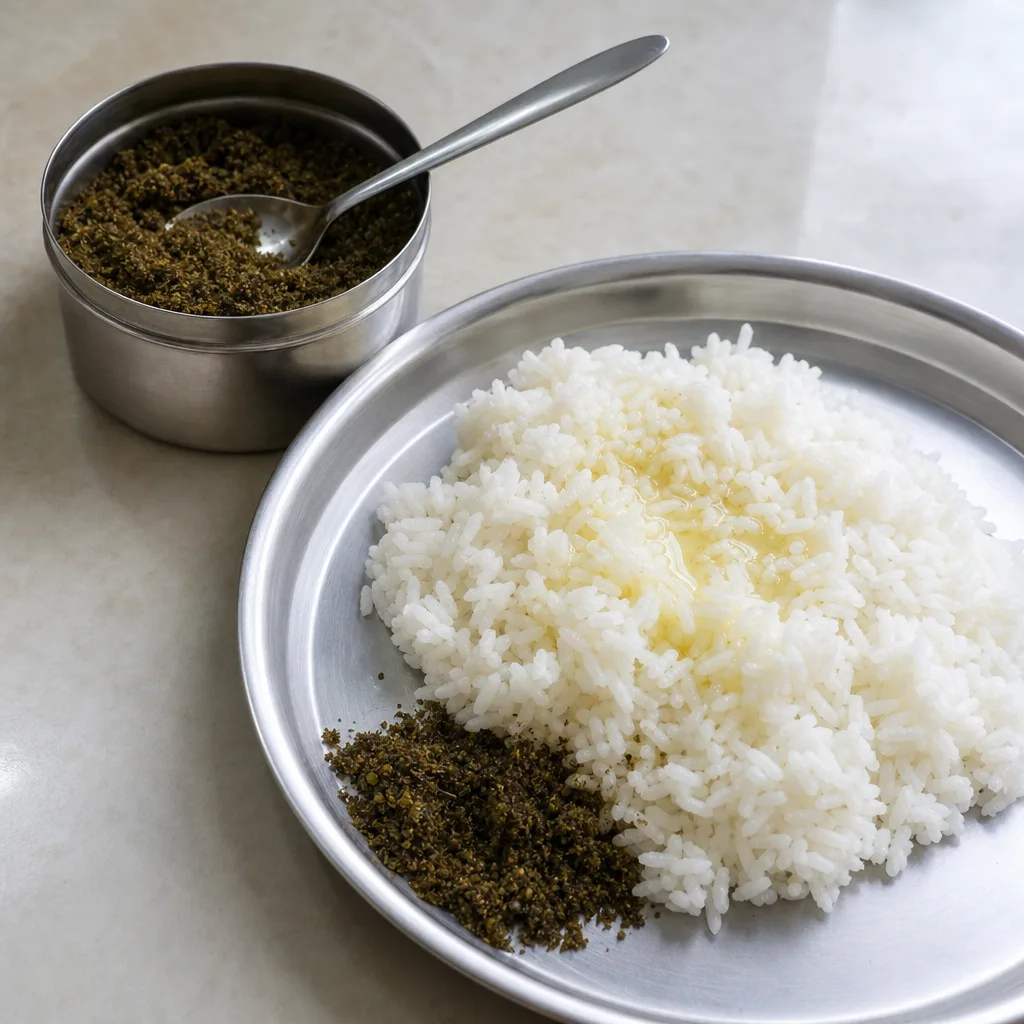
This is the powder you reach for when rice is plain and time is short. A spoonful mixed into hot rice with a thread of gingelly oil is a complete meal in itself, the kind that Iyer grandmothers kept in a steel dabba on the shelf alongside the other rice podis. It is not a condiment in the background sense; it is strong, aromatic and slightly bitter in a way that is entirely intentional.
The curry leaves must be bone dry before they go into the pan. Any moisture left on them will make them spit dangerously in the hot iron and leave the finished powder damp, which shortens its life and dulls the flavour. Spreading the washed leaves on a cloth the night before, or in the morning sun for an hour, is the right way to do it.
Households differ mainly on the ratio of urad dal to curry leaf and on how much pepper they use. Some families toast the dal and spices together from the start; others toast the curry leaves completely separately so they can control the heat more precisely, since the leaves scorch faster than the dal. The method here keeps them separate, which is slower but gives you more control.
Ingredients (serves Makes roughly 150 g powder, enough for 1)
For the podi
Method
Dry the curry leaves thoroughly
Spread the washed curry leaves in a single layer on a clean dry cloth the night before, or in morning sunlight for at least one hour. They must feel completely papery and dry to the touch before you begin. If you press a leaf and feel any softness or coolness, they are not ready. Do not skip this step; damp leaves will steam rather than toast.
Heat the pan
Place a heavy iron kadai or thick-bottomed pan over low heat. Let it warm for a full minute before anything goes in. This powder is made entirely on low heat; rushing it on high heat will burn the outside of the dal while the inside stays raw, and the curry leaves will go from green to black in seconds.
Toast the urad dal
Add the gingelly oil to the warm pan, then tip in the urad dal. Stir continuously on low heat for 5 to 7 minutes. The dal should turn a pale golden colour and smell nutty. Pick one up and press it between your fingers; it should feel completely dry and hard with no soft centre. Remove from the pan immediately and spread on a plate to cool.
Toast the peppercorns and chillies
In the same pan with the residual oil, add the black peppercorns and dry red chillies together on low heat. Stir for 2 to 3 minutes until the chillies darken slightly and the peppercorns begin to smell sharp and fragrant. Do not let the chillies blacken. Remove and add to the plate with the dal.
Toast the asafoetida
Add the piece of solid asafoetida to the dry pan on low heat and press it gently with the back of a spoon for about 30 seconds, turning once. It will puff slightly and turn a shade darker. Remove it quickly; it scorches fast and turns bitter. Add it to the cooling ingredients.
Toast the curry leaves
This is the most delicate step. Keep the heat on low and add the dried curry leaves to the dry pan. Stir constantly and keep your face back from the pan; even dry leaves can spit briefly. Toast for 3 to 4 minutes until the leaves are completely crisp and crumble to dust when you pinch one. The colour should be a deep olive green, not black. Remove immediately onto the plate and let everything cool to room temperature.
Cool completely before grinding
Do not grind while anything is warm. Warm ingredients release steam inside the grinder jar and the powder will clump and stick to the sides. Wait at least 15 minutes, or until the ingredients are at room temperature. Spread them out on the plate rather than piling them, so they cool faster.
Grind to a coarse powder
Transfer all the toasted ingredients to a dry mixer jar. Add salt. Grind in short pulses of 5 to 8 seconds each, stopping to check the texture between pulses. The finished podi should be slightly coarse, not a fine dust. Lift the jar and shake it between pulses; any large pieces will settle to the bottom so you can see what still needs grinding. Do not run the mixer continuously or the heat from the motor will warm the powder and affect the texture.
Check and finish
Taste and adjust salt. The powder should be intensely aromatic, slightly bitter from the curry leaf, with clear pepper heat. Spread it on a plate for 10 minutes to release any residual warmth from the grinding before storing.
Store correctly
Transfer to a completely dry airtight steel or glass container. Store at room temperature away from light and moisture. It keeps well for 3 to 4 weeks. If you live in a humid climate, store it in the refrigerator after the first week, though this slightly mutes the aroma.
How to serve
Hot plain rice with a generous pour of gingelly oil stirred through. Also eaten with idli or dosa, with a few drops of gingelly oil on the side for dipping.
Served with: Hot plain rice with a generous pour of gingelly oil stirred through. Also eaten with idli or dosa, with a few drops of gingelly oil on the side for dipping.
Cook's tips
Drying the leaves
If you are in a hurry, spread the washed leaves on a baking tray and place them in an oven with only the pilot light on, or in the lowest possible setting, for 20 minutes with the door slightly ajar. Do not use microwave drying for this; it changes the flavour of the leaf.
Solid versus powdered asafoetida
Powdered asafoetida sold in small tins often contains wheat flour as a filler. The solid lump form (available in most South Indian grocery shops) is purer and stronger. If you can only find the powder, reduce the quantity to a pinch and add it directly to the dal while it is toasting rather than toasting it separately.
The grinder jar must be dry
Even a single drop of water in the mixer jar will cause the powder to clump into a paste around the blade. Wipe the jar with a dry cloth and run it empty for 10 seconds to remove any moisture before adding the ingredients.
Adjusting heat level
Six Gundu chillies gives medium heat. Reduce to four for a milder podi, or increase to eight and add an extra half teaspoon of pepper if your household likes it sharp. Byadagi chillies give a deeper red colour and less heat than Gundu; either is correct.
Regional variations
Chettiar version uses more black pepper and no dal; Andhra households add dried coconut and more chilli; some Tamil Vellalar families add a small quantity of chana dal alongside the urad.
Glossary
- Karuveppilai கறிவேப்பிலை
- Curry leaf (Murraya koenigii); the Tamil name used across Tamil Nadu.
- Podi பொடி
- Dry powder or spice blend, typically served with rice or as a dipping powder for idli and dosa.
- Urad dal உளுந்து
- Black gram, husked and split or whole; the base of many Tamil rice podis and the primary protein element here.
- Gingelly oil நல்லெண்ணெய்
- Cold-pressed sesame oil used in Tamil Nadu for cooking and finishing; has a distinct nutty flavour different from the roasted sesame oil used in East Asian cooking.
- Hing பெருங்காயம்
- Asafoetida; dried resin used in very small quantities as a digestive and flavouring in Brahmin cooking where onion and garlic are not used.
- Kadai கடாய்
- A round-bottomed iron or steel pan used for dry roasting and frying; the thick iron version retains heat evenly and is preferred for toasting spices.
Two things decide whether this podi works: the curry leaves must be completely dry before they go into the pan, and the entire process must happen on low heat. Rush either of those and you get a bitter, unevenly toasted powder that smells of scorched dal rather than the deep, clean fragrance of properly toasted curry leaf. Everything else is adjustable.
More Chutneys, Podis & Pickles recipes
Pudina Chutney
Traditional Tamil Brahmin pudina chutney with fresh coconut, green chilli and tamarind, finished with a gingelly oil tadka. Ready in 15 minutes.
Beerakaya Pachadi
Traditional Coastal Andhra beerakaya pachadi: ridge gourd cooked in gingelly oil, ground coarse with coconut and cumin, finished with a mustard tadka…
Naranga Achar
Traditional Kerala lemon pickle with a 10-day salt cure, coconut oil tempering, and fenugreek-chilli masala. Step-by-step household method from Trava…
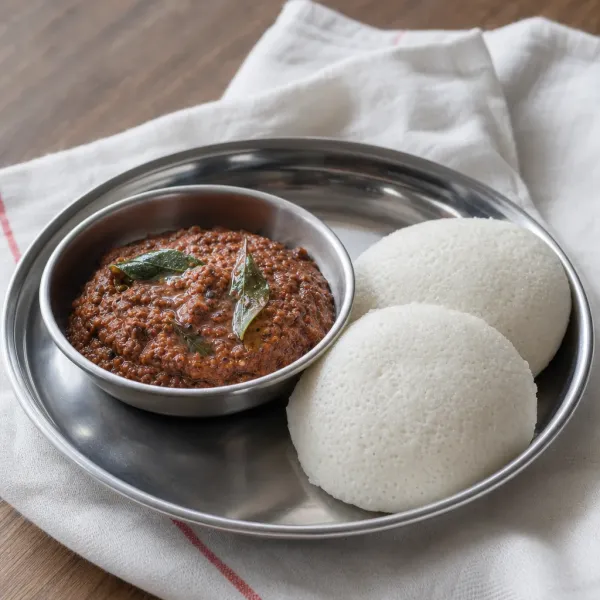
Kathirikai Chutney
Traditional Tamil Brahmin roasted brinjal chutney with gingelly oil tempering. No onion, no garlic. Ready in 30 minutes. Serve with idli or dosa.
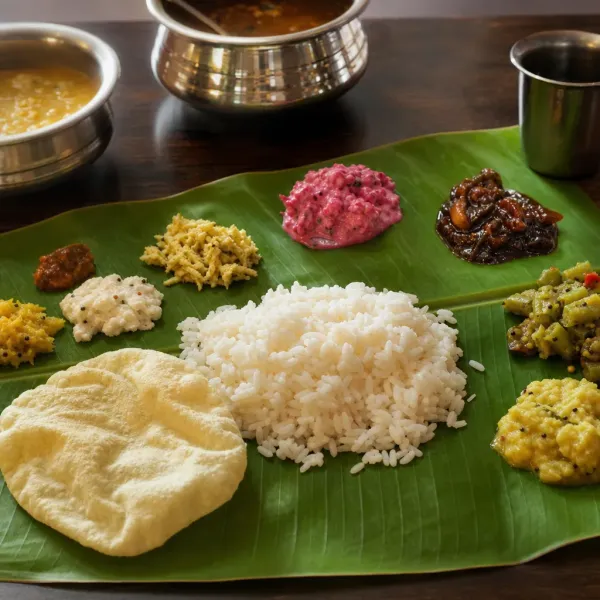
Puli Inji
Traditional Kerala puli inji recipe for sadya – fresh ginger and tamarind cooked to a thick, dark condiment with jaggery and coconut oil tempering.
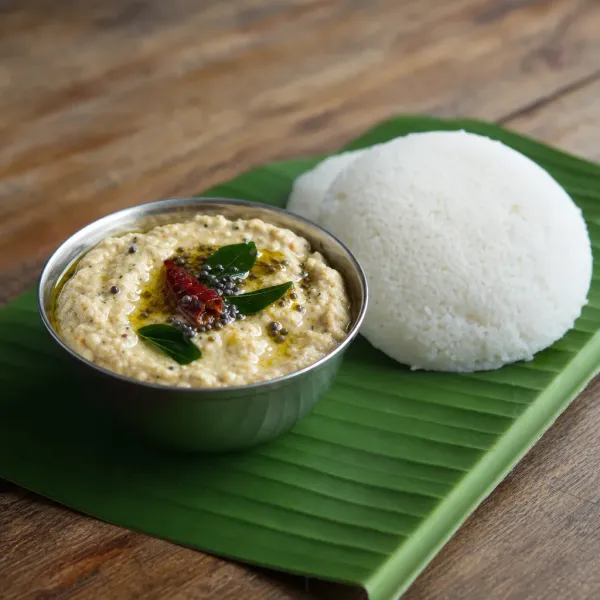
Andhra Peanut Chutney (Pallī Pachchadi)
Authentic Andhra pallī pachchadi: dry-roasted peanuts ground thick with Guntur chillies, tamarind and garlic, finished with a gingelly oil tempering.