

Uppu Seedai Recipe
Malayalam ഉപ്പു സീഡൈTamil உப்பு சீடைKannada ಉಪ್ಪು ಸೀಡೆTelugu ఉప్పు సీడై
- Prep30 min
- Cook40 min
- Serves6 to 8 (makes roughly 60 small balls)
- DifficultyMedium
- DietVegetarian
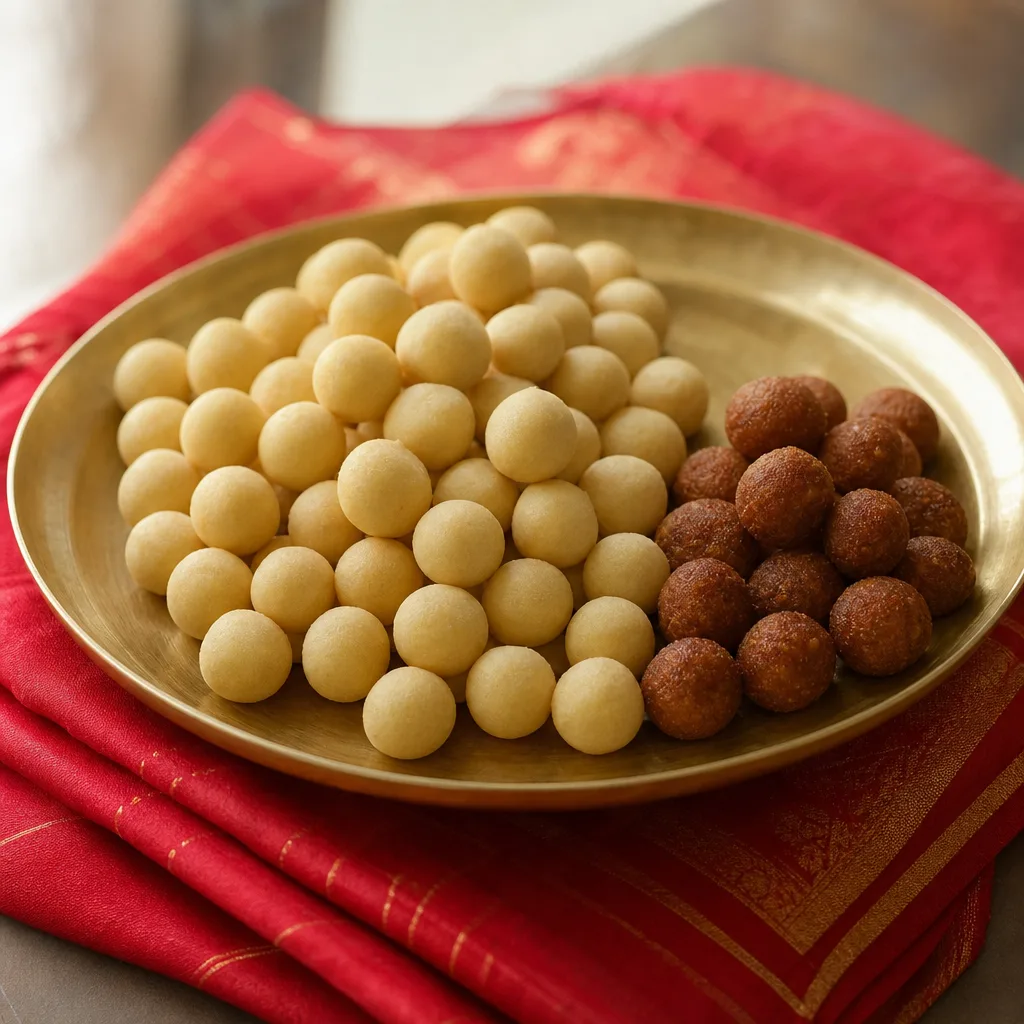
Uppu seedai is one of two seedais made in Tamil Iyer homes on Gokulashtami, the other being the sweet vella seedai. The two are always made together and offered as neivedhyam before the family eats them. The savoury version is small, round, pale golden, and completely hollow inside after frying — that hollow is the sign that the dough was right and the oil was at the correct temperature.
The dough is made from rice flour that has been roasted at home, not the raw store-bought variety. That roasting step is what most people skip when seedai bursts in the oil, and it is the step that cannot be skipped. Urad dal flour is roasted separately and added in a small quantity to bind. Fresh coconut, butter, white sesame seeds, cumin, and asafoetida go in; nothing else. The balls are shaped small — no bigger than a large marble — because a bigger ball holds steam and will crack open in the oil.
Households differ on two points: some add a pinch of black pepper in addition to cumin, and some use slightly more butter to get a softer bite. Both are genuine. What does not vary is the roasting of the flour and the size of the ball.
Ingredients (serves 6 to 8 (makes roughly 60 small balls))
For the dough
For frying
Method
Roast the rice flour
Spread the raw rice flour in a wide, dry iron or non-stick pan over low-medium heat. Stir continuously with a flat spatula for 8 to 10 minutes. The flour should feel dry and sandy, smell faintly of roasted grain, and leave no raw starchy smell. It must not brown. Spread it on a wide plate and let it cool completely before you use it — even slightly warm flour will melt the butter and make the dough greasy.
Roast the urad dal flour
In the same dry pan, roast the urad dal flour over low heat for 3 to 4 minutes, stirring constantly. It will turn very faintly cream-coloured and smell nutty. Tip it onto the same plate as the rice flour and let it cool.
Combine the dry ingredients
Once both flours are fully cool, sift them together into a wide mixing bowl. Add the salt, asafoetida, cumin seeds, sesame seeds, and grated coconut. Mix well with your fingers so the coconut and seeds are evenly distributed through the flour.
Work in the butter
Add the room-temperature butter in small pieces. Rub it into the flour mixture using your fingertips, the way you would for a short pastry, until the mixture resembles coarse breadcrumbs and holds together briefly when pressed. Do not rush this — the butter must coat the flour evenly or the seedai will not be crisp.
Add water and form the dough
Add water a tablespoon at a time, mixing after each addition. You need a dough that comes together cleanly, is not sticky, and does not crack at the edges when you press a small piece. It should feel like firm, smooth playdough. Stop adding water the moment it holds together — a wet dough will burst in the oil.
Rest the dough
Cover the dough with a damp cloth and leave it for 10 minutes. This short rest lets the flour fully absorb the water and makes the dough easier to roll without cracks.
Shape the balls
Pinch off small portions of dough and roll them between your palms into smooth balls about 2 cm in diameter — roughly the size of a large marble. The surface must be completely smooth with no cracks; any crack will let oil in and the ball will burst. Lay the shaped balls on a dry plate in a single layer. Do not stack them.
Dry the shaped balls briefly
Leave the balls uncovered at room temperature for 10 to 15 minutes. This short air-drying firms the surface slightly and reduces the chance of bursting. In a humid kitchen, a ceiling fan running overhead helps.
Heat the oil
Pour the oil into a deep, wide kadai and heat it over medium flame. The oil is ready when a small piece of dough dropped in rises slowly to the surface within 4 to 5 seconds. If it rises instantly, the oil is too hot and the outside will colour before the inside cooks through. If it sinks and sits, the oil is too cool and the seedai will absorb oil.
Fry in small batches
Slide 10 to 12 balls into the oil at a time. Do not crowd the kadai. Keep the flame on medium throughout. The balls will sink briefly, then rise and begin to rotate slowly as they fry. Fry for 12 to 15 minutes, turning occasionally, until they are pale golden all over and the bubbling around them has almost completely subsided. The near-silence tells you the moisture inside is gone.
Drain and cool
Lift the seedai out with a slotted spoon and drain on a plate lined with paper. Do not taste one immediately — they are soft when hot and will harden and become hollow as they cool. Let them cool for at least 15 minutes before you judge the texture.
Store once completely cool
Once fully cool and crisp, store in an airtight tin. They keep well for 4 to 5 days at room temperature. If they soften, spread them on a tray and warm in a low oven (150°C) for 5 minutes.
How to serve
Vella seedai (sweet jaggery rice balls made in the same Gokulashtami batch). Both are offered as neivedhyam together and then eaten as a festival snack.
Served with: Vella seedai (sweet jaggery rice balls made in the same Gokulashtami batch). Both are offered as neivedhyam together and then eaten as a festival snack.
Cook's tips
Why seedai bursts in the oil
The two most common causes are under-roasted flour (which still holds raw moisture) and cracks in the shaped balls (which let steam escape violently). Check both before the oil goes on.
Store-bought rice flour
You can use store-bought raw rice flour, but you must still roast it yourself. The flour sold as 'idiyappam flour' is already roasted and will make the dough too dry and crumbly — do not use it here.
Butter temperature matters
Cold butter will not rub in evenly; melted butter will make the dough oily and the seedai greasy. Leave the butter out for an hour before you start.
Frying temperature drift
After the first batch, the oil temperature rises. Lower the flame slightly before each subsequent batch so the seedai do not colour too fast on the outside while remaining raw inside.
Coconut moisture varies
Fresh coconut from a very watery nut will add more moisture to the dough. Add water even more cautiously on those days. The dough should never feel wet to the touch.
Regional variations
Vella seedai (sweet version with jaggery) is made alongside uppu seedai in the same Gokulashtami batch; Karnataka Brahmin households make a similar ball called chakkuli kodbale though the shaping and fat differ.
Glossary
- Seedai சீடை
- Small deep-fried rice flour balls, either savoury (uppu) or sweet (vella), made especially for Gokulashtami in Tamil Brahmin households.
- Perungayam பெருங்காயம்
- Asafoetida; the dried resin used in small quantities in Tamil Brahmin cooking as a digestive and flavouring, replacing onion and garlic which are avoided.
- Neivedhyam நைவேத்யம்
- Food offered to the deity before the household eats it; a central part of festival cooking in Hindu homes.
- Pachari പച്ചരി
- Raw (unboiled) rice; in this context, the raw rice flour ground from it, distinct from parboiled rice flour.
- Kadai கடாய்
- A deep, round-bottomed iron or steel wok used for deep-frying across South Indian kitchens.
Two things decide whether uppu seedai works: the flour must be roasted until all raw moisture is gone, and every ball must be rolled completely smooth with no surface cracks. Get those two right and the rest follows — the balls will hollow out, turn crisp, and keep for days.
More Snacks recipes
Murukku: Tamil Nadu Brahmin Household Recipe
Crisp rice flour murukku from a Tamil Iyer kitchen: the traditional ratio, the right dough consistency, and how to fry it pale gold all the way throu…
Keerai Vadai
Traditional Tamil Iyer keerai vadai made with coarsely ground chana dal, arai keerai, shallots and fennel. Crisp, vegan, fried in gingelly oil.
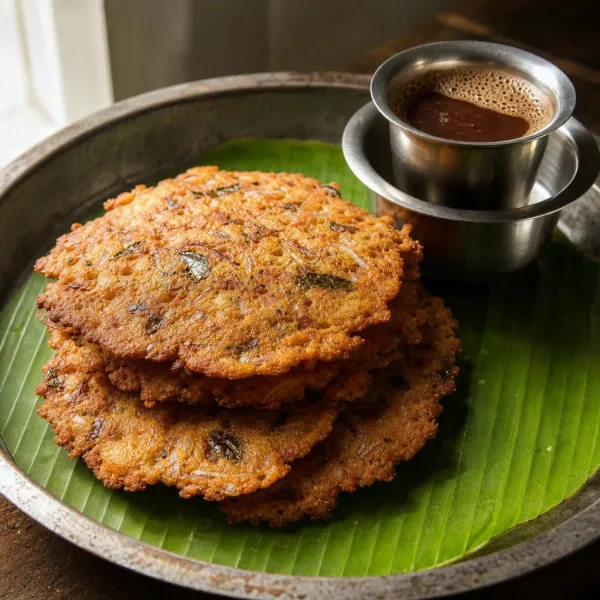
Maddur Vade
Authentic Maddur vade recipe from Mandya, Karnataka — thin, crisp rice flour and shallot discs fried to deep gold, the way they were made at Maddur s…
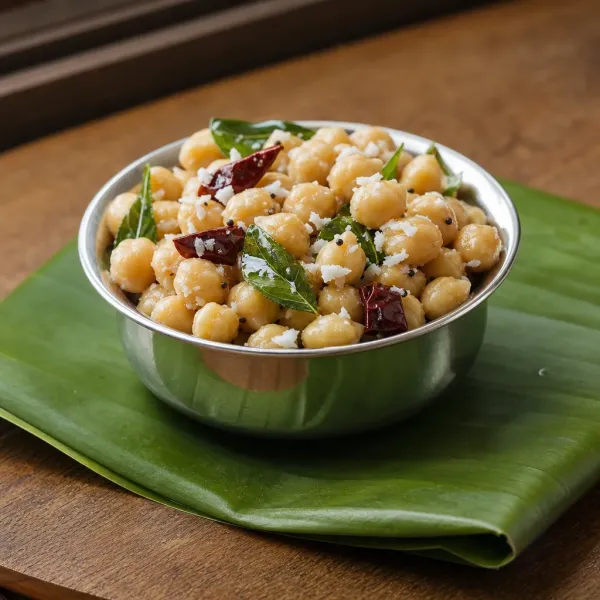
Kondakadalai Sundal
Traditional Tamil Brahmin kondakadalai sundal for Navratri. White chickpeas tempered with mustard, urad dal, dried chilli, and finished with fresh co…
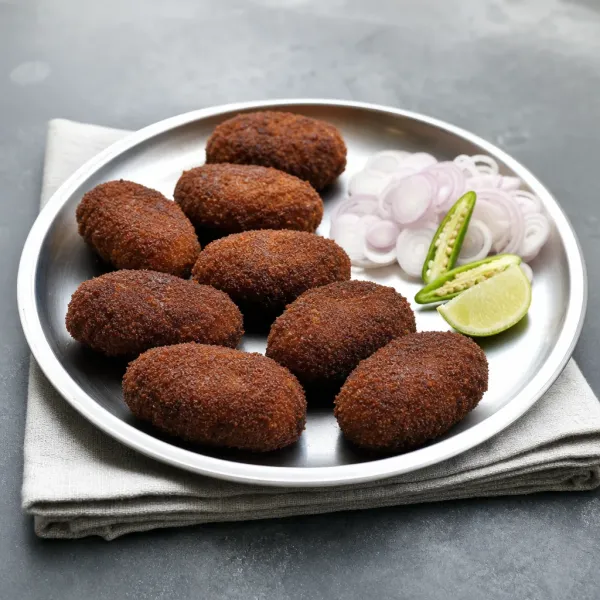
Kerala Beef Cutlet
Traditional Kerala Nasrani beef cutlet with shallots, black pepper and coconut oil. Crisp breadcrumb crust, soft spiced filling. Step-by-step method.