

Kottayam Meen Vevichathu Recipe
Malayalam കോട്ടയം മീൻ വേവിച്ചത്Tamil கோட்டயம் மீன் வேவிச்சதுKannada ಕೊಟ್ಟಯಂ ಮೀನ್ ವೇವಿಚ್ಚತ್Telugu కొట్టాయం మీన్ వేవిచ్చత్
- Prep20 min
- Cook35 min
- Serves4
- DifficultyEasy
- DietNon-vegetarian
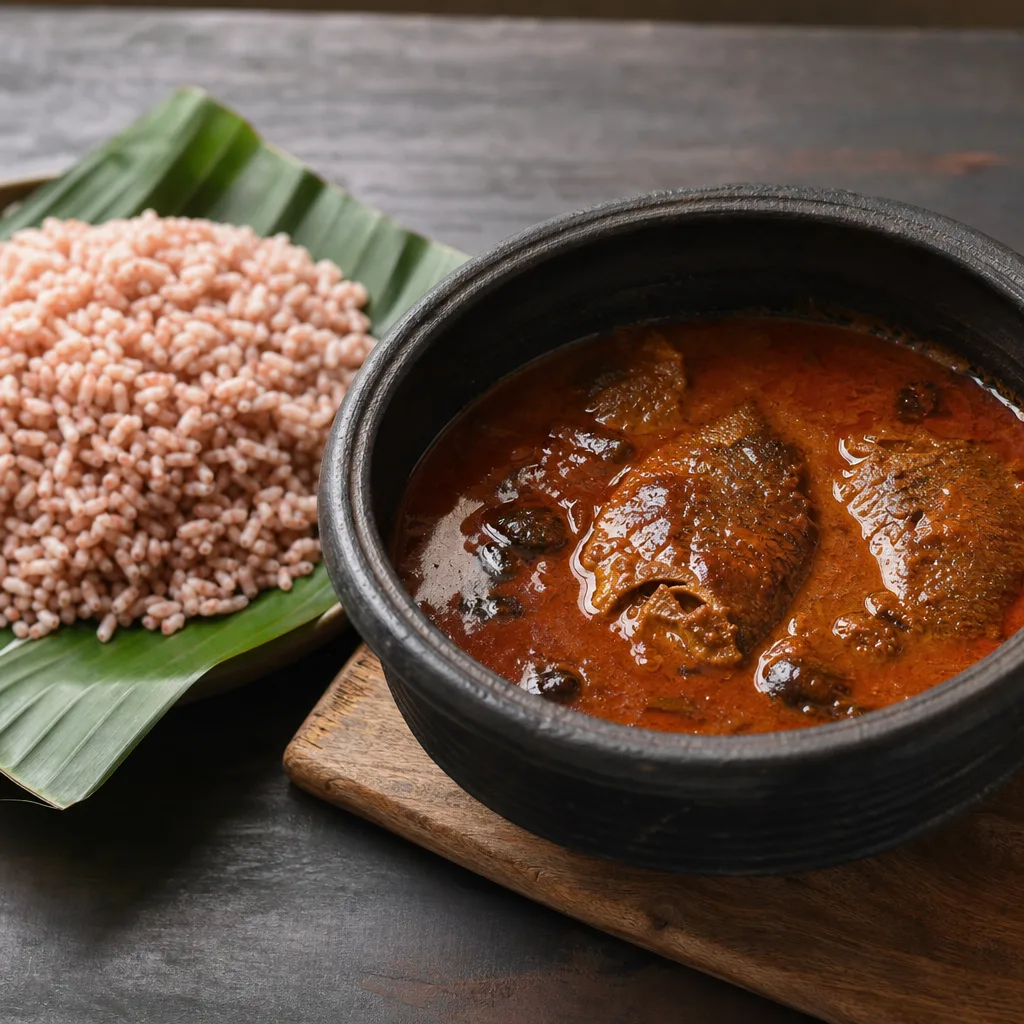
Meen Vevichathu is the fish curry that defines the Kottayam Syrian Christian table. It is a deep brick-red, intensely sour curry with no coconut at all — no milk, no paste, no grating. The sourness comes entirely from kudampuli, the dried black rind of the Malabar tamarind, and the colour from Kashmiri chilli, which gives heat without turning the gravy raw-red. The curry is thin and oily in the right way: coconut oil floats on top, and the kudam puli pieces sit at the bottom of the earthenware pot.
This curry is famously better the next day, and better still on the third. Households in Kottayam often cook a large batch on Sunday and eat it through the week. The fish most commonly used is karimeen (pearl spot), which holds its shape beautifully, but ayala (mackerel), kora (sea bass), and netholi (anchovies) all appear in different households. The pot matters: a manchatti, the dark unglazed Kerala earthenware, is not optional in traditional kitchens. It holds heat evenly and adds a faint mineral note that a steel vessel cannot replicate.
The method is simple and the order is fixed. The kudampuli soaks first. The shallots and green chillies go into hot coconut oil, then the dry spices bloom briefly, then the soaked kudampuli and its water go in, then the fish. No stirring once the fish is in — only a gentle swirl of the pot. Rushing the final simmer is the one mistake that costs you the depth the dish is known for.
Ingredients (serves 4)
Fish
Souring agent
Aromatics
Spices
Fat and liquid
Method
Soak the kudampuli
Place the kudampuli pieces in a small bowl and pour 200 ml of warm water over them. Leave for at least 15 minutes. The water will turn pale yellow and smell sharply sour. Do not discard this water — it goes into the curry. If your kudampuli is very dry and hard, soak for 30 minutes.
Heat the manchatti
Set the earthenware pot over a medium flame. Pour in the coconut oil and let it heat until it shimmers — about 2 minutes. An earthenware pot takes longer to heat than steel, so be patient. Do not let the oil smoke.
Fry the fenugreek seeds
Add the fenugreek seeds to the hot oil. They will sputter and turn a shade darker in about 30 seconds. Watch carefully — burnt fenugreek makes the whole curry bitter. As soon as they colour, move to the next step immediately.
Soften the shallots, garlic, ginger and chillies
Add the sliced shallots, crushed garlic, ginger matchsticks, green chillies and curry leaves all at once. Stir and cook over medium heat for 8 to 10 minutes, until the shallots are soft, translucent and just beginning to turn gold at the edges. Do not rush this — undercooked shallots leave a raw bite in the finished curry.
Bloom the dry spices
Reduce the heat to low. Add the Kashmiri chilli powder, turmeric and black pepper. Stir continuously for 1 to 2 minutes, coating the shallot mixture. The spices should smell cooked and fragrant, not raw. If the pot looks dry, add a tablespoon of the kudampuli soaking water to prevent scorching.
Add the kudampuli and its water
Pour in the kudampuli along with all its soaking water and the additional 250 ml of plain water. Add salt. Stir, raise the heat to medium, and bring to a gentle boil. Let it simmer for 5 minutes so the sourness from the kudampuli begins to open into the gravy.
Slide in the fish
Lower the fish pieces gently into the simmering gravy in a single layer. Tilt and swirl the pot to coat the fish — do not use a spoon, which will break the pieces. The gravy should come halfway up the fish; if it does not, add a little more water.
Simmer without disturbing
Cover the pot and cook on a low to medium flame for 12 to 15 minutes. Swirl the pot once or twice but do not stir. The fish is done when it is opaque all the way through and the oil has separated and is floating on the surface. The gravy will have deepened to a dark brick red.
Rest before serving
Turn off the heat and leave the curry uncovered for at least 10 minutes before serving. This resting time lets the fish absorb the sour gravy. If you can wait until the next day, do — the flavour improves markedly overnight.
How to serve
Kappa (boiled tapioca) is the classic pairing in Kottayam — the starchy plainness of the kappa against the sharp, oily curry is the point. Also eaten with matta rice (Kerala red rice) or with appam.
Served with: Kappa (boiled tapioca) is the classic pairing in Kottayam — the starchy plainness of the kappa against the sharp, oily curry is the point. Also eaten with matta rice (Kerala red rice) or with appam.
Cook's tips
Which fish to use
Karimeen is the prestige choice and holds its shape perfectly. Ayala (mackerel) is more commonly used on weekdays and is equally good. Avoid very delicate white fish — they break apart before the simmer is done.
Kudampuli quantity and sourness
Five to six pieces gives a pronounced sourness, which is correct for this curry. If your kudampuli is very fresh and pungent, start with four pieces and taste the gravy before adding the fish. You can add more soaked kudampuli mid-cook but you cannot take sourness away.
The manchatti is not optional
An earthenware pot distributes heat gently and prevents the bottom from scorching during the long simmer. If you must use steel, keep the flame lower than you think necessary and watch the bottom carefully. The curry will still taste good but will lack the faint earthiness the pot contributes.
Storing and reheating
Store in the manchatti itself, covered, at room temperature overnight if the kitchen is not too hot, or refrigerate. To reheat, warm gently over a low flame and swirl the pot — do not boil hard or the fish will tighten and dry out.
Kashmiri chilli and heat
Two and a half tablespoons of Kashmiri chilli powder sounds alarming but this variety is mild and primarily a colouring agent. The heat in this curry comes mostly from the green chillies and black pepper. If you use regular red chilli powder, reduce to one teaspoon and accept that the colour will be less vivid.
Regional variations
Mappila meen curry from Malabar uses tamarind or kudampuli with coconut milk; Thiruvananthapuram-style fish curry may include ground coconut; some Kottayam households add a small piece of ginger, which others omit entirely.
Glossary
- Kudampuli കുടംപുളി
- Dried rind of Garcinia cambogia (Malabar tamarind); the souring agent specific to Kerala fish curries, especially in the south and central regions.
- Manchatti മൺചട്ടി
- Unglazed Kerala earthenware cooking pot; used for fish curries and rice dishes; retains heat gently and evenly.
- Karimeen കരിമീൻ
- Pearl spot fish (Etroplus suratensis); the state fish of Kerala, found in backwaters and prized for its firm, flavourful flesh.
- Chuvannulli ചുവന്നുള്ളി
- Small red shallots used throughout Kerala cooking; sharper and more aromatic than large onions.
- Uluva ഉലുവ
- Fenugreek seeds; used whole in small quantities in Kerala fish curries to add a faint bitterness that balances sourness.
- Matta rice മട്ട അരി
- Kerala red parboiled rice; nutty, slightly chewy, and the traditional everyday rice of central and southern Kerala.
Two things decide this curry: the quality and quantity of the kudampuli, and the patience to simmer low and slow without stirring. Get those right and the rest follows. The brick-red colour, the oil floating on top, the sour-hot gravy that soaks into the fish — all of it comes from those two things done properly.
More Seafood recipes
Meen Thalai Kuzhambu
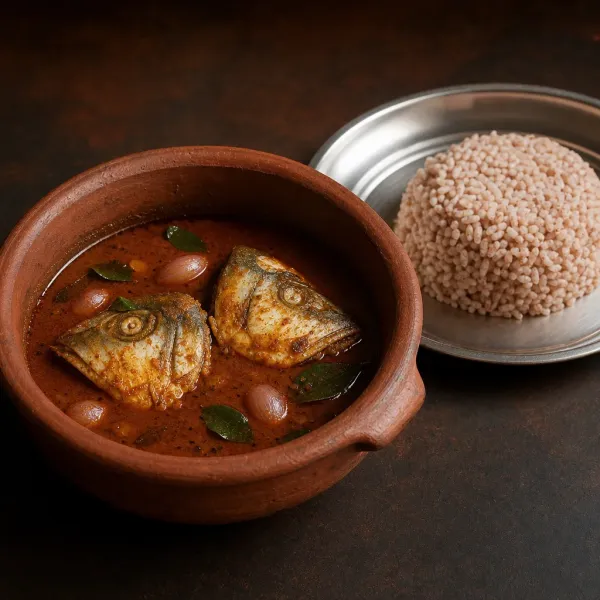
Traditional Chettinad fish head curry with kalpasi, marathi mokku, gingelly oil and tamarind. Household recipe from the Chettiar kitchen of Tamil Nad…
Kerala Nasrani Fish Cutlet
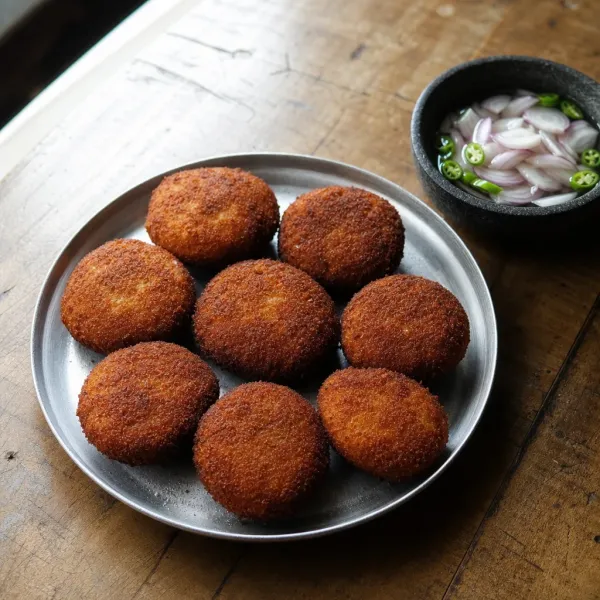
Traditional Kerala Nasrani fish cutlet with seer fish, shallots and coconut oil. Step-by-step method for a crisp, golden crust that holds.
Choora Curry
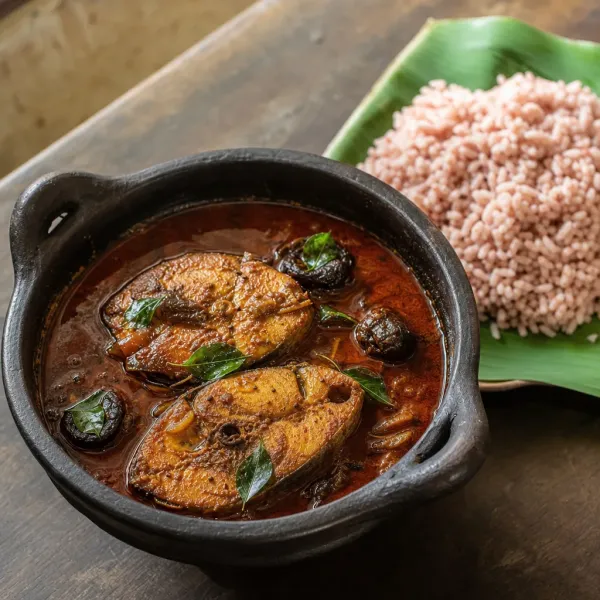
Traditional Mappila tuna curry from Malabar, made with kudampuli, fresh coconut paste, and shallots in coconut oil. Step-by-step home recipe.
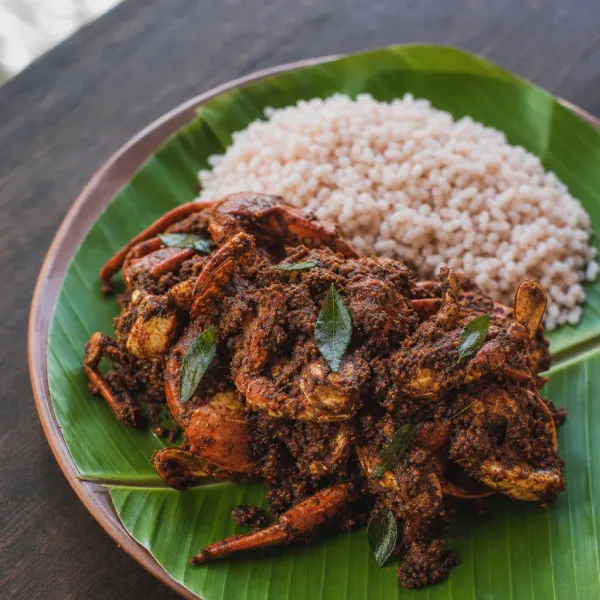
Kerala Crab Roast
Traditional dry Kerala crab roast from a Nasrani Travancore kitchen. Mud crab slow-cooked with shallots, coconut oil, and hand-ground spices until th…
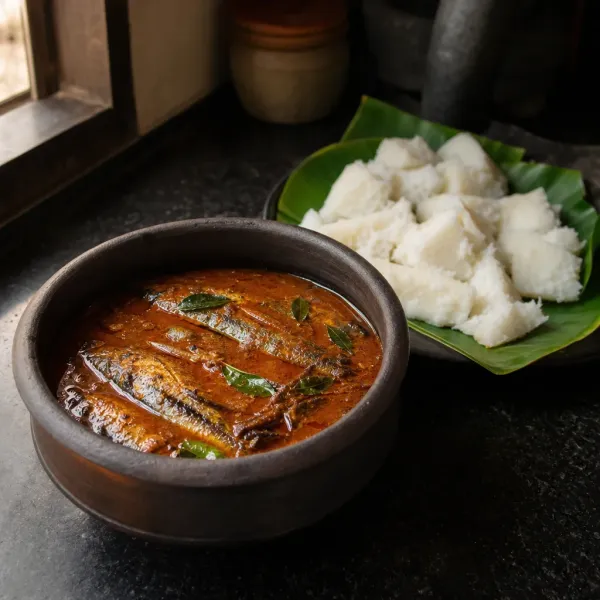
Chala Curry
Traditional Kerala sardine curry with kudampuli and fresh coconut paste, cooked in a manchatti. Authentic coastal recipe with kappa or matta rice.
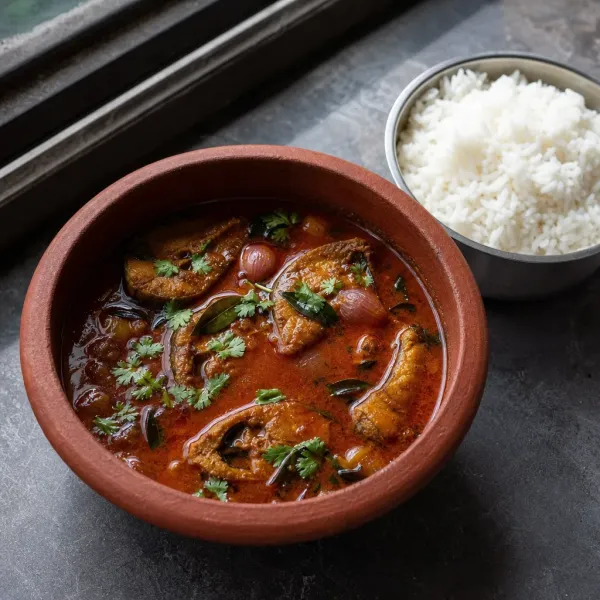
Chepala Pulusu
Traditional Andhra chepala pulusu made with whole shallots, tamarind, and firm fish simmered in gingelly oil. No tomato. Coastal Andhra household met…