

Choora Curry Recipe
Malayalam ചൂര കറിTamil சூரை மீன் கறிKannada ಚೂರ ಮೀನು ಕರಿTelugu చూర చేప కూర
- Prep20 min
- Cook40 min
- Serves4
- DifficultyMedium
- DietNon-vegetarian
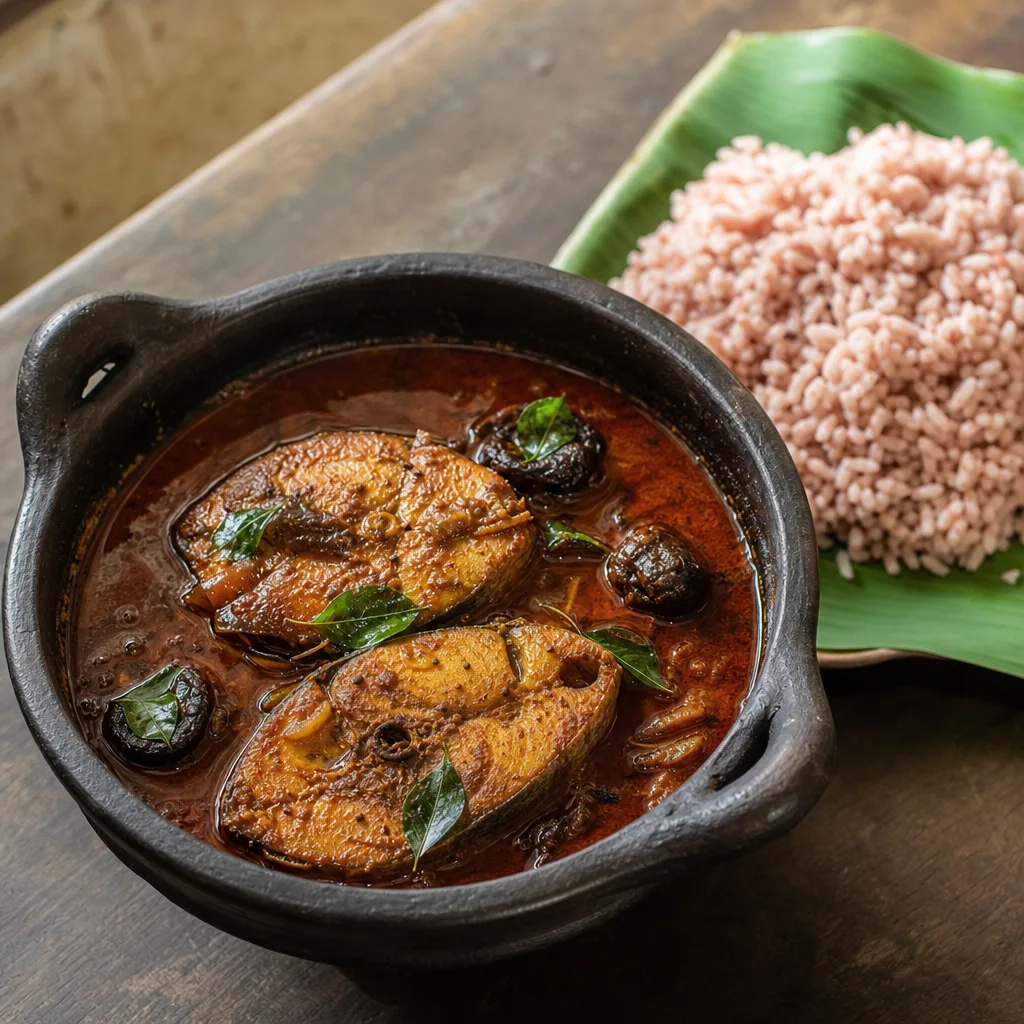
Choora is skipjack or yellowfin tuna, the fish that Malabar's fishing communities and Mappila households have cooked for generations. Cut thick, it can hold a long braise without falling apart, and it takes spice well. This curry is cooked in coconut oil, soured with kudampuli, and finished with a ground coconut paste that thickens the gravy without making it sweet.
Mappila cooks in Kozhikode and Kannur typically grind fresh coconut with fennel seeds and a little turmeric for the paste, and they keep the gravy fairly dark and well-reduced rather than loose. The curry is eaten the same day it is made, though many households say it improves after the fish sits in the gravy for an hour off the heat.
Some families add a small piece of ginger to the coconut paste; others add it whole to the tempering. The shallots are always shallots, never onion, and the oil is always coconut oil. The kudampuli is soaked before it goes in so the soaking water carries some of its sourness into the gravy.
Ingredients (serves 4)
For the fish
For soaking
For the ground coconut paste
For the curry base
Method
Rub and rest the fish
Rub the tuna steaks with ½ tsp turmeric and salt. Set aside while you prepare everything else. This firms the surface slightly and the turmeric draws out any strong smell.
Soak the kudampuli
Place the kudampuli pieces in 100 ml warm water. Leave them for at least 15 minutes. The water will turn pale amber and smell sour. Keep both the pieces and the soaking water; both go into the curry.
Grind the coconut paste
Put the grated coconut, fennel seeds and ¼ tsp turmeric in a wet grinder or small mixer jar. Add 3 to 4 tbsp water and grind to a smooth, thick paste. It should have no gritty texture when you rub a little between your fingers. Set aside.
Temper the spices
Heat the coconut oil in a wide, heavy-bottomed vessel, ideally a manchatti (clay pot), over medium heat. When the oil shimmers, add the mustard seeds and let them splutter fully. Add the dried red chillies and curry leaves and stand back; they will crackle. Give it ten seconds.
Cook the shallots, ginger and garlic
Add the sliced shallots and cook over medium heat, stirring often, for 8 to 10 minutes until they are deep golden and soft. Do not rush this; underdone shallots leave a raw edge in the gravy. Add the ginger and garlic and cook for another 2 minutes until fragrant.
Add the green chillies and dry spice powders
Add the slit green chillies, then the Kashmiri chilli powder, coriander powder and black pepper powder. Stir constantly for 1 minute over medium-low heat. The powders should coat the shallots and smell toasted, not raw. If the pan looks dry, add a splash of water to prevent burning.
Add the kudampuli and water
Pour in the kudampuli soaking water and add the soaked kudampuli pieces. Add 250 ml plain water. Stir, scraping up anything stuck to the base. Taste the liquid; it should be noticeably sour and well-seasoned. Add salt now.
Bring to a simmer and add the fish
Bring the liquid to a steady simmer over medium heat. Slide the tuna steaks in gently in a single layer. Do not stir; tuna breaks if you move it too much. Spoon the gravy over the top of each piece. Cover and cook for 8 minutes.
Stir in the coconut paste
Uncover and add the ground coconut paste, diluting it with 50 ml water so it pours easily. Tilt the pan and spoon the gravy gently to incorporate the paste without breaking the fish. The gravy will thicken within 2 to 3 minutes and turn a deeper, richer colour.
Simmer to finish
Cook uncovered over medium-low heat for another 8 to 10 minutes. The gravy should coat the back of a spoon and the oil will begin to show at the edges. Taste and adjust salt. The kudampuli pieces are not eaten but stay in the pot.
Rest before serving
Turn off the heat and leave the curry covered for at least 15 minutes before serving. The fish continues to absorb the gravy and the flavour deepens. If you can wait an hour, it is better still.
How to serve
Matta rice (red parboiled rice); or pathiri (thin rice flour flatbread) for a Mappila meal; or kappa (tapioca) boiled and mashed.
Served with: Matta rice (red parboiled rice); or pathiri (thin rice flour flatbread) for a Mappila meal; or kappa (tapioca) boiled and mashed.
Cook's tips
Which tuna to use
Skipjack (katsuwonus pelamis) is the traditional choora of the Malabar coast. Yellowfin works well too. Avoid canned tuna entirely; the texture collapses in a long braise.
Manchatti versus steel pan
A clay pot holds heat gently and the kudampuli does not react with it. If you use a steel or aluminium pan, watch the heat more carefully; the gravy reduces faster and can catch at the base.
Kudampuli sourness varies
Dried kudampuli varies in potency. Taste the gravy after adding the soaking water. If it is not sour enough, add one more piece. If it is very sour, remove a piece early.
Do not substitute tamarind
Tamarind gives a different, fruitier sourness and a darker colour. It is not the same. Kudampuli is sold in Kerala grocery stores and online; it is worth sourcing.
Storage
This curry keeps well for one day at room temperature in a cool kitchen, or two days refrigerated. Reheat gently; boiling again toughens the fish.
Regional variations
Nasrani households in central Kerala make a similar tuna curry with kudampuli and coconut milk but without the whole spices and fennel that mark the Mappila version; coastal Tamil Nadu fishermen communities make a seerfish kuzhambu with tamarind and no coconut.
Glossary
- Choora ചൂര
- Skipjack or yellowfin tuna; a firm, dark-fleshed fish common along the Kerala coast.
- Kudampuli കുടംപുളി
- Dried rind of Garcinia cambogia, the souring agent specific to Kerala fish curries; also called Malabar tamarind.
- Manchatti മൺചട്ടി
- Unglazed clay cooking pot traditional in Kerala kitchens; conducts heat gently and imparts a subtle earthiness.
- Chuvannulli ചുവന്നുള്ളി
- Small red shallots; the standard allium in Kerala cooking, sharper and more aromatic than large onions.
- Perumjeerakam പെരുംജീരകം
- Fennel seeds; used in Mappila cooking to flavour both meat and fish dishes.
- Kappa കപ്പ
- Tapioca (cassava), boiled or mashed; a common accompaniment to fish curry in Kerala.
- Pathiri പത്തിരി
- Thin unleavened flatbread made from rice flour; a staple bread in Mappila households.
Two things decide this curry: the kudampuli and the patience with the shallots. Get the sourness right by tasting the gravy before the fish goes in, and cook the shallots all the way to deep gold so they dissolve into the base. Everything else follows from those two steps.
More Seafood recipes
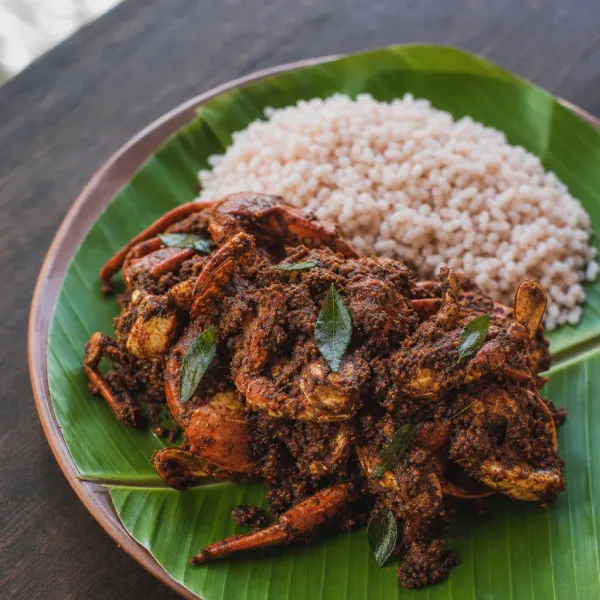
Kerala Crab Roast
Traditional dry Kerala crab roast from a Nasrani Travancore kitchen. Mud crab slow-cooked with shallots, coconut oil, and hand-ground spices until th…
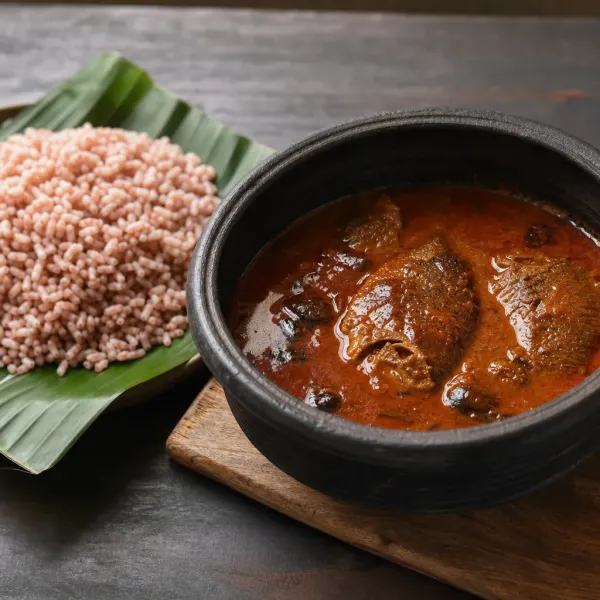
Kottayam Meen Vevichathu
Authentic Kottayam-style red fish curry with kudampuli, no coconut. Traditional Nasrani recipe cooked in a manchatti with Kashmiri chilli and coconut…
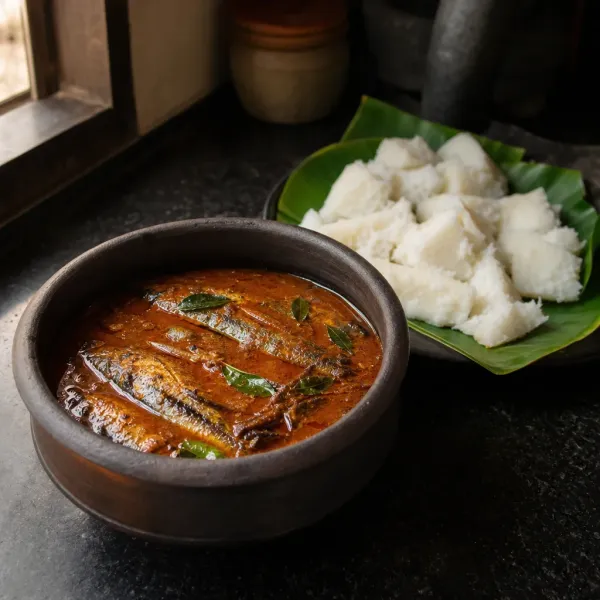
Chala Curry
Traditional Kerala sardine curry with kudampuli and fresh coconut paste, cooked in a manchatti. Authentic coastal recipe with kappa or matta rice.
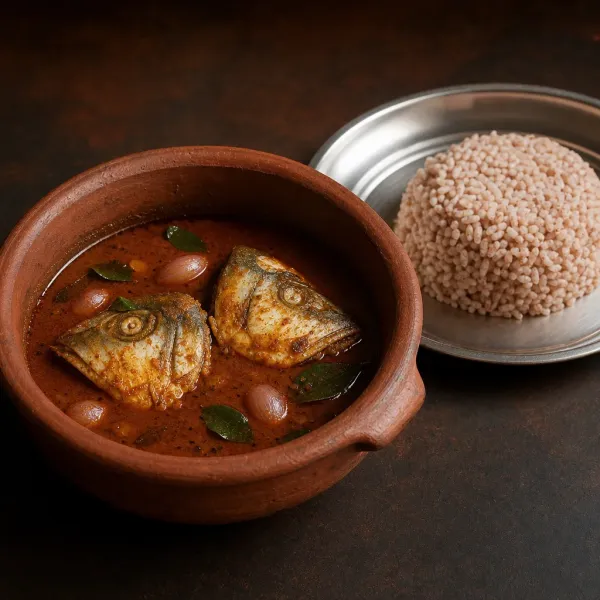
Meen Thalai Kuzhambu
Traditional Chettinad fish head curry with kalpasi, marathi mokku, gingelly oil and tamarind. Household recipe from the Chettiar kitchen of Tamil Nad…
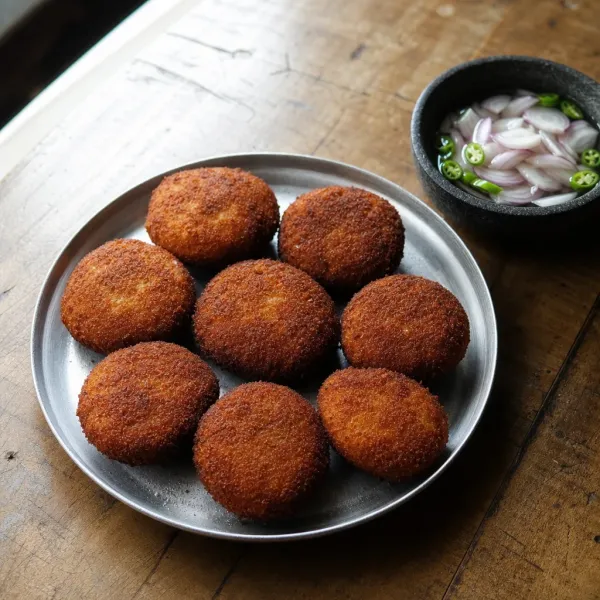
Kerala Nasrani Fish Cutlet
Traditional Kerala Nasrani fish cutlet with seer fish, shallots and coconut oil. Step-by-step method for a crisp, golden crust that holds.
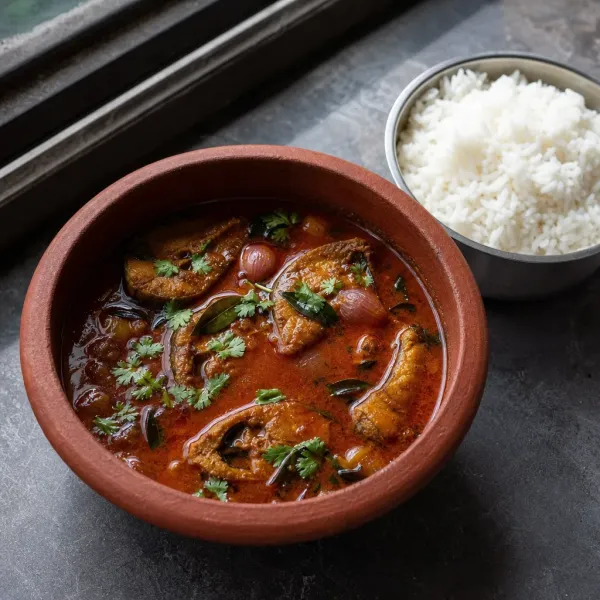
Chepala Pulusu
Traditional Andhra chepala pulusu made with whole shallots, tamarind, and firm fish simmered in gingelly oil. No tomato. Coastal Andhra household met…