

Kerala Crab Roast Recipe
Malayalam നണ്ടു റോസ്റ്റ്Tamil நண்டு வறுவல்Kannada ಏಡಿ ರೋಸ್ಟ್Telugu పీత రోస్ట్
- Prep25 min
- Cook45 min
- Serves4
- DifficultyMedium
- DietNon-vegetarian
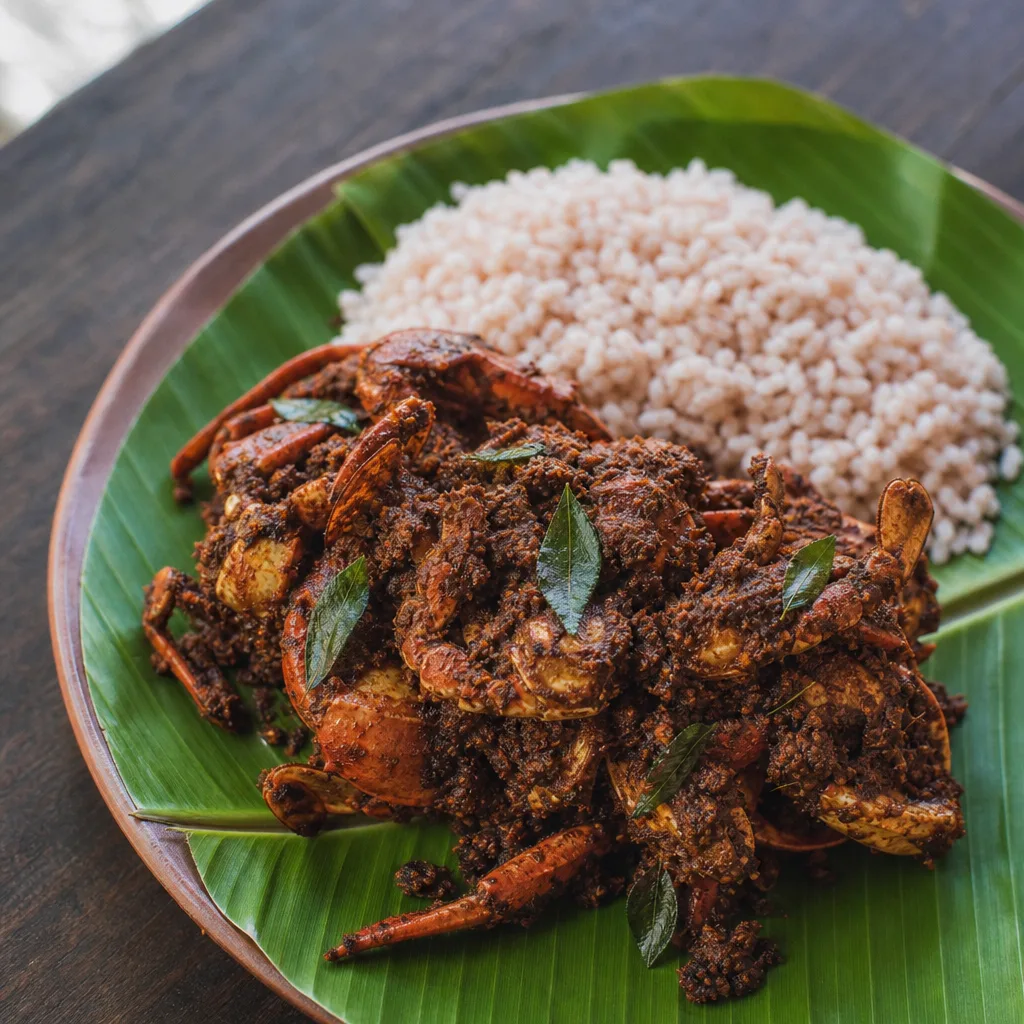
This is the dry crab preparation that appears at almost every Nasrani feast table in Travancore, piled onto a banana leaf alongside rice and fish curry. It is not a gravy and it is not a stew. By the time it is done, the masala clings to every joint and crevice of the crab in a dark, fragrant crust, and the pan is nearly dry.
The crab used in most households is the backwater mud crab — what people here call the nandu — cleaned and cracked so the masala can reach the flesh inside the claws. The whole spice base is simple: shallots cooked down very slowly until they are almost jammy, fresh ginger and garlic, and a careful layering of coriander, chilli, turmeric, and black pepper. Coconut oil is not optional here; it carries the flavour of the shallots in a way no other fat does.
Households differ on heat level — some cooks use only Kashmiri chilli for colour with a few bird's eye chillies for bite, others use a single variety of red chilli throughout. The step everyone agrees on is patience at the end: you must keep the flame low and keep stirring until the masala is completely dry and beginning to stick. Rushing that final stage leaves the crab wet and the spices raw-tasting.
Ingredients (serves 4)
For the crab
For the masala
Method
Marinate the crab
Rub the cleaned crab pieces with ½ tsp turmeric and a generous pinch of salt. Set aside for 15 minutes while you prepare everything else. This brief marination seasons the flesh and the turmeric takes the raw smell off the crab.
Fry the crab pieces briefly
Heat 2 tbsp of the coconut oil in a wide, heavy-bottomed pan — a cheena chatti or a thick-based kadai — over medium-high heat. Add the crab pieces in a single layer and fry for 4 to 5 minutes, turning once, until the shells turn a deep orange-red. You are not cooking the crab through at this stage, just sealing it. Remove and set aside.
Slow-cook the shallots
In the same pan, add the remaining 2 tbsp coconut oil over medium-low heat. Add the sliced shallots and a pinch of salt. Cook slowly, stirring every couple of minutes, for 15 to 18 minutes until the shallots are very soft, pale gold, and beginning to collapse. Do not rush this — under-cooked shallots give the finished dish a sharp, raw edge that no amount of extra cooking later will fix.
Add ginger, garlic, and aromatics
Add the chopped ginger and garlic to the softened shallots. Stir and cook for 3 to 4 minutes until the raw smell of the garlic is gone and the mixture is fragrant. Add the slit green chillies and curry leaves and stir for another minute.
Add the dry spices
Reduce the heat to low. Add the Kashmiri chilli powder, red chilli powder, coriander powder, black pepper, and turmeric. Stir continuously for 2 minutes, making sure the spices coat the shallot mixture and fry in the oil rather than steam. The masala should smell toasted and the oil should begin to separate at the edges. If it looks like it is catching, add a tablespoon of water.
Return the crab and coat it
Add the partially fried crab pieces back to the pan. Toss well so every piece is coated in the masala. Add 3 tbsp of water, stir, cover with a lid, and cook on low heat for 10 minutes. The crab finishes cooking in this time through the steam trapped under the lid.
Dry the masala completely
Remove the lid. Taste for salt. Increase the heat to medium and cook, stirring frequently, for another 8 to 10 minutes until all the moisture has evaporated and the masala clings thickly to the crab. The pan should be almost dry and the masala should be just beginning to stick to the base. This is the stage that makes the dish. Pull it off the heat the moment you see the first signs of the masala darkening at the edges.
Rest and serve
Let the crab rest in the pan for 5 minutes off the heat before serving. The residual heat finishes the spices and the masala sets around the shells. Serve hot.
How to serve
Kappa (boiled tapioca) or matta rice, with a fish curry or rasam alongside. At a full meal it sits on a banana leaf next to rice and a fish kuzhambu.
Served with: Kappa (boiled tapioca) or matta rice, with a fish curry or rasam alongside. At a full meal it sits on a banana leaf next to rice and a fish kuzhambu.
Cook's tips
Cracking the claws
If the fishmonger has not cracked the claws, do it yourself with the back of a heavy knife before cooking. Whole uncracked claws will not absorb any masala and are frustrating to eat at the table.
Fresh versus frozen crab
Fresh live mud crab is the correct choice. Frozen crab releases a lot of water when it hits the pan and makes it very hard to achieve the dry finish. If you must use frozen, thaw it completely, pat it dry, and be prepared to cook the final drying stage longer.
The shallot shortcut
Some households use a blender to roughly pulse the shallots rather than slicing them by hand. The texture of the final masala is slightly different — more paste-like — but the flavour is acceptable. It is genuinely common in busy households.
Chilli balance
Kashmiri chilli alone gives a beautiful deep colour but very little heat. If your household prefers a fiercer result, increase the regular red chilli powder to 1½ tsp and reduce the Kashmiri to 1 tsp. Do not simply add more of both or the dish becomes bitter.
Storing leftovers
Crab roast keeps well for one day at room temperature in a cool kitchen, or refrigerated for two days. Reheat in the pan over low heat with a tiny splash of water to loosen the masala. The flavour is often better the next day.
Regional variations
Mappila (Malabar) crab roast uses fennel seed more prominently and may finish with a small amount of grated coconut; coastal Hindu households in Travancore sometimes add a thin coconut milk splash at the end before drying it off.
Glossary
- Nandu നണ്ടു
- Mud crab; the common backwater crab used in Kerala cooking.
- Chuvannulli ചുവന്നുള്ളി
- Small red shallots; the standard allium in Kerala cooking, sharper and more aromatic than large onions.
- Cheena chatti ചീനച്ചട്ടി
- A round-bottomed clay or iron wok introduced through Chinese trading contact; widely used in Kerala for frying and roasting.
- Kudampuli കുടംപുളി
- Gamboge or Malabar tamarind; the souring agent used in Kerala fish curries. Not used in this dish but often confused with it.
- Kappa കപ്പ
- Tapioca or cassava, boiled and eaten as a staple, particularly in central and southern Kerala.
Two things decide whether this dish works: the patience to cook the shallots down fully before the spices go in, and the discipline to keep stirring at the end until the pan is genuinely dry. Every other step is forgiving. Those two are not.
More Seafood recipes
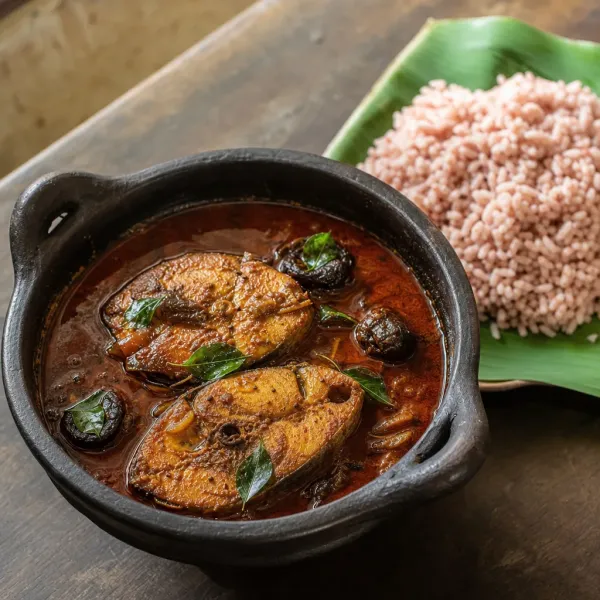
Choora Curry
Traditional Mappila tuna curry from Malabar, made with kudampuli, fresh coconut paste, and shallots in coconut oil. Step-by-step home recipe.
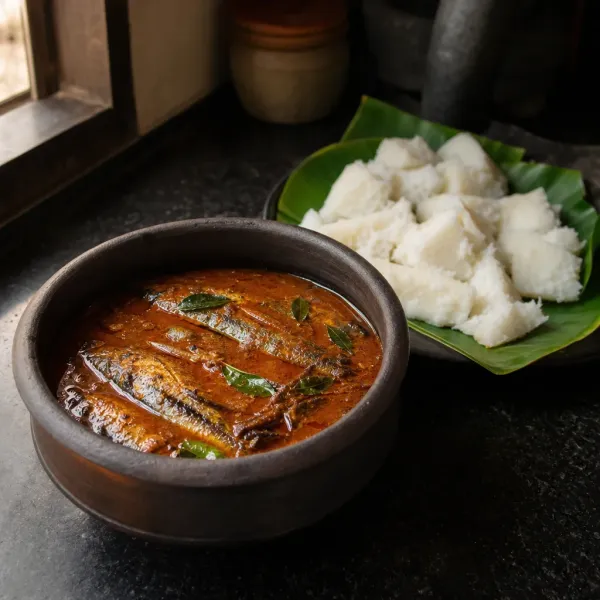
Chala Curry
Traditional Kerala sardine curry with kudampuli and fresh coconut paste, cooked in a manchatti. Authentic coastal recipe with kappa or matta rice.
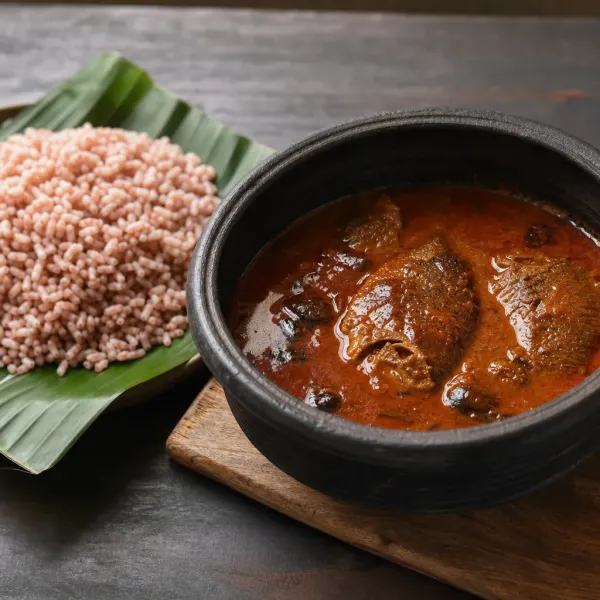
Kottayam Meen Vevichathu
Authentic Kottayam-style red fish curry with kudampuli, no coconut. Traditional Nasrani recipe cooked in a manchatti with Kashmiri chilli and coconut…
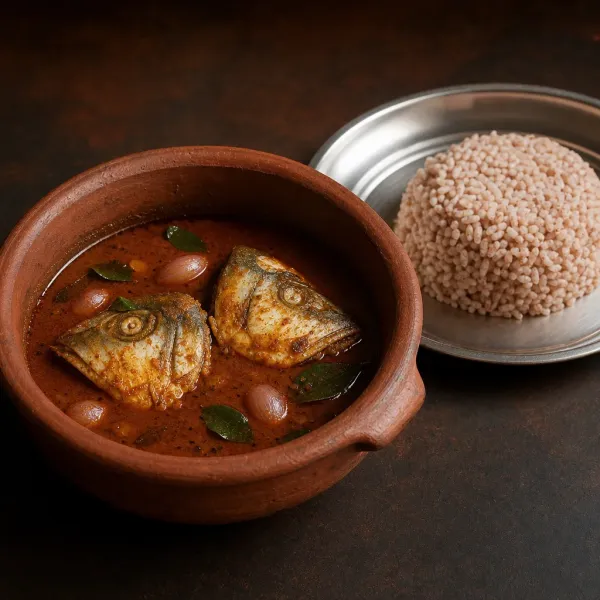
Meen Thalai Kuzhambu
Traditional Chettinad fish head curry with kalpasi, marathi mokku, gingelly oil and tamarind. Household recipe from the Chettiar kitchen of Tamil Nad…
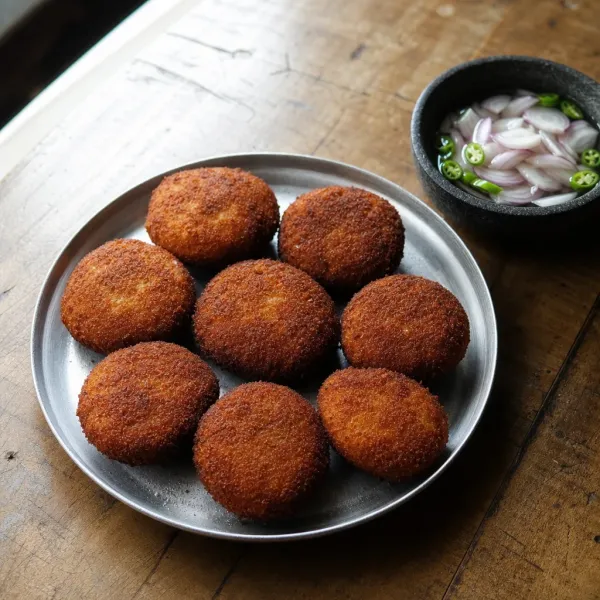
Kerala Nasrani Fish Cutlet
Traditional Kerala Nasrani fish cutlet with seer fish, shallots and coconut oil. Step-by-step method for a crisp, golden crust that holds.
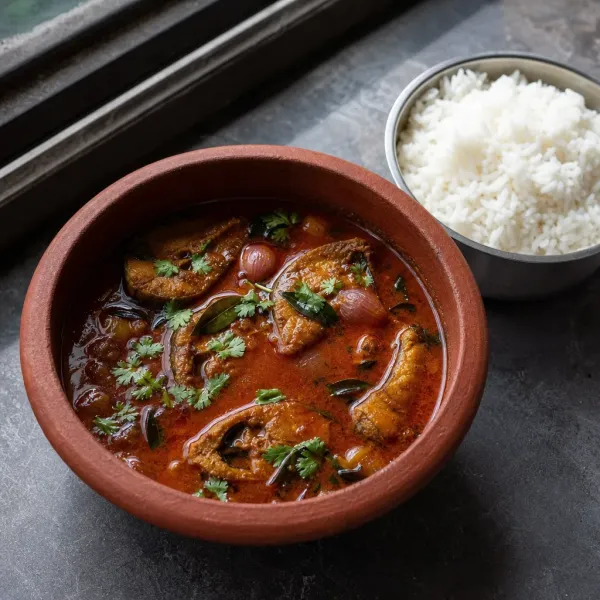
Chepala Pulusu
Traditional Andhra chepala pulusu made with whole shallots, tamarind, and firm fish simmered in gingelly oil. No tomato. Coastal Andhra household met…