

Beans Poriyal Recipe
Malayalam ബീൻസ് പൊരിയൽTamil பீன்ஸ் பொரியல்Kannada ಬೀನ್ಸ್ ಪಲ್ಯTelugu బీన్స్ పొరియల్
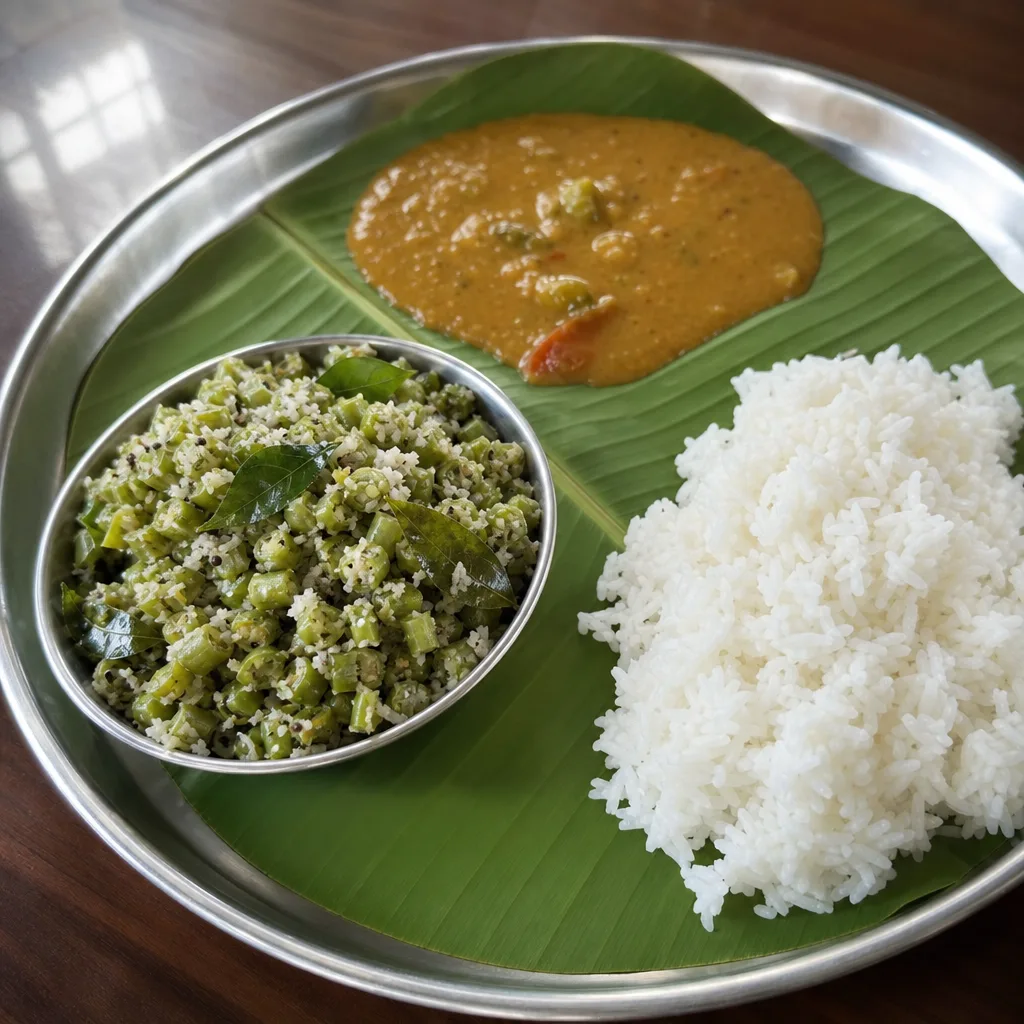
- Prep15 min
- Cook20 min
- Serves4
- DifficultyEasy
- DietVegan
Poriyal is the everyday dry vegetable dish of a Tamil Brahmin (Iyer) household, and beans poriyal is one of the most frequently made. It sits on the banana leaf or steel thali alongside sambar and rasam, doing the quiet work of providing texture and a little sweetness against the sour and spiced liquids.
The method is consistent across Iyer kitchens: a mustard and urad dal tadka in gingelly oil, the beans cooked with minimal water so they steam in their own moisture, and freshly grated coconut stirred through at the very end. The coconut is never cooked long — it goes in off the heat or just before, so it stays pale and moist rather than turning granular and dry.
Households differ mainly on two things: whether to add a pinch of asafoetida in the tadka (most do), and whether to use green chilli or dry red chilli for heat. Both are genuine. Some cooks add a small amount of chana dal alongside the urad dal for a little extra nuttiness. The beans must be cut small and evenly — roughly 1 cm pieces — so they cook through without needing much water.
Ingredients (serves 4)
Main
For the tadka
Method
Prepare the beans
Top and tail the beans and cut them into pieces roughly 1 cm long. Uniformity matters here — pieces that are too thick will still be raw when the smaller ones are done. Rinse them once in cold water and leave them in the colander to drain.
Heat the oil and bloom the mustard
Set a wide, heavy kadai over medium heat and add the gingelly oil. When the oil is hot — it will shimmer and a mustard seed dropped in will pop immediately — add all the mustard seeds. Keep the lid or a splatter screen close. Let them pop fully, which takes about 30 seconds. If you move on before the popping slows, the mustard will taste raw.
Fry the dals and aromatics
Add the urad dal and chana dal to the popped mustard. Stir continuously over medium heat for about 45 seconds until the dals turn a light golden colour. Add the dry red chilli and curry leaves — stand back, the curry leaves will splutter — and fry for another 15 seconds. The dals should smell nutty, not bitter.
Add asafoetida and green chilli
Add the pinch of asafoetida and the slit green chillies. Stir once so the asafoetida fries in the oil for just a few seconds. It should not sit on the hot pan long enough to darken.
Add the beans and salt
Tip in the drained beans and add salt. Stir well so the beans are coated in the seasoned oil. The pan will look crowded — that is fine.
Cook the beans with minimal water
Sprinkle 3 tablespoons of water over the beans. The water that clings to them from rinsing plus this small addition is enough. Cover the kadai with a tight lid, reduce the heat to low-medium, and let the beans steam in their own moisture for 8 to 10 minutes. Do not lift the lid in the first 6 minutes.
Check and finish cooking
Lift the lid and test a piece of bean. It should be just tender — cooked through but with a slight bite, not soft and collapsing. If there is still moisture pooled at the bottom, raise the heat to medium and stir for 1 to 2 minutes with the lid off until the pan is dry. Poriyal must be dry; any liquid left in the pan will make the coconut go wet and clumped.
Stir in the coconut
Turn the heat off or reduce it to the lowest possible setting. Add the freshly grated coconut and fold it through the beans gently. The coconut only needs to warm through — 30 seconds of residual heat is enough. If you cook it longer over a live flame it will dry out and lose its fresh flavour. Taste for salt and serve immediately.
How to serve
Hot plain rice with sambar and rasam, as part of a Tamil Brahmin meal. Also sits well on a thali alongside kootu and a pickle.
Served with: Hot plain rice with sambar and rasam, as part of a Tamil Brahmin meal. Also sits well on a thali alongside kootu and a pickle.
Cook's tips
Fresh coconut is not optional
Desiccated coconut will turn the poriyal dry and slightly sweet in the wrong way. If you cannot get fresh coconut, frozen grated coconut thawed at room temperature is a reasonable substitute. Desiccated coconut is not.
Do not add too much water
The most common mistake is adding a full cup of water and then having to drain or boil it off, which overcooks the beans and makes them dull green. Three tablespoons is genuinely enough for 400 g of beans in a covered pan on low heat.
Gingelly oil matters
This is cold-pressed sesame oil (not the dark toasted Chinese variety). It has a mild, distinctive flavour that is part of the dish. Refined sunflower oil will produce a blander result. Coconut oil shifts the dish towards a Kerala thoran rather than a Tamil poriyal.
Cutting size
If the pieces are cut larger than 1.5 cm, increase the water to 4 tablespoons and the covered cooking time to 12 minutes. Check before adding the coconut.
Regional variations
Kerala households make a similar beans thoran with more coconut and a curry leaf–mustard tadka in coconut oil; Karnataka makes beans palya with less coconut and sometimes uses groundnuts.
Glossary
- Poriyal பொரியல்
- Tamil term for a dry stir-fried or steamed vegetable dish finished with grated coconut, a staple of the Tamil daily meal.
- Nallennai நல்லெண்ணெய்
- Cold-pressed gingelly (sesame) oil, the everyday cooking fat of Tamil Nadu, especially for vegetable dishes and pickles.
- Perungayam பெருங்காயம்
- Asafoetida; used in small quantities in the tadka of Tamil Brahmin cooking, partly as a digestive and partly for flavour.
- Tadka தாளிக்கை
- The tempering step in which whole spices, dal and aromatics are fried briefly in hot oil to release their flavour before the main ingredient is added.
- Kadai கடாய்
- A wide, deep, round-bottomed pan used across South Indian cooking for frying, stir-frying and tempering.
Two things decide whether this poriyal works: keeping the beans dry before the coconut goes in, and adding the coconut off the heat. Get those right and the result is exactly what it should be — each piece of bean distinct, lightly coated with coconut, smelling of curry leaf and gingelly oil.
More Dry Vegetable Sides recipes
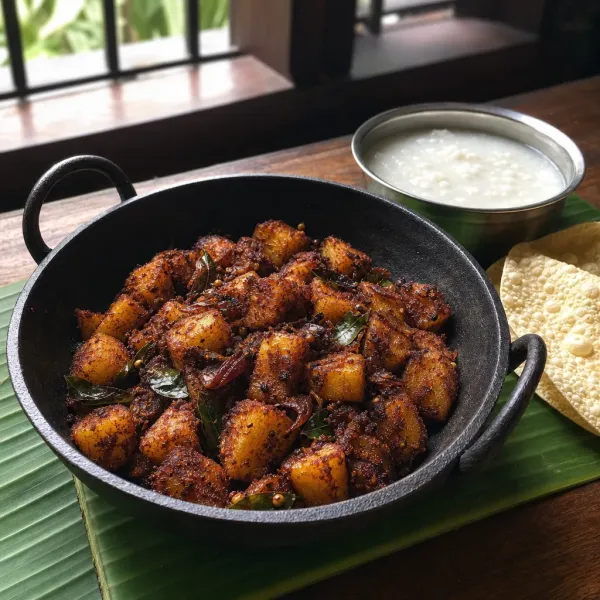
Urulakizhangu Roast
Traditional Kerala Nasrani-style potato roast with shallots, curry leaves and coconut oil. Step-by-step method for a dry, spice-coated urulakizhangu…
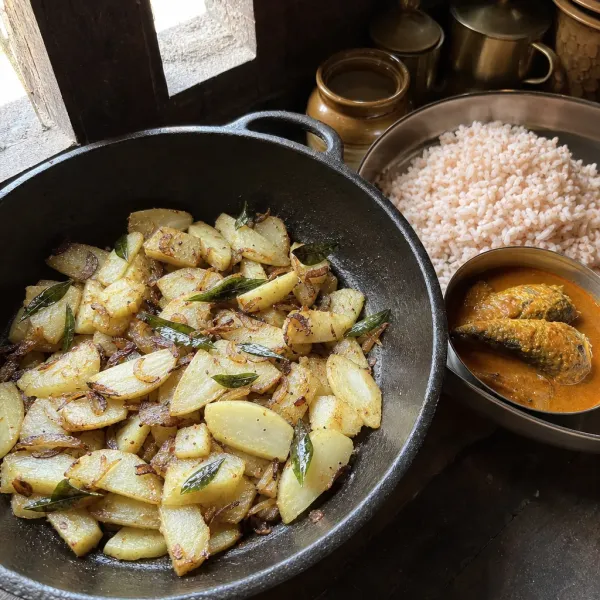
Koorka Mezhukkupuratti (Chinese Potato Stir-Fry)
Traditional Kerala koorka mezhukkupuratti: Chinese potato stir-fried with shallots, green chilli and curry leaves in coconut oil. Step-by-step househ…
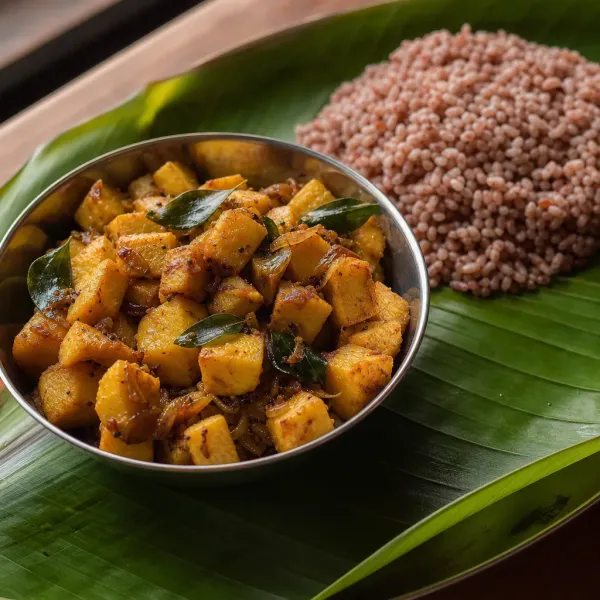
Chena Mezhukkupuratti (Elephant Foot Yam Stir-Fry)
Traditional Kerala recipe for chena mezhukkupuratti: elephant foot yam stir-fried in coconut oil with shallots, dried red chillies, and curry leaves.
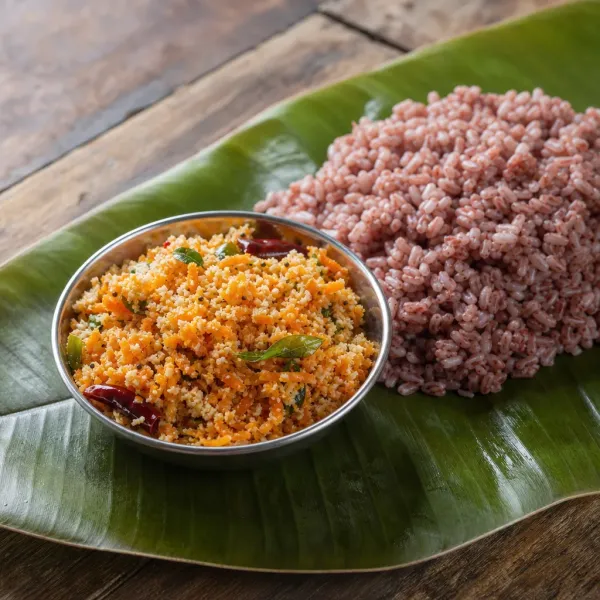
Carrot Thoran
A classic Kerala carrot thoran made with fresh grated coconut, shallots, curry leaves and coconut oil. Dry, fragrant and ready in under 30 minutes.
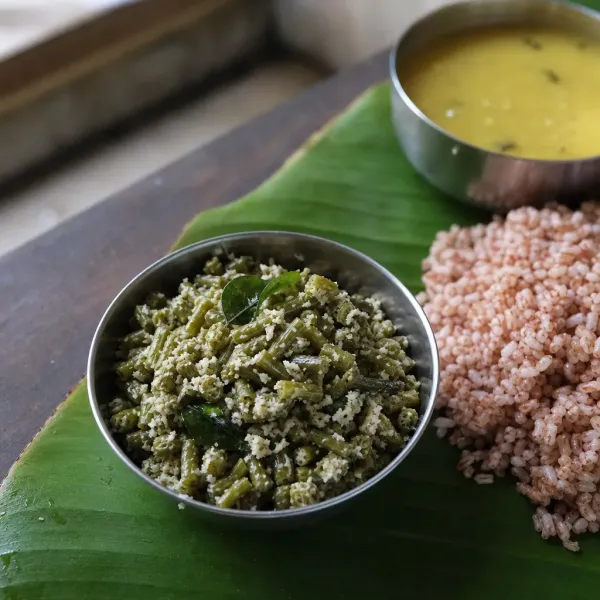
Payar Thoran (Long Beans with Coconut)
Traditional Kerala payar thoran made with long beans, fresh grated coconut and a mustard-curry leaf tempering. Dry, simple, everyday.
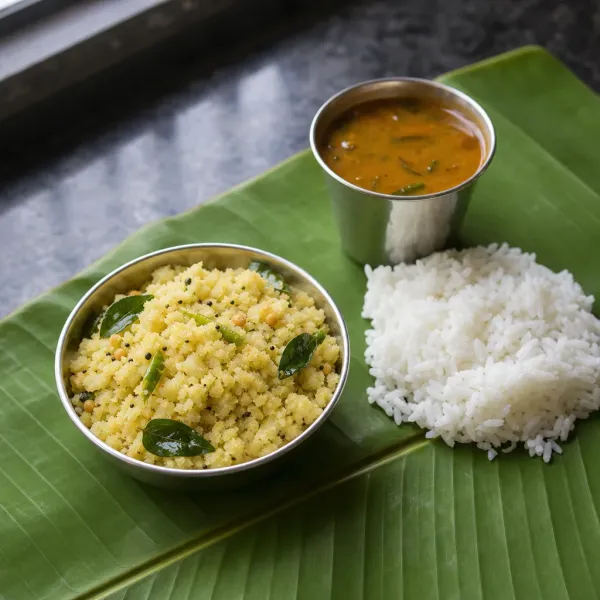
Urulakizhangu Podimas
Authentic Iyer-style crumbled potato podimas with gingelly oil, mustard, curry leaves and ginger. Dry, light and ready in under 30 minutes.