

Payar Thoran (Long Beans with Coconut) Recipe
Malayalam പയർ തോരൻTamil பயறு தோரன்Kannada ಪಯರ್ ತೋರನ್Telugu పయర్ తోరన్
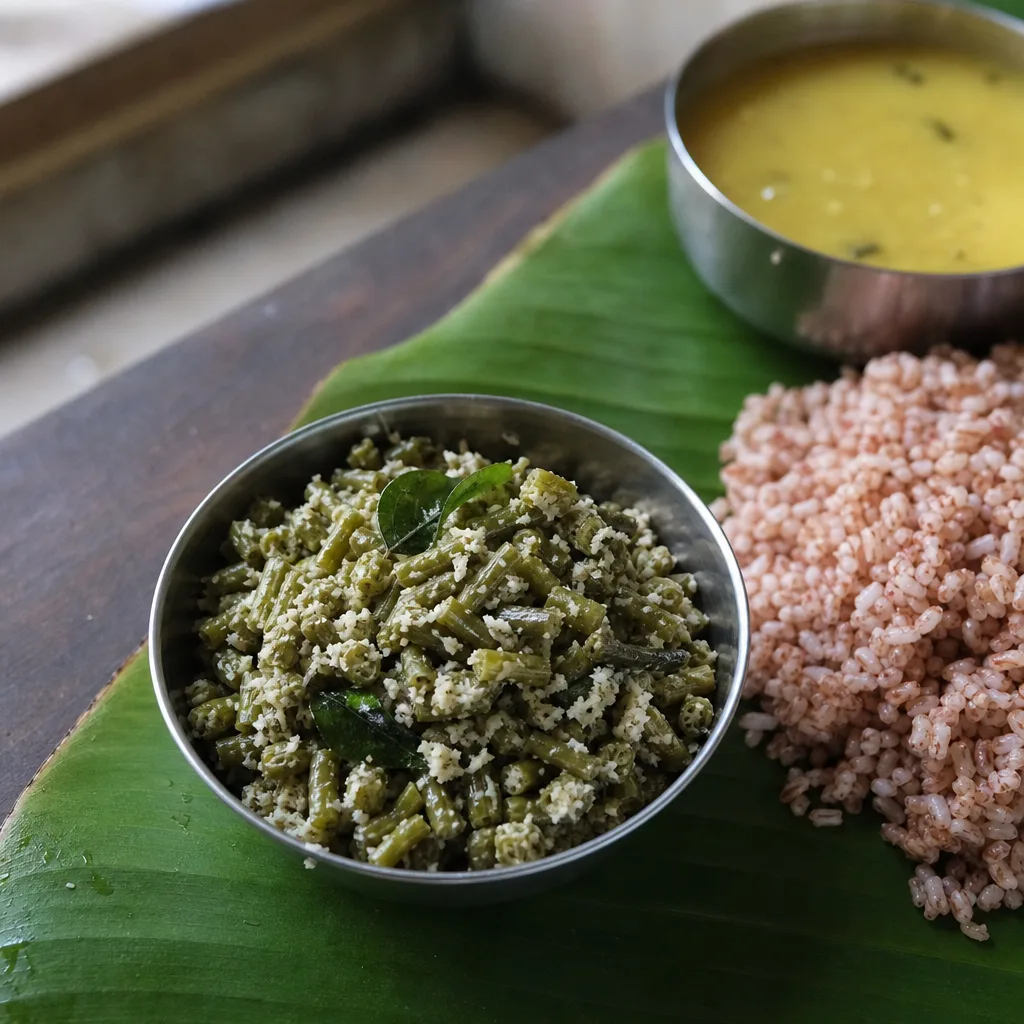
- Prep15 min
- Cook15 min
- Serves4
- DifficultyEasy
- DietVegan
Payar thoran is one of the everyday vegetable dishes that anchors a Kerala sadya or a plain rice meal. It is not a side dish in any grand sense — it is simply what gets made when long beans are in the kitchen and rice is nearly cooked. The texture should be dry, not saucy. Every strand of bean stays distinct, coated lightly with coconut rather than buried in it.
The dish belongs to every community in Kerala without much argument. What differs from house to house is the ratio of coconut to bean, how finely the coconut is ground (coarse is traditional in most homes), and whether the cook adds a small dried red chilli or two to the tempering. Some cooks grind the coconut with a little cumin; others add the cumin whole into the oil at the start.
It is eaten as part of a rice meal, usually alongside a dal or a kuzhambu. The thoran itself is mild enough that it sits comfortably next to sharper dishes without fighting them.
Ingredients (serves 4)
For the thoran
Method
Prepare the beans
Trim both ends of the long beans and cut them into pieces roughly 1 cm long. Rinse once in cold water and drain well. They should be dry enough that they do not steam each other when they hit the pan.
Mix the coconut masala
In a small bowl, combine the grated coconut, turmeric, cumin seeds, and slit green chillies. Crush everything together briefly with your fingers — you want the coconut to take on a faint yellow colour from the turmeric and the cumin to release a little fragrance. Do not grind this to a paste; keep it coarse and loose.
Heat the oil and temper
Set a wide, heavy pan or cheenachatti over medium heat and add the coconut oil. When the oil is hot, add the mustard seeds. Wait for them to pop fully — if you rush this step the mustard stays raw and bitter. Then add the dried red chillies and curry leaves and stand back; the leaves will splutter.
Soften the shallots
Add the sliced shallots to the pan and stir them into the oil. Cook on medium heat for about 3 minutes, stirring occasionally, until they turn translucent and the edges just begin to colour. They should not brown deeply — you want sweetness, not caramelisation.
Add the beans and salt
Tip in the cut beans and season with salt. Stir everything together so the beans are coated in the oil and shallot mixture. The beans will be bright green at this point.
Cook the beans covered
Sprinkle about 2 tablespoons of water over the beans, reduce the heat to low, and cover the pan with a lid. Let the beans cook in their own steam for 6 to 8 minutes. Check once halfway through and stir gently. The beans are ready when they are just tender but still hold their shape — a piece should bend without snapping but should not be mushy.
Add the coconut mixture
Remove the lid and check that any remaining water in the pan has evaporated. If there is still liquid, raise the heat briefly and stir until the pan is dry. Then add the coconut and spice mixture. Stir it through the beans evenly.
Finish on low heat
Cook uncovered on low heat for 2 to 3 minutes, stirring gently two or three times. The coconut should warm through and become fragrant but must not brown. The finished thoran is dry, with each piece of bean visible and the coconut clinging lightly to it. Taste for salt and serve immediately.
How to serve
Steamed matta rice, dal (parippu curry), and a kuzhambu or rasam as part of a rice meal. Also part of an Onam sadya alongside other thorans and koottan.
Served with: Steamed matta rice, dal (parippu curry), and a kuzhambu or rasam as part of a rice meal. Also part of an Onam sadya alongside other thorans and koottan.
Cook's tips
Keeping it dry
The most common mistake is adding too much water in step 6. Two tablespoons is enough for 400 g of beans in a covered pan. If you add more, the thoran becomes wet and the coconut turns soggy rather than staying fluffy.
Coarse coconut is intentional
Do not grind the coconut to a smooth paste. Coarsely grated coconut gives the thoran its characteristic texture. A smooth paste makes the dish dense and paste-like rather than light and dry.
Freshness of the beans
Young, tender beans cook in 6 to 7 minutes. Older, thicker pods can take 10 minutes or more. Press a piece between your fingers before you start — if it is already fibrous and stiff, peel the outer string along the seam before cutting.
Frozen coconut
Freshly grated coconut is the correct ingredient. Frozen grated coconut, thawed and squeezed of excess water, is a reasonable household substitute. Desiccated coconut is not suitable — it will not soften properly and the flavour is wrong.
Regional variations
In Malabar households the coconut paste sometimes includes a small piece of shallot ground in with the spices; in some Nasrani kitchens a pinch of turmeric is omitted entirely, leaving the thoran very pale.
Glossary
- Achinga payar അച്ചിങ്ങ പയർ
- Long beans, also called yard-long beans; the variety used in Kerala thorans.
- Thoran തോരൻ
- A dry Kerala stir-fry of vegetables with freshly grated coconut and a simple tempering.
- Cheriya ulli ചെറിയ ഉള്ളി
- Small shallots; the standard allium in Kerala cooking, sweeter and more aromatic than large onions.
- Cheenachatti ചീനച്ചട്ടി
- A wide, shallow wok-style pan used in Kerala kitchens; the shape allows moisture to evaporate quickly, keeping thorans dry.
- Kariveppila കറിവേപ്പില
- Curry leaves; used fresh in Kerala cooking and added directly to hot oil to release their fragrance.
Two things decide whether this thoran works: the beans must be cooked just through before the coconut goes in, and the pan must be dry at that moment. Wet beans plus coconut gives you a clump. Properly cooked, dry beans plus coarse coconut gives you a thoran where you can see and taste each element separately.
More Dry Vegetable Sides recipes
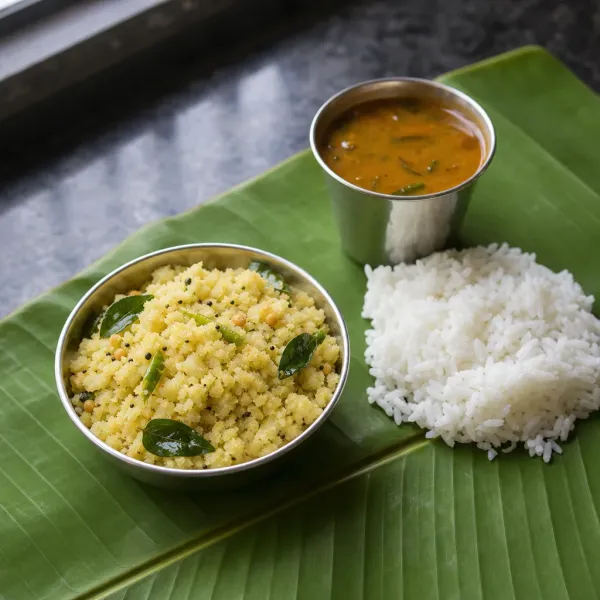
Urulakizhangu Podimas
Authentic Iyer-style crumbled potato podimas with gingelly oil, mustard, curry leaves and ginger. Dry, light and ready in under 30 minutes.
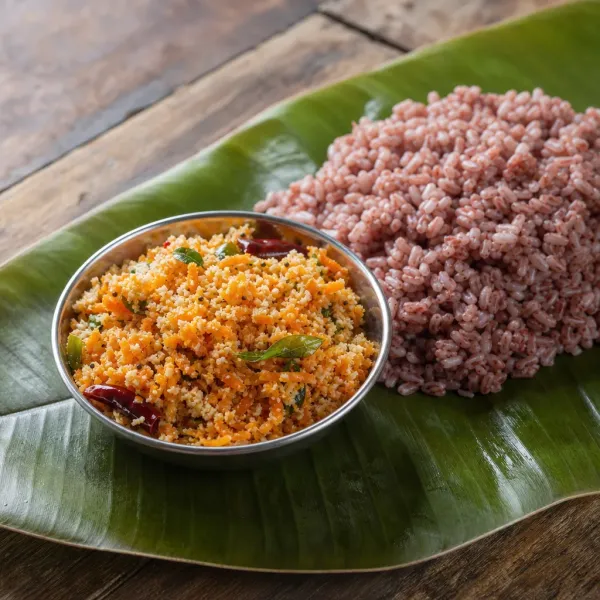
Carrot Thoran
A classic Kerala carrot thoran made with fresh grated coconut, shallots, curry leaves and coconut oil. Dry, fragrant and ready in under 30 minutes.
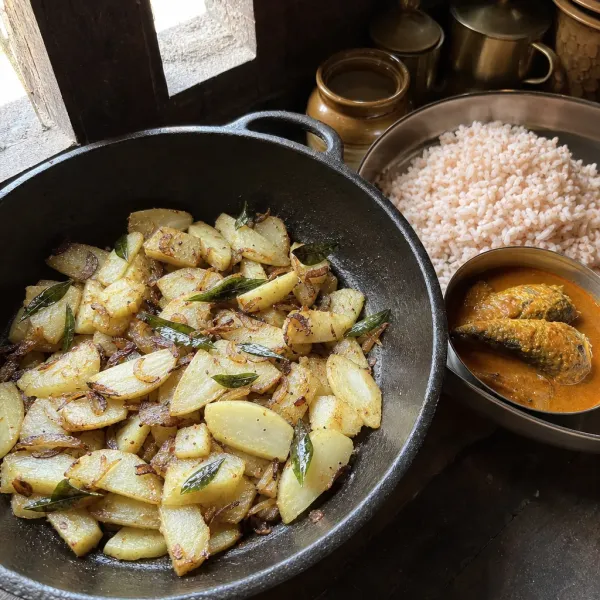
Koorka Mezhukkupuratti (Chinese Potato Stir-Fry)
Traditional Kerala koorka mezhukkupuratti: Chinese potato stir-fried with shallots, green chilli and curry leaves in coconut oil. Step-by-step househ…
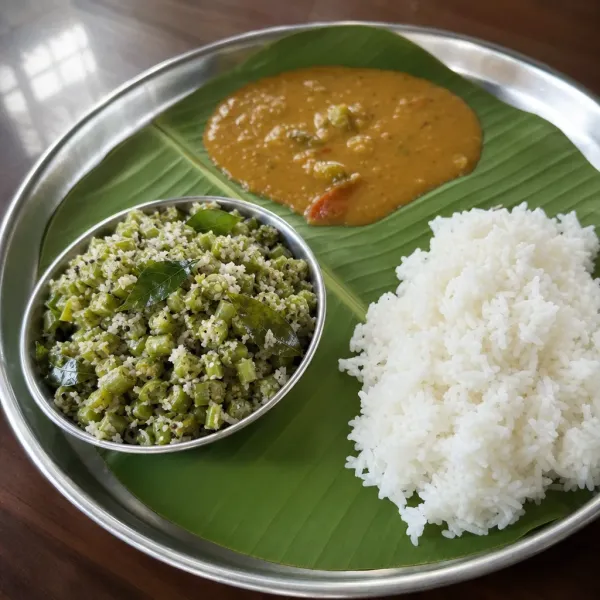
Beans Poriyal
A traditional Tamil Brahmin beans poriyal with gingelly oil tadka and fresh coconut. Dry, lightly spiced, and ready in under 30 minutes.
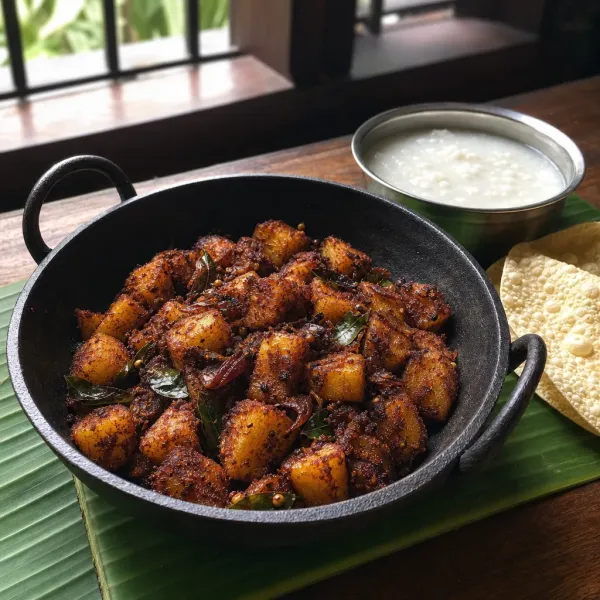
Urulakizhangu Roast
Traditional Kerala Nasrani-style potato roast with shallots, curry leaves and coconut oil. Step-by-step method for a dry, spice-coated urulakizhangu…
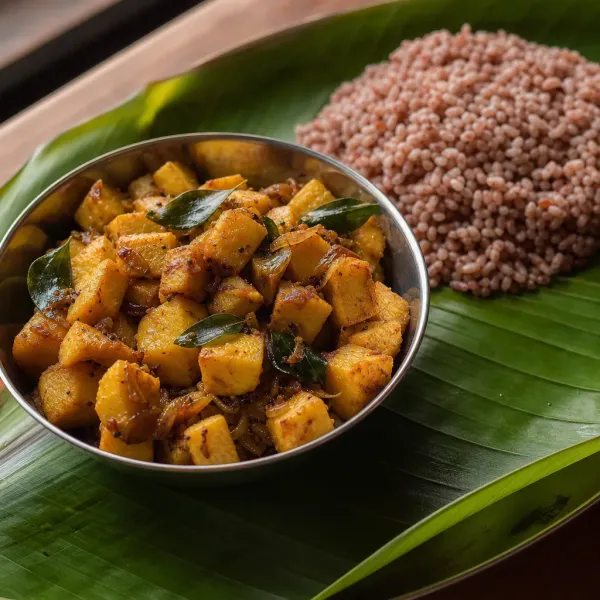
Chena Mezhukkupuratti (Elephant Foot Yam Stir-Fry)
Traditional Kerala recipe for chena mezhukkupuratti: elephant foot yam stir-fried in coconut oil with shallots, dried red chillies, and curry leaves.