

Urulakizhangu Podimas Recipe
Malayalam ഉരുളക്കിഴങ്ങ് പൊടിമസ്Tamil உருளைக்கிழங்கு பொடிமாஸ்Kannada ಆಲೂಗಡ್ಡೆ ಪೊಡಿಮಾಸ್Telugu బంగాళాదుంప పొడిమాస్
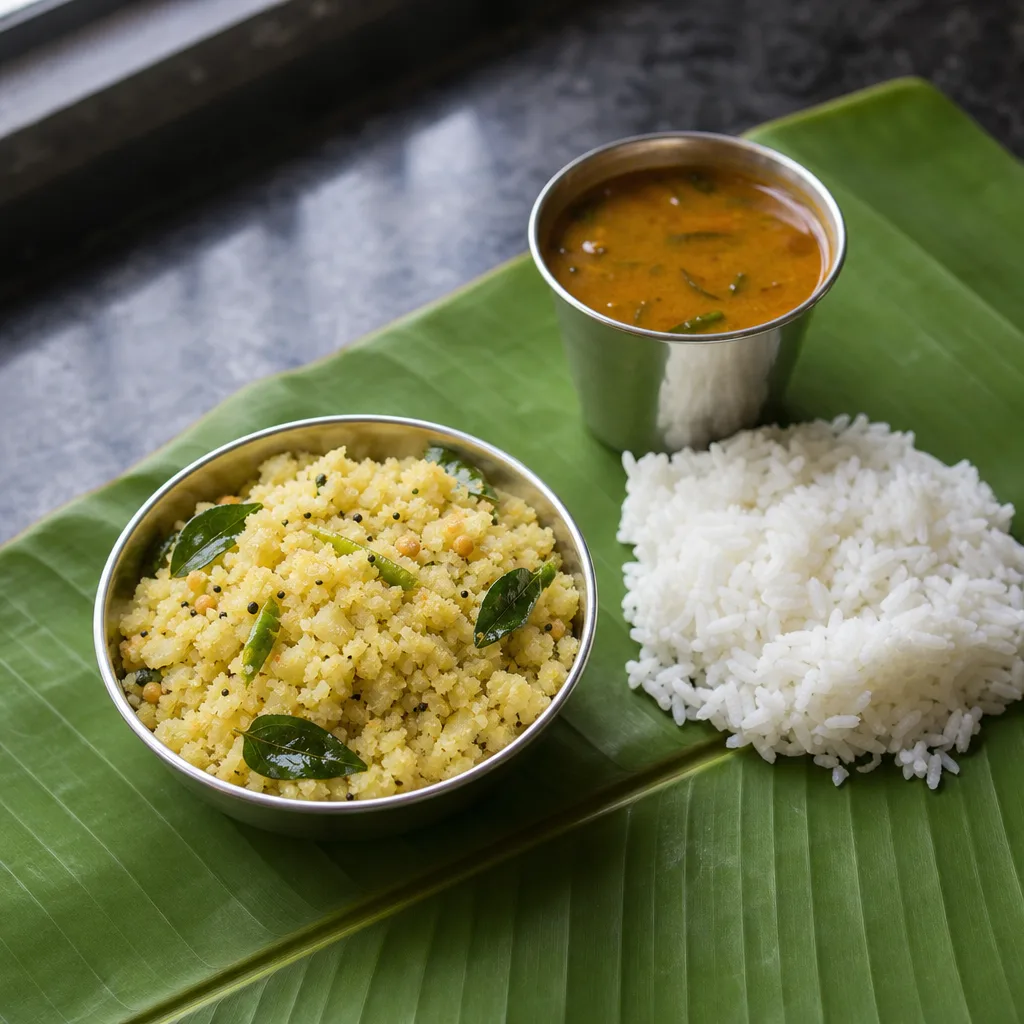
- Prep15 min
- Cook20 min
- Serves4
- DifficultyEasy
- DietVegan
Podimas is a dry potato dish from the Tamil Brahmin kitchen, made by crumbling boiled potatoes into a seasoned tempering of mustard, curry leaves, green chilli and ginger. It is not mashed smooth and it is not left in chunks. The texture sits between the two: coarse, slightly grainy, each piece holding its shape just enough to coat with the tempering.
In an Iyer household this is everyday food, eaten at lunch alongside sambar and rice, or stuffed into a soft chapati for a child's tiffin box. It is also a reliable dish to take to a temple function because it travels well and holds at room temperature without turning watery.
Households differ mainly on the chilli. Some cooks use only green chillies and no dried red chilli at all; others add one dried red chilli to the mustard tempering for a faint smokiness. The ginger is not optional here — it is what lifts the dish. Lemon juice at the end is common but not universal; some families consider it unnecessary if the potatoes are fresh and floury.
Ingredients (serves 4)
For boiling
For the tempering
Method
Boil the potatoes whole
Place the unpeeled potatoes in a vessel, cover generously with cold water and bring to a boil. Cook until a skewer passes through the centre without resistance, 20 to 25 minutes depending on size. Do not overcook them to a waterlogged state — they should be just done. Drain and leave them until cool enough to handle but still warm.
Peel and crumble while warm
Peel the skin away with your fingers; it will slip off easily. Break the potatoes apart with your hands into rough, uneven pieces about the size of a large chickpea. Do not use a masher. The uneven texture is the point — some pieces will crumble finer, some will stay slightly larger, and that variation is correct.
Heat the oil and bloom the mustard
Set a heavy kadai over medium heat and add the gingelly oil. When the oil shimmers, add the mustard seeds and cover loosely. Let them splutter and pop for about 20 seconds. If you rush this and add the dals before the mustard has fully popped, the mustard will taste raw in the finished dish.
Toast the dals and dried chilli
Add the urad dal, chana dal and the broken dried red chilli. Stir constantly over medium heat until the dals turn pale gold and the chilli darkens at the edges, about 90 seconds. Keep the heat moderate — on high heat the dals will colour unevenly and the chilli will turn bitter.
Add the aromatics
Add the curry leaves, slit green chillies and grated ginger in quick succession. Stand back slightly when the curry leaves go in — they will spit in the hot oil. Stir for 30 seconds until the ginger loses its raw smell and the curry leaves are glossy and fragrant.
Add asafoetida and turmeric
Reduce the heat to low. Add the asafoetida and turmeric and stir immediately into the oil for 10 seconds. Turmeric added on low heat blooms without scorching; on high heat it turns acrid.
Add the crumbled potato and salt
Tip in the crumbled potato and the salt. Fold everything together gently with a flat spatula, turning the potato through the tempering so the turmeric coats each piece evenly. Do not press down or stir vigorously — you are coating, not mashing.
Dry it out over low heat
Keep the heat on low and cook, turning every minute or so, for 4 to 5 minutes. The potato should lose any surface moisture and look dry and slightly powdery on the outside. If it looks wet or sticky, give it another minute. This drying step is what makes it podimas rather than a wet subzi.
Finish and taste
Taste for salt. If using lemon juice, squeeze it over now and fold through once. Remove from heat immediately after the lemon goes in — prolonged heat after lemon makes it taste flat. Serve hot.
How to serve
Hot rice with sambar and a small amount of ghee; or alongside rasam rice; or rolled inside soft phulkas for a tiffin meal. In some households it also appears as part of a full South Indian lunch on a banana leaf alongside kootu, rasam and papad.
Served with: Hot rice with sambar and a small amount of ghee; or alongside rasam rice; or rolled inside soft phulkas for a tiffin meal. In some households it also appears as part of a full South Indian lunch on a banana leaf alongside kootu, rasam and papad.
Cook's tips
Choose the right potato
A floury, starchy variety works best — the kind that crumbles naturally when you break it. Waxy potatoes hold together and will not give you the right texture. In Tamil Nadu, the local round potatoes sold as 'country potato' are ideal. Avoid refrigerated or very new potatoes, which tend to be waxy.
Gingelly oil is not optional
The faint sesame-seed nuttiness of gingelly oil is part of the flavour of this dish in a Tamil Brahmin kitchen. Coconut oil changes the character entirely and refined sunflower oil makes it taste of nothing. Use cold-pressed gingelly oil if you can find it.
Crumble warm, not hot or cold
If the potatoes are too hot to handle, the steam escaping will make them gummy when you break them. If they are fully cold, they will not crumble naturally and you will end up mashing. Warm — where you can hold them comfortably — is the right moment.
Lemon juice: a household choice
Many traditional cooks skip the lemon entirely and find the dish complete without it. Add it only if the potatoes taste a little flat. Never add it early in the cooking.
Regional variations
A Kerala Brahmin (Iyer settled in Kerala) household version exists that is nearly identical but may use slightly more green chilli and finish with a squeeze of lemon. A non-Brahmin Tamil version sometimes adds a small amount of finely sliced shallots tempered at the start.
Glossary
- Podimas பொடிமாஸ்
- A dry, crumbled preparation, from the Tamil root suggesting something broken or powdered fine.
- Perungayam பெருங்காயம்
- Asafoetida, the dried resin used in Brahmin cooking in place of onion and garlic as a digestive and flavouring agent.
- Nallennai நல்லெண்ணெய்
- Gingelly oil, cold-pressed sesame oil; the everyday cooking fat of the Tamil kitchen for dry dishes and temperings.
- Kadai கடாய்
- A wide, deep pan with sloping sides, used for tempering and dry-frying.
Two things decide whether this succeeds: the texture of the crumbled potato and the quality of the tempering. If the potato is crumbled at the right warmth and dried properly over low heat, it will be light and slightly powdery. If the mustard, dals and ginger are bloomed carefully in gingelly oil without burning, the tempering will carry the whole dish. Get those two things right and everything else follows.
More Dry Vegetable Sides recipes
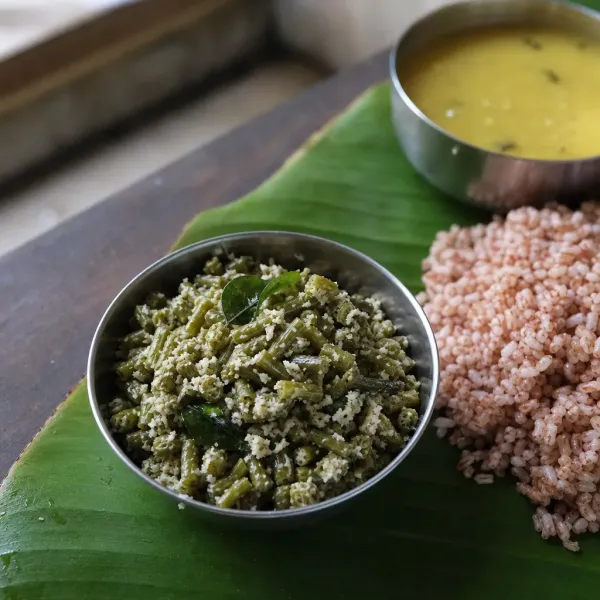
Payar Thoran (Long Beans with Coconut)
Traditional Kerala payar thoran made with long beans, fresh grated coconut and a mustard-curry leaf tempering. Dry, simple, everyday.
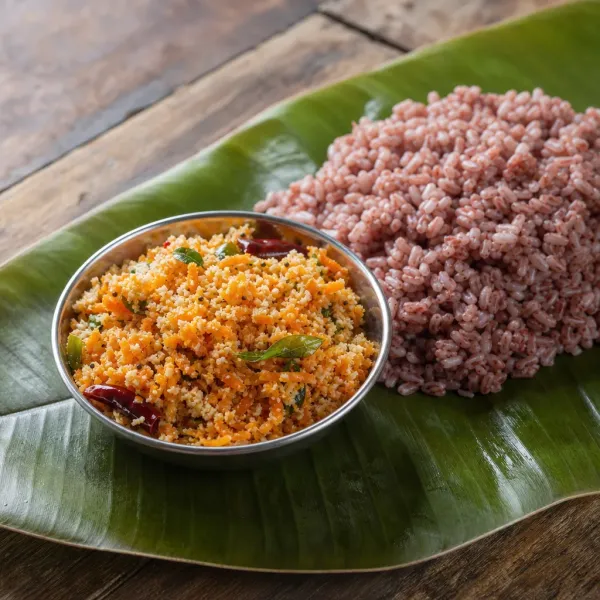
Carrot Thoran
A classic Kerala carrot thoran made with fresh grated coconut, shallots, curry leaves and coconut oil. Dry, fragrant and ready in under 30 minutes.
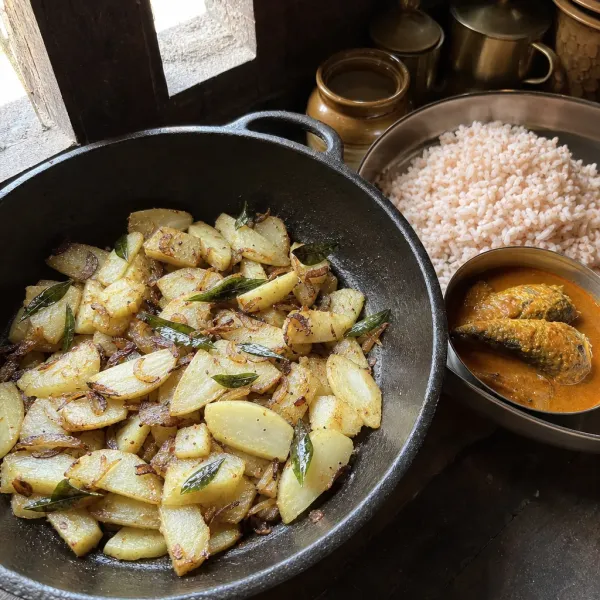
Koorka Mezhukkupuratti (Chinese Potato Stir-Fry)
Traditional Kerala koorka mezhukkupuratti: Chinese potato stir-fried with shallots, green chilli and curry leaves in coconut oil. Step-by-step househ…
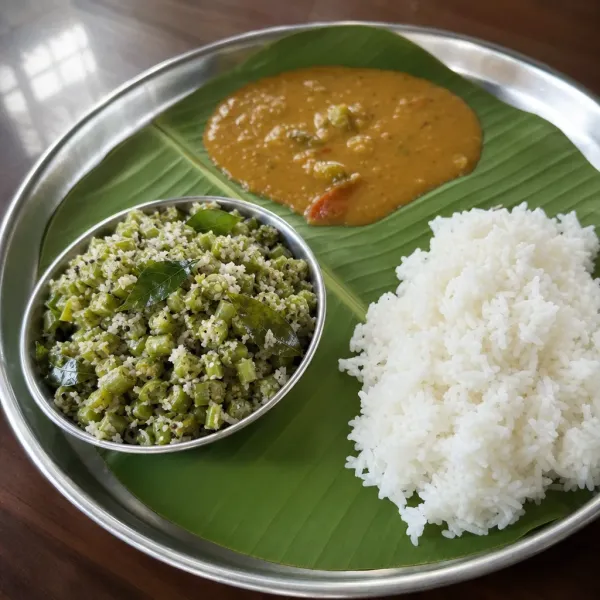
Beans Poriyal
A traditional Tamil Brahmin beans poriyal with gingelly oil tadka and fresh coconut. Dry, lightly spiced, and ready in under 30 minutes.
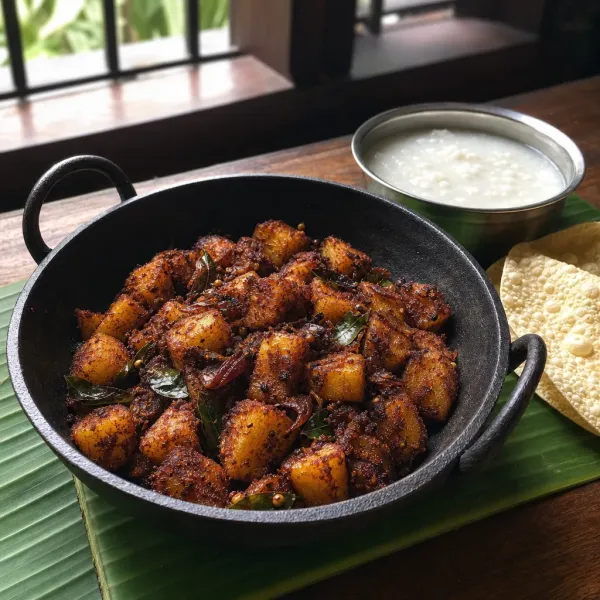
Urulakizhangu Roast
Traditional Kerala Nasrani-style potato roast with shallots, curry leaves and coconut oil. Step-by-step method for a dry, spice-coated urulakizhangu…
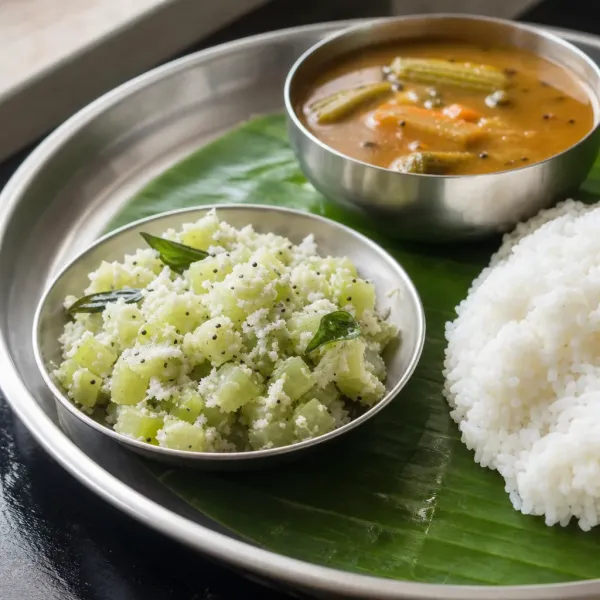
Pudalangai Poriyal
Traditional Tamil Brahmin pudalangai poriyal: snake gourd stir-fried in gingelly oil with mustard, urad dal, and fresh coconut. Ready in 30 minutes.