

Pudalangai Poriyal Recipe
Malayalam പടവലങ്ങ തോരൻTamil புடலங்காய் பொரியல்Kannada ಪಡವಲಕಾಯಿ ಪಲ್ಯTelugu పొట్లకాయ పోరియల్
- Prep15 min
- Cook15 min
- Serves4
- DifficultyEasy
- DietVegan
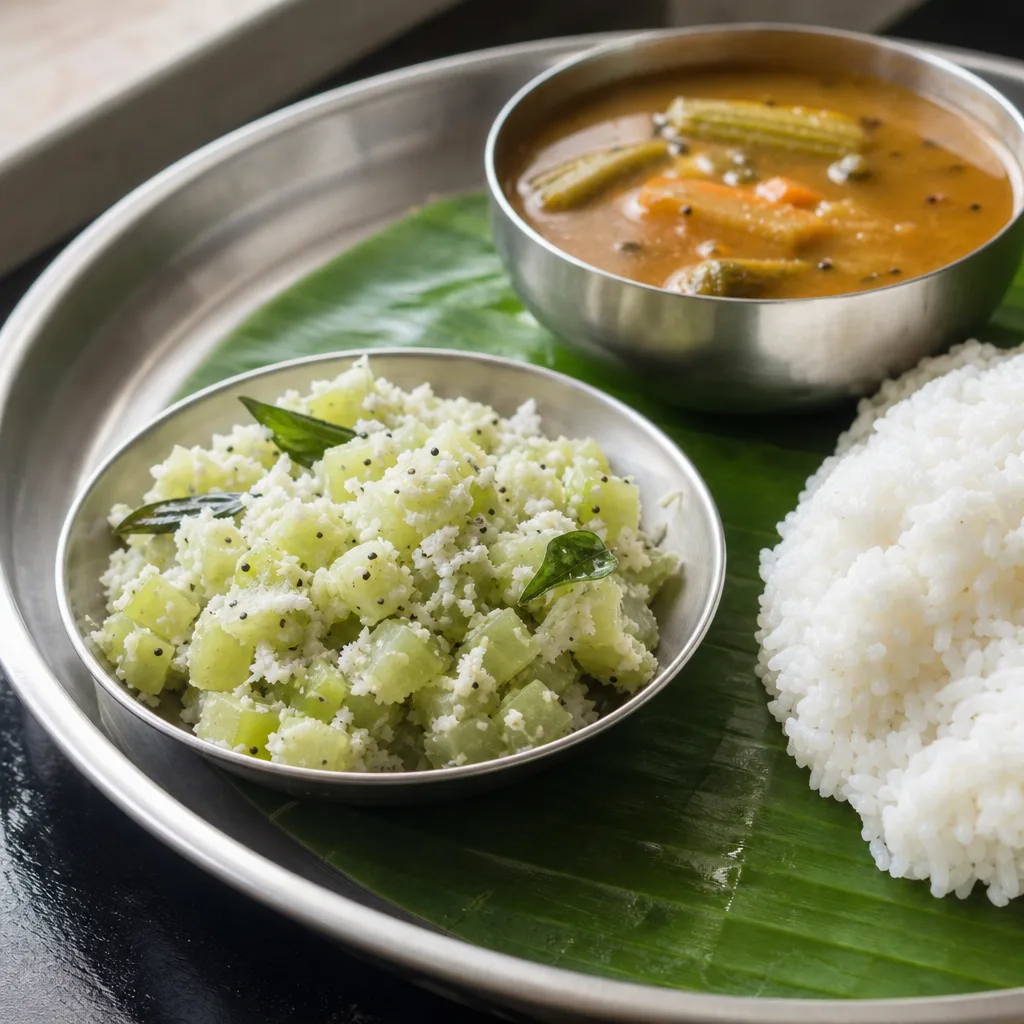
Pudalangai poriyal is an everyday Tamil Brahmin side dish, made in homes where snake gourd comes in from the kitchen garden or the weekly market. It is light, mildly spiced, and finished with freshly grated coconut. The vegetable releases a little water as it cooks, so the technique is to drive that moisture off completely and let the pieces become tender without turning mushy.
In most Iyer households this goes straight onto the thali alongside sambar and rasam, with a small mound of rice. It is not a dish that calls for attention; it is the quiet, reliable accompaniment that balances the sharper flavours on the plate. Some families add a pinch of turmeric for colour; others leave it out entirely and keep the poriyal pale green.
Household variation is modest. Some cooks add a small amount of chana dal to the tempering for a little texture and nuttiness. Some skip the coconut if none is available, though the dish is considered incomplete without it in most homes. The heat level stays gentle — one or two dried red chillies is the usual measure.
Ingredients (serves 4)
Main vegetable
For tempering
Seasoning and finish
Method
Prepare the snake gourd
Peel the snake gourd with a vegetable peeler — the skin is thin and comes off easily. Cut it into rounds about 1 cm thick, then halve or quarter each round so you have small, even pieces. Use a spoon to scrape out the white pith and seeds from the centre of each piece and discard them. The flesh should be pale green and firm.
Heat the oil and temper
Set a kadai over medium heat and add the gingelly oil. When the oil is hot but not smoking, add the mustard seeds and wait for them to pop — this takes about 30 seconds. Do not rush this step or the mustard will be raw-tasting.
Add the dals and chillies
Add the urad dal and chana dal to the popped mustard. Stir constantly; both dals should turn pale golden, not dark brown. This takes about 45 seconds on medium heat. Add the broken dried red chillies and let them darken for a few seconds, then add the curry leaves — stand back as they will splutter.
Add asafoetida and turmeric
Add the pinch of asafoetida and stir it into the oil for just a few seconds. Then add the turmeric. Keep the heat at medium; turmeric can turn bitter if it scorches.
Add the snake gourd
Tip in the prepared snake gourd pieces and toss well so every piece is coated in the tempered oil. Add salt and mix again. The vegetable will look pale and firm at this stage.
Cook until tender, driving off the moisture
Cover the kadai with a lid and cook on medium-low heat for about 6 to 7 minutes. The snake gourd will release water and steam in its own moisture. After 6 minutes, remove the lid and raise the heat to medium. Stir frequently and let the released water evaporate completely — this usually takes another 4 to 5 minutes. The pieces should be tender when pressed with a spoon but should hold their shape and not be wet or slippery. If moisture remains, the poriyal will taste steamed rather than stir-fried.
Finish with coconut
Once the moisture is gone and the pan looks dry, reduce the heat to low. Add the freshly grated coconut and toss gently for about one minute, just long enough for the coconut to warm through and mix evenly. Do not cook the coconut for longer or it will lose its fresh flavour and the poriyal will dry out excessively. Taste for salt, adjust, and remove from heat.
Rest briefly before serving
Let the poriyal sit uncovered for two minutes before transferring to a serving bowl. This allows any last trace of steam to escape and keeps the texture dry and distinct, as a poriyal should be.
How to serve
Steamed rice, sambar, and rasam on a Tamil Brahmin thali. Often accompanied by a small portion of mor kuzhambu or plain curd on the side.
Served with: Steamed rice, sambar, and rasam on a Tamil Brahmin thali. Often accompanied by a small portion of mor kuzhambu or plain curd on the side.
Cook's tips
Choosing the gourd
Pick snake gourds that are firm and no longer than about 40 cm. Very large, old gourds have tough skin, fibrous flesh, and fully formed seeds that are unpleasant to eat. The ideal gourd is young enough that the seeds are still soft and small, though you should still scrape them out.
Why gingelly oil matters
Gingelly oil (cold-pressed sesame oil, not the roasted kind used in Chinese cooking) gives this poriyal its characteristic Tamil Brahmin flavour. Coconut oil will produce a different dish. If gingelly oil is genuinely unavailable, refined sunflower oil is a neutral fallback, but the flavour will be noticeably flatter.
The moisture problem
Snake gourd holds a surprising amount of water. If you do not drive it off completely in step 6, the finished poriyal will be wet and the coconut will clump. Keep the heat high enough after removing the lid that you can hear a steady sizzle.
Fresh coconut only
Desiccated coconut does not work here. It absorbs the little remaining oil and turns the poriyal dry and grainy. Freshly grated coconut from a whole coconut, or frozen grated coconut thawed and squeezed of excess moisture, are the only acceptable options.
Regional variations
Kerala households make a similar dish called padavalanga thoran, finishing it with fresh grated coconut and curry leaves in a slightly different tempering order; Andhra homes cook potlakaya with chana dal and dried red chillies in a drier style.
Glossary
- Pudalangai புடலங்காய்
- Snake gourd in Tamil; a long, pale green vegetable with soft white pith and seeds that must be removed before cooking.
- Poriyal பொரியல்
- Tamil term for a dry vegetable stir-fry, finished with grated coconut; a standard component of the Tamil thali.
- Nallennai நல்லெண்ணெய்
- Cold-pressed gingelly oil (sesame oil) used as the cooking fat in Tamil Nadu for vegetables, kuzhambu, and pickles.
- Perungayam பெருங்காயம்
- Asafoetida; used in tiny quantities in Tamil Brahmin cooking as a digestive and flavour base, especially in dishes that contain no onion or garlic.
- Kadai கடாய்
- A wide, deep pan with sloping sides used for stir-frying and tempering across South Indian kitchens.
The two things that decide this poriyal are patience with the moisture and the freshness of the coconut. Let the snake gourd cook through fully before you open the lid, then keep the heat high long enough to drive every drop of water out of the pan. Add the coconut only at the very end and only for a minute. Get those two things right and the result is exactly what it should be: dry, fragrant, and gently spiced.
More Dry Vegetable Sides recipes
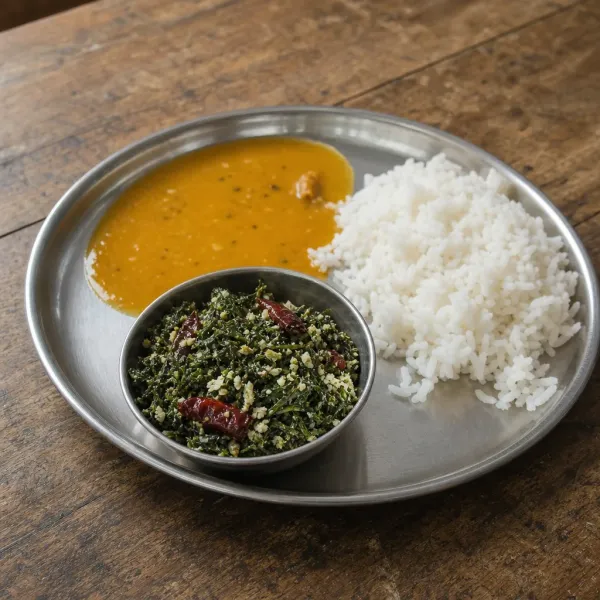
Menthya Soppu Palya
Traditional Karnataka dry stir-fry of fresh fenugreek leaves with coconut, shallots and a tempering of mustard, curry leaves and dried red chillies.
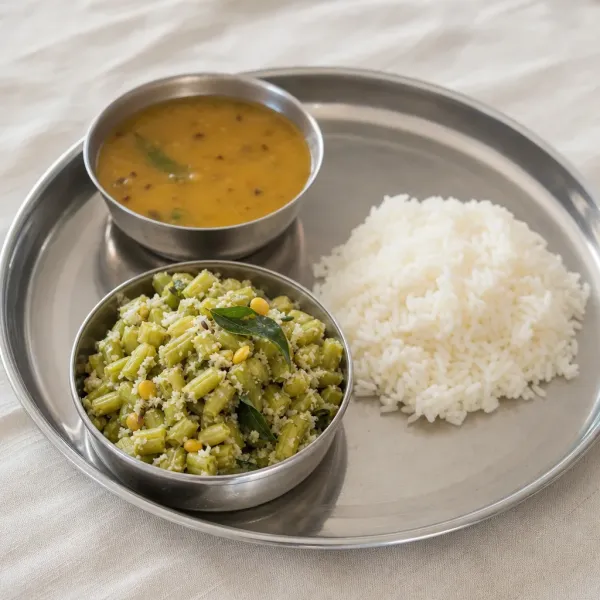
Gorikayi Palya
Traditional Karnataka gorikayi palya: cluster beans stir-fried with mustard, curry leaves, chana dal and fresh coconut. A dry, everyday vegetable sid…
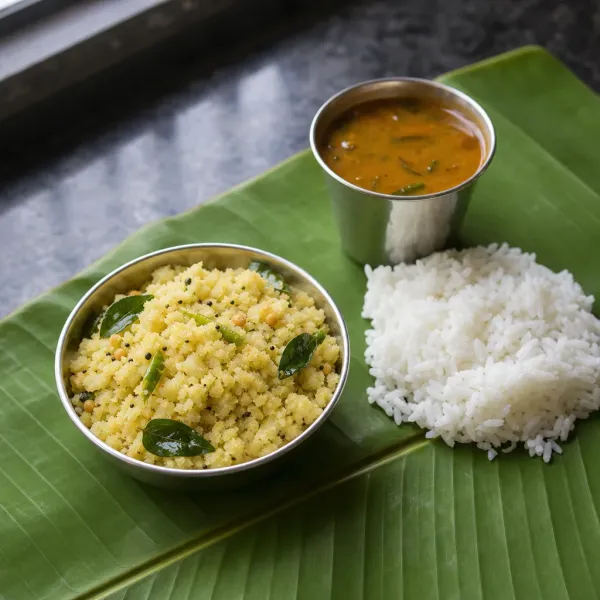
Urulakizhangu Podimas
Authentic Iyer-style crumbled potato podimas with gingelly oil, mustard, curry leaves and ginger. Dry, light and ready in under 30 minutes.
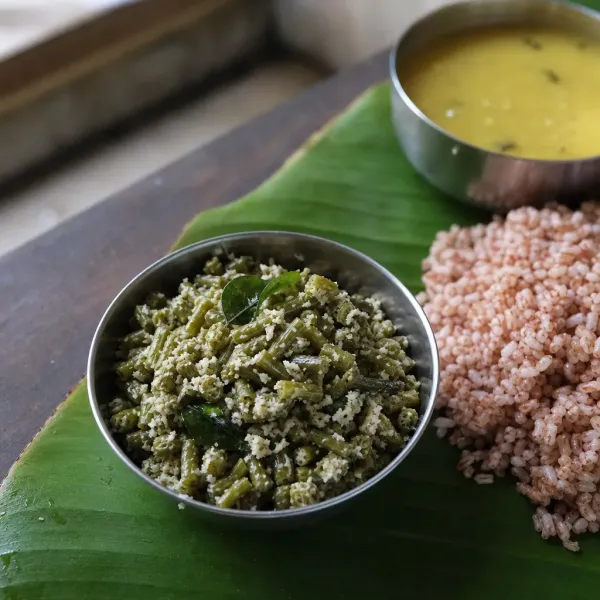
Payar Thoran (Long Beans with Coconut)
Traditional Kerala payar thoran made with long beans, fresh grated coconut and a mustard-curry leaf tempering. Dry, simple, everyday.
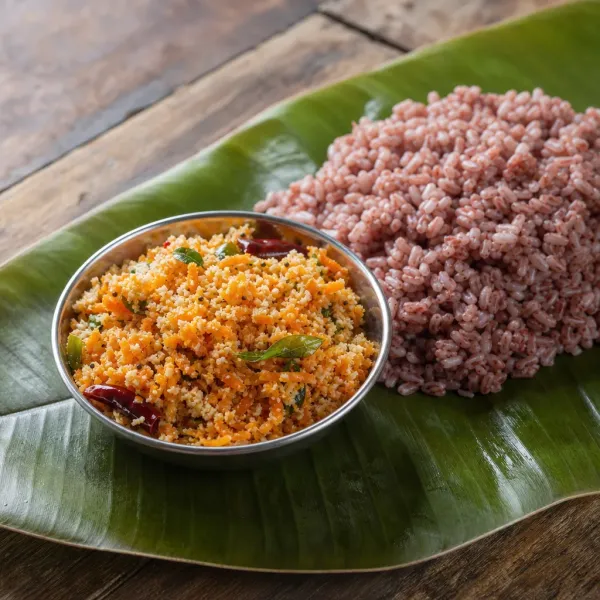
Carrot Thoran
A classic Kerala carrot thoran made with fresh grated coconut, shallots, curry leaves and coconut oil. Dry, fragrant and ready in under 30 minutes.
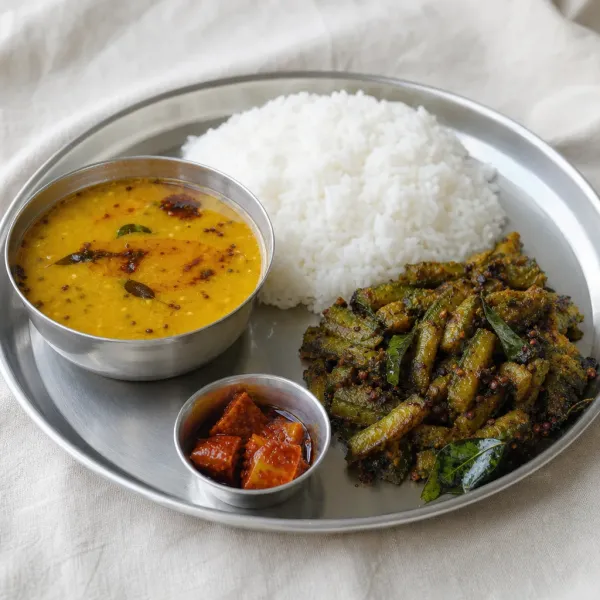
Beerakaya Vepudu (Andhra Ridge Gourd Stir-Fry)
Traditional Andhra Beerakaya Vepudu: a dry ridge gourd stir-fry cooked in gingelly oil with mustard, dried red chillies and curry leaves. Vegan and e…