

Menthya Soppu Palya Recipe
Malayalam മെന്ത്യ സൊപ്പു പല്യTamil வெந்தய கீரை பல்யKannada ಮೆಂತ್ಯ ಸೊಪ್ಪು ಪಲ್ಯTelugu మెంతి ఆకు పల్య
- Prep15 min
- Cook15 min
- Serves4
- DifficultyEasy
- DietVegan
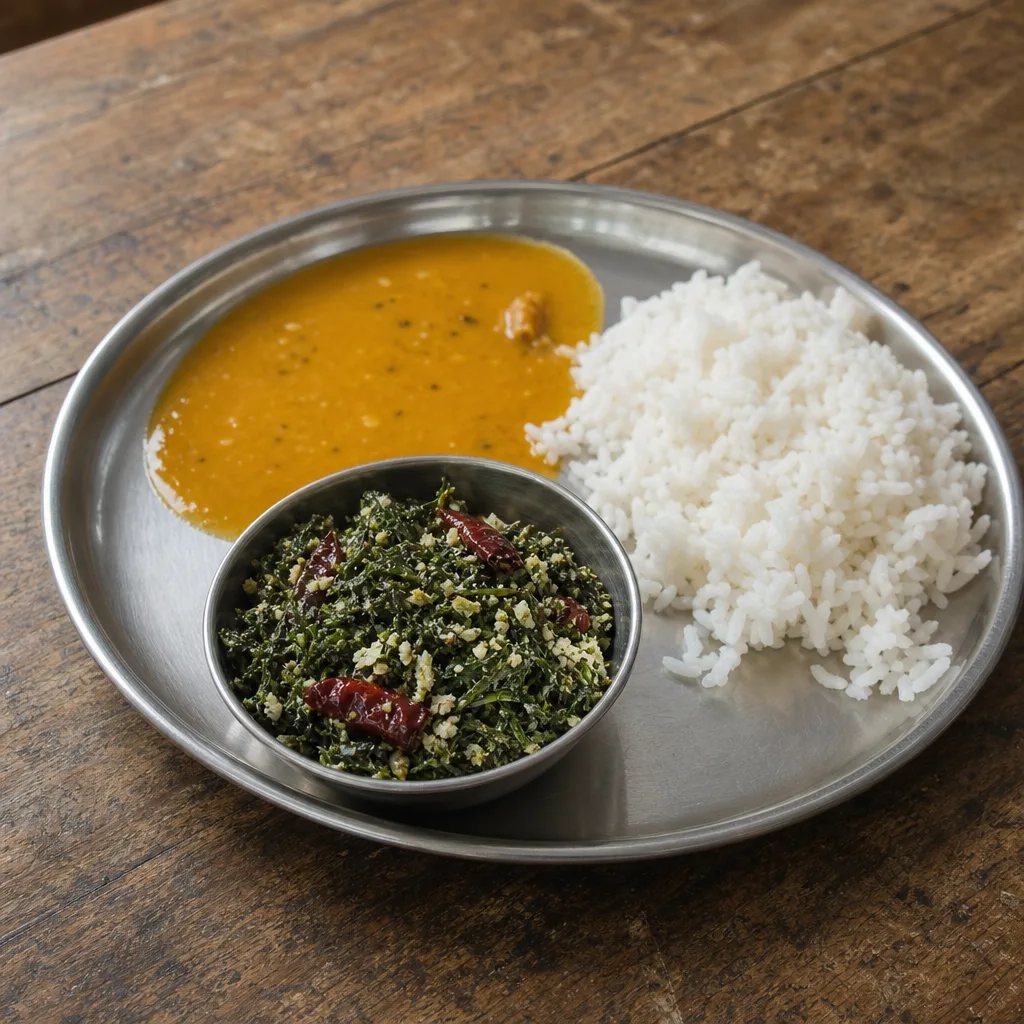
Menthya soppu palya is a dry stir-fry cooked in nearly every Karnataka household when fenugreek greens are in season, roughly from October through February. The leaves are small, tender and unmistakably bitter, and the dish makes no attempt to hide that bitterness. What it does is balance it: with the sweetness of fresh coconut, the faint heat of dried chillies, and just enough jaggery to round the edges without making the palya sweet.
This is everyday food, ready in under twenty minutes once the greens are cleaned. It goes on the plate alongside rice and sambar, or alongside chapati at dinner. Some households add a handful of chana dal to the tempering for a little texture; others keep it plain. The version here is the plainer one, which lets the greens speak.
The only real work is picking the leaves. Fenugreek stems, especially the thicker ones lower on the bunch, are too fibrous and add unwanted bitterness without the sweetness the leaves carry. Take the time to strip them properly and the palya will be far better for it.
Ingredients (serves 4)
For the palya
For the tempering
Method
Wash and dry the leaves
Place the stripped fenugreek leaves in a large bowl of cold water and swish them well. Lift them out into a colander rather than pouring, so any grit stays in the bowl. Rinse once more, then shake off as much water as you can. Excess water in the pan will make the palya soggy rather than dry.
Heat the oil and crackle the mustard
Set a wide, heavy pan or kadai over medium heat and add the coconut oil. When the oil is hot, add the mustard seeds. Keep the lid close to hand; they will splutter. Wait until the spluttering stops before moving to the next step, which takes about 30 seconds.
Add the dried chillies and curry leaves
Drop in the broken dried chillies and the curry leaves. Stand back as the curry leaves will spit in the hot oil. Fry for about 20 seconds until the chillies darken slightly and the curry leaves are crisp.
Sweat the shallots and garlic
Add the sliced shallots and garlic. Stir and cook over medium heat for 3 to 4 minutes until the shallots are soft and just beginning to colour at the edges. Do not let them brown deeply or they will overpower the greens.
Add turmeric and the fenugreek leaves
Sprinkle in the turmeric and stir for 10 seconds. Add all the fenugreek leaves at once. The pan will look very full; they will wilt down to roughly one-fifth of their raw volume. Stir to coat the leaves in the tempered oil.
Cook the greens down
Cover the pan and cook on medium-low heat for 4 to 5 minutes. The leaves will release a little moisture and wilt completely. Remove the lid, increase the heat to medium, and stir-fry for another 3 to 4 minutes until any remaining moisture evaporates. The palya should look dry, not wet or steaming.
Season with salt and jaggery
Add salt and the grated jaggery. Stir well and taste. The jaggery should not be perceptible as sweetness; it simply takes the sharp edge off the bitterness. If the leaves still taste very harsh, add another small pinch of jaggery. Cook for 1 minute more.
Finish with fresh coconut
Take the pan off the heat and stir in the freshly grated coconut. Mix thoroughly so the coconut is evenly distributed through the leaves. Do not cook it further; the coconut goes in off the heat so it stays moist and fragrant rather than drying out.
How to serve
Steamed rice with sambar and a simple dal; or with chapati and a bowl of plain yogurt. In some households it appears alongside jolada roti (jowar flatbread) with a smear of ghee.
Served with: Steamed rice with sambar and a simple dal; or with chapati and a bowl of plain yogurt. In some households it appears alongside jolada roti (jowar flatbread) with a smear of ghee.
Cook's tips
Choosing the bunch
Buy bunches where the leaves are small and bright green. Large, yellowing leaves are older and significantly more bitter, and no amount of jaggery will fully correct that. If you can only find older leaves, blanch them briefly in salted boiling water, squeeze dry, and then proceed from the tempering step.
Stripping the leaves efficiently
Hold the base of a stem in one hand and run the thumb and forefinger of the other hand up along it in one motion. The leaves come off cleanly. Discard anything thicker than a matchstick.
The jaggery question
Some cooks skip jaggery entirely and prefer the full bitterness. Others add up to a full teaspoon. Start with half and taste before adding more. The goal is balance, not sweetness.
Storage
This palya keeps for one day at room temperature in a cool kitchen, or one day refrigerated. The coconut turns stale quickly, so it is best eaten the day it is made.
Adding chana dal
A common household variation adds 2 tablespoons of chana dal to the hot oil before the mustard seeds, frying until golden. This gives the palya a pleasant crunch and a little extra body. It is genuinely traditional in many Karnataka homes, not a modern addition.
Regional variations
In Udupi households, fresh grated coconut is added more generously and the dish may include a small piece of jaggery to soften the bitterness; in some North Karnataka kitchens, a pinch of groundnut powder is stirred in at the end.
Glossary
- Menthya soppu ಮೆಂತ್ಯ ಸೊಪ್ಪು
- Fenugreek greens in Kannada; soppu means leafy greens, menthya is fenugreek.
- Palya ಪಲ್ಯ
- Karnataka term for a dry vegetable stir-fry, equivalent to Tamil poriyal or Kerala thoran.
- Kadai ಕಡಾಯಿ
- A wide, deep, round-bottomed cooking pan used across South Indian kitchens for frying and stir-frying.
- Jolada roti ಜೋಳದ ರೊಟ್ಟಿ
- Unleavened flatbread made from jowar (sorghum) flour, a staple in North Karnataka.
Two things decide this palya: the freshness of the fenugreek leaves, and the patience to cook out every drop of moisture before the coconut goes in. Young, bright leaves need only a whisper of jaggery; old or waterlogged leaves will fight you. Get the leaves right and keep the pan dry, and the dish takes care of itself.
More Dry Vegetable Sides recipes
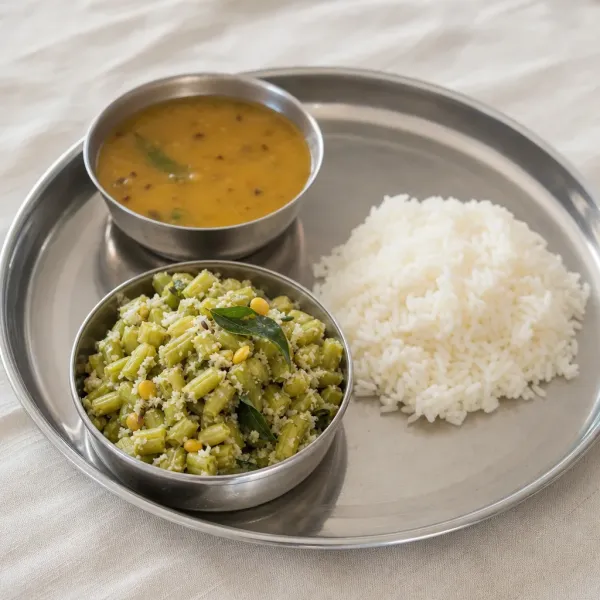
Gorikayi Palya
Traditional Karnataka gorikayi palya: cluster beans stir-fried with mustard, curry leaves, chana dal and fresh coconut. A dry, everyday vegetable sid…
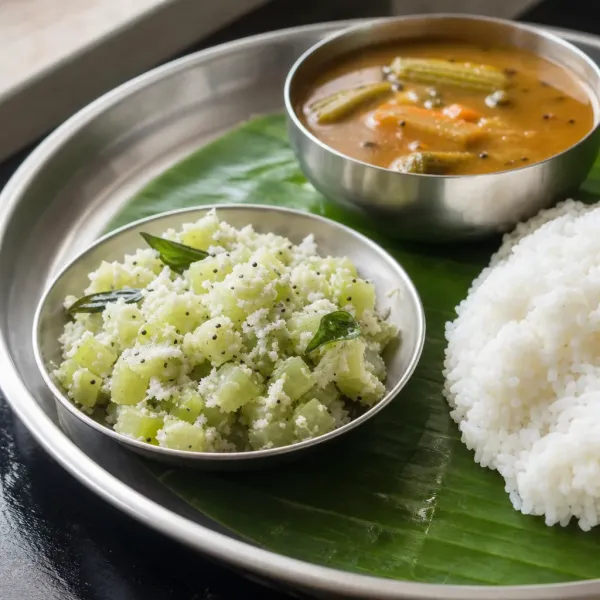
Pudalangai Poriyal
Traditional Tamil Brahmin pudalangai poriyal: snake gourd stir-fried in gingelly oil with mustard, urad dal, and fresh coconut. Ready in 30 minutes.
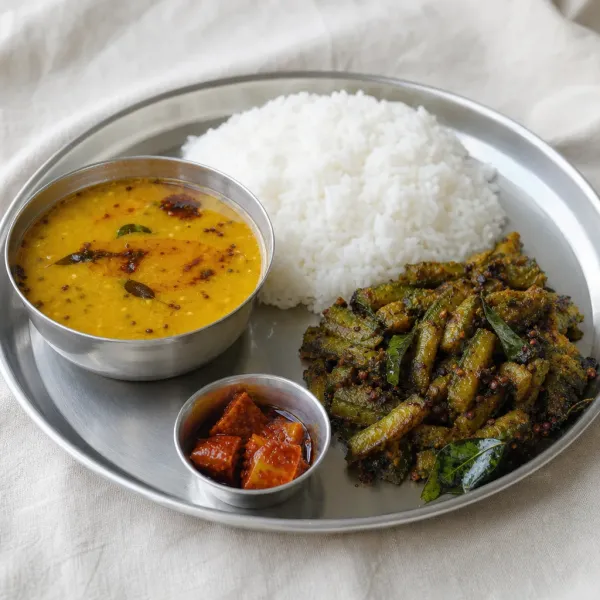
Beerakaya Vepudu (Andhra Ridge Gourd Stir-Fry)
Traditional Andhra Beerakaya Vepudu: a dry ridge gourd stir-fry cooked in gingelly oil with mustard, dried red chillies and curry leaves. Vegan and e…
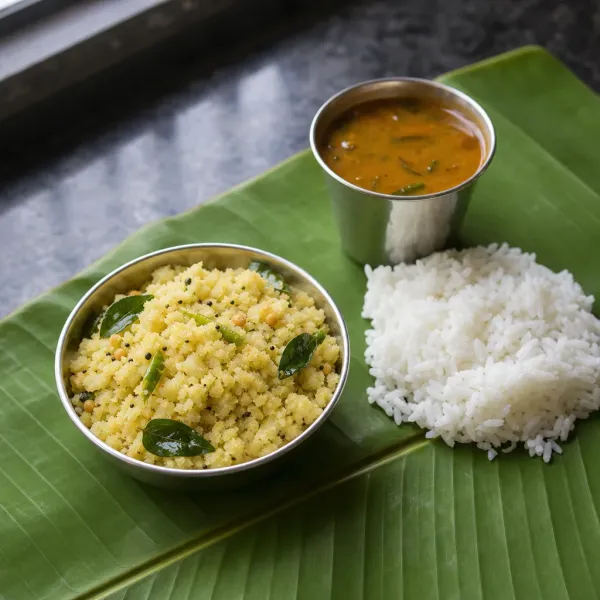
Urulakizhangu Podimas
Authentic Iyer-style crumbled potato podimas with gingelly oil, mustard, curry leaves and ginger. Dry, light and ready in under 30 minutes.
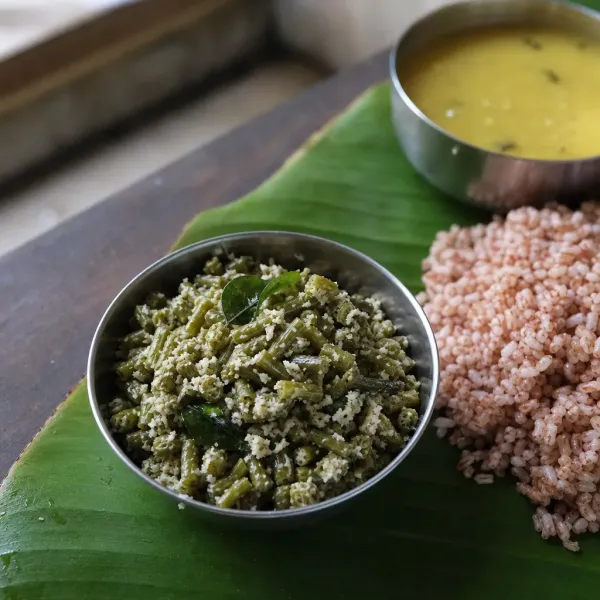
Payar Thoran (Long Beans with Coconut)
Traditional Kerala payar thoran made with long beans, fresh grated coconut and a mustard-curry leaf tempering. Dry, simple, everyday.
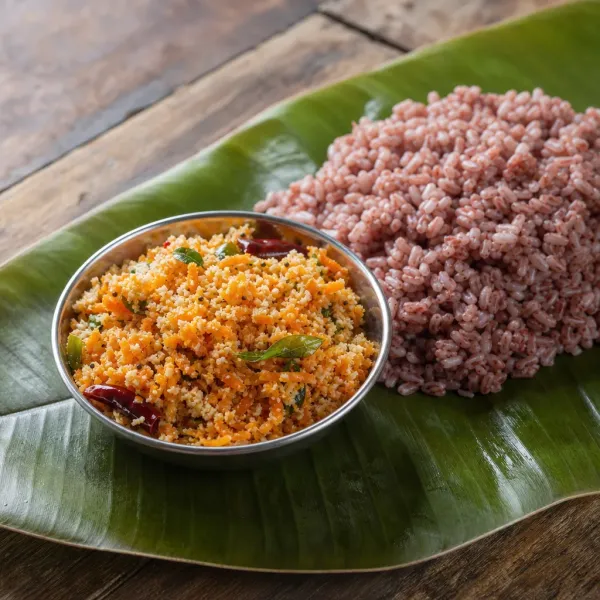
Carrot Thoran
A classic Kerala carrot thoran made with fresh grated coconut, shallots, curry leaves and coconut oil. Dry, fragrant and ready in under 30 minutes.