

Majjige Huli Recipe
Malayalam മജ്ജിഗെ ഹുളിTamil மஜ்ஜிகே ஹுளிKannada ಮಜ್ಜಿಗೆ ಹುಳಿTelugu మజ్జిగ హులి
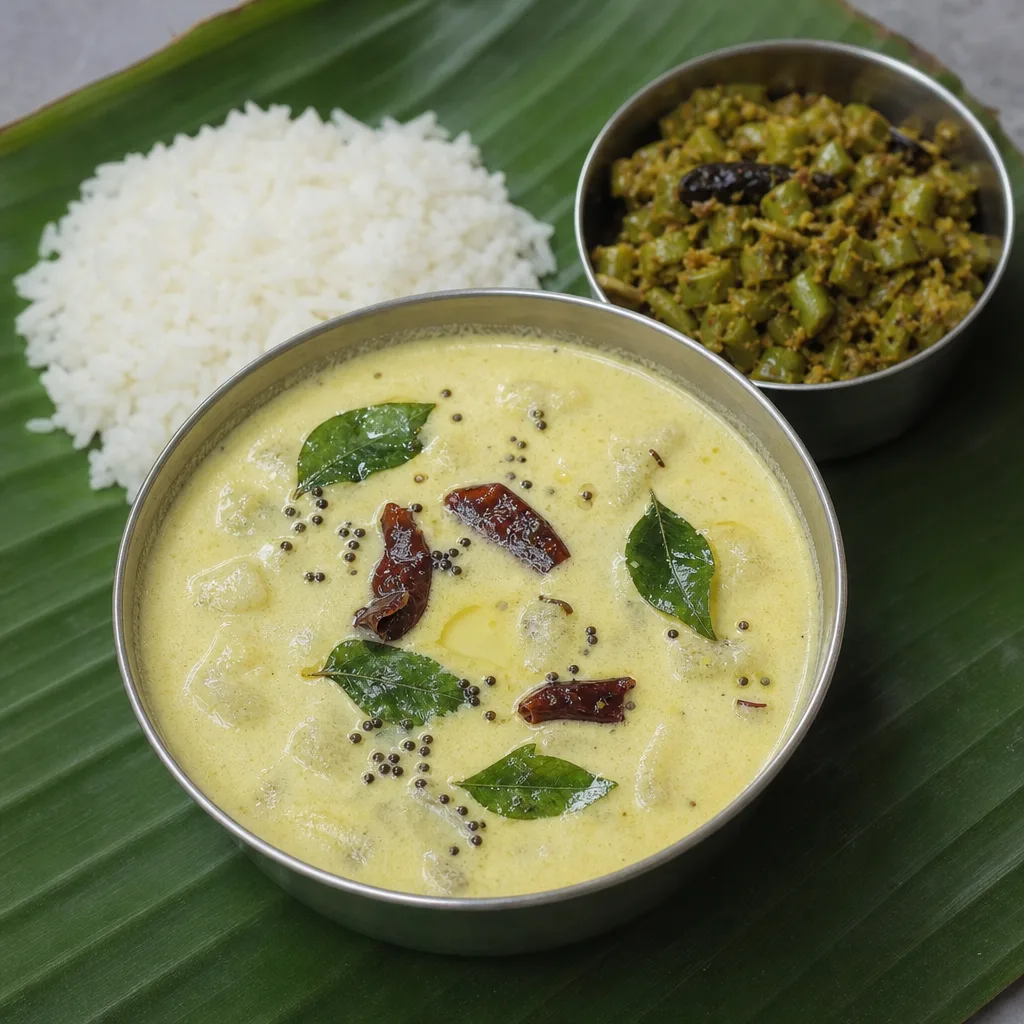
- Prep20 min
- Cook25 min
- Serves4
- DifficultyEasy
- DietVegetarian
Majjige huli is a Karnataka Brahmin buttermilk curry built on a ground coconut and green chilli paste stirred into well-soured curd. It is not the same thing as Kerala's moru curry, though they share a family resemblance. The Karnataka version is thicker, relies on a cooked coconut paste for its body, and is almost always made with a vegetable — ash gourd (boodakumbalakai) is the classic choice, though cucumber, raw banana, and yam appear in different homes and seasons.
The dish is cooked gently over low heat once the buttermilk goes in. If you rush it or let it boil hard, the curd will split and you will have a grainy, sour mess instead of a smooth, pale yellow curry. The moment you see the first real bubble, the pot comes off the flame. That is the single most important thing about this dish.
In most Madhwa households this is a weekday lunch item, ladled over plain rice alongside a dry palya and papad. Some families add a small pinch of jaggery to soften the sourness; others find that unnecessary if the curd is fresh enough. The tempering is always done in ghee — not oil — and the fragrance of ghee with mustard seeds and curry leaves going into the finished curry is the smell of this dish.
Ingredients (serves 4)
Vegetable
For the ground paste
Buttermilk base
For the tempering
Method
Soak the chana dal
Put the chana dal in a small bowl, cover with water and leave it for 15 minutes while you prepare everything else. It will not soften fully — you just need it to lose its raw hardness so it grinds smoothly. Drain before using.
Cook the ash gourd
Put the ash gourd cubes in a wide pan with 150 ml water and a pinch of salt. Cover and cook over medium heat for 8 to 10 minutes until the pieces are just tender — a knife should go in without resistance but the cubes should hold their shape. Do not overcook; they will cook again briefly once the curry goes in. Drain off any excess water and leave the gourd in the pan.
Grind the paste
Combine the grated coconut, green chillies, drained chana dal, cumin seeds and turmeric in a wet grinder or a small blender jar. Add 3 to 4 tablespoons of water — just enough to get the blades moving — and grind to a very smooth, fine paste. It should feel silky between your fingers, with no gritty coconut texture remaining. This takes about 3 minutes in a good blender, longer in a stone grinder.
Whisk the buttermilk
Beat the curd with 200 ml water until completely smooth and lump-free. The mixture should be pourable, roughly the consistency of thin lassi. If your curd is very thick, add a little more water. Season with salt now.
Combine paste and buttermilk
Add the ground coconut paste to the whisked buttermilk and stir well until fully incorporated. Taste for salt and sourness. The raw mixture will smell sharp; that mellows once it is cooked.
Add the buttermilk mixture to the gourd
Pour the coconut-buttermilk mixture over the cooked ash gourd in the pan. Place the pan over low heat. Stir gently and continuously as it heats. Do not walk away from this step.
Heat gently — stop before it boils
Keep the heat low and stir without stopping. The curry will slowly turn from opaque white to a pale, creamy yellow as it warms through. The moment you see the first proper bubble break the surface — not a shimmer, an actual bubble — take the pan off the heat immediately. Boiling will split the curd and ruin the texture. The finished curry should be smooth and slightly thickened, not watery.
Make the tempering
Heat the ghee in a small tempering ladle or a tiny pan over medium heat. When the ghee is hot, add the mustard seeds and wait for them to pop — about 30 seconds. Add the broken dried red chillies and curry leaves; they will crackle and spit. Add the asafoetida, stir once, and pour the entire tempering immediately over the curry.
Rest briefly and serve
Cover the pan for 2 minutes so the tempering fragrance infuses into the curry. Stir once gently, check salt, and serve. Majjige huli does not hold well on heat — serve it within 10 to 15 minutes of making it.
How to serve
Steamed plain rice (sona masoori or raw rice); a dry vegetable palya such as beans or carrot; papad; sometimes a small portion of pickle.
Served with: Steamed plain rice (sona masoori or raw rice); a dry vegetable palya such as beans or carrot; papad; sometimes a small portion of pickle.
Cook's tips
The curd must be sour
Fresh, mild curd makes a flat-tasting curry. Day-old curd kept at room temperature overnight in a warm kitchen is ideal. If your curd is not sour enough, the dish will taste bland no matter how much salt you add.
Do not reheat
Reheating splits the buttermilk base. If you must warm leftovers, do it over the lowest possible heat, stirring constantly, and stop well before it simmers. Many households simply eat it at room temperature the second time.
Vegetable choices
Ash gourd is traditional and absorbs the curry beautifully. Cucumber (cut and lightly salted to remove excess water first), raw banana (boiled separately), and elephant yam are all used in different homes. Avoid vegetables that release a lot of liquid once cut, as this will thin the curry unpredictably.
Grinder versus blender
A wet grinder gives a finer, creamier paste than a blender. If using a blender, grind the coconut in two short bursts and check the texture. A coarse paste will leave threads of coconut in the finished curry.
Chana dal in the paste
Some families omit the chana dal entirely and rely on coconut alone for body. Others use a teaspoon of soaked toor dal. The dal is a thickener, not a dominant flavour. Leave it out if you prefer a thinner, more delicate curry.
Regional variations
Havyaka Brahmin version uses more coconut and less dal in the paste; Udupi temple-style omits onion and uses ash gourd almost exclusively; Tamil Brahmin mor kuzhambu is a close parallel but uses a different spice set and toor dal.
Glossary
- Majjige ಮಜ್ಜಿಗೆ
- Buttermilk or thinned sour curd in Kannada.
- Huli ಹುಳಿ
- Sour curry in Kannada; the word also means sourness.
- Boodakumbalakai ಬೂದುಕುಂಬಳಕಾಯಿ
- Ash gourd (winter melon); the traditional vegetable for this dish.
- Palya ಪಲ್ಯ
- A dry vegetable stir-fry served alongside rice in Karnataka meals.
- Jeerige ಜೀರಿಗೆ
- Cumin seeds in Kannada.
- Hing ಹಿಂಗು
- Asafoetida; used in small quantities in the tempering of many Karnataka Brahmin dishes.
Two things decide this dish: the sourness of the curd and the discipline to pull the pan off the heat before it boils. Get both right and the curry is smooth, pale, gently fragrant with ghee and cumin, and deeply comforting over plain rice. Misjudge either and no amount of adjusting will fix it.
More Vegetarian Gravies recipes
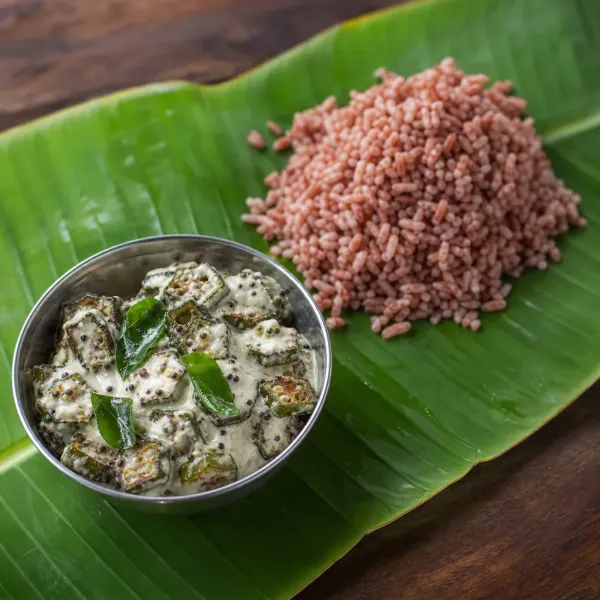
Vendakka Kichadi
Traditional Kerala Vendakka Kichadi: crisp-fried okra folded into a fresh coconut and sour curd base, tempered with mustard and curry leaves in cocon…
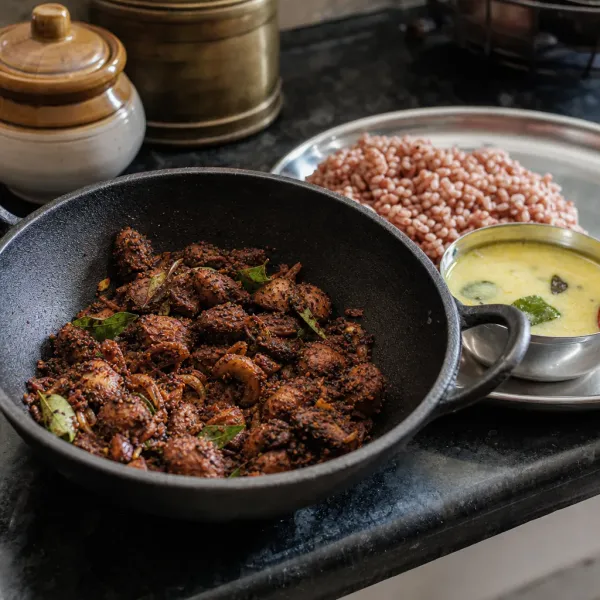
Mushroom Pepper Masala
A dry, pepper-forward mushroom masala from Nasrani kitchens in Travancore, cooked in coconut oil with shallots and curry leaves. Ready in 40 minutes.
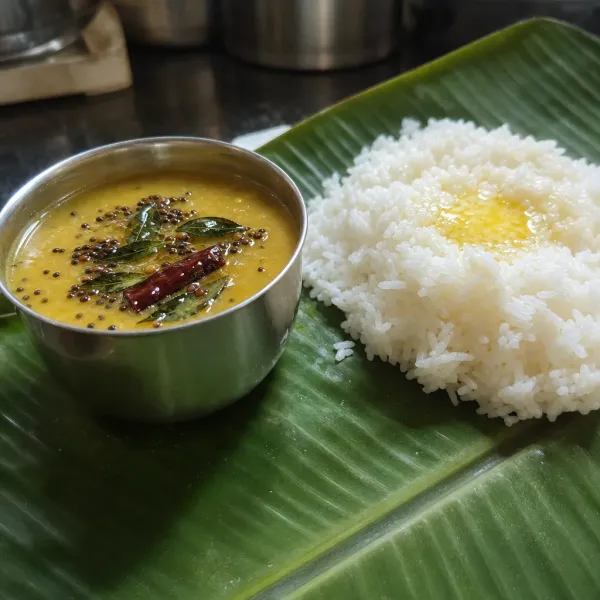
Tovve
Authentic Karnataka Brahmin tovve: mild toor dal with a ghee tempering of mustard, cumin, curry leaf and asafoetida. Ready in 35 minutes.
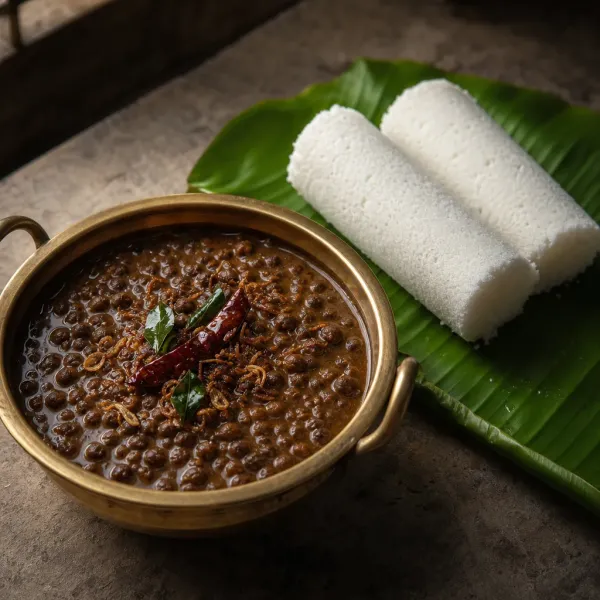
Kadala Curry
Authentic Kerala kadala curry with roasted coconut paste and shallots. The classic breakfast partner for puttu, made the traditional household way.
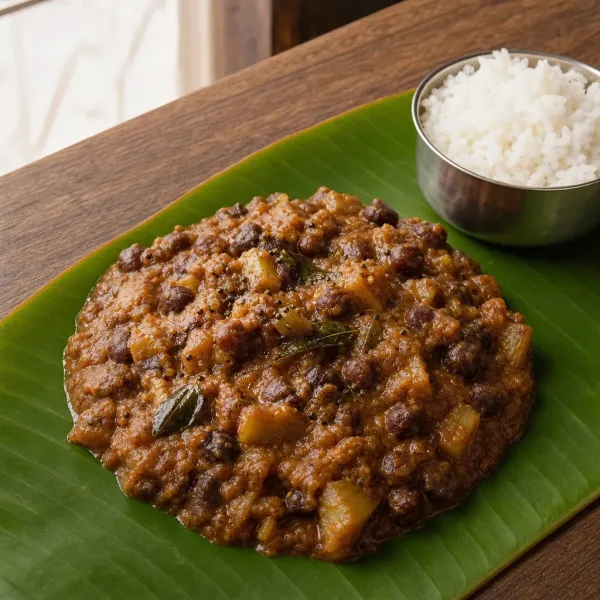
Kootu Curry
Traditional Kerala kootu curry with kala chana, raw banana, and yam in a deep-roasted coconut paste. A fixed dish on the sadya leaf.
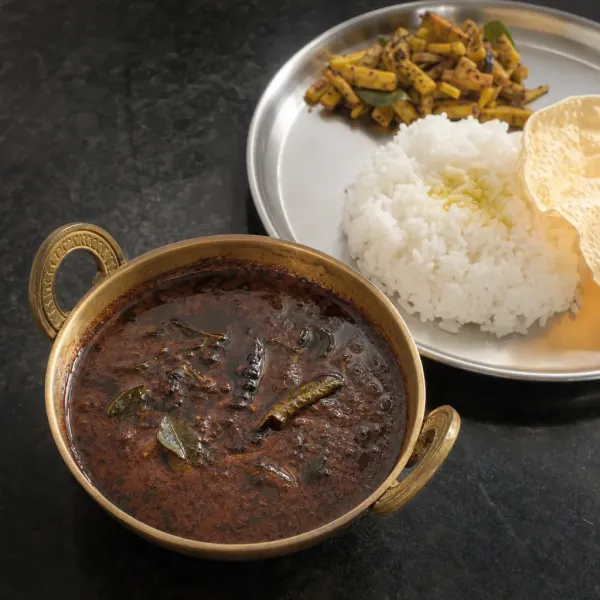
Milagu Kuzhambu
Traditional Tamil Brahmin milagu kuzhambu made with whole black pepper, tamarind, shallots, and gingelly oil. Thick, pungent, and cooked the old way.