

Kadala Curry Recipe
Malayalam കടല കറിTamil கடலை கறிKannada ಕಡಲೆ ಕರಿTelugu కందల కూర
- Prep20 min
- Soak / ferment8 hr
- Cook50 min
- Serves4
- DifficultyMedium
- DietVegan
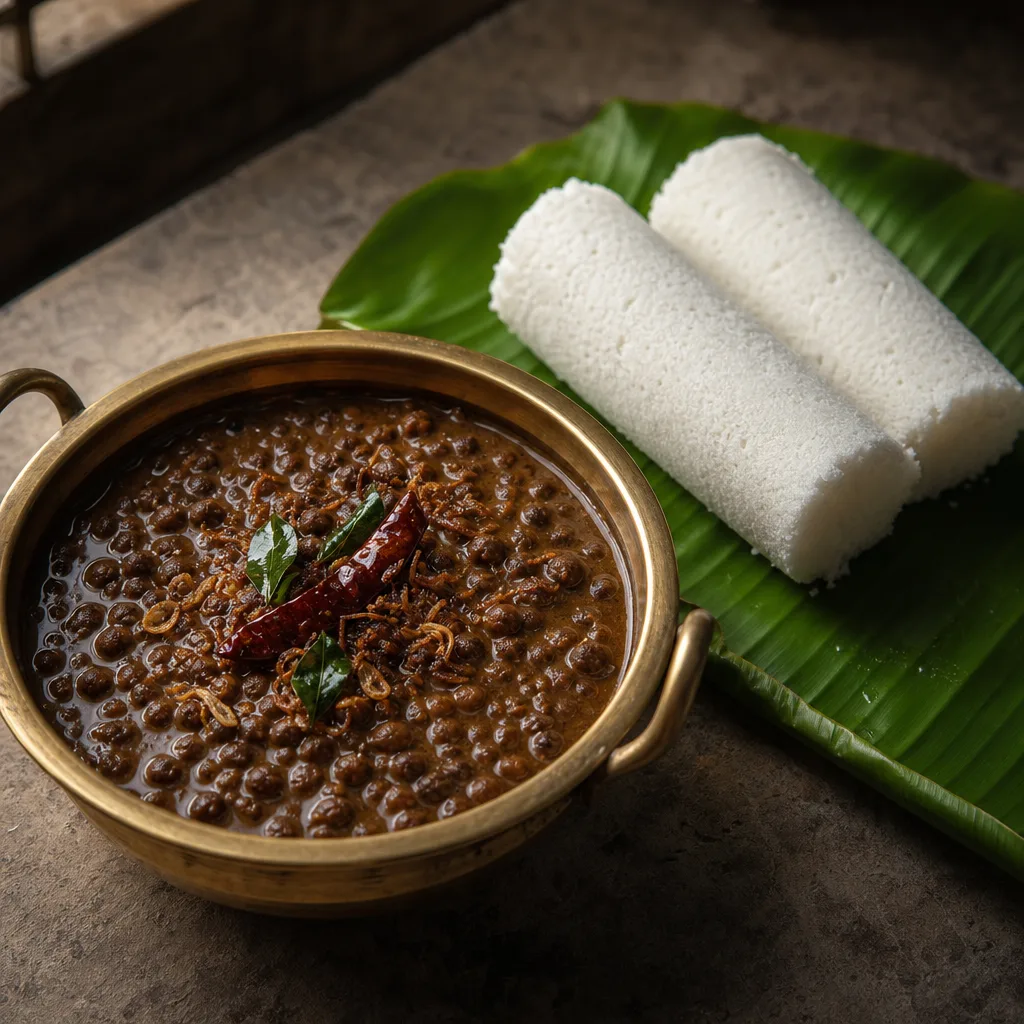
Kadala curry is the natural partner of puttu in Kerala households. The two are eaten together at breakfast or supper, the dry, crumbly puttu soaking up the dark, spiced gravy. Black chana (kala chana) is used, not white chickpeas. The colour of the finished curry comes from slow-cooked shallots and a paste of roasted coconut, coriander and dried chillies ground together until deep brown.
Most Kerala households make this without tomato. The body comes entirely from the ground coconut paste and the starch released by the chana. The gravy should be thick enough to coat the back of a spoon, not watery, and the colour should be a warm, dark brown with reddish undertones from the roasted paste.
Every household adjusts the heat and the roasting time for the coconut to taste. Some grind the coconut paste very fine; others leave it slightly coarse, which gives a rougher, more textured gravy. Both are correct. What is not negotiable is the roasting: under-roasted coconut gives a raw, pale curry that tastes flat.
Ingredients (serves 4)
To soak and cook
For the roasted coconut paste
For the base
For the tempering
Seasoning
Method
Soak the chana
Put the black chana in a large bowl, cover with at least three times their volume of cold water, and leave for 8 hours or overnight. They will swell to nearly double in size. Drain and rinse. If any chana have not plumped at all, they are old stock and will take much longer to cook.
Pressure-cook the chana
Put the soaked, drained chana in a pressure cooker with enough fresh water to cover by 2 cm, and add ½ tsp salt. Cook on medium-high heat for 5 to 6 whistles, then lower the heat and cook for another 10 minutes. Let the pressure release naturally. The chana should be completely soft when pressed between two fingers but not falling apart. If they are still firm, cook for 2 more whistles. Reserve all the cooking liquid.
Roast the coconut and whole spices
Heat a dry iron or heavy pan on medium flame. Add the grated coconut, coriander seeds, dried red chillies, black peppercorns, and fennel seeds together. Stir constantly. The coconut will first turn pale, then begin to smell nutty, then darken to a deep golden-brown. This takes 8 to 12 minutes and cannot be rushed. If the heat is too high, the outside chars before the inside is roasted. You want an even, dark brown colour throughout, not black. Remove from the pan immediately and spread on a plate to cool.
Grind the paste
Once the roasted coconut mixture is cool enough to handle, put it in a grinder jar with the turmeric powder and 3 to 4 tbsp of the chana cooking liquid. Grind to a smooth, thick paste. Add liquid a little at a time; you want a paste, not a slurry. Set aside.
Cook the shallots and aromatics
Heat 3 tbsp coconut oil in a heavy-bottomed pan or uruli over medium heat. Add the sliced shallots and cook, stirring often, for 8 to 10 minutes until they turn a deep golden-brown. Do not rush this step; under-cooked shallots make the curry taste raw and sweet. Add the crushed garlic, ginger, slit green chillies, and curry leaves. Cook for another 3 minutes until the raw smell of garlic is gone.
Add the coconut paste
Add the ground coconut paste to the pan and stir it into the shallot base. Cook on medium-low heat for 4 to 5 minutes, stirring frequently, until the paste darkens slightly and the oil begins to separate at the edges. This step builds the depth of the curry; do not skip it.
Add the chana and cooking liquid
Add the cooked chana to the pan along with 1 to 1½ cups of the reserved cooking liquid, depending on how thick you want the gravy. Stir well to combine everything. Taste and adjust salt.
Simmer to finish
Bring to a gentle boil, then lower the heat and simmer uncovered for 10 to 12 minutes. The gravy will thicken as it reduces and the chana will absorb some of the paste. The finished curry should be thick and dark, coating the chana. If it is too thick, add a splash more cooking liquid. If too thin, simmer a little longer.
Temper and finish
In a small pan, heat 1 tsp coconut oil over medium-high heat. Add the mustard seeds and wait for them to splutter. Add the dried red chilli, curry leaves, and the thinly sliced shallots. Fry until the shallots turn brown and crisp, about 3 to 4 minutes. Pour this tempering over the curry and stir once. Serve hot.
How to serve
Puttu (steamed rice and coconut cylinders); also eaten with appam or plain boiled matta rice.
Served with: Puttu (steamed rice and coconut cylinders); also eaten with appam or plain boiled matta rice.
Cook's tips
Old chana takes longer
Black chana from a packet that has sat on the shelf for months will not soften in 5 whistles. If they are still firm after pressure cooking, cook for 3 to 4 more whistles. There is no shortcut for old legumes.
The roasting is the recipe
The dark colour and nutty depth of the curry come entirely from how well the coconut is roasted. Pale-roasted coconut gives a pale, flat curry. If you are unsure, roast a minute longer than you think is needed.
Save the cooking liquid
The water the chana cooked in is starchy and flavoured. Use it to adjust the consistency of the curry. Plain water will thin the flavour.
Making it ahead
The curry tastes better the next day once the chana has absorbed the gravy. Reheat gently with a splash of water; it thickens considerably as it cools.
Dried coconut shortcut
Some households use dried copra (not desiccated coconut from a packet) when fresh coconut is unavailable. Copra roasts faster and gives a slightly different but acceptable flavour. Desiccated sweetened coconut is not a substitute.
Regional variations
Mappila households in Malabar make a darker, more spice-forward version without coconut paste, sometimes with whole spices fried in coconut oil; Nasrani kitchens occasionally add a small piece of kudampuli for sourness.
Glossary
- Kadala കടല
- Black chana (kala chana) in Malayalam; the word also covers chickpeas generally but in this context always means the small black variety.
- Shallots (Kerala) ചെറിയ ഉള്ളി
- Small, pink-purple shallots native to Kerala, sharper and more aromatic than large onions; essential to the flavour of most Kerala curries.
- Uruli ഉരുളി
- A wide, shallow brass or bell-metal cooking vessel traditional to Kerala kitchens, used for curries and frying.
- Kudampuli കുടംപുളി
- Malabar tamarind (Garcinia cambogia); the souring agent used in Kerala fish curries and some meat curries, distinct from tamarind.
- Kanthari കാന്താരി
- Small, fiery bird's eye chilli grown in Kerala; used for heat in curries and chutneys.
Two things decide this curry: the depth of the coconut roast and the patience spent on the shallots. Rush either and the result is pale and flat. Get both right and the gravy has a dark, layered warmth that no spice powder can replicate.
More Vegetarian Gravies recipes
Tovve
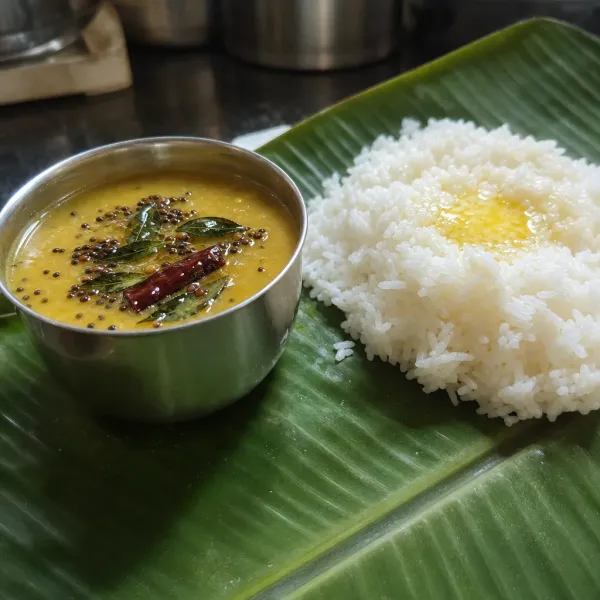
Authentic Karnataka Brahmin tovve: mild toor dal with a ghee tempering of mustard, cumin, curry leaf and asafoetida. Ready in 35 minutes.
Vendakka Kichadi
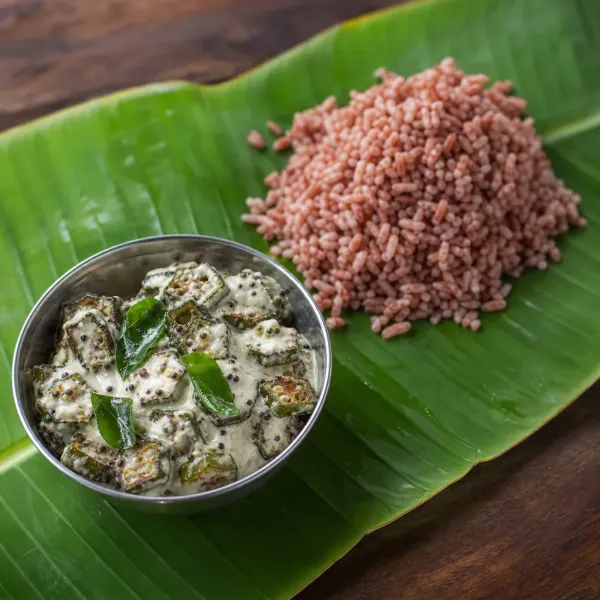
Traditional Kerala Vendakka Kichadi: crisp-fried okra folded into a fresh coconut and sour curd base, tempered with mustard and curry leaves in cocon…
Vendhaya Kuzhambu
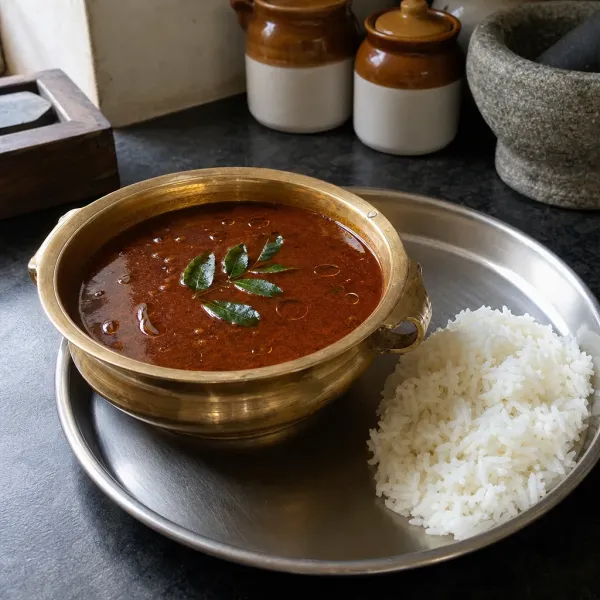
Traditional Tamil Brahmin vendhaya kuzhambu made with tamarind, roasted fenugreek paste, fresh coconut, and gingelly oil. A pourable rice kuzhambu.
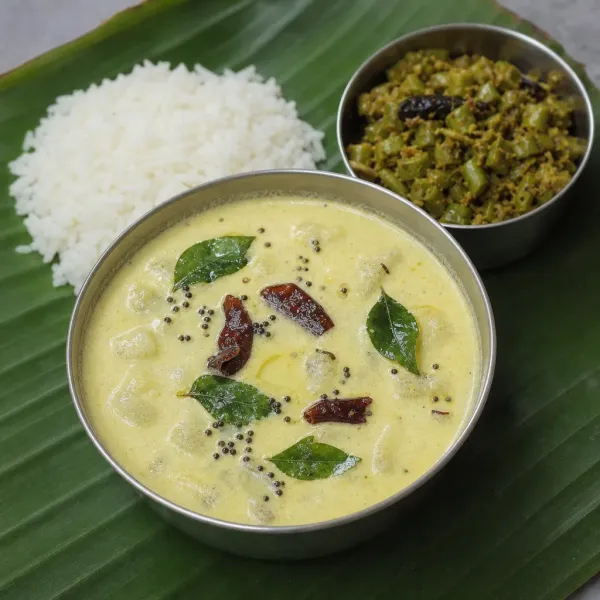
Majjige Huli
Traditional Karnataka Brahmin majjige huli with ash gourd, fresh coconut paste and sour curd. Step-by-step method with tips to prevent splitting.
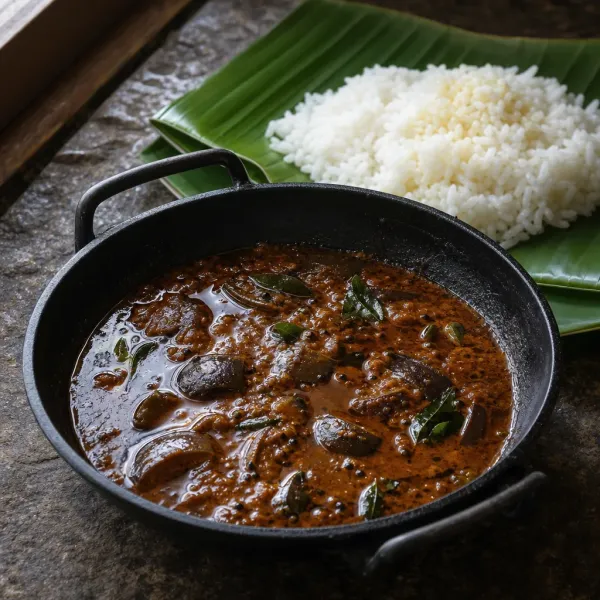
Puli Kuzhambu
Traditional Tamil Brahmin puli kuzhambu with brinjal, freshly ground coconut-spice paste, and gingelly oil. Thick, sour, deeply spiced weekday rice d…
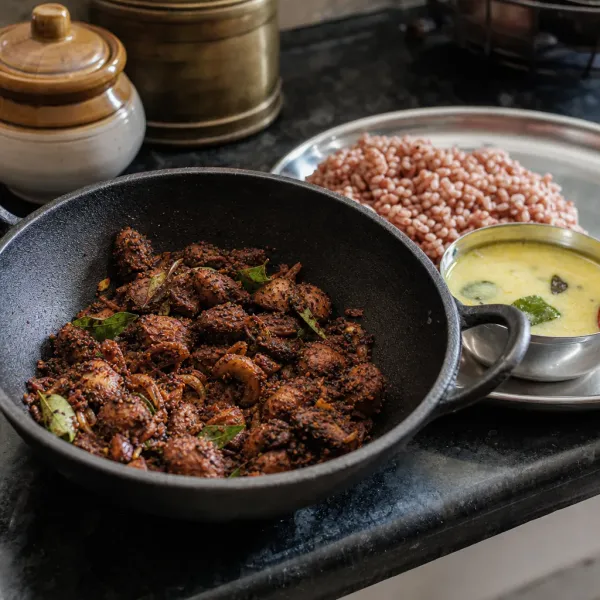
Mushroom Pepper Masala
A dry, pepper-forward mushroom masala from Nasrani kitchens in Travancore, cooked in coconut oil with shallots and curry leaves. Ready in 40 minutes.