

Puli Kuzhambu Recipe
Malayalam പുളി കുഴമ്പ്Tamil புளி குழம்புKannada ಹುಳಿ ಕುಳಂಬುTelugu పులి కుళంబు
- Prep20 min
- Cook40 min
- Serves4
- DifficultyMedium
- DietVegan
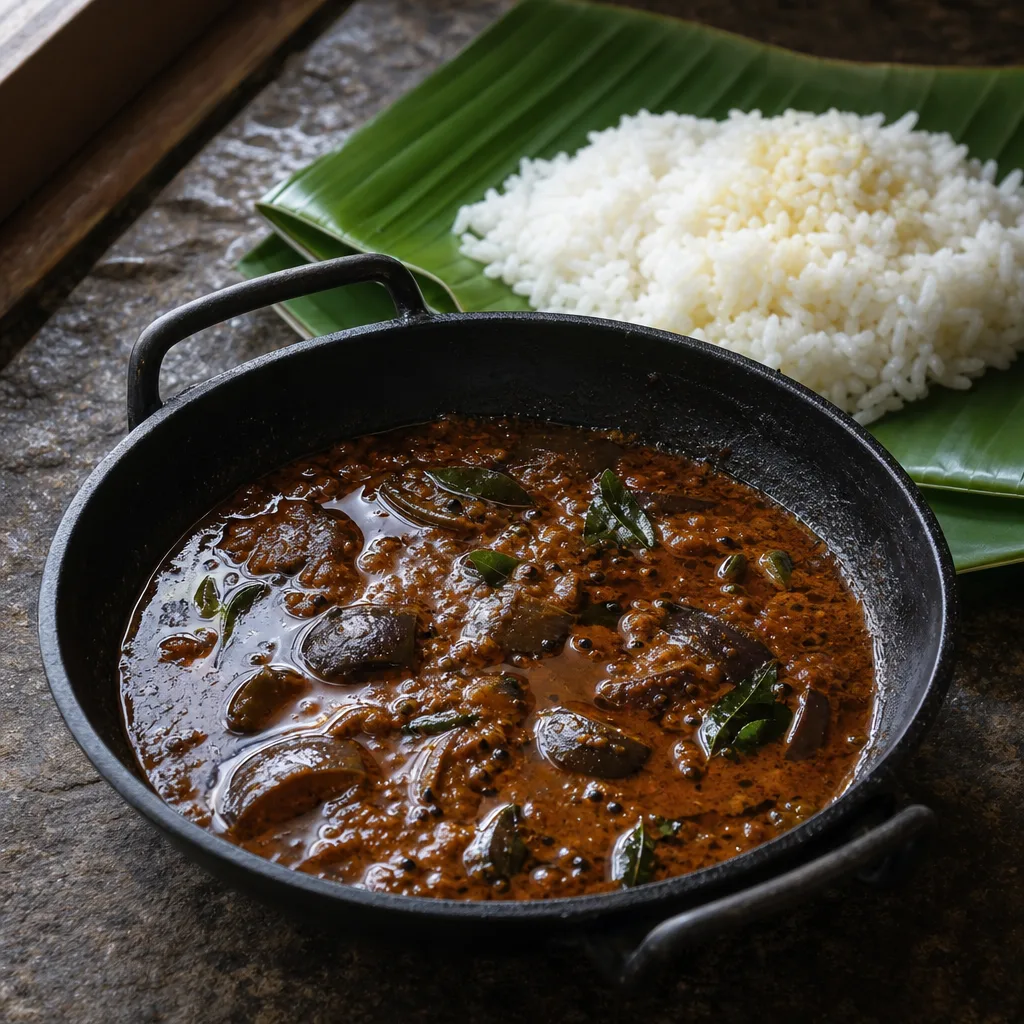
Puli kuzhambu is a thick, dark, intensely sour tamarind kuzhambu cooked in gingelly oil with a freshly ground coconut-spice paste. It belongs firmly to the Tamil Brahmin kitchen, where it appears at least once a week, usually on the day after a festival when the cooking is meant to be simple and the rice plentiful. It keeps well for two or three days and deepens in flavour as it sits.
The kuzhambu is eaten with plain cooked rice, a small pool of gingelly oil poured directly over the rice before mixing. The sourness of the tamarind, the heat of the dried chillies, and the slight sweetness of the coconut paste come together only after the kuzhambu has cooked down to a consistency that coats the back of a spoon. If it is still thin enough to pour freely, it needs more time on the fire.
Households differ mainly in the vegetable: brinjal (kathirikkai) is the most common, sundakkai (turkey berry) is the more traditional, and some homes use a combination of the two. A few families add a small piece of raw mango in season instead of increasing the tamarind. The recipe here uses brinjal, which is what most households cook on a weekday.
Ingredients (serves 4)
For soaking
For the fresh ground paste
For the kuzhambu
Method
Soak the tamarind
Break the tamarind into a small bowl, pour 300 ml of warm water over it and leave it for 20 minutes. Work it with your fingers until all the pulp has dissolved into the water, then strain through a sieve, pressing the fibres firmly. You should have a thick, dark extract of about 250 ml. Discard the fibres and seeds.
Dry-roast the spices for the paste
Set a small heavy pan over medium-low heat with no oil. Add the coriander seeds, cumin, black pepper and dried red chillies one after another, stirring constantly. The seeds will darken a shade and smell nutty; the chillies will puff and turn a deeper brick-red. This takes about 3 minutes total. Tip onto a plate immediately so they do not continue cooking in the residual heat of the pan.
Grind the paste
Put the roasted spices into a wet grinder or stone grinder with the fresh grated coconut and 3 to 4 tablespoons of water. Grind to a smooth, thick paste. The coconut should not be gritty; run the grinder for at least 5 minutes, scraping down the sides. A smooth paste integrates into the kuzhambu properly; a coarse one stays in lumps.
Temper the oil
Heat the gingelly oil in a heavy-bottomed kadai over medium heat until it shimmers. Add the mustard seeds and let them splutter completely before adding anything else. Add the dried red chillies for tempering, then the curry leaves, standing back as they will spit. Let the leaves crisp for 30 seconds.
Cook the shallots and garlic
Add the halved shallots and crushed garlic to the tempered oil. Cook over medium heat, stirring often, for about 8 minutes until the shallots are soft, translucent, and beginning to colour at the edges. Do not rush this step; undercooked shallots leave a raw, sharp note in the finished kuzhambu.
Add turmeric and brinjal
Sprinkle in the turmeric powder and stir for 30 seconds. Drain the brinjal pieces and add them to the kadai. Stir to coat them in the oil and shallot mixture. Cook for 4 minutes over medium heat, turning the pieces, until the cut surfaces start to soften and take on a little colour.
Pour in the tamarind extract
Add the tamarind extract and 100 ml of water. Add salt. Stir and bring to a boil over medium-high heat, then reduce to a steady simmer. Cook uncovered for 12 to 15 minutes. The brinjal should be fully cooked through and the raw tamarind smell should have cooked off entirely; if you can still smell uncooked tamarind, give it another 5 minutes.
Add the ground paste
Add the coconut-spice paste and stir it into the kuzhambu thoroughly, breaking up any clumps. Rinse the grinder with 50 ml of water and add that too. Reduce the heat to medium-low. Stir frequently to prevent the coconut paste from catching at the bottom.
Simmer to the right consistency
Cook uncovered for another 10 to 12 minutes, stirring every couple of minutes. The kuzhambu is ready when it has thickened to a consistency that coats the back of a spoon and the oil begins to separate and float at the surface in small pools. The colour will deepen to a dark reddish-brown. Taste and adjust salt.
Rest before serving
Take the kadai off the heat and let the kuzhambu rest for at least 10 minutes before serving. It thickens further as it sits and the flavours settle. If it becomes too thick on reheating the next day, add a splash of water and warm gently over low heat.
How to serve
Plain cooked rice (ideally short-grain raw rice or matta rice), with a small pour of gingelly oil mixed directly into the rice before ladling the kuzhambu. Papad and a simple kootu or poriyal alongside.
Served with: Plain cooked rice (ideally short-grain raw rice or matta rice), with a small pour of gingelly oil mixed directly into the rice before ladling the kuzhambu. Papad and a simple kootu or poriyal alongside.
Cook's tips
Gingelly oil is not optional
This kuzhambu is built on the flavour of gingelly oil. Substituting refined oil or coconut oil changes the character of the dish completely. Use cold-pressed gingelly oil if you can find it.
Vegetable choices
Sundakkai (turkey berry) is the more traditional vegetable. Fry the berries in the oil first until they blister before adding the shallots. Drumstick pieces are also used; add them with the tamarind extract as they take longer than brinjal.
The paste must be smooth
A coarse coconut paste will not dissolve into the kuzhambu. If you are using a mixer-grinder rather than a stone grinder, add a little more water and run it for longer, scraping down the sides several times.
It keeps well
Puli kuzhambu stored in a clean dry container at room temperature keeps for 2 days in a hot climate and up to 4 days refrigerated. The tamarind acts as a preservative. Do not use a wet spoon to serve from the container.
Adjusting sourness
Tamarind varies considerably in sourness. Taste the extract before adding it. If it is very sour, use 200 ml of extract and make up the volume with water. If it is mild, use the full 250 ml without diluting.
Regional variations
Chettinad version uses kalpasi and marathi mokku in the masala; Iyengar households often skip shallots entirely and use a heavier hand of pepper; some Kongu households add small drumstick pieces to the same base.
Glossary
- Puli புளி
- Tamarind; also the Tamil word for sourness.
- Kuzhambu குழம்பு
- A thick, spiced gravy or sauce, distinct from sambar and rasam in texture and composition.
- Nallennai நல்லெண்ணெய்
- Gingelly oil, cold-pressed sesame oil; the standard cooking fat for Tamil kuzhambu and pickles.
- Chinna vengayam சின்ன வெங்காயம்
- Small shallots; literally 'small onion'; preferred over large onions in traditional Tamil cooking for their sweetness.
- Kadugu கடுகு
- Mustard seeds; the first ingredient into the hot oil in most Tamil tempering.
- Kathirikkai கத்திரிக்காய்
- Brinjal or eggplant; the small purple variety is preferred for kuzhambu as it holds its shape better than large varieties.
- Kari veppilai கறி வேப்பிலை
- Curry leaves; added to the tempering and essential to the flavour base of most South Indian gravies.
- Milagu மிளகு
- Black pepper; used in the ground paste here to add depth and heat distinct from chilli heat.
Two things decide this kuzhambu: whether the tamarind has cooked long enough to lose its raw sharpness before the paste goes in, and whether the coconut-spice paste is ground fine enough to dissolve completely into the gravy. Get both right and the kuzhambu will have the deep, unified flavour that makes it worth cooking every week.
More Vegetarian Gravies recipes
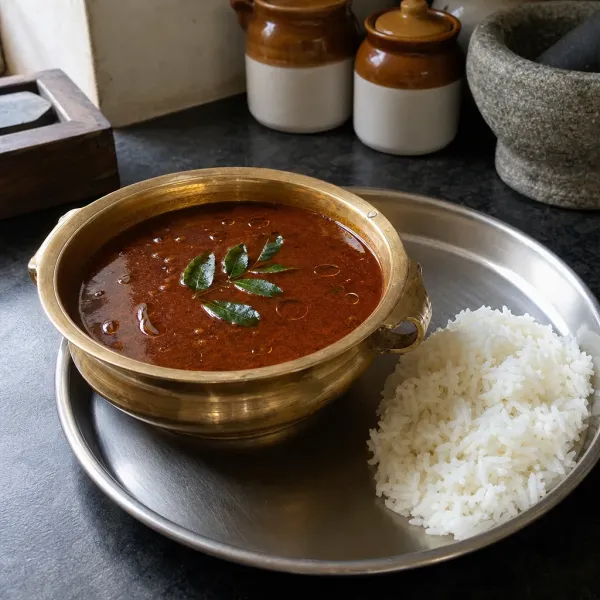
Vendhaya Kuzhambu
Traditional Tamil Brahmin vendhaya kuzhambu made with tamarind, roasted fenugreek paste, fresh coconut, and gingelly oil. A pourable rice kuzhambu.
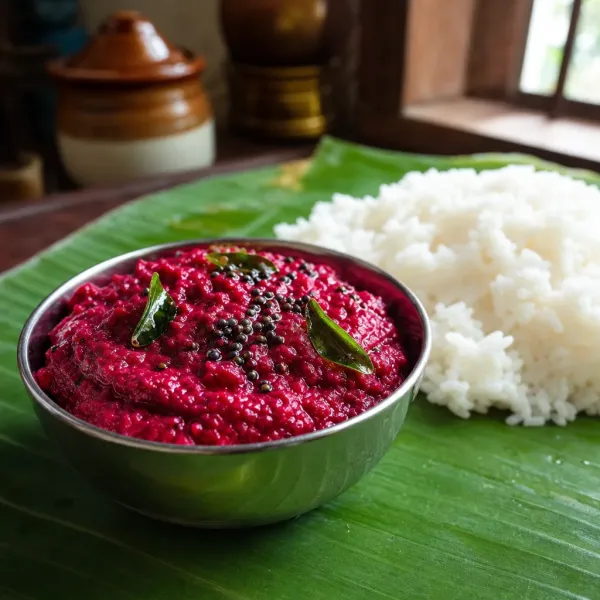
Beetroot Pachadi
Traditional Kerala beetroot pachadi with fresh coconut paste and curd, finished with a mustard and curry leaf tempering. A sadya essential, step by s…
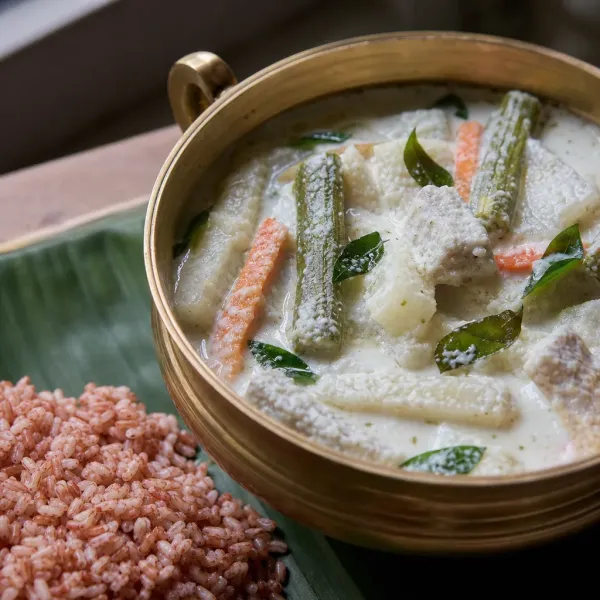
Avial
Classic Kerala avial with fresh coconut paste, sour yoghurt, and raw coconut oil. Traditional Travancore household method with exact quantities.
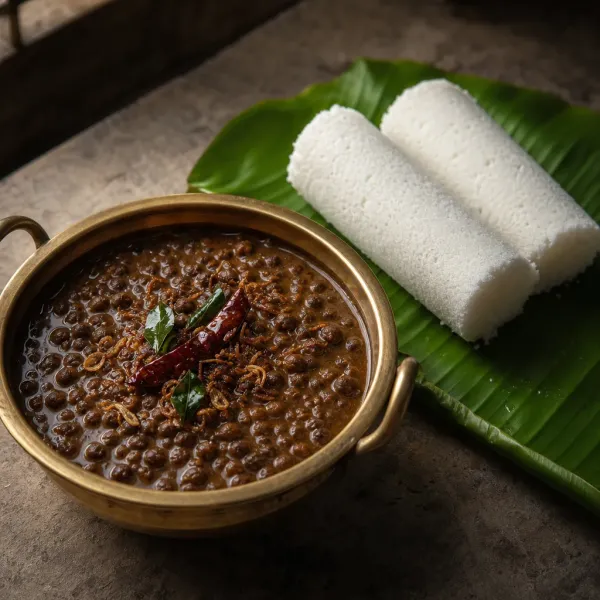
Kadala Curry
Authentic Kerala kadala curry with roasted coconut paste and shallots. The classic breakfast partner for puttu, made the traditional household way.
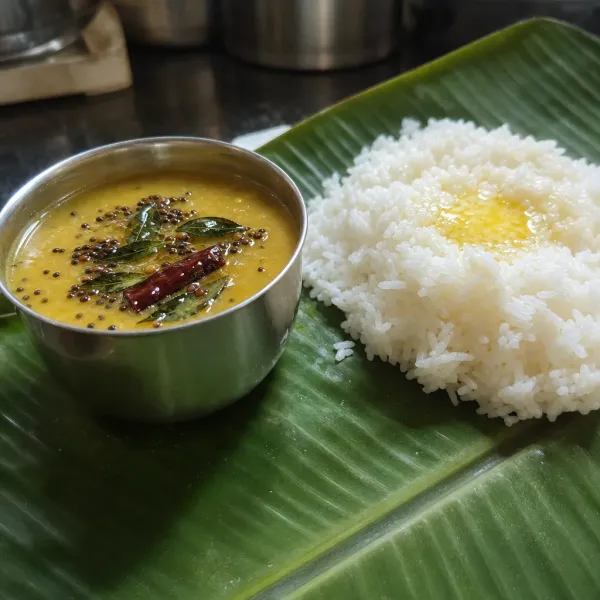
Tovve
Authentic Karnataka Brahmin tovve: mild toor dal with a ghee tempering of mustard, cumin, curry leaf and asafoetida. Ready in 35 minutes.
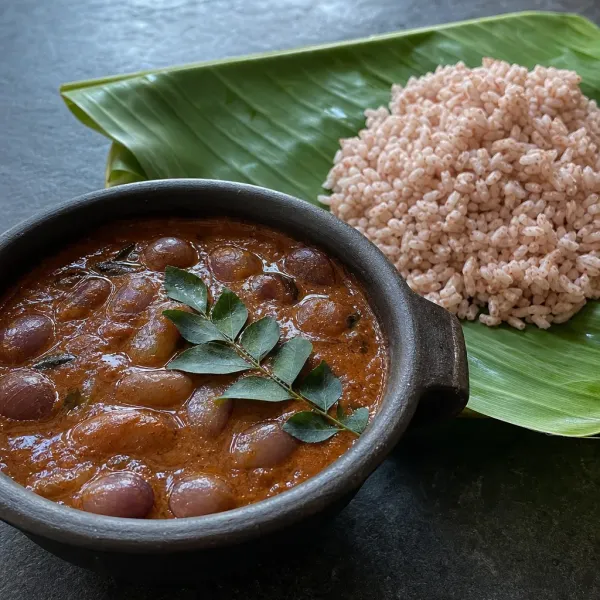
Theeyal
Traditional Kerala shallot theeyal with deep-roasted coconut, kudampuli, and fresh curry leaves. Step-by-step household method from Travancore kitche…