

Tovve Recipe
Malayalam തൊവ്വെTamil தொவ்வேKannada ತೊವ್ವೆTelugu తొవ్వె
- Prep10 min
- Cook35 min
- Serves4
- DifficultyEasy
- DietVegetarian
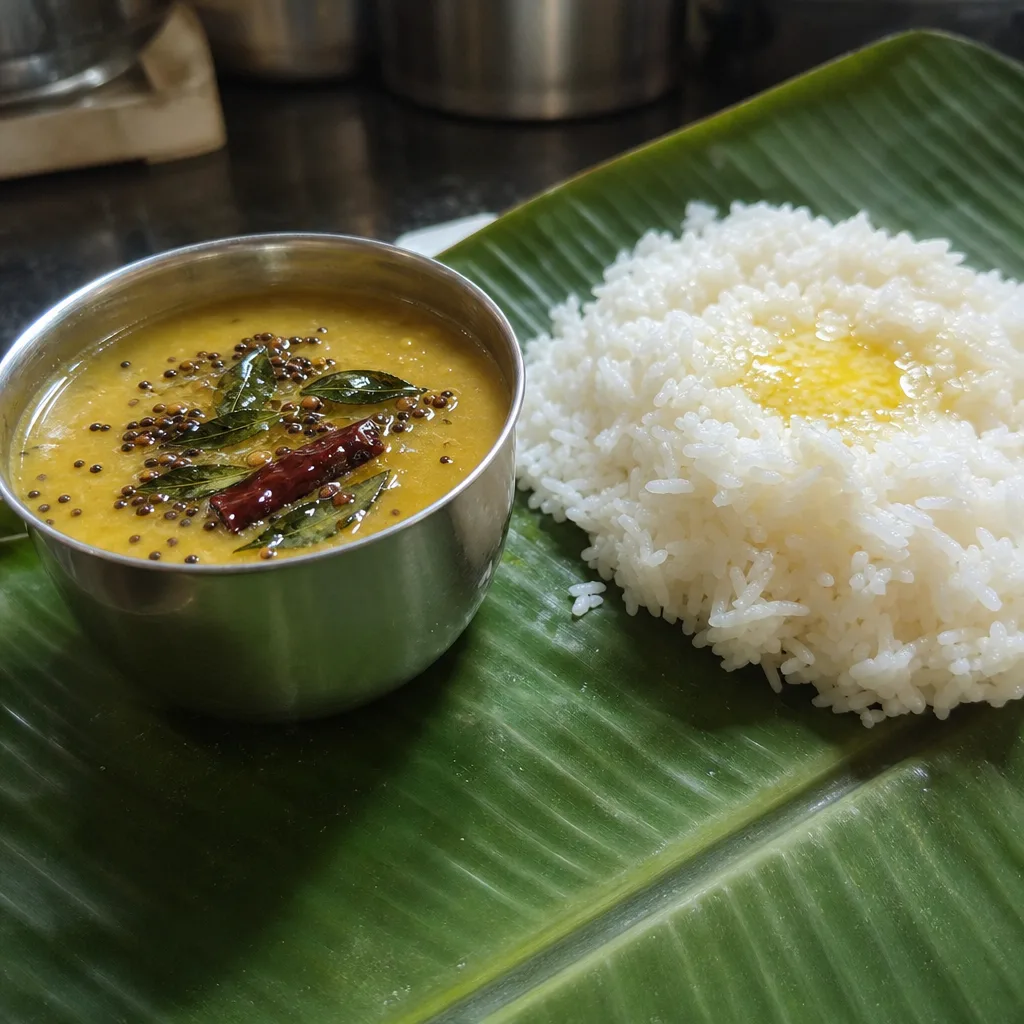
Tovve is the everyday dal of Karnataka Brahmin households. It is mild, thin by North Indian dal standards, and seasoned simply so that it does not compete with the rice and ghee it is always eaten with. The word itself is old Kannada for a cooked lentil preparation, and every Smartha and Madhwa household has its own small variation in the tempering.
The dal is toor dal, cooked soft and then loosened with water to a pourable consistency. The tempering is done in ghee — not oil — and the flavours are turmeric, green chilli, curry leaf, and asafoetida. Some households add a small piece of fresh coconut; some squeeze a little lemon at the table. Tomato is not traditional here; this is not a tangy dal.
At the midday meal it is ladled over hot rice before any vegetable side dish is served, and more ghee is added on top. Leftover tovve thickens overnight; thin it with a little warm water when reheating.
Ingredients (serves 4)
For the dal
For the tempering (oggarane)
Method
Rinse and pressure-cook the dal
Rinse the toor dal in two changes of water until the water runs mostly clear. Put it in a pressure cooker with 600 ml water and the turmeric. Cook on medium heat for 4 to 5 whistles, then turn off the heat and let the pressure drop on its own. The dal should be completely soft and beginning to collapse — press a grain between your fingers and it should crush without resistance.
Mash and loosen the dal
Open the cooker and whisk or mash the dal well with a ladle or a dal whisk until smooth and uniform. It will be thick at this stage. Add 150 to 200 ml warm water and stir to bring it to a thin, pourable consistency — it should flow off the ladle in a steady stream, not in slow drops. Taste and add salt now.
Keep the dal warm on low heat
Transfer the dal to a vessel and keep it on the lowest flame while you prepare the tempering. It should be gently steaming but not boiling. Stir occasionally so it does not settle and catch at the bottom.
Heat the ghee for tempering
In a small tempering pan or a steel ladle, heat the ghee over medium flame until it is fully liquid and shimmering. Ghee heats faster than oil; watch it closely. You need it hot enough that the mustard seeds pop immediately on contact.
Add mustard and cumin
Drop in the mustard seeds. They will begin to pop within seconds. As soon as the popping slows — about 15 to 20 seconds — add the cumin seeds. Let them sizzle for 10 seconds until they darken one shade.
Add the remaining tempering ingredients
Add the dry red chilli and the slit green chilli. They will colour and blister in about 15 seconds. Add the curry leaves immediately after — they will splutter loudly in the ghee, so tilt the pan away from you. Finally add the asafoetida and let it bloom for just 5 seconds. The whole tempering from ghee to finish takes under a minute.
Pour the tempering into the dal
Pour the entire contents of the tempering pan directly into the warm dal. It will sizzle and splutter when it hits the liquid. Stir once to distribute the tempering evenly through the dal.
Adjust and serve immediately
Check the salt and the consistency one last time. Tovve is served right away, hot. If it has thickened while standing, stir in a splash of warm water. It should be thin enough to pour freely over rice.
How to serve
Hot plain rice (sona masuri or raw Karnataka rice) with a generous spoonful of ghee poured over the rice before the tovve is added. Accompanied by a dry vegetable palya, papad, and pickle. At a full meal, a kosambari (raw salad) and rice-based items like chitranna may also appear.
Served with: Hot plain rice (sona masuri or raw Karnataka rice) with a generous spoonful of ghee poured over the rice before the tovve is added. Accompanied by a dry vegetable palya, papad, and pickle. At a full meal, a kosambari (raw salad) and rice-based items like chitranna may also appear.
Cook's tips
Why the dal turns grey
If you use an aluminium pressure cooker that is old and pitted, the dal can take on a dull grey colour. A stainless steel cooker keeps the dal a clean yellow. The taste is unaffected but the colour matters for this simple dish.
Consistency is the whole point
Tovve is supposed to be thin — thinner than most people expect. If it sits like a paste on the rice rather than soaking into it, add more water. Err on the side of too thin rather than too thick.
Asafoetida quality
Use compounded asafoetida (the block or the better-quality powder) rather than the cheapest supermarket powder, which can smell harsh. Brahmin households that avoid onion and garlic rely on asafoetida for depth, so its quality is noticed.
Reheating
Leftover tovve will be very thick the next day. Reheat gently on a low flame with added water, stirring constantly. Do not boil hard or it will lose its smooth texture.
Open-pot method
Traditionally, toor dal was cooked in an open pot for 45 to 60 minutes over a wood fire until soft. The pressure cooker is now universal in these households and produces an identical result. No flavour is lost.
Regional variations
Konkani-speaking Saraswat households make a similar mild dal called dali toye or dali thoy, which is thinner and uses coconut oil; the Iyengar version may add a pinch of asafoetida and skip green chilli entirely.
Glossary
- Tovve ತೊವ್ವೆ
- A simple cooked dal preparation in Kannada culinary vocabulary, distinct from sambar or huli.
- Toor dal ತೊಗರಿ ಬೇಳೆ
- Split and husked pigeon peas, the most common dal in Karnataka cooking.
- Oggarane ಒಗ್ಗರಣೆ
- The Kannada word for tempering — hot fat with spices poured over a dish to finish it.
- Hing ಇಂಗು
- Asafoetida, the dried resin used in Brahmin cooking as a substitute for onion and garlic, which are avoided.
- Palya ಪಲ್ಯ
- A dry stir-fried vegetable side dish in Karnataka, equivalent to Tamil poriyal.
Tovve lives or dies on two things: the dal must be cooked completely soft before any tempering goes near it, and the ghee must be genuinely hot when the mustard seeds go in. Undercooked dal stays grainy and never smooths out no matter how much you mash it. Tepid ghee gives a muted, flat tempering instead of the sharp, fragrant one that makes this simple dish worth eating every day.
More Vegetarian Gravies recipes
Kadala Curry
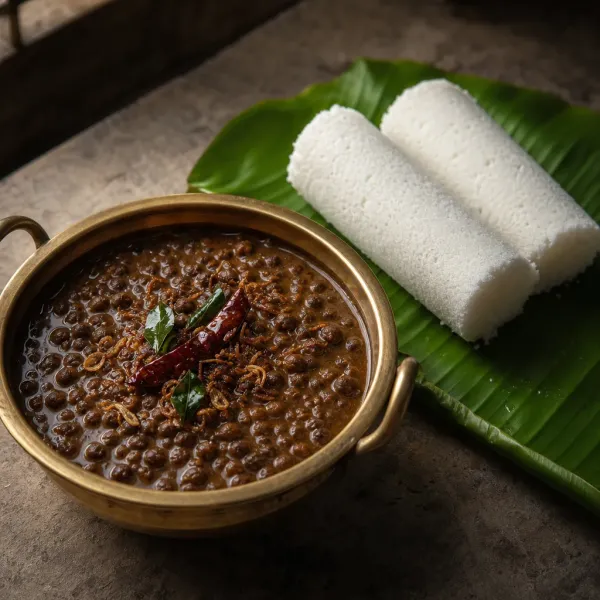
Authentic Kerala kadala curry with roasted coconut paste and shallots. The classic breakfast partner for puttu, made the traditional household way.
Vendakka Kichadi
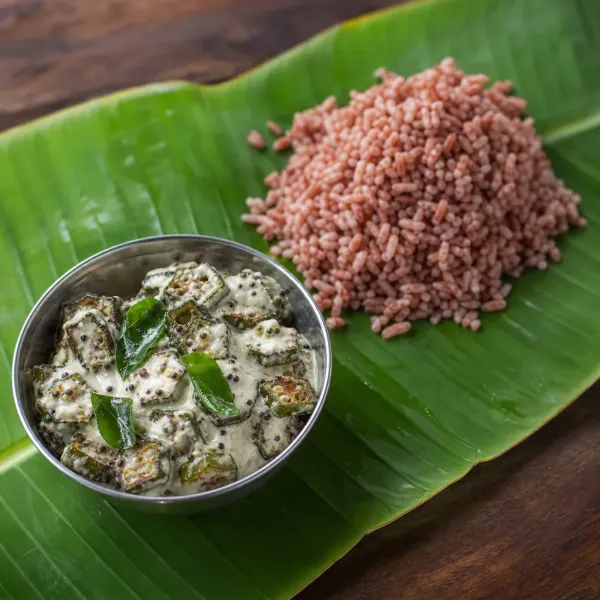
Traditional Kerala Vendakka Kichadi: crisp-fried okra folded into a fresh coconut and sour curd base, tempered with mustard and curry leaves in cocon…
Majjige Huli
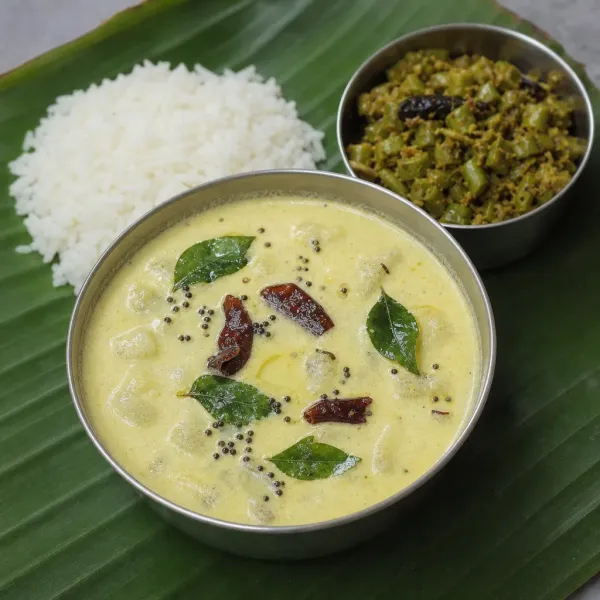
Traditional Karnataka Brahmin majjige huli with ash gourd, fresh coconut paste and sour curd. Step-by-step method with tips to prevent splitting.
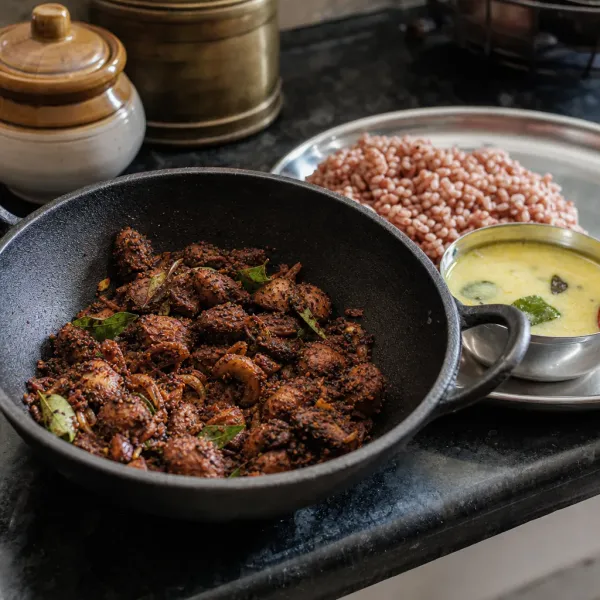
Mushroom Pepper Masala
A dry, pepper-forward mushroom masala from Nasrani kitchens in Travancore, cooked in coconut oil with shallots and curry leaves. Ready in 40 minutes.
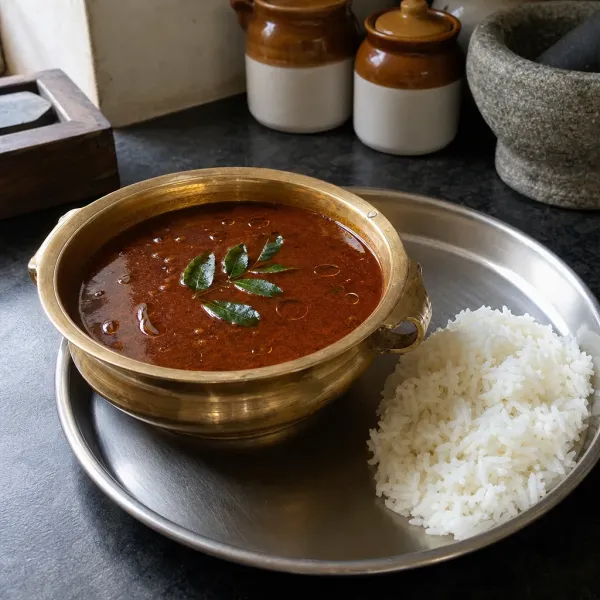
Vendhaya Kuzhambu
Traditional Tamil Brahmin vendhaya kuzhambu made with tamarind, roasted fenugreek paste, fresh coconut, and gingelly oil. A pourable rice kuzhambu.
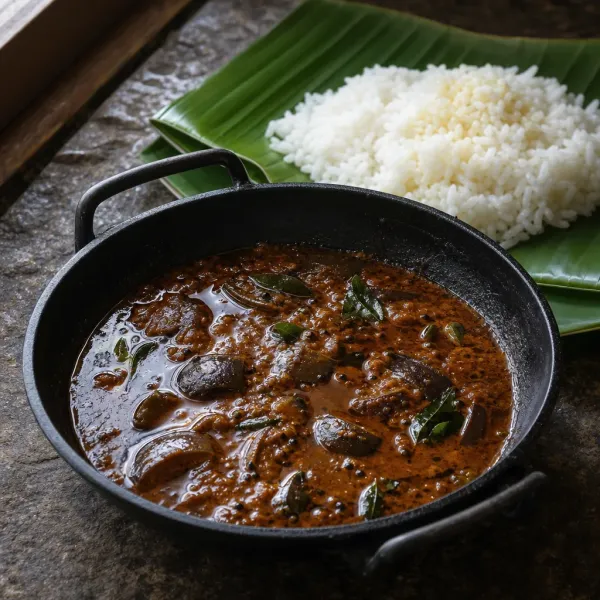
Puli Kuzhambu
Traditional Tamil Brahmin puli kuzhambu with brinjal, freshly ground coconut-spice paste, and gingelly oil. Thick, sour, deeply spiced weekday rice d…