

Mangalorean Mutton Sukka Recipe
Malayalam മട്ടൺ സുക്കTamil மட்டன் சுக்காKannada ಮಟನ್ ಸುಕ್ಕTelugu మటన్ సుక్కా
- Prep30 min
- Cook1 hr 10 min
- Serves4
- DifficultyMedium
- DietNon-vegetarian
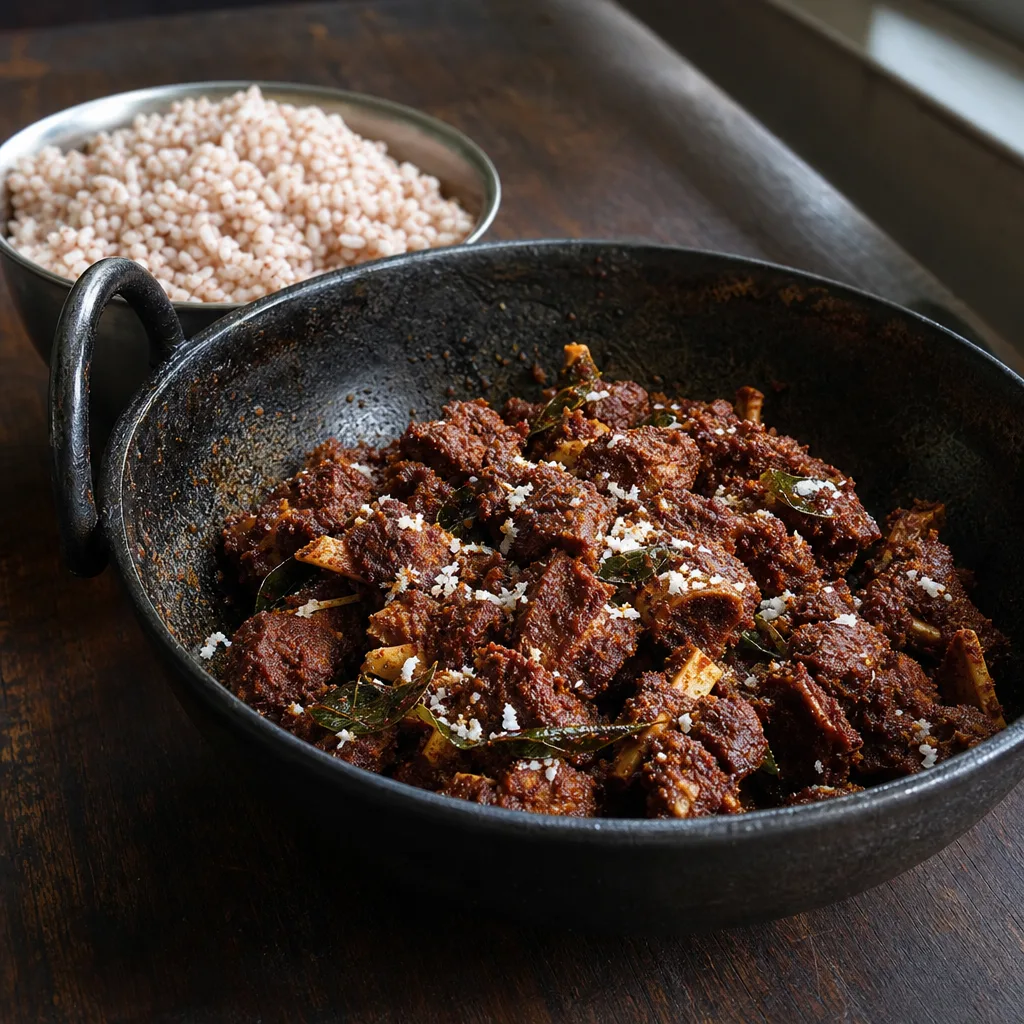
Sukka is a dry, intensely spiced mutton preparation that is central to Konkani Catholic feast cooking in Mangalore and the surrounding Dakshina Kannada coast. The name comes from the Konkani word for dry, and dryness is exactly the point: by the time it reaches the table, every piece of meat is coated in a dark, aromatic crust of roasted spice and scraped coconut, with almost no gravy left in the pan.
The backbone of the dish is a masala that is roasted whole and then ground. Byadgi chillies give the deep brick-red colour without punishing heat; a handful of black pepper brings the actual fire. The meat is cooked separately until tender, then the two are brought together over a slow flame and worked until the masala clings. Grated fresh coconut goes in last, just long enough to toast lightly in the residual heat.
At home this is made for Sunday lunch and for celebrations, usually alongside rice and a thin mutton or chicken curry so there is some liquid on the plate. Some households add a small piece of dried kokum to the pressure cooker when boiling the meat; others rely only on the spices. The grated coconut quantity is a matter of strong family opinion.
Ingredients (serves 4)
For the meat
For the sukka masala (roast and grind)
For cooking the sukka
Method
Pressure-cook the mutton
Put the mutton in a pressure cooker with the turmeric, salt, and 250 ml water. Cook on medium heat for 5 whistles, then lower the flame and cook for another 8 minutes. Let the pressure drop on its own. The meat should be just tender but not falling apart — it will cook further in the pan. Reserve every drop of the stock that collects in the cooker.
Dry-roast the whole spices
Set a heavy iron or thick-bottomed pan over medium-low heat. Add the Byadgi chillies, peppercorns, coriander seeds, cumin, fennel, cloves, cardamom, cinnamon, and stone flower if using. Roast, stirring constantly, until the coriander seeds turn a shade darker and the chillies puff slightly and smell toasty — about 4 to 5 minutes. Do not walk away; the moment they smell right they can burn. Tip them immediately onto a plate to cool.
Grind the masala
Once the spices are cool enough to handle, grind them to a fine powder in a dry mixer jar. No water at this stage — the masala should be completely dry. Set aside.
Fry the shallots, garlic and ginger
In a wide, heavy pan — a kadai or an iron pan — heat the coconut oil over medium flame. Add the halved shallots and fry, stirring, until they turn golden at the edges and soften, about 6 to 7 minutes. Add the crushed garlic and chopped ginger and fry for another 3 minutes until the raw smell is gone.
Add the ground masala
Lower the heat. Add the ground sukka masala to the pan and stir it through the oil and shallots. Fry for 2 to 3 minutes, stirring constantly. If it begins to stick, add a splash of the reserved mutton stock — no more than 2 tbsp at a time. The masala should fry in the oil, not steam in liquid.
Add the cooked mutton
Add the pressure-cooked mutton pieces to the pan and turn them to coat thoroughly in the masala. Add the curry leaves. Pour in about 4 tbsp of the reserved stock — enough to help the masala cling without making a gravy. Stir and cook over medium heat.
Dry it out slowly
Cook the mutton in the masala, stirring every couple of minutes, for 15 to 20 minutes over medium-low heat. Add the remaining stock in small additions only if the masala threatens to scorch. By the end, the liquid should be entirely gone and the masala should coat every piece of meat in a dark, fragrant crust. This is the stage that cannot be rushed — a high flame will burn the outside while leaving the inside uncoated.
Add the grated coconut
Scatter the grated fresh coconut over the meat and fold it in gently. Cook for 3 to 4 minutes more, stirring, until the coconut just begins to colour at the edges and smells toasted. It should still be mostly white with a few golden flecks — if it browns fully the coconut will turn bitter. Taste for salt and take off the heat.
How to serve
Steamed matta rice or plain boiled rice, alongside a thin mutton or chicken curry (kori ambat) to provide liquid on the plate. Some households serve it with sanna (Konkani steamed rice cakes) for a celebration meal.
Served with: Steamed matta rice or plain boiled rice, alongside a thin mutton or chicken curry (kori ambat) to provide liquid on the plate. Some households serve it with sanna (Konkani steamed rice cakes) for a celebration meal.
Cook's tips
Byadgi chillies are not optional
The deep brick-red colour of the dish comes specifically from Byadgi chillies, which are low in heat and high in colour. Substituting Kashmiri chillies will give a similar colour but a slightly different flavour. Regular red chillies will make it far too hot and the colour will be different.
Do not discard the stock
The stock from the pressure cooker is the only liquid used to adjust the masala as it fries. If you discard it and use water instead, you lose the flavour that keeps the masala from tasting raw and powdery.
The coconut goes in last for a reason
Fresh grated coconut added too early will absorb all the moisture and prevent the masala from coating the meat. Add it only when the sukka is already dry and fragrant.
Pan choice matters
A wide, heavy iron pan gives the best result because it holds heat evenly and allows the moisture to escape quickly. A narrow or non-stick pan traps steam and the dish will not dry out properly.
Reheating
Sukka keeps well for a day at room temperature in a cool kitchen, and for three days refrigerated. Reheat in the pan with a tiny splash of water and a drizzle of coconut oil; it comes back to life quickly.
Regional variations
Bunt community sukka uses a similar roasted masala but tends to be drier and sometimes omits grated coconut; Beary Muslim sukka has a distinct spice balance with khus khus and is cooked in a different fat; Chettinad sukka (Tamil Nadu) is a separate dish entirely.
Glossary
- Sukka / Sukke ಸುಕ್ಕ
- Konkani and Kannada word meaning dry; describes the cooking style where all liquid is cooked off and the spices cling directly to the meat.
- Byadgi chilli ಬ್ಯಾಡಗಿ ಮೆಣಸಿನಕಾಯಿ
- A variety of dried red chilli from Byadgi town in Karnataka, prized for its deep red colour and moderate heat; essential to Mangalorean and Udupi cooking.
- Dagad phool / Kalpasi ಕಲ್ಪಾಸಿ
- Stone flower, a dried lichen used as a spice in Mangalorean, Chettinad and Maharashtrian cooking; adds a faintly earthy, mossy depth.
- Shallots (sambar onions) ಸಣ್ಣ ಈರುಳ್ಳಿ
- Small, pungent onions used throughout South Indian cooking in place of large onions; they caramelise faster and have a sharper flavour.
- Kori ambat ಕೋರಿ ಅಂಬಟ್
- A thin, coconut-based chicken curry from the Mangalorean Konkani and Tulu kitchen, commonly served alongside sukka to provide liquid with the meal.
Two things decide this dish: the patience to roast the whole spices until genuinely fragrant before grinding, and the discipline to dry out the masala slowly at the end rather than hurrying it over high heat. Rush either stage and you get either a raw-tasting powder or a scorched crust. Get both right and the meat is dark, aromatic, and completely coated.
More Mutton, Beef & Pork recipes
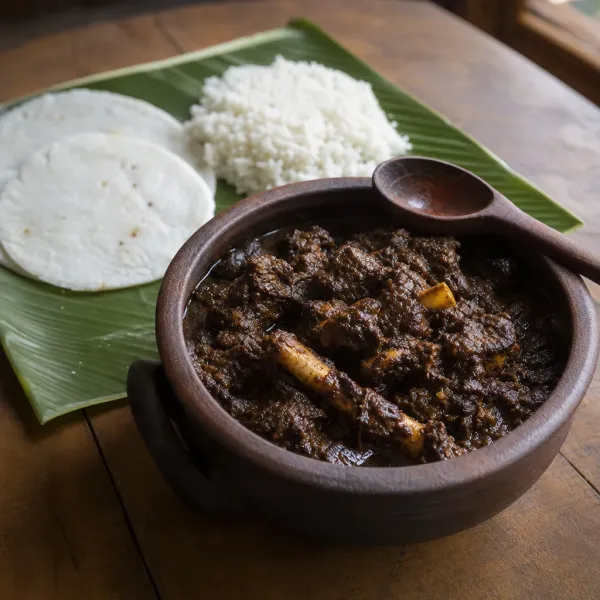
Coorg Pandi Curry
Authentic Kodava pandi curry with freshly roasted Coorg masala and kachampuli. Bone-in pork cooked low and slow the traditional Kodagu way.
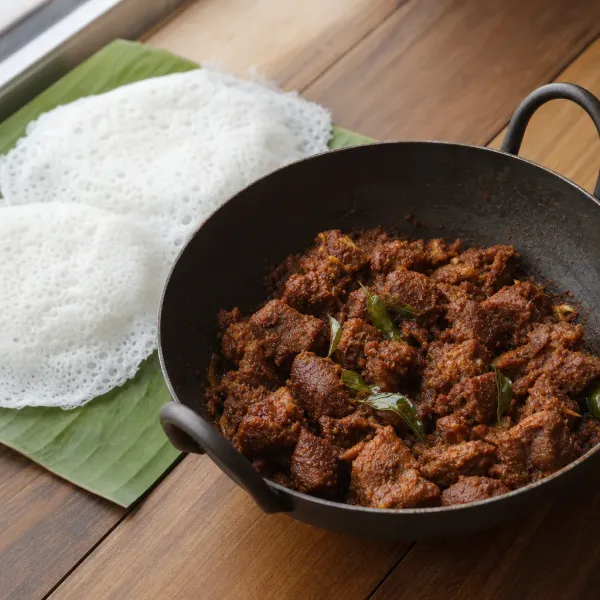
Mangalorean Mutton Ghee Roast
Traditional Konkani Catholic mutton ghee roast from Mangalore, made with Byadagi chillies, tamarind, and pure ghee. Step-by-step home recipe.
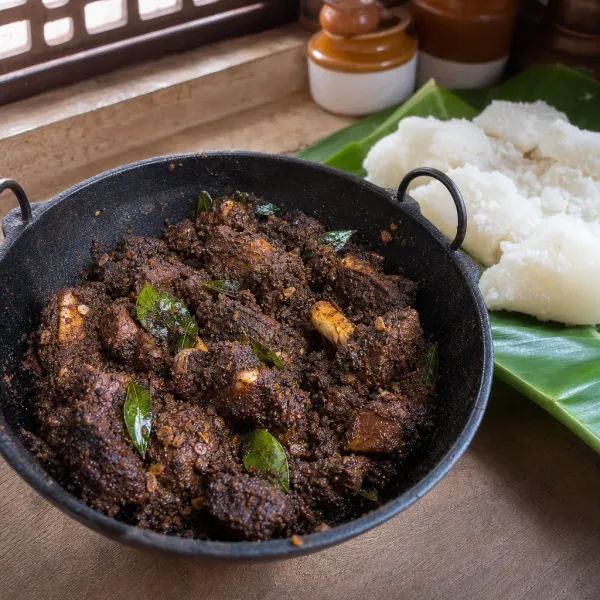
Kerala Beef Roast (Nadan Beef Roast)
Authentic Kerala Nasrani beef roast with thick dark masala, cooked the traditional way with shallots, coconut oil and curry leaves. Step-by-step hous…
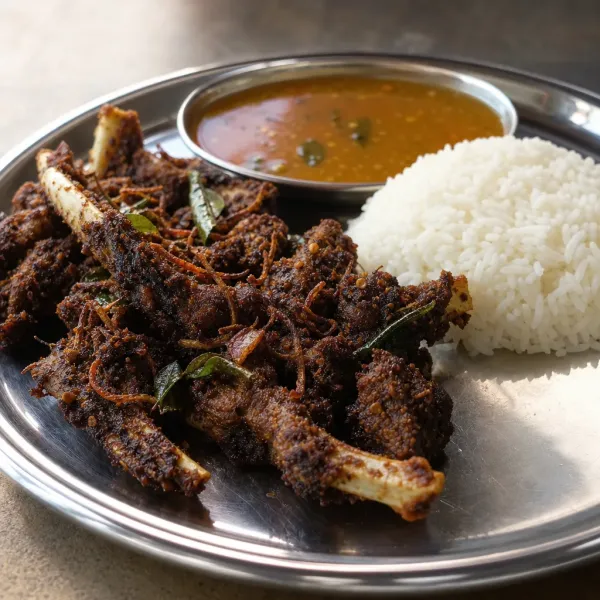
Mutton Chops Fry
Traditional Chettinad mutton chops fry with freshly ground kalpasi masala, fried in gingelly oil with shallots until dry and deeply spiced.
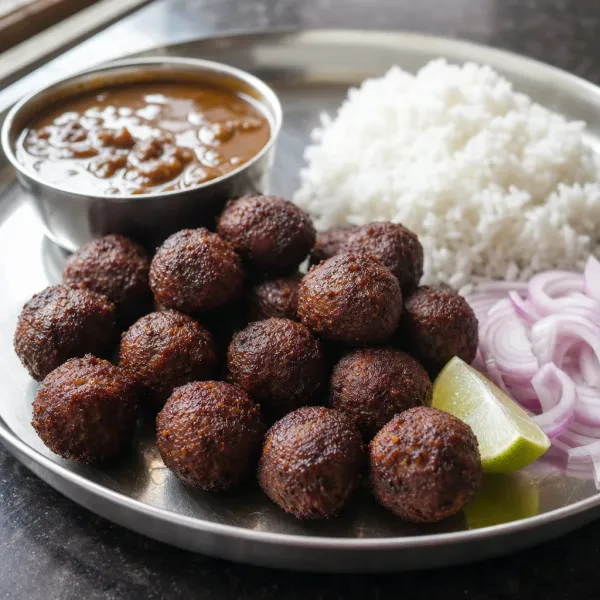
Mutton Kola Urundai
Authentic Chettinad mutton kola urundai with kalpasi, marathi mokku and gingelly oil. Traditional Chettiar household recipe with step-by-step method.
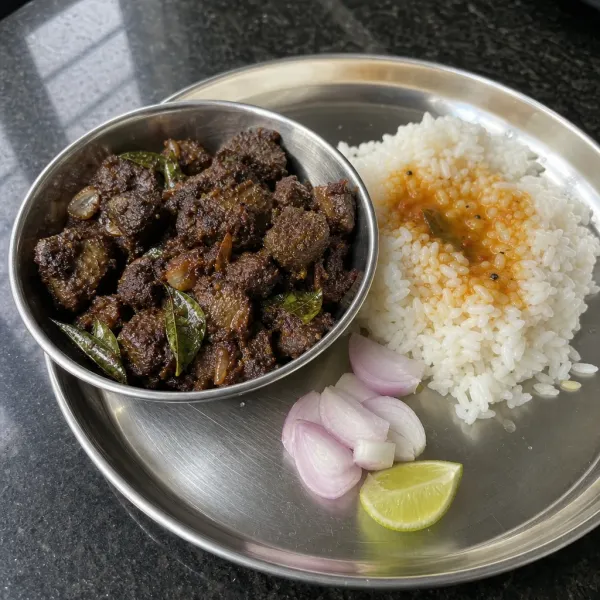
Eeral Varuval
Authentic Chettinad eeral varuval: mutton liver dry-fried with kalpasi, marathi mokku, shallots and gingelly oil. Traditional method, exact quantitie…