

Eeral Varuval Recipe
Malayalam ആടിന്റെ കരൾ വറുത്തത്Tamil ஈரல் வறுவல்Kannada ಕುರಿ ಈರಲು ವರ್ಣTelugu మేక కాలేయం వేపుడు
- Prep20 min
- Cook40 min
- Serves4
- DifficultyMedium
- DietNon-vegetarian
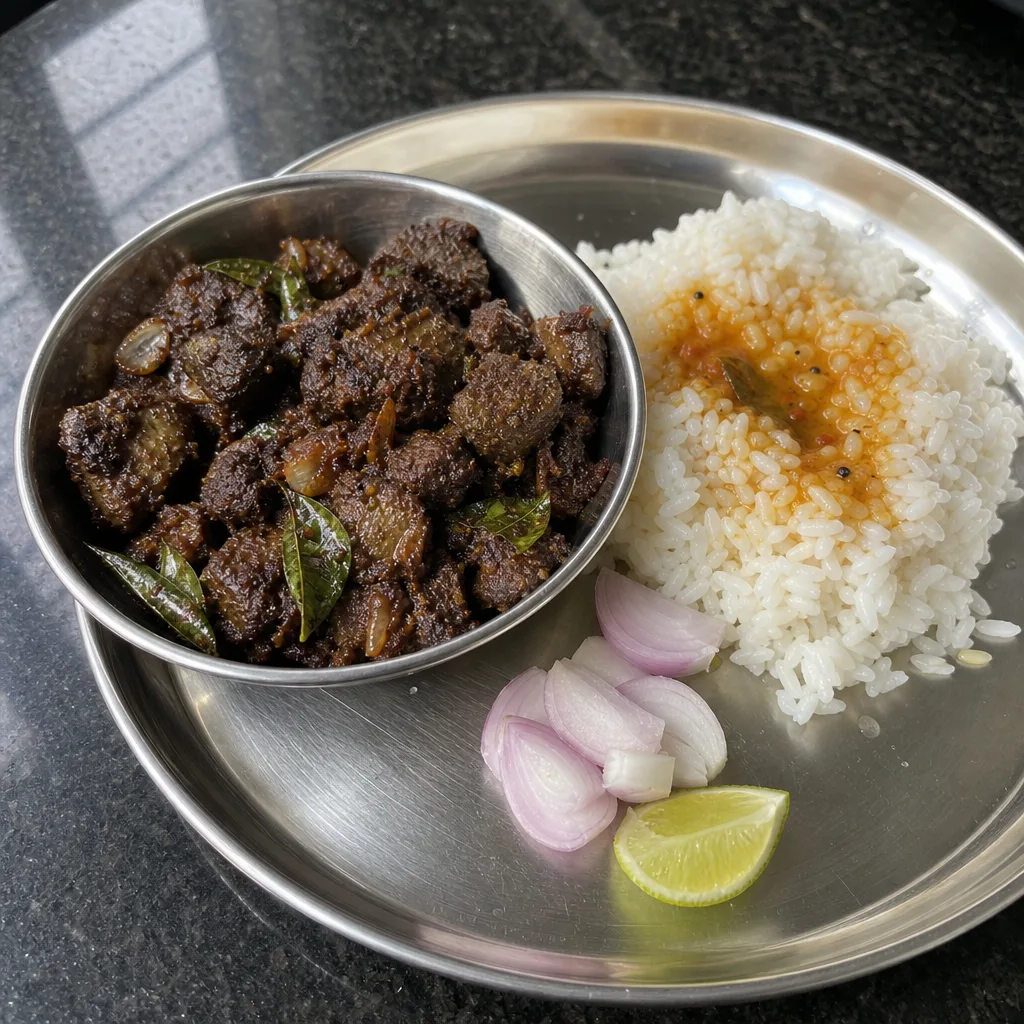
Eeral varuval is a Chettinad dry-fry, cooked until the liver pieces are firm and dark at the edges but still yielding at the centre. It is not a gravy and it is not a quick toss in a pan. The spice layering is done in stages so that each addition blooms in the hot oil before the next goes in. Gingelly oil is the fat of Chettinad cooking and it belongs here; coconut oil would change the dish entirely.
In Chettiar households this is most often made on a Sunday when fresh mutton is bought from the market. The liver is cut thick, not thin, because thin slices overcook before the spices have time to coat them properly. Shallots are used, not large onions, and they are fried until they are genuinely brown and collapsing, which takes longer than most people allow.
Some cooks add a small piece of kalpasi (stone flower) and marathi mokku (dried flower pods) to the tempering, which is the Chettinad signature. Others keep it simpler for everyday cooking. Both are correct. The version here includes them because this is a Chettinad recipe, not a generic liver fry.
Ingredients (serves 4)
Main
Whole spices for tempering
Ground spices
Seasoning
Method
Clean and marinate the liver
Rinse the liver cubes under cold water and pat them thoroughly dry. In a bowl, toss the pieces with ¼ tsp turmeric, ½ tsp red chilli powder and a pinch of salt. Leave aside while you prepare the rest. Do not marinate for longer than 20 minutes or the salt will draw out moisture and the liver will steam instead of fry.
Heat the oil and bloom the whole spices
Heat the gingelly oil in a heavy iron kadai or thick-bottomed pan over medium flame. When the oil shimmers and a fennel seed dropped in sizzles immediately, add the dried red chillies, kalpasi, marathi mokku and fennel seeds. Fry for about 30 seconds until the chillies darken slightly and the fennel is fragrant. Keep the heat at medium; kalpasi burns quickly and turns bitter.
Fry the shallots until deeply browned
Add the shallots and fry, stirring often, over medium flame for 10 to 12 minutes. They must reach a deep golden-brown, almost caramelised. This is the step most people rush and it shows in the final dish. Pale shallots give a raw, sharp taste; properly browned shallots give sweetness that balances the liver's bitterness.
Add garlic and ginger
Add the crushed garlic and chopped ginger. Fry for 3 to 4 minutes, stirring, until the raw smell is completely gone and the mixture smells sweet and nutty.
Add tomato and cook down
Add the chopped tomato and cook over medium flame, mashing it as it softens, for about 5 minutes until the oil separates at the edges and the mixture is a thick, dark paste. If the tomato is very watery, cook a minute or two longer. You need a dry masala base, not a wet one.
Add the ground spices
Lower the flame. Add the remaining turmeric, the coriander powder, the remaining red chilli powder, the black pepper powder and the cumin powder. Stir constantly for 1 to 2 minutes. The spices must fry in the oil and paste, not just sit on top. If the pan looks too dry, add a splash of water, no more than 2 tbsp, to prevent burning.
Add the liver and curry leaves
Raise the flame to medium-high. Add the marinated liver pieces and the curry leaves. Toss well so every piece is coated in the masala. Do not add water at this stage. The liver will release its own moisture.
Cook the liver through
Stir and toss the liver every couple of minutes. Cook for 8 to 10 minutes over medium-high flame. The liver is ready when the pieces are firm to the touch, the moisture has evaporated, and the masala is clinging dry to each piece. Cut one piece open: the centre should be just barely pink, not raw, not grey all the way through. Overcooked liver turns grainy and hard.
Finish and rest
Check salt and adjust. Add the chopped coriander leaves, toss once, and take the pan off the heat. Let it rest uncovered for 3 to 4 minutes before serving. Resting allows the residual heat to finish the cooking gently and the spices to settle into the meat.
How to serve
Plain steamed rice with a small amount of rasam poured over it, or with parotta. A raw sliced shallot and a wedge of lime are set on the side in most Chettiar households.
Served with: Plain steamed rice with a small amount of rasam poured over it, or with parotta. A raw sliced shallot and a wedge of lime are set on the side in most Chettiar households.
Cook's tips
On the tomato
Tomato is used in modern Chettinad household cooking of liver fry as a souring agent and to build body in the masala. Some older versions use no tomato and rely entirely on the spice paste. If you prefer the older style, omit it and add 1 tsp of tamarind paste dissolved in 2 tbsp water at the same stage.
Do not overcook liver
Liver goes from perfectly cooked to rubbery in under two minutes. Start checking at the 8-minute mark. The pieces should feel firm but give a little when pressed. Once they feel hard, they are overcooked and no amount of resting will fix them.
Kalpasi and marathi mokku
These two dried aromatics are available at shops that stock Chettinad spices. They are not interchangeable with anything else. If you cannot find them, leave them out rather than substituting; the dish will still be good, just not distinctively Chettinad.
Gingelly oil substitution
If gingelly oil is unavailable, use refined sunflower oil. Do not use coconut oil; it changes the flavour profile entirely and moves the dish away from its Tamil kitchen identity.
Storage
Eeral varuval keeps well refrigerated for two days. Reheat in a dry pan over low flame with a few drops of oil, not in a microwave, which makes liver rubbery.
Regional variations
Mappila-style mutton liver fry from Malabar uses kudampuli souring and less dry-spice layering; Coorgi (Kodava) liver fry uses rice wine vinegar and minimal spicing.
Glossary
- Eeral ஈரல்
- Liver in Tamil; specifically used for the organ meat of goat or sheep in Chettinad cooking.
- Varuval வறுவல்
- A dry fry preparation in Tamil cuisine where spiced meat or vegetables are cooked until the moisture evaporates and the masala clings to the surface.
- Kalpasi கல்பாசி
- Stone flower, a dried lichen used as an aromatic in Chettinad spice blends; it has a faintly earthy, mossy fragrance.
- Marathi mokku மராத்து மொக்கு
- Dried flower pods of the Marathi tree, used in Chettinad cooking for a subtle bitterness and aroma; one of the distinctive spices of the region.
- Nallennai நல்லெண்ணெய்
- Gingelly oil, cold-pressed sesame oil; the traditional cooking fat for most Chettinad meat and kuzhambu preparations.
- Sombu சோம்பு
- Fennel seeds; used whole in tempering and ground in spice mixes across Tamil Nadu, particularly in Chettinad cooking.
- Chinna vengayam சின்ன வெங்காயம்
- Small red shallots; the standard allium in Tamil Nadu cooking, sharper and more aromatic than large onions.
Two things decide this dish: how long you fry the shallots, and how carefully you watch the liver in its final minutes. Brown the shallots past the point you think is enough, and pull the liver off the heat while the centre still has the faintest give. Everything else is forgiving.
More Mutton, Beef & Pork recipes
Mutton Kola Urundai
Authentic Chettinad mutton kola urundai with kalpasi, marathi mokku and gingelly oil. Traditional Chettiar household recipe with step-by-step method.
Beef Peralan (Kerala Nasrani Style)
Traditional Kerala Nasrani beef peralan: semi-dry, spiced with black pepper and coriander, finished with fried coconut slivers in coconut oil. Authen…
Coorg Pandi Curry
Authentic Kodava pandi curry with freshly roasted Coorg masala and kachampuli. Bone-in pork cooked low and slow the traditional Kodagu way.
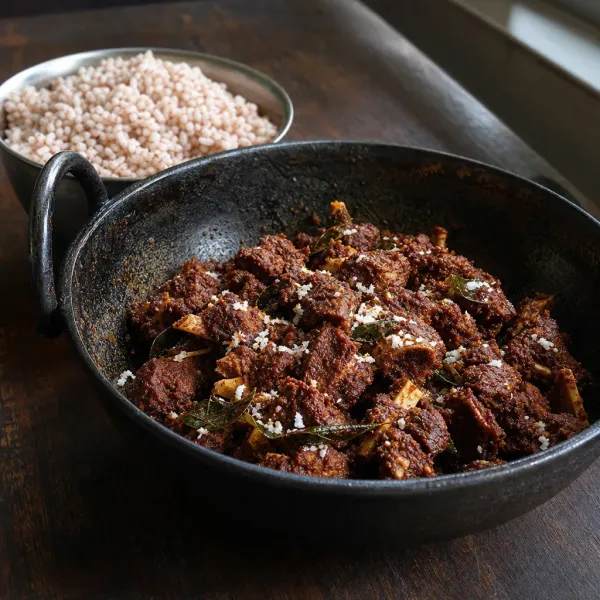
Mangalorean Mutton Sukka
Traditional Mangalorean mutton sukka from the Konkani Catholic kitchen: bone-in mutton slow-cooked with freshly roasted Byadgi chilli masala and grat…
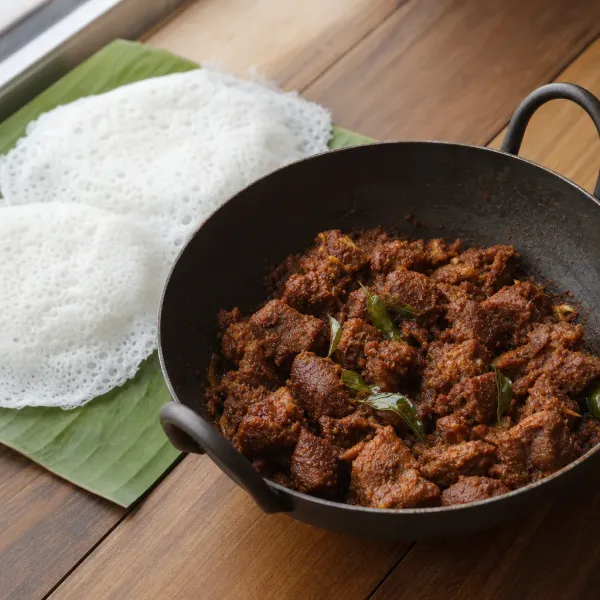
Mangalorean Mutton Ghee Roast
Traditional Konkani Catholic mutton ghee roast from Mangalore, made with Byadagi chillies, tamarind, and pure ghee. Step-by-step home recipe.
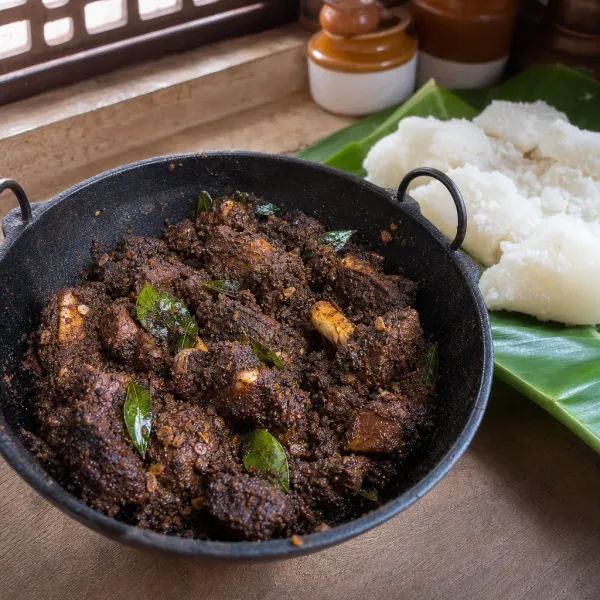
Kerala Beef Roast (Nadan Beef Roast)
Authentic Kerala Nasrani beef roast with thick dark masala, cooked the traditional way with shallots, coconut oil and curry leaves. Step-by-step hous…