

Beef Peralan (Kerala Nasrani Style) Recipe
Malayalam ബീഫ് പേരലൻTamil பீஃப் பேரலன்Kannada ಬೀಫ್ ಪೇರಲನ್Telugu బీఫ్ పేరలన్
- Prep25 min
- Cook55 min
- Serves4
- DifficultyMedium
- DietNon-vegetarian
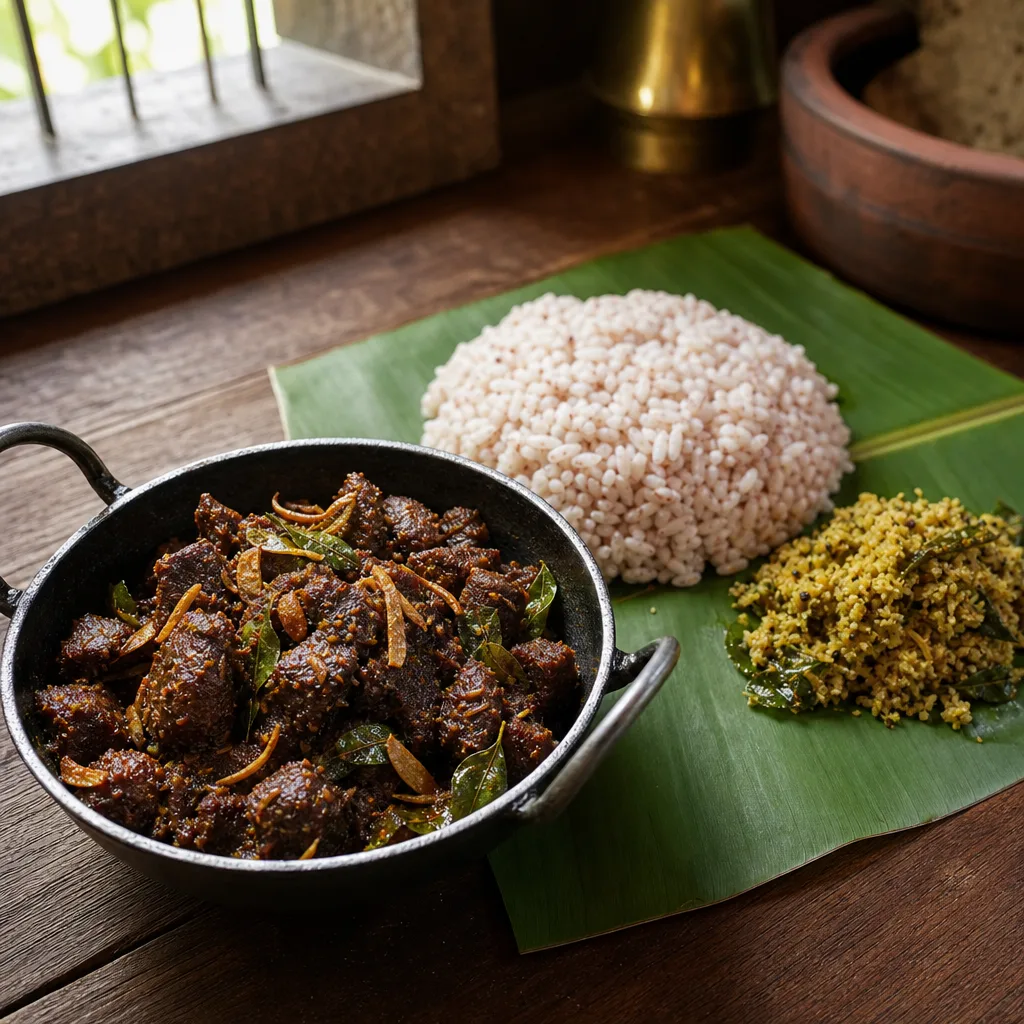
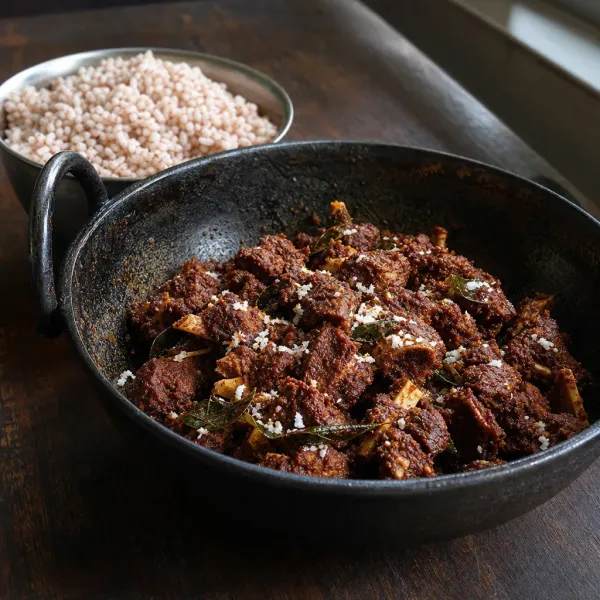
Beef peralan is a Nasrani dish from central and southern Kerala, cooked in almost every Syrian Christian home for Sunday lunch and feast days. It is semi-dry, deeply spiced, and finished with fried coconut slivers that give it its texture and a faint sweetness against the black pepper heat. The beef is first pressure-cooked or slow-cooked in its own juices with whole spices, then the liquid is reduced down and the meat is fried in coconut oil until it darkens and coats itself in a thick, clinging masala.
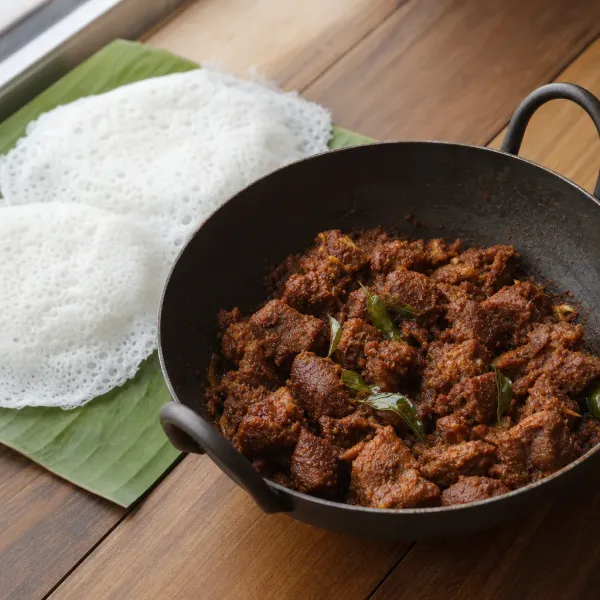
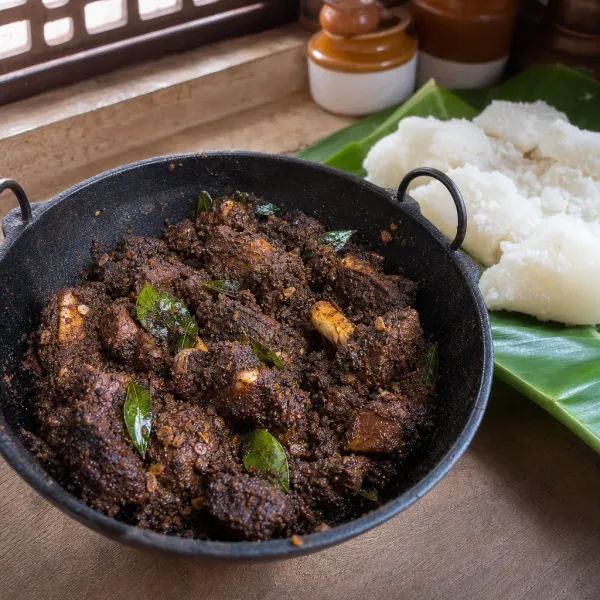
In most households it is eaten with matta rice and a simple thoran or with appam and stew on special mornings. Some cooks add a few curry leaves at the very end so they stay crisp rather than wilting into the gravy. Others fry the coconut slivers separately and scatter them on top just before serving so they stay distinct. Both are correct.
The spice base is coriander-heavy with a strong presence of black pepper and very little chilli heat by comparison. Garam masala does not belong here; the warmth comes from the whole spices cooked with the meat and from the pepper ground fresh if possible. Vinegar is used in some households, a small splash added during the final fry, which is a Portuguese-influenced touch that survives in Travancore Nasrani cooking.
Ingredients (serves 4)
For cooking the beef
For the peralan (final fry)
Method
Combine beef with first masala
Put the beef pieces into a heavy pot or pressure cooker. Add the shallots, crushed ginger, crushed garlic, slit green chillies, coriander powder, black pepper powder, turmeric, fennel seeds, cloves, cardamom, cinnamon, salt, and 120 ml water. Mix well with your hands so the spices coat every piece. Let it sit for 10 minutes while you prepare the rest.
Cook the beef until tender
Place the pot over medium heat, cover, and cook for 50 to 60 minutes, turning occasionally, until the beef is completely tender and the liquid has reduced to a thick, dark coating. If using a pressure cooker, cook on high pressure for 25 minutes then release naturally; after opening, cook uncovered on medium heat to reduce any remaining liquid until the masala is almost dry and clings to the meat. The meat should be very tender but holding its shape.
Fry the coconut slivers
Heat 1 tbsp of the coconut oil in a wide, heavy iron or steel pan over medium heat. Add the coconut slivers and fry, stirring constantly, until they are golden brown and smell nutty, about 4 to 5 minutes. Remove them to a plate immediately; they burn quickly once they colour. Set aside.
Fry shallots until deep brown
In the same pan, add the remaining 3 tbsp coconut oil over medium heat. Add the sliced shallots and fry, stirring regularly, until they are a deep reddish-brown, about 12 to 15 minutes. Do not rush this step on high heat; the shallots must caramelise slowly or they will taste raw and sharp rather than sweet.
Add ginger, garlic and chilli
Add the ginger matchsticks, sliced garlic, and slit green chillies to the browned shallots. Fry for 3 to 4 minutes until the raw smell of the ginger and garlic is gone and everything looks glossy.
Add curry leaves and dry spices
Add the curry leaves and let them splutter for 30 seconds. Then add the coriander powder and black pepper powder, lower the heat, and stir for 1 minute. The spices will darken slightly and smell fragrant. If they look like they are about to catch, add a tiny splash of water.
Add the cooked beef
Tip the cooked beef along with any remaining coating masala into the pan. Toss well so every piece is covered in the fried shallot and spice mixture. Turn the heat to medium-high and fry, stirring and pressing the meat against the pan, for 8 to 10 minutes. You want the outside of each piece to darken and take on a dry, almost roasted surface.
Add vinegar if using
If using coconut or toddy vinegar, sprinkle it over the meat now and toss quickly. It will sizzle and evaporate in about 30 seconds, leaving a faint sourness that cuts through the fat. Do not add more than 1 tsp or it will overpower.
Finish with coconut slivers
Scatter the fried coconut slivers over the beef and toss once or twice. Taste for salt and pepper. The dish should be semi-dry with no pooling liquid, each piece of beef coated in a dark, fragrant masala, and the coconut slivers visible throughout. Serve hot.
How to serve
Matta rice (red Kerala rice) with a simple thoran and rasam; or with kallappam (lacy rice bread) and coconut milk for a Sunday breakfast spread.
Served with: Matta rice (red Kerala rice) with a simple thoran and rasam; or with kallappam (lacy rice bread) and coconut milk for a Sunday breakfast spread.
Cook's tips
Choosing the cut
Chuck or brisket with some fat running through it stays juicy after the long fry. Lean topside or silverside will dry out and turn stringy. Bone-in pieces give the cooking liquid more body, which helps the final masala cling better.
Coconut slivers, not grated coconut
The slivers must be cut from fresh coconut, roughly 2 cm long and 3 to 4 mm thick. Grated coconut will dissolve into the masala and disappear. Desiccated coconut has no place here. If fresh coconut is unavailable, the dish is still good without them, but it is no longer peralan in the full sense.
Vinegar
Coconut vinegar or toddy vinegar is traditional in Travancore households. Cane vinegar is a reasonable substitute. Do not use malt vinegar or balsamic. Some households skip it entirely and the dish is equally authentic.
The final fry is not optional
The step of frying the cooked beef in the shallot masala is what makes this peralan rather than a simple beef curry. If you stop after pressure-cooking, you have a gravy dish. The colour, texture and flavour all come from that final 8 to 10 minutes in the pan.
Storing and reheating
Peralan keeps well for two days at room temperature in Kerala's climate if the oil content is sufficient and it was cooked dry. It actually improves overnight as the spices settle. Reheat in the pan with a tiny splash of water, not in the microwave, which makes the meat rubbery.
Regional variations
Mappila households in Malabar make a related dry beef fry (beef ularthiyathu) with different spice ratios, less coconut, and sometimes fennel seed; the Nasrani version is distinct in its use of coconut slivers fried in coconut oil and its particular balance of coriander and black pepper.
Glossary
- Peralan പേരലൻ
- A Kerala cooking technique in which meat or fish is first cooked and then fried in oil with aromatics until semi-dry and coated in a dark masala.
- Kunjulli കുഞ്ഞുള്ളി
- Small Kerala shallots, more pungent and sweeter when cooked than large onions; essential to most Kerala meat dishes.
- Thenga kothu തേങ്ങ കൊത്ത്
- Slivers or chips cut from fresh coconut, used in several Kerala dishes for texture and a mild sweetness.
- Perumjeerakam പെരുംജീരകം
- Fennel seeds; used in small quantities in Nasrani meat cooking for a faint anise warmth.
- Matta rice മട്ട അരി
- Red parboiled rice from Palakkad, the everyday rice of most Kerala households, with a nutty flavour and firm bite.
- Nasrani നസ്രാണി
- Kerala's Syrian Christian community, also called Saint Thomas Christians; their cuisine is one of the oldest Christian food traditions in the world and is strongly associated with beef cookery.
Two things decide whether this dish works: the patience to fry the shallots to a genuine deep brown without burning them, and the courage to keep the heat high during the final fry so the beef actually darkens and dries rather than stewing in its own moisture. Get those right and the coconut slivers and spices do the rest.
More Mutton, Beef & Pork recipes
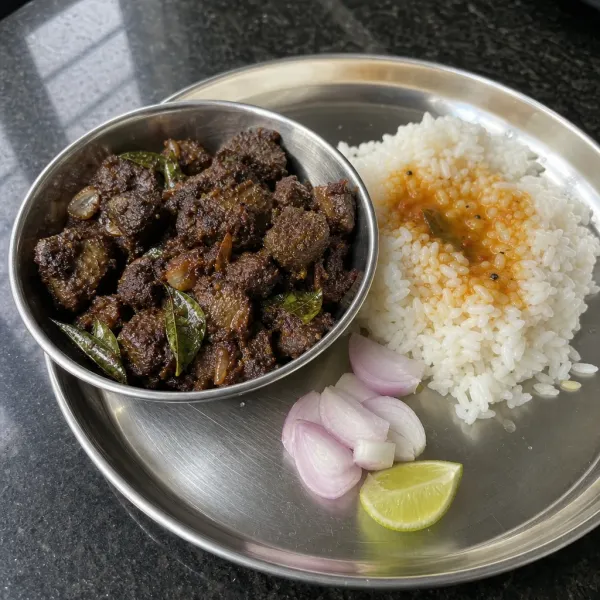
Eeral Varuval
Authentic Chettinad eeral varuval: mutton liver dry-fried with kalpasi, marathi mokku, shallots and gingelly oil. Traditional method, exact quantitie…
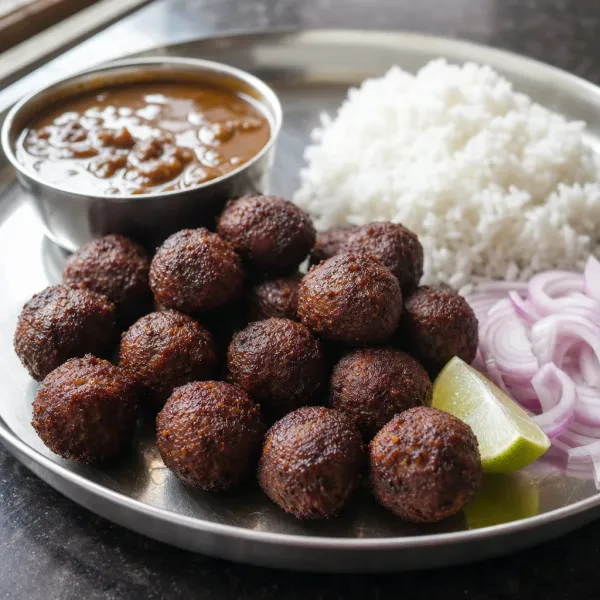
Mutton Kola Urundai
Authentic Chettinad mutton kola urundai with kalpasi, marathi mokku and gingelly oil. Traditional Chettiar household recipe with step-by-step method.
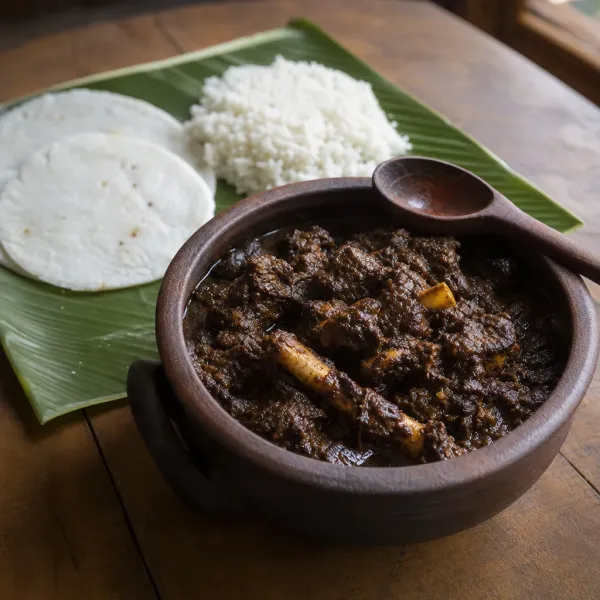
Coorg Pandi Curry
Authentic Kodava pandi curry with freshly roasted Coorg masala and kachampuli. Bone-in pork cooked low and slow the traditional Kodagu way.
Mangalorean Mutton Sukka
Traditional Mangalorean mutton sukka from the Konkani Catholic kitchen: bone-in mutton slow-cooked with freshly roasted Byadgi chilli masala and grat…
Mangalorean Mutton Ghee Roast
Traditional Konkani Catholic mutton ghee roast from Mangalore, made with Byadagi chillies, tamarind, and pure ghee. Step-by-step home recipe.
Kerala Beef Roast (Nadan Beef Roast)
Authentic Kerala Nasrani beef roast with thick dark masala, cooked the traditional way with shallots, coconut oil and curry leaves. Step-by-step hous…