

Milagu Kuzhambu Recipe
Malayalam മിളകു കുഴമ്പ്Tamil மிளகு குழம்புKannada ಮೆಣಸು ಕುಳಂಬುTelugu మిరియాల కుళంబు
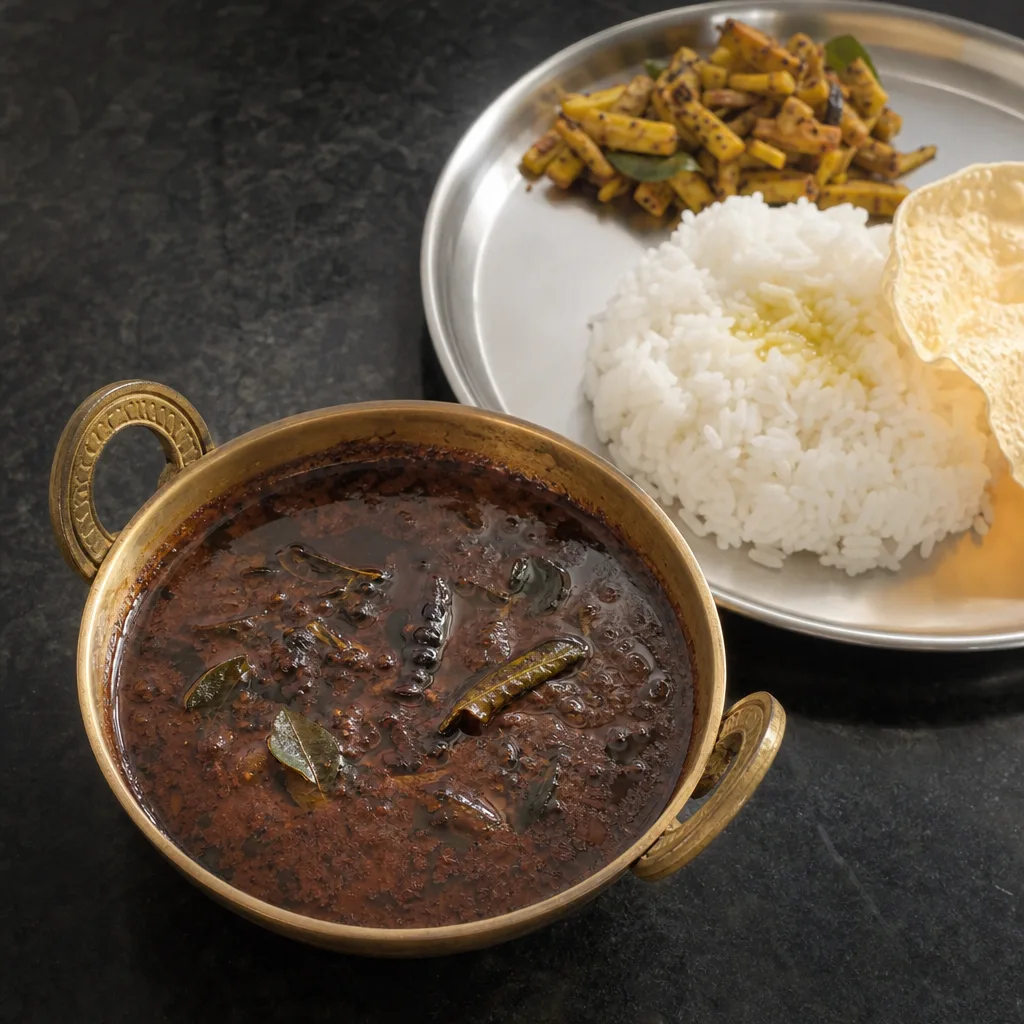
- Prep15 min
- Cook35 min
- Serves4
- DifficultyMedium
- DietVegan
Milagu kuzhambu is the dish Tamil Brahmin households reach for when someone has a cold, when the monsoon turns damp, or when the stomach needs settling after a run of heavy meals. Pepper is the point of it: not a background note but the whole flavour. Tamarind gives it body and sourness, a small amount of jaggery rounds the edges, and curry leaves keep it rooted in the everyday.
In most Iyer homes this is a thick, almost syrupy kuzhambu, meant to be eaten with a large quantity of rice and a generous pour of sesame oil or ghee. It is not a soup and it is not thin. A spoonful stirred into a mound of rice should coat every grain. Some households add a small piece of omam (ajwain) to the spice paste for digestion; others keep it to just pepper, cumin, and dried red chilli. Both are correct.
The shallots here are the small South Indian variety, not large onions. Tamarind is the sour agent, not kudampuli. The fat is gingelly oil throughout, which is standard for Tamil kuzhambu.
Ingredients (serves 4)
For the spice paste
For the kuzhambu
For tempering
Method
Soak the tamarind
Break the tamarind into a bowl and pour 300 ml of warm water over it. Leave it for 10 minutes, then squeeze the pulp thoroughly with your fingers. Strain through a sieve, pressing all the liquid through. Discard the fibre and seeds. You should have about 250 to 270 ml of tamarind water.
Dry-roast the spice paste ingredients
Set a small heavy pan over medium-low heat. Add 1 tsp gingelly oil, then put in the urad dal and chana dal. Stir constantly until they turn pale gold, about 90 seconds. Add the whole peppercorns, cumin, and dried red chillies. Keep stirring for another minute until the pepper smells sharp and the chillies darken slightly. Add the curry leaves, stir for 20 seconds, then tip everything onto a plate to cool. Do not let the dals go brown or the paste will taste bitter.
Grind the paste
Once the roasted spices are completely cool, grind them with 3 to 4 tablespoons of water to a coarse, thick paste. It should not be perfectly smooth — a little texture is correct. Set aside.
Fry the shallots and garlic
Heat 3 tbsp gingelly oil in a heavy-bottomed kadai over medium heat. Add the shallots and garlic and fry, stirring often, for 8 to 10 minutes until the shallots are soft, translucent, and beginning to colour at the edges. They should smell sweet. If they brown too quickly, lower the heat.
Add turmeric and the spice paste
Add the turmeric to the kadai and stir for 20 seconds. Then add the ground spice paste and fry it with the shallots over medium heat for 3 to 4 minutes, stirring continuously. The paste will darken and the raw smell of the pepper will soften into something rounder. Do not skip this step — undercooked paste leaves a raw, harsh edge on the finished kuzhambu.
Pour in the tamarind water
Add the strained tamarind water to the kadai. Stir well to incorporate the paste. Add salt and bring to a boil over medium-high heat, then reduce to a steady simmer.
Simmer until thick
Simmer uncovered for 18 to 22 minutes, stirring every few minutes to prevent sticking at the bottom. The kuzhambu is ready when the oil floats visibly on the surface, the colour has deepened to a dark reddish-brown, and the consistency coats the back of a spoon thickly. If you draw a line through the spoon, it should hold. Do not rush this — a thin kuzhambu has not cooked long enough.
Add jaggery
Stir in the jaggery and let it dissolve over low heat for 1 minute. Taste and adjust salt. The jaggery should not make the kuzhambu sweet — it simply takes the raw sharpness off the tamarind.
Temper and finish
Heat 1 tbsp gingelly oil in a small tempering pan over medium-high heat. When it shimmers, add the mustard seeds and wait for them to pop. Add the broken dried red chilli and curry leaves — stand back as the leaves will splutter. Pour the entire tempering over the kuzhambu immediately. Cover for one minute so the fragrance is absorbed, then stir once and take off the heat.
How to serve
Hot plain rice with a pour of gingelly oil or ghee. Papad (appalam) and a dry vegetable dish such as vazhakkai varuval or raw banana poriyal alongside. Some households serve it with a small bowl of curd to cool the meal.
Served with: Hot plain rice with a pour of gingelly oil or ghee. Papad (appalam) and a dry vegetable dish such as vazhakkai varuval or raw banana poriyal alongside. Some households serve it with a small bowl of curd to cool the meal.
Cook's tips
The pepper quantity is not a misprint
Two tablespoons of whole pepper looks like a lot. It is correct for this dish. If you are not accustomed to strong pepper heat, start with 1½ tbsp the first time and increase when you know the dish.
Why gingelly oil matters
Cold-pressed gingelly oil (not refined sesame oil) is what gives this kuzhambu its characteristic flavour. Coconut oil or refined oil will produce a different dish. Do not substitute.
It thickens further as it cools
Take it off the heat when it is slightly thinner than you want at the table. It will thicken noticeably as it sits. If it becomes too thick the next day, stir in a few tablespoons of warm water and reheat gently.
Storage
This keeps well. Stored in a clean, dry container at room temperature, it lasts 2 to 3 days in a South Indian kitchen. Refrigerated, up to a week. The flavour actually improves on the second day.
No tomato
Tomato does not belong in the traditional Iyer version of this kuzhambu. Tamarind is the only souring agent. Adding tomato changes both the colour and the character of the dish.
Regional variations
Chettinad households make a more pungent version with kalpasi and marathi mokku added to the spice paste; some Iyengar kitchens use a slightly thinner consistency and skip the jaggery entirely.
Glossary
- Kuzhambu குழம்பு
- A class of South Indian gravies, typically tamarind- or coconut-based, thicker than rasam and meant to be eaten with rice.
- Milagu மிளகு
- Black pepper; the primary flavouring agent in this dish.
- Gingelly oil நல்லெண்ணெய்
- Cold-pressed sesame oil used as the cooking fat in Tamil Nadu for kuzhambu and pickles; has a distinct nutty flavour.
- Chinna vengayam சின்ன வெங்காயம்
- Small South Indian shallots; sharper and more pungent than large onions, used throughout Tamil cooking.
- Jeeragam ஜீரகம்
- Cumin seeds; used here as part of the spice paste alongside pepper.
- Appalam அப்பளம்
- Thin sun-dried lentil wafer, fried or roasted; a standard accompaniment to rice meals in Tamil Nadu.
Two things decide this kuzhambu: frying the spice paste long enough in the oil before the tamarind goes in, and simmering the whole thing until the oil separates and rises to the surface. Both take patience. Rush either one and you will have a thin, raw-tasting gravy instead of the thick, deeply flavoured one this is meant to be.
More Vegetarian Gravies recipes
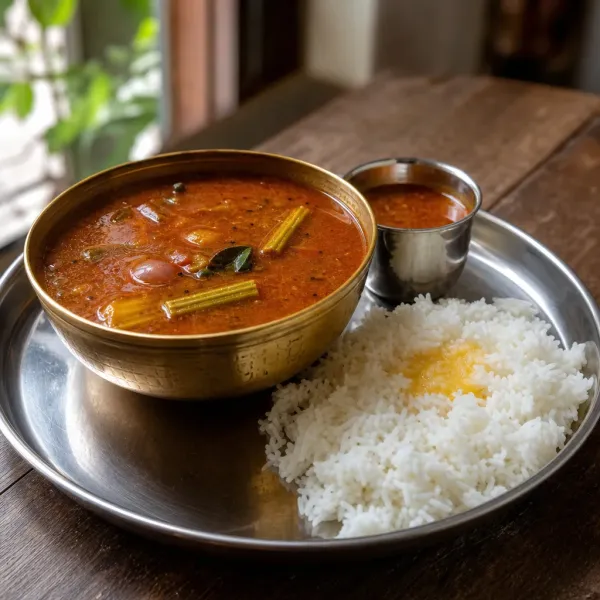
Tamil Brahmin Sambar with Homemade Sambar Podi
Traditional Tamil Brahmin sambar with homemade sambar podi, toor dal, drumstick and shallots in a tamarind base. Cooked in gingelly oil.
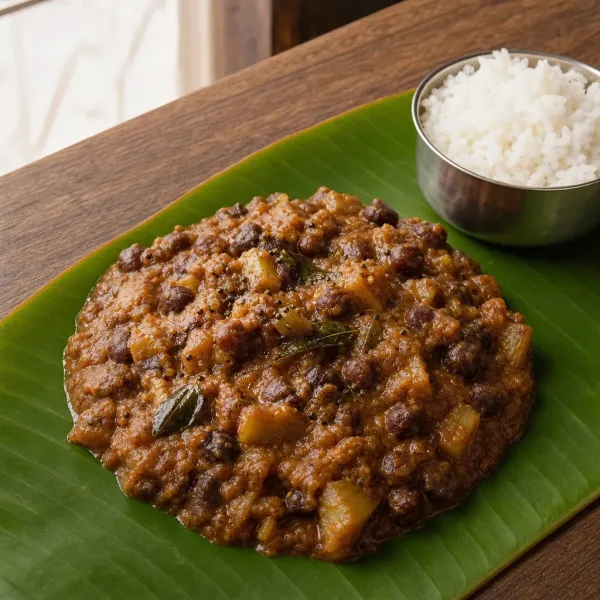
Kootu Curry
Traditional Kerala kootu curry with kala chana, raw banana, and yam in a deep-roasted coconut paste. A fixed dish on the sadya leaf.
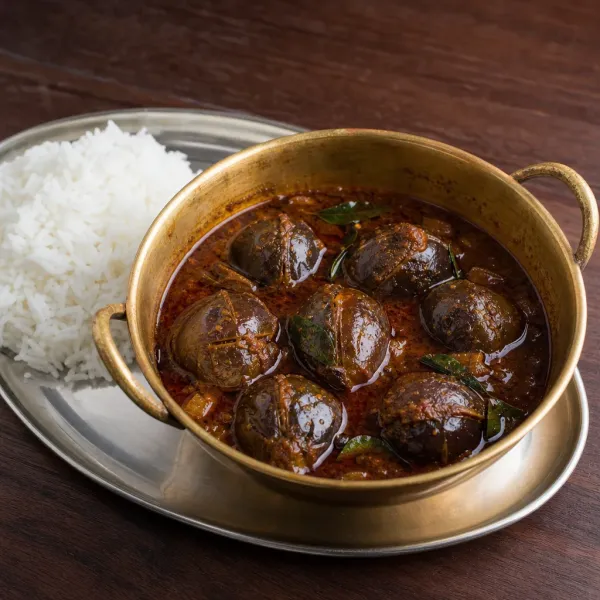
Ennai Kathirikai Kuzhambu
Traditional Chettinad ennai kathirikai kuzhambu: small brinjals stuffed with dry-roasted spice paste, fried in gingelly oil and simmered in tamarind…
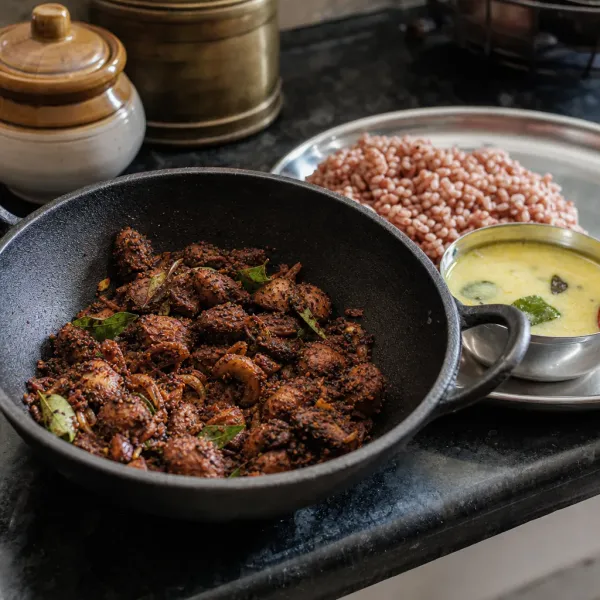
Mushroom Pepper Masala
A dry, pepper-forward mushroom masala from Nasrani kitchens in Travancore, cooked in coconut oil with shallots and curry leaves. Ready in 40 minutes.
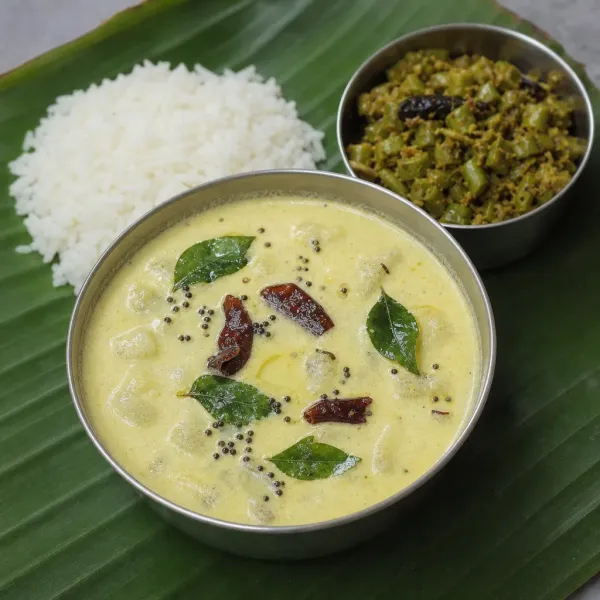
Majjige Huli
Traditional Karnataka Brahmin majjige huli with ash gourd, fresh coconut paste and sour curd. Step-by-step method with tips to prevent splitting.
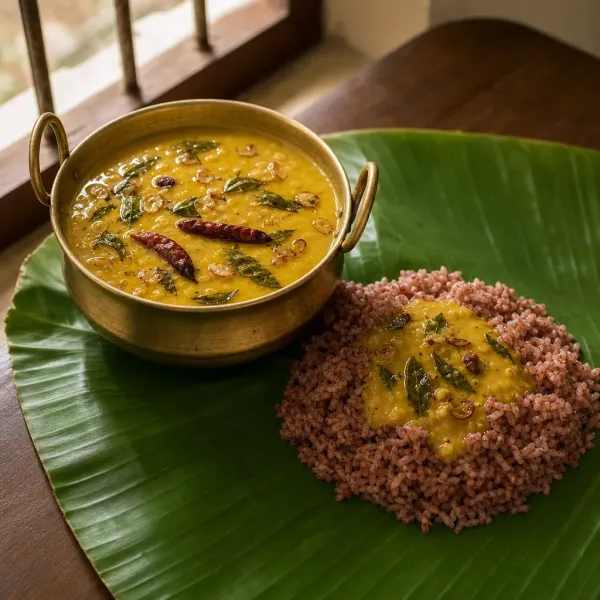
Parippu Curry
Traditional Kerala sadya parippu curry made with split moong dal, freshly ground coconut paste and a coconut oil tempering. Step-by-step home recipe.